
The Digital Cohort Dilemma: A Macro-Level Analysis of Screen Time and Youth Well-Being – Lumina Literati Publishing
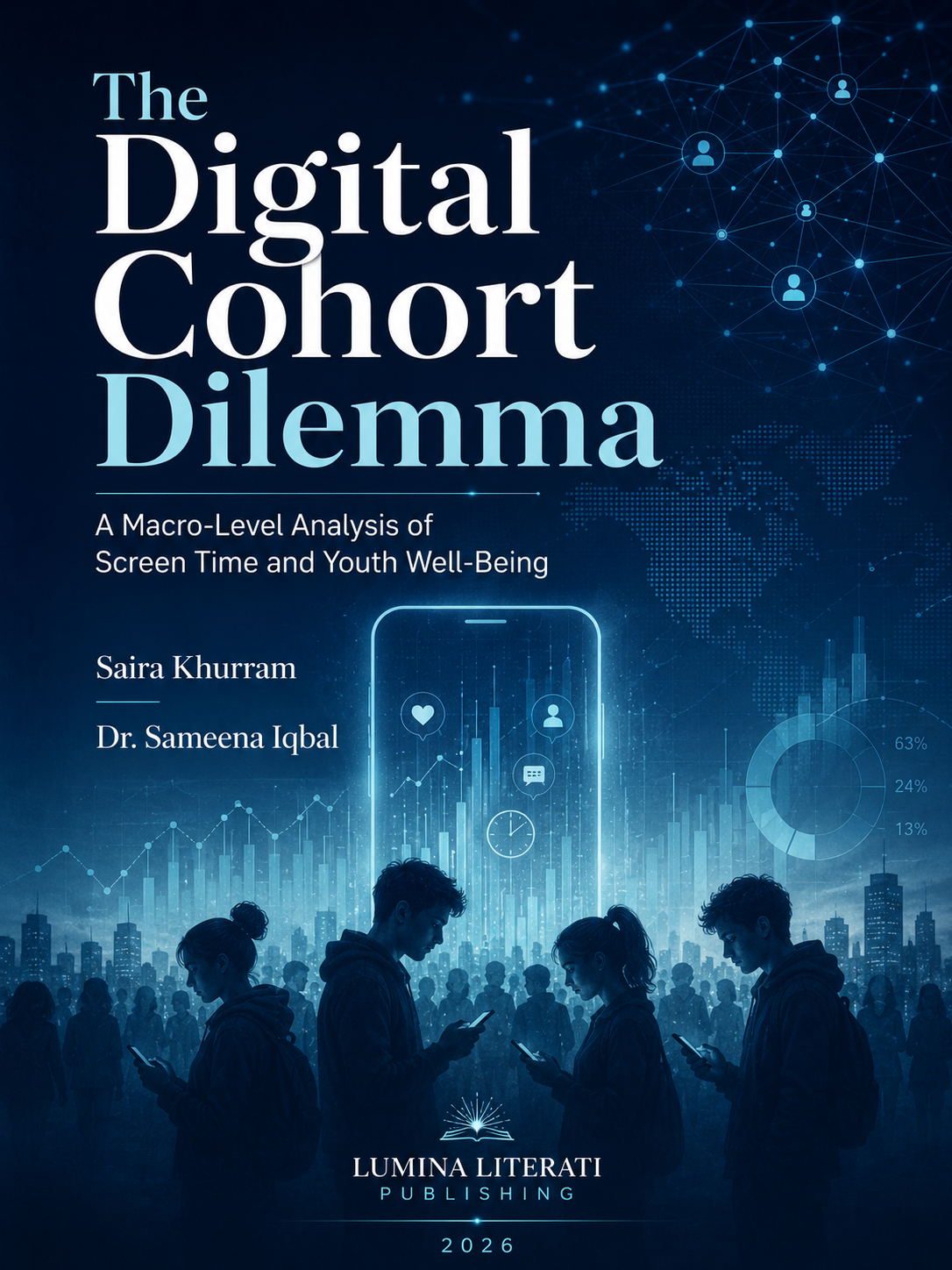
The Digital Cohort Dilemma: A Macro-Level Analysis of Screen Time and Youth Well-Being book cover

The Digital Cohort Dilemma

A Macro-Level Analysis of Screen Time and Youth Well-Being

By &

Published by Lumina Literati Publishing
Publication Year:
ISBN: 978-627-7813-53-6

Book Overview

The Digital Cohort Dilemma: A Macro-Level Analysis of Screen Time and Youth Well-Being begins from a deceptively simple reframing: the rise in youth screen time is not a failure of individual willpower but a transformation of the environment in which children now grow up. Where public debate reaches for an individual vocabulary — “put the phone down,” “set better limits” — this volume argues that contemporary screen exposure is a structural determinant of well-being, produced by a redesigned childhood in which education, friendship, play, entertainment, and identity have all been re-routed through screen-based systems.

At the heart of the book is the concept of the digital cohort: a birth-year group whose members pass through the critical windows of development under a historically specific technological environment. Drawing on Norman Ryder’s account of cohorts as the vehicle through which history becomes biography, and on life-course epidemiology’s emphasis on the timing, dose, and accumulation of exposure, the book treats birth year not as a destiny but as an index of exposure timing — distinguishing when a technology became available from when it became socially unavoidable.

From this foundation the volume builds outward. It traces the structural shift from scarce screens to ambient saturation; weighs the cross-national epidemiological evidence on dose, duration, and the “displacement cascade” by which mediated time crowds out sleep, movement, and face-to-face contact; documents the institutional vacuum in which schools, healthcare systems, and families were outpaced by the speed of technological diffusion; and examines the attention economy as a structural force whose persuasive design and algorithmic amplification engineer compulsion by intent rather than accident.

Its closing movement is constructive. Extending Bronfenbrenner’s bioecological model to digital ecosystems and applying the precautionary principle to digital childhood, the book advances a population-level policy toolkit, a programme for reconstructing developmental time and space — sleep, movement, and low-bandwidth sociality — and a cohort-responsibility framework that distributes specific duties across technology companies, governments, schools, and researchers.

The central argument is at once diagnosis and call to action: youth screen exposure is not a private habit to be managed by discipline alone, but a structural determinant of a generation’s health — and holding that generation’s development together is a collective responsibility that no single parent, school, or platform can discharge in isolation.

About the Authors

Saira Khurram

Program Leader, Foreign Qualifications, Roots IVY Educational Complex · University Lecturer in Psychology · MSc Zoology, BS Psychology, B.Ed

Saira Khurram is an educator, researcher, and author whose academic path bridges the biological sciences, psychology, and education. Holding an MSc in Zoology, a BS in Psychology, and a B.Ed, she has established herself as a versatile academic leader specialising in innovative teaching methodologies, curriculum design, and interdisciplinary research.

As Program Leader of Foreign Qualifications at Roots IVY Educational Complex, she guides students through international curricula including IGCSE, O-Level, A-Level, AQA, Pearson Edexcel, IB, and OCR, with a sustained emphasis on fostering critical thinking, integrating technology-based learning, and promoting research engagement among students and faculty alike.

Alongside her leadership in secondary education, she serves as a university lecturer teaching undergraduate and postgraduate psychology modules and supervising research projects across psychology and biology. It is this interdisciplinary vantage — at once educational, biological, and psychological — that she brings to the developmental questions at the heart of this volume.


Dr. Sameena Iqbal

Lecturer & Clinical Psychologist · Founder, “Healing Playground” Child Psychotherapy Lab, Department of Psychology, International Islamic University Islamabad (IIUI) · PhD, Clinical Psychology

Dr. Sameena Iqbal is a lecturer and trained clinical psychologist with more than thirteen years of experience in psychotherapy, clinical assessment, teaching, and research. Her professional and research work centres on child and adolescent mental health, parenting practices, and the management of disruptive behaviour disorders, culminating in her doctoral thesis on the efficacy of parent–child interventions.

She has published extensively in national and international journals on parenting, student mental health, mindfulness, psycholinguistics, AI and communication, domestic violence, self-esteem, and clinical populations. Her practice integrates evidence-based psychological methods with culturally responsive, research-driven insight across clinical, academic, and community settings.

She holds professional certifications as a Certified Hypnotherapist (NGH, USA), Certified Islamic Psychotherapist, NLP Practitioner (NFNLP, USA), and Behavioral Neuro-Leadership Practitioner, with advanced clinical training in CBT, MMPI-II, Schema Therapy, Narrative Exposure Therapy, and Neurofeedback. She recently established the “Healing Playground” child-psychotherapy lab in the Department of Psychology at IIUI, supporting children’s psychological well-being through community-awareness programmes and direct psychological services.

Endorsements & Reviews

“A bracing reframing of a debate too often reduced to willpower and screen-time limits. By treating digital childhood as a structural determinant of health — and the ‘digital cohort’ as its central unit of analysis — this book gives educators, clinicians, and policymakers the vocabulary the moment demands.”

“Rare is the study that speaks fluently to epidemiology, developmental psychology, and public policy at once. Rigorous about the evidence and honest about its limits, it refuses both moral panic and complacent dismissal — and reframes a debate that has badly needed this clarity.”

“The closing chapters on developmental infrastructure and cohort responsibility are the most practical I have read on this subject. Rather than blaming children or parents, the authors show how schools, platforms, governments, and researchers each carry a share of the duty. Essential reading for anyone raising, teaching, or studying the first fully digital generation.”

Open Access Promotion – Final Design

Free & Open Access

This scholarly work is available to everyone. Click the cover to start reading our new publication without barriers.

The Digital Cohort Dilemma: A Macro-Level Analysis of Screen Time and Youth Well-Being

References

Showing 10 of 217 referencesShowing all 217 references

1
Bohnert, M., & Gracia, P. (2020). Emerging Digital Generations? Impacts of Child Digital Use on Mental and Socioemotional Well-Being across Two Cohorts in Ireland, 2007–2018. Child Indicators Research, 14(2), 629–659. https://doi.org/10.1007/s12187-020-09767-z
2
Bohnert, M., & Gracia, P. (2023). Digital use and socioeconomic inequalities in adolescent well‐being: Longitudinal evidence on socioemotional and educational outcomes. Journal of Adolescence, 95(6), 1179–1194. https://doi.org/10.1002/jad.12193
3
Büchi, M. (2020). Digital Well-Being Theory and Research. https://doi.org/10.31219/osf.io/k3e2j
4
Cortesi, S., Hasse, A., Lombana-Bermúdez, A., Kim, S., & Gasser, U. (2020). Youth and Digital Citizenship+ (Plus): Understanding Skills for a Digital World. SSRN Electronic Journal. https://doi.org/10.2139/ssrn.3557518
5
Davis, K., Anderson, M., Yang, C., Choukas-Bradley, S., Bell, B. T., & Slovák, P. (2024). Cross-Disciplinary Perspectives on Youth Digital Well-Being Research: Identifying Notable Developments, Persistent Gaps, and Future Directions. Journal of Adolescent Research, 40(2), 259–295. https://doi.org/10.1177/07435584241291163
6
Jensen, M., George, M. J., Russell, M. A., Lippold, M. A., & Odgers, C. L. (2021). Does Adolescent Digital Technology Use Detract from the Parent–Adolescent Relationship? Journal of Research on Adolescence, 31(2), 469–481. https://doi.org/10.1111/jora.12618
7
Keyes, K. M. (2023). Annual Research Review: Sex, gender, and internalizing conditions among adolescents in the 21st century – trends, causes, consequences. Journal of Child Psychology and Psychiatry, 65(4), 384–407. https://doi.org/10.1111/jcpp.13864
8
Liu, X., Liu, J., Flores, D. D., & McDonald, C. C. (2024). Family factors related to adolescent screen media use and mental health outcomes: A systematic review and recommendation for practices. Journal of Adolescence, 96(7), 1401–1427. https://doi.org/10.1002/jad.12367
9
Modecki, K. L., Goldberg, R., Wiśniewski, P., & Orben, A. (2022). What is digital parenting? A systematic review of past measurement and blueprint for the future. https://doi.org/10.31234/osf.io/7zng6
10
Odgers, C. L., & Jensen, M. (2020). Annual Research Review: Adolescent mental health in the digital age: facts, fears, and future directions. Journal of Child Psychology and Psychiatry, 61(3), 336–348. https://doi.org/10.1111/jcpp.13190
11
Rasi, P., Vuojärvi, H., & Ruokamo, H. (2019). Media Literacy for All Ages. Journal of Media Literacy Education, 11(2), 1–19. https://doi.org/10.23860/jmle-2019-11-2-1
12
Respi, C., Gui, M., Abbiati, G., Paladini, C., Ercolanoni, S., Milzani, F., Pirola, T., & Vezzoli, G. (2025). Longitudinal effect of early social media use on standardized learning outcomes during school career. https://doi.org/10.21203/rs.3.rs-6785728/v1
13
Shiferaw, B. D., Wang, Y., Wang, Y., Wang, Y., Mackay, L. E., Luo, Y., Yan, N., Shen, X., Zhou, T., Zhu, Y., Cai, J., Wang, Q., Yan, W., Gao, X., Pan, H., & Wang, W. (2025). Impact of digital addiction on youth health: A systematic review and meta-analysis. Journal of Behavioral Addictions, 14(3), 1129–1158. https://doi.org/10.1556/2006.2025.00081
14
Stavropoulos, V., Motti‐Stefanidi, F., & Griffiths, M. D. (2022). Risks and Opportunities for Youth in the Digital Era. European Psychologist, 27(2), 86–101. https://doi.org/10.1027/1016-9040/a000451
15
Bohnert, M., & Gracia, P. (2020). Emerging Digital Generations? Impacts of Child Digital Use on Mental and Socioemotional Well-Being across Two Cohorts in Ireland, 2007–2018. Child Indicators Research, 14(2), 629–659. https://doi.org/10.1007/s12187-020-09767-z
16
Büchi, M. (2021). Digital well-being theory and research. New Media & Society, 26(1), 172–189. https://doi.org/10.1177/14614448211056851
17
Ferguson, C. J., Kaye, L., Branley-Bell, D., Markey, P. M., Ivory, J., Klisanin, D., Elson, M., Smyth, M. J., Hogg, J. L., McDonnell, D., Nichols, D. L., Siddiqui, S., Gregerson, M., & Wilson, J. (2022). Like this meta-analysis: Screen media and mental health. Professional Psychology Research and Practice, 53(2), 205–214. https://doi.org/10.1037/pro0000426
18
Jensen, M., George, M. J., Russell, M. A., Lippold, M. A., & Odgers, C. L. (2021). Does Adolescent Digital Technology Use Detract from the Parent–Adolescent Relationship? Journal of Research on Adolescence, 31(2), 469–481. https://doi.org/10.1111/jora.12618
19
Macuh, B., Raspor, A., Sraka, M., & Kovačič, A. (2018). Media exposure and education of first to six grade children from Slovenia: Parent opinions. International Journal of Cognitive Research in Science Engineering and Education, 6(3), 49–57. https://doi.org/10.5937/ijcrsee1803049m
20
Magis‐Weinberg, L., Suleiman, A. B., & Dahl, R. E. (2021). Context, Development, and Digital Media: Implications for Very Young Adolescents in LMICs. Frontiers in Psychology, 12. https://doi.org/10.3389/fpsyg.2021.632713
21
Modecki, K. L., Goldberg, R., Wiśniewski, P., & Orben, A. (2022). What is digital parenting? A systematic review of past measurement and blueprint for the future. https://doi.org/10.31234/osf.io/7zng6
22
Odgers, C. L., & Jensen, M. (2020). Annual Research Review: Adolescent mental health in the digital age: facts, fears, and future directions. Journal of Child Psychology and Psychiatry, 61(3), 336–348. https://doi.org/10.1111/jcpp.13190
23
Rich, M., Bickham, D. S., & Shrier, L. A. (2015). Measuring Youth Media Exposure. American Behavioral Scientist, 59(14), 1736–1754. https://doi.org/10.1177/0002764215596558
24
Stavropoulos, V., Motti‐Stefanidi, F., & Griffiths, M. D. (2022). Risks and Opportunities for Youth in the Digital Era. European Psychologist, 27(2), 86–101. https://doi.org/10.1027/1016-9040/a000451
25
Walsh, L. C., Regan, A., Okabe‐Miyamoto, K., & Lyubomirsky, S. (2021). Does Putting Away Your Smartphone Make You Happier? The Effects of Restricting Digital Media and Social Media on Well-Being. https://doi.org/10.31234/osf.io/c3phw
26
Żerebecki, B. G., & Opree, S. J. (2022). The direct and indirect effects of social technology use on children’s life satisfaction. International Journal of Child-Computer Interaction, 34, 100538. https://doi.org/10.1016/j.ijcci.2022.100538
27
Brajša‐Žganec, A., Topić, M. K., Džida, M., Brkljačić, T., & Babarović, T. (2022). Digital technology use and negative online experiences as predictors of life satisfaction in Croatian primary school children. Radovi Zavoda Za Znanstveni Rad Varaždin, 33, 181–206. https://doi.org/10.21857/yrvgqtwlg9
28
Németh, M. B., Hódi, Á., Juhász, F., Sárik, A. M., & Tóth, E. (2021). Szülők véleménye az óvodáskorú gyermekek IKT-eszköz használatának negatív és pozitív hatásairól. Gyermeknevelés Tudományos Folyóirat, 9(1), 8–38. https://doi.org/10.31074/gyntf.2021.1.8.38
29
Patel, M.-G., & Quan‐Haase, A. (2022). The social-ecological model of cyberbullying: Digital media as a predominant ecology in the everyday lives of youth. New Media & Society, 26(9), 5507–5528. https://doi.org/10.1177/14614448221136508
30
Salmon, J., Arundell, L., Hume, C., Brown, H., Hesketh, K. D., Dunstan, D. W., Daly, R. M., Pearson, N., Cerin, E., Moodie, M., Sheppard, L., Ball, K., Bagley, S. M., Chinapaw, M. J. M., & Crawford, D. (2011). A cluster-randomized controlled trial to reduce sedentary behavior and promote physical activity and health of 8-9 year olds: The Transform-Us! Study. BMC Public Health, 11(1). https://doi.org/10.1186/1471-2458-11-759
31
Throuvala, M. A., Griffiths, M. D., Rennoldson, M., & Kuss, D. J. (2021). Policy Recommendations for Preventing Problematic Internet Use in Schools: A Qualitative Study of Parental Perspectives. International Journal of Environmental Research and Public Health, 18(9), 4522. https://doi.org/10.3390/ijerph18094522
32
Ben‐Shlomo, Y., Cooper, R., & Kuh, D. (2016). The last two decades of life course epidemiology, and its relevance for research on ageing. International Journal of Epidemiology, 45(4), 973–988. https://doi.org/10.1093/ije/dyw096
33
Buka, S. L., Rosenthal, S. R., & Lacy, M. E. (2017). Epidemiological Study Designs: Traditional and Novel Approaches to Advance Life Course Health Development Research. 541–560. https://doi.org/10.1007/978-3-319-47143-3_22
34
Burton‐Jeangros, C., Cullati, S., Sacker, A., & Blane, D. (2015). Introduction. 1–18. https://doi.org/10.1007/978-3-319-20484-0_1
35
Halfon, N., & Hochstein, M. (2002). Life Course Health Development: An Integrated Framework for Developing Health, Policy, and Research. Milbank Quarterly, 80(3), 433–479. https://doi.org/10.1111/1468-0009.00019
36
Odgers, C. L., & Jensen, M. (2020). Annual Research Review: Adolescent mental health in the digital age: facts, fears, and future directions. Journal of Child Psychology and Psychiatry, 61(3), 336–348. https://doi.org/10.1111/jcpp.13190
37
Thimm-Kaiser, M., & Keyes, K. M. (2025). US State Policies Regarding Social Media: Do Policies Match the Evidence? Milbank Quarterly, 103(S1), 337–365. https://doi.org/10.1111/1468-0009.70021
38
Keyes, K. M. (2023). Annual Research Review: Sex, gender, and internalizing conditions among adolescents in the 21st century – trends, causes, consequences. Journal of Child Psychology and Psychiatry, 65(4), 384–407. https://doi.org/10.1111/jcpp.13864
39
Kostyrka‐Allchorne, K., Cooper, N. R., & Simpson, A. (2017). The relationship between television exposure and children’s cognition and behaviour: A systematic review. Developmental Review, 44, 19–58. https://doi.org/10.1016/j.dr.2016.12.002
40
Linder, L., McDaniel, B. T., Stockdale, L., & Coyne, S. M. (2021). The impact of parent and child media use on early parent–infant attachment. Infancy, 26(4), 551–569. https://doi.org/10.1111/infa.12400
41
Nagata, J. M., Chu, J., Ganson, K. T., Murray, S. B., Iyer, P., Gabriel, K. P., Garber, A. K., Bibbins‐Domingo, K., & Baker, F. C. (2022). Contemporary screen time modalities and disruptive behavior disorders in children: a prospective cohort study. Journal of Child Psychology and Psychiatry, 64(1), 125–135. https://doi.org/10.1111/jcpp.13673
42
Nian, M., Braun, G., Escher, B. I., & Fang, M. (2024). Toxicological Study of Human Exposure to Mixtures of Chemicals: Challenges and Approaches. Environmental Science & Technology Letters, 11(8), 773–782. https://doi.org/10.1021/acs.estlett.4c00393
43
Przybylski, A. K., & Weinstein, N. (2019). Digital Screen Time Limits and Young Children’s Psychological Well-Being: Evidence From a Population-Based Study. Child Development, 90(1), e56–e65. https://doi.org/10.1111/cdev.13007
44
Thomas, R. S., Bahadori, T., Buckley, T. J., Cowden, J., Deisenroth, C., Dionisio, K. L., Frithsen, J. B., Grulke, C., Gwinn, M. R., Harrill, J., Higuchi, M., Houck, K. A., Hughes, M. F., Hunter, E. S., Isaacs, K., Judson, R., Knudsen, T. B., Lambert, J. C., Linnenbrink, M., … Williams, A. (2019). The Next Generation Blueprint of Computational Toxicology at the U.S. Environmental Protection Agency. Toxicological Sciences, 169(2), 317–332. https://doi.org/10.1093/toxsci/kfz058
45
Biswas, S., Kareh, A. E., Qureshi, M., Lee, D. M. X., Sun, C., Lam, J., Saw, S., & Najjar, R. P. (2024). The influence of the environment and lifestyle on myopia. Journal of Physiological Anthropology, 43(1). https://doi.org/10.1186/s40101-024-00354-7
46
Cui, L., Zhou, H., Lou, X., Chen, T., Guo, Y., Li, J., Hao, Y., Li, Z., Yang, X., & Wang, X. (2023). Effects of behaviors and surrounding environment on myopia before and during the COVID-19 pandemic: a longitudinal analysis of children and adolescents in China. Journal of Public Health, 32(7), 1229–1241. https://doi.org/10.1007/s10389-023-01900-w
47
Dresp, B. (2020). Children’s Health in the Digital Age. International Journal of Environmental Research and Public Health, 17(9), 3240. https://doi.org/10.3390/ijerph17093240
48
Lau, J., Koh, W., Ng, J. S., Lee, D., Peh, C. H., Lam, J., Tan, K., & Koh, V. (2023). How can we better evaluate paediatric progression of myopia and associated risk factors? Lessons from the COVID‐19 pandemic: A systematic review. Acta Ophthalmologica, 102(3). https://doi.org/10.1111/aos.15773
49
Paterson, D. C., Ramage, K., Moore, S. A., Riazi, N. A., Tremblay, M. S., & Faulkner, G. (2021). Exploring the impact of COVID-19 on the movement behaviors of children and youth: A scoping review of evidence after the first year. Journal of Sport and Health Science, 10(6), 675–689. https://doi.org/10.1016/j.jshs.2021.07.001
50
Stafford‐Bell, N., McVeigh, J., Lingham, G., Straker, L., Eastwood, P. R., Yazar, S., Mackey, D. A., & Lee, S. S. (2021). Associations of 12‐year sleep behaviour trajectories from childhood to adolescence with myopia and ocular biometry during young adulthood. Ophthalmic and Physiological Optics, 42(1), 19–27. https://doi.org/10.1111/opo.12905
51
Trott, M., Driscoll, R., Iraldo, E., & Pardhan, S. (2022). Changes and correlates of screen time in adults and children during the COVID-19 pandemic: A systematic review and meta-analysis. Eclinicalmedicine, 48, 101452. https://doi.org/10.1016/j.eclinm.2022.101452
52
Yalçın, S., & Bayraktar, A. (2022). Comparison of PISA and PIAAC Participants’ Reading Habits and Strategies in Terms of Reading Achievement. International Journal of Contemporary Educational Research, 8(4), 158–169. https://doi.org/10.33200/ijcer.919958
53
Zhang, Y., Tian, S., Zou, D., Zhang, H., & Pan, C. (2022). Screen time and health issues in Chinese school-aged children and adolescents: a systematic review and meta-analysis. BMC Public Health, 22(1). https://doi.org/10.1186/s12889-022-13155-3
54
Zong, Z., Zhang, Y., Qiao, J.-C., Tian, Y., & Xu, S. (2024). The association between screen time exposure and myopia in children and adolescents: a meta-analysis. BMC Public Health, 24(1). https://doi.org/10.1186/s12889-024-19113-5
55
Baum, F., Newman, L., & Biedrzycki, K. R. (2012). Vicious cycles: digital technologies and determinants of health in Australia. Health Promotion International, 29(2), 349–360. https://doi.org/10.1093/heapro/das062
56
Charmaraman, L., Lynch, A. D., Richer, A. M., & Zhai, E. (2022). Examining early adolescent positive and negative social technology behaviors and well-being during the COVID-19 pandemic. Technology Mind and Behavior, 3(1), 157–169. https://doi.org/10.1037/tmb0000062
57
Galla, B. M., Choukas‐Bradley, S., Fiore, H. M., & Esposito, M. V. (2021). Values-Alignment Messaging Boosts Adolescents’ Motivation to Control Social Media Use. Child Development, 92(5), 1717–1734. https://doi.org/10.1111/cdev.13553
58
Jennings, N. A., & Caplovitz, A. G. (2022). Parenting and tweens’ media use during the COVID-19 pandemic. Psychology of Popular Media, 11(3), 311–315. https://doi.org/10.1037/ppm0000376
59
Konrath, S., James, C., Weinstein, E., & Tench, B. (2025). Development and validation of the Tech With Care Index for teens. Psychology of Popular Media, 14(4), 507–520. https://doi.org/10.1037/ppm0000593
60
Lapierre, M. A., & Choi, E. (2021). Parental awareness of new online advertising techniques targeting children: an exploratory study of American parents. Young Consumers, 22(2), 290–305. https://doi.org/10.1108/yc-12-2020-1271
61
Macias, C., & Choi, K. (2021). Preschoolers’ beliefs about media technologies: The role of family income. Human Behavior and Emerging Technologies, 3(4), 572–584. https://doi.org/10.1002/hbe2.278
62
Magis‐Weinberg, L., Suleiman, A. B., & Dahl, R. E. (2021). Context, Development, and Digital Media: Implications for Very Young Adolescents in LMICs. Frontiers in Psychology, 12. https://doi.org/10.3389/fpsyg.2021.632713
63
Martin, F., Bacak, J., Polly, D., Wang, W., & Ahlgrim‐Delzell, L. (2022). Teacher and School Concerns and Actions on Elementary School Children Digital Safety. Techtrends, 67(3), 561–571. https://doi.org/10.1007/s11528-022-00803-z
64
McDaniel, B. T. (2019). Parent distraction with phones, reasons for use, and impacts on parenting and child outcomes: A review of the emerging research. Human Behavior and Emerging Technologies, 1(2), 72–80. https://doi.org/10.1002/hbe2.139
65
McManus, B., Underhill, A. T., Mrug, S., Anthony, T., & Stavrinos, D. (2020). Gender moderates the relationship between media use and sleep quality. Journal of Sleep Research, 30(4). https://doi.org/10.1111/jsr.13243
66
Subrahmanyam, K., & Michikyan, M. (2022). Methodological and Conceptual Issues in Digital Media Research. 9–38. https://doi.org/10.1017/9781108976237.003
67
Bridbord, K., & HANSON, D. (2009). A Personal Perspective on the Initial Federal Health-Based Regulation to Remove Lead from Gasoline. Environmental Health Perspectives, 117(8), 1195–1201. https://doi.org/10.1289/ehp.0800534
68
Frank, D. M. (2021). What is the environment in environmental health research? Perspectives from the ethics of science. Studies in History and Philosophy of Science Part A, 88, 172–180. https://doi.org/10.1016/j.shpsa.2021.05.018
69
Freudenburg, W. R., Gramling, R., & Davidson, D. J. (2008). Scientific Certainty Argumentation Methods (SCAMs): Science and the Politics of Doubt*. Sociological Inquiry, 78(1), 2–38. https://doi.org/10.1111/j.1475-682x.2008.00219.x
70
Gilbert, S. G., & Weiss, B. (2006). A rationale for lowering the blood lead action level from 10 to 2μg/dL. Neurotoxicology, 27(5), 693–701. https://doi.org/10.1016/j.neuro.2006.06.008
71
Markowitz, G., & Rosner, D. (2002). Corporate Responsibility for Toxins. The Annals of the American Academy of Political and Social Science, 584(1), 159–174. https://doi.org/10.1177/000271620258400112
72
Muller, C., Sampson, R. J., & Winter, A. S. (2018). Environmental Inequality: The Social Causes and Consequences of Lead Exposure. Annual Review of Sociology, 44(1), 263–282. https://doi.org/10.1146/annurev-soc-073117-041222
73
Rauh, V., & Margolis, A. (2016). Research Review: Environmental exposures, neurodevelopment, and child mental health – new paradigms for the study of brain and behavioral effects. Journal of Child Psychology and Psychiatry, 57(7), 775–793. https://doi.org/10.1111/jcpp.12537
74
Benoît, C. (2019). The new political economy of regulation. French Politics, 17(4), 482–499. https://doi.org/10.1057/s41253-019-00093-7
75
Carrigan, C., & Coglianese, C. (2016). Capturing Regulatory Reality: Stigler’s The Theory of Economic Regulation SSRN Electronic Journal. https://doi.org/10.2139/ssrn.2805153
76
Holley, C., Kennedy, A., Mutongwizo, T., & Shearing, C. (2021). Public Servants and Regulator Capture in Energy and Environmental Governance. 835–852. https://doi.org/10.1007/978-3-030-29980-4_7
77
Lima, J. M., & Galea, S. (2018). Corporate practices and health: a framework and mechanisms. Globalization and Health, 14(1). https://doi.org/10.1186/s12992-018-0336-y
78
Lodge, M. (2014). Regulatory Capture Recaptured. Public Administration Review, 74(4), 539–542. https://doi.org/10.1111/puar.12246
79
Lokanan, M. (2017). Self-regulation and compliance enforcement practices by the Investment Dealers Association in Canada. Journal of Financial Regulation and Compliance, 25(1), 2–21. https://doi.org/10.1108/jfrc-04-2016-0038
80
Newman, P. (2019). Personnel is Policy: Regulatory Capture at the Federal Trade Commission, 1914–1929. Journal of Institutional Economics, 15(6), 1037–1053. https://doi.org/10.1017/s1744137419000341
81
Näsman, M., & Pitteloud, S. (2022). The power and limits of expertise: Swiss–Swedish linking of vehicle emission standards in the 1970s and 1980s. Business and Politics, 24(3), 241–260. https://doi.org/10.1017/bap.2022.3
82
Popp, D. (2019). Environmental Policy and Innovation: A Decade of Research. https://doi.org/10.3386/w25631
83
Richards, M. J. (2016). Regulating Automakers for Climate Change: US Reforms in Global Context. Environmental Policy and Governance, 26(6), 498–509. https://doi.org/10.1002/eet.1726
84
Thomas, D. W., & Thomas, M. D. (2022). George stigler’s theory of economic regulation at 50 – introduction to a special issue. Public Choice, 193(1–2), 1–5. https://doi.org/10.1007/s11127-022-00993-3
85
Trubnikov, D. (2017). Regulation of Telecommunications: The Choice Between Market and Regulatory Failures. Law State and Telecommunications Review, 9(1), 25–46. https://doi.org/10.26512/lstr.v9i1.21511
86
Berrocoso, J. V., Acevedo-Borrega, J., & Cerezo-Pizarro, M. (2022). Educational Technology and Student Performance: A Systematic Review. Frontiers in Education, 7. https://doi.org/10.3389/feduc.2022.916502
87
Daumiller, M., Rinas, R., Schoon, I., & Lüftenegger, M. (2023). How Did COVID-19 Affect Education and What Can Be Learned Moving Forward? Zeitschrift Für Psychologie, 231(3), 177–191. https://doi.org/10.1027/2151-2604/a000527
88
Gallagher‐Mackay, K., Srivastava, P., Underwood, K., Dhuey, E., McCready, L. T., Born, K., Maltsev, A., Perkhun, A., Steiner, R. M., Barrett, K., & Sander, B. (2021). COVID-19 and Education Disruption in Ontario: Emerging Evidence on Impacts. https://doi.org/10.47326/ocsat.2021.02.34.1.0
89
Ji, L., Qiang, F., & Zhou, Y. (2022). Mixed‐Methods Inquiry of Socially Inclusive e‐Learning: A Policy Document Analysis and Rapid Survey Study. Social Inclusion, 10(4). https://doi.org/10.17645/si.v10i4.4901
90
Kallon, A. (2024). Perspective Chapter: The Digital Divide in a Global Emergency – How Technology is Shaping Academic Performance in Diverse Communities. https://doi.org/10.5772/intechopen.113923
91
Panagouli, E., Stavridou, A., Savvidi, C., Kourti, A., Ψαλτοπούλου, Θ., Sergentanis, T. Ν., & Τσίτσικα, Ά. (2021). School Performance among Children and Adolescents during COVID-19 Pandemic: A Systematic Review. Children, 8(12), 1134. https://doi.org/10.3390/children8121134
92
Queiroz, M. D., & Costa, B. L. D. (2024). School responses to the COVID-19 pandemic: An analysis of the state education system of Minas Gerais, Brazil. Cadernos Gestão Pública E Cidadania, 29, 1–19. https://doi.org/10.12660/cgpc.v29.90520.85916
93
Sandu, A., & Taylor, C. (2024). Digital learning technologies usage during Covid‐19 lockdowns. British Educational Research Journal, 51(2), 607–628. https://doi.org/10.1002/berj.4092
94
Tomaszewski, W., Zając, T., Rudling, E. S., Riele, K. te, McDaid, L., & Western, M. (2022). Uneven impacts of COVID‐19 on the attendance rates of secondary school students from different socioeconomic backgrounds in Australia: A quasi‐experimental analysis of administrative data. Australian Journal of Social Issues, 58(1), 111–130. https://doi.org/10.1002/ajs4.219
95
Torres, A. M., & Sánchez, S. (2024). Education in a pandemic, learning to guarantee inclusive education from an approach psychosocial. Environment and Social Psychology, 9(6). https://doi.org/10.54517/esp.v9i6.2238
96
Trotta, E., Serio, G., Monacis, L., Carlucci, L., Marinelli, C. V., Petito, A., Celia, G., Bonvino, A., Calvio, A., Stallone, R., Esposito, C., Fantinelli, S., Sulla, F., Fuccio, R. D., Salvatore, G., Quarto, T., & Palladino, P. (2024). The effects of the COVID-19 pandemic on Italian primary school children’s learning: A systematic review through a psycho-social lens. Plos One, 19(6), e0303991. https://doi.org/10.1371/journal.pone.0303991
97
Abad, Z. S. H., Kline, A., Sultana, M., Noaeen, M., Nurmambetova, E., Lucini, F. R., Al-Jefri, M., & Lee, J. (2021). Digital public health surveillance: a systematic scoping review. NPJ Digital Medicine, 4(1). https://doi.org/10.1038/s41746-021-00407-6
98
Carras, M. C., Stavropoulos, V., Motti‐Stefanidi, F., Labrique, A., & Griffiths, M. D. (2021). Draconian policy measures are unlikely to prevent disordered gaming. Journal of Behavioral Addictions, 10(4), 849–853. https://doi.org/10.1556/2006.2021.00075
99
Domoff, S. E., Borgen, A. L., & Radesky, J. (2020). Interactional theory of childhood problematic media use. Human Behavior and Emerging Technologies, 2(4), 343–353. https://doi.org/10.1002/hbe2.217
100
Domoff, S. E., Borgen, A. L., Rye, B., Barajas, G. R., & Avery, K. (2022). Problematic Digital Media Use and Addiction. 300–316. https://doi.org/10.1017/9781108976237.016
101
Eales, L., Gillespie, S., Alstat, R. A., Ferguson, G. M., & Carlson, S. M. (2021). Children’s screen and problematic media use in the United States before and during the COVID-19 pandemic. Child Development, 92(5), e866–e882. https://doi.org/10.1111/cdev.13652
102
Ferguson, C. J., Bean, A. M., Nielsen, R. K. L., & Smyth, M. P. (2020). Policy on unreliable game addiction diagnoses puts the cart before the horse. Psychology of Popular Media, 9(4), 533–540. https://doi.org/10.1037/ppm0000249
103
Haddock, A., Ward, N. L., Yu, R., & O’Dea, N. (2022). Positive Effects of Digital Technology Use by Adolescents: A Scoping Review of the Literature. International Journal of Environmental Research and Public Health, 19(21), 14009. https://doi.org/10.3390/ijerph192114009
104
Kirchhelle, C. (2020). Giants On Clay Feet – COVID-19, infection control, and public health laboratory networks in England, the US, and (West-)Germany (1945-2020). https://doi.org/10.31235/osf.io/uv57t
105
Kroshus, E., Steiner, M. K., & Christakis, D. (2024). Family and developmental correlates of adolescent involvement in decision making about screen use. Preventive Medicine Reports, 41, 102717. https://doi.org/10.1016/j.pmedr.2024.102717
106
Lieberoth, A., & Fiskaali, A. (2021). Can Worried Parents Predict Effects of Video Games on Their Children? A Case-Control Study of Cognitive Abilities, Addiction Indicators and Wellbeing. Frontiers in Psychology, 11. https://doi.org/10.3389/fpsyg.2020.586699
107
MACİT, Z. B., & KAVAFOĞLU, S. (2019). Screen: Subject of all Information Technology Addiction. Middle Black Sea Journal of Health Science, 5(3), 293–301. https://doi.org/10.19127/mbsjohs.542122
108
Nielsen, P., Favez, N., Liddle, H. A., & Rigter, H. (2019). Linking parental mediation practices to adolescents’ problematic online screen use: A systematic literature review. Journal of Behavioral Addictions, 8(4), 649–663. https://doi.org/10.1556/2006.8.2019.61
109
Rooij, A. J. van, & Nijkamp, L. (2018). Addressing problematic video game use: A multimethod, dual-context perspective on leisure-time use. Journal of Behavioral Addictions, 7(3), 526–530. https://doi.org/10.1556/2006.7.2018.62
110
Adigwe, I. (2021). Identifying the Moderating and Mediating Variables in Parental Mediation Practices in Nigerian Families in the Digital Age. Social Media + Society, 7(3). https://doi.org/10.1177/20563051211033817
111
Adigwe, I., Mason, J., & Gromik, N. (2024). Investigating the relationship between socio-demographic variables of parents, digital literacy and parental mediation practices in the digital age: Nigeria in focus. E-Learning and Digital Media, 22(3), 229–246. https://doi.org/10.1177/20427530241232495
112
Cabello-Hutt, T., Cabello, P., & Claro, M. (2017). Online opportunities and risks for children and adolescents: The role of digital skills, age, gender and parental mediation in Brazil. New Media & Society, 20(7), 2411–2431. https://doi.org/10.1177/1461444817724168
113
Gervilla, E., Irles, D. L., Cabrera‐Perona, V., Fernández‐Martínez, I., & Anupol, J. (2023). Online risks at adolescence. Design and validation of a Parental Mediation Scale for Information and Communication Technologies (Riesgos en línea para los adolescentes. Diseño y validación de una escala de mediación parental para las tecnologías de la información y la comunicación — TIC). Journal for the Study of Education and Development Infancia Y Aprendizaje, 46(3), 492–528. https://doi.org/10.1080/02103702.2023.2191428
114
Livingstone, S., Mascheroni, G., & Staksrud, E. (2017). European research on children’s internet use: Assessing the past and anticipating the future. New Media & Society, 20(3), 1103–1122. https://doi.org/10.1177/1461444816685930
115
Livingstone, S., Çağıltay, K., & Ólafsson, K. (2015). EU K ids O nline II D ataset: A cross‐national study of children’s use of the Internet and its associated opportunities and risks. British Journal of Educational Technology, 46(5), 988–992. https://doi.org/10.1111/bjet.12317
116
Livingstone, S., Ólafsson, K., Helsper, E., Lupiáñez‐Villanueva, F., Veltri, G., & Folkvord, F. (2017). Maximizing Opportunities and Minimizing Risks for Children Online: The Role of Digital Skills in Emerging Strategies of Parental Mediation. Journal of Communication, 67(1), 82–105. https://doi.org/10.1111/jcom.12277
117
Mascheroni, G., Cino, D., Mikuška, J., & Šmahel, D. (2022). Explaining inequalities in vulnerable children’s digital skills: The effect of individual and social discrimination. New Media & Society, 24(2), 437–457. https://doi.org/10.1177/14614448211063184
118
Ponte, C., Mascheroni, G., Batista, S., Larrañaga, M. S. G., Fernández, G. M., & Cino, D. (2023). Children’s digital mediation: The family climate in Spain, Italy and Portugal. Observatorio (Obs*), 17(2). https://doi.org/10.15847/obsobs17220232214
119
Ponte, C., Simões, J. A., Batista, S., & Castro, T. S. (2018). Implicados, intermitentes, desengajados? Estilos de mediação de pais de crianças de 3-8 anos que usam a internet. Sociologia Problemas E Práticas, (91). https://doi.org/10.7458/10.7458/spp20199112332
120
Rosani, D. (2019). Combating Discrimination: Internet Literacy to Strengthen Children’s Rights in the Digital Environment | Combate à discriminação: educação digital para fortalecer os direitos das crianças no ambiente digital. Revista Publicum, 5(2), 106–128. https://doi.org/10.12957/publicum.2019.47203
121
Stoilova, M., Livingstone, S., & Mascheroni, G. (2020). Digital Childhood? 128–143. https://doi.org/10.1093/oxfordhb/9780190864385.013.9
122
Калмус, В., Blinka, L., & Ólafsson, K. (2013). Does It Matter What Mama Says: Evaluating the Role of Parental Mediation in European Adolescents’ Excessive Internet Use. Children & Society, 29(2), 122–133. https://doi.org/10.1111/chso.12020
123
Калмус, В., Sukk, M., & Soo, K. (2022). Towards more active parenting: Trends in parental mediation of children’s internet use in European countries. Children & Society, 36(5), 1026–1042. https://doi.org/10.1111/chso.12553
124
Farmelo, G. (2016). Physics: Fallible pontiff of physics. Nature, 538(7624), 168–169. https://doi.org/10.1038/538168a
125
Nieborg, D. B. (2015). Crushing Candy: The Free-to-Play Game in Its Connective Commodity Form. Social Media + Society, 1(2). https://doi.org/10.1177/2056305115621932
126
Omari, J. (2020). Is Facebook the Internet? Ethnographic Perspectives on Open Internet Governance in Brazil. Law & Social Inquiry, 45(4), 1093–1112. https://doi.org/10.1017/lsi.2020.5
127
Baker, A. E., Galván, A., & Fuligni, A. J. (2025). The connecting brain in context: How adolescent plasticity supports learning and development. Developmental Cognitive Neuroscience, 71, 101486. https://doi.org/10.1016/j.dcn.2024.101486
128
Capella, J., & Telzer, E. H. (2024). A framework for integrating neural development and social networks in adolescence. Developmental Cognitive Neuroscience, 69, 101442. https://doi.org/10.1016/j.dcn.2024.101442
129
Cheng, T. W., Mills, K. L., & Pfeifer, J. H. (2024). Revisiting adolescence as a sensitive period for sociocultural processing. Neuroscience & Biobehavioral Reviews, 164, 105820. https://doi.org/10.1016/j.neubiorev.2024.105820
130
Courtney, A. L., Casey, B. J., & Rapuano, K. M. (2020). A Neurobiological Model of Alcohol Marketing Effects on Underage Drinking. Journal of Studies on Alcohol and Drugs Supplement, (s19), 68–80. https://doi.org/10.15288/jsads.2020.s19.68
131
Crone, E. A. (2014). The role of the medial frontal cortex in the development of cognitive and social‐affective performance monitoring. Psychophysiology, 51(10), 943–950. https://doi.org/10.1111/psyp.12252
132
Cummings, L., Mattfeld, A. T., Pettit, J. W., & McMakin, D. L. (2021). Viewing Nonsuicidal Self-Injury in Adolescence Through a Developmental Neuroscience Lens: The Impact of Neural Sensitivity to Socioaffective Pain and Reward. Clinical Psychological Science, 9(5), 767–790. https://doi.org/10.1177/2167702621989323
133
Galván, A. (2014). Insights about Adolescent Behavior, Plasticity, and Policy from Neuroscience Research. Neuron, 83(2), 262–265. https://doi.org/10.1016/j.neuron.2014.06.027
134
Galván, A. (2021). Adolescent Brain Development and Contextual Influences: A Decade in Review. Journal of Research on Adolescence, 31(4), 843–869. https://doi.org/10.1111/jora.12687
135
Guyer, A. E., Silk, J. S., & Nelson, E. E. (2016). The neurobiology of the emotional adolescent: From the inside out. Neuroscience & Biobehavioral Reviews, 70, 74–85. https://doi.org/10.1016/j.neubiorev.2016.07.037
136
Luciana, M. (2013). Adolescent brain development in normality and psychopathology. Development and Psychopathology, 25(4pt2), 1325–1345. https://doi.org/10.1017/s0954579413000643
137
Richards, J., Plate, R. C., & Ernst, M. (2013). A systematic review of fMRI reward paradigms used in studies of adolescents vs. adults: The impact of task design and implications for understanding neurodevelopment. Neuroscience & Biobehavioral Reviews, 37(5), 976–991. https://doi.org/10.1016/j.neubiorev.2013.03.004
138
Schriber, R. A., & Guyer, A. E. (2016). Adolescent neurobiological susceptibility to social context. Developmental Cognitive Neuroscience, 19, 1–18. https://doi.org/10.1016/j.dcn.2015.12.009
139
Telzer, E. H., Hoorn, J. van, Rogers, C. R., & Kathy, T. (2018). Social Influence on Positive Youth Development: A Developmental Neuroscience Perspective. 215–258. https://doi.org/10.1016/bs.acdb.2017.10.003 -, S. R. S. (2024). Digital Democracy in India: How Social Media Shapes Political Narratives? International Journal for Multidisciplinary Research, 6(4). https://doi.org/10.36948/ijfmr.2024.v06i04.26741
140
Andok, M. (2023). Religious Filter Bubbles on Digital Public Sphere. Religions, 14(11), 1359. https://doi.org/10.3390/rel14111359
141
Coady, D. (2024). Stop Talking about Echo Chambers and Filter Bubbles. Educational Theory, 74(1), 92–107. https://doi.org/10.1111/edth.12620
142
Dahlgren, P. (2021). A critical review of filter bubbles and a comparison with selective exposure. Nordicom Review, 42(1), 15–33. https://doi.org/10.2478/nor-2021-0002
143
Firmansyah, Y., Ramadhony, F., & Rohaniah, Y. (2023). OPPORTUNITIES AND CHALLENGES TOWARDS THE 2024 ELECTION: THE “ECHO CHAMBER” PHENOMENON AND THE INFLUENCE OF SOCIAL MEDIA ON THE LEVELS OF POLITICAL LITERACY OF BEGINNER AND MILLENNIAL VOTER. Iccd, 5(1), 243–249. https://doi.org/10.33068/iccd.v5i1.592
144
Jawad, M., Talreja, K., Bhutto, S. A., & Faizan, K. (2024). Investigating how AI Personalization Algorithms Influence Self-Perception, Group Identity, and Social Interactions Online. Review of Applied Management and Social Sciences, 7(4), 533–550. https://doi.org/10.47067/ramss.v7i4.397
145
Kharel, A. B. (2024). Cyber-Politics: Social Media’s Influence on Political Mobilization. Journal of Political Science, 103–115. https://doi.org/10.3126/jps.v24i1.62857
146
Lundgren, B. (2023). In defense of ethical guidelines. Ai and Ethics, 3(3), 1013–1020. https://doi.org/10.1007/s43681-022-00244-7
147
Mann, R. B. (2025). Navigating Digital Realities: Understanding Young People’s Engagement With Social Media for News, Political Information, and Identity Formation. Journal of Adolescent & Adult Literacy, 69(4). https://doi.org/10.1002/jaal.70028
148
Marchi, R. (2012). With Facebook, Blogs, and Fake News, Teens Reject Journalistic “Objectivity.” Journal of Communication Inquiry, 36(3), 246–262. https://doi.org/10.1177/0196859912458700
149
Pariser, E. (2012). The filter bubble: how the new personalized Web is changing what we read and how we think. Choice Reviews Online, 50(02), 50-0926-50–0926. https://doi.org/10.5860/choice.50-0926
150
Parker, L., & Smith, K. (2022). Literacy Education in the Post-Truth Era: The Pedagogical Potential of Multiliteracies. Language and Literacy, 24(2), 198–215. https://doi.org/10.20360/langandlit29577
151
Potter, B. F. (2023). Contingent Encounters: Understanding the Relationship Between Homophily and Polarisation within Social Media. Brief Encounters, 1(7). https://doi.org/10.24134/be.v7i1.11
152
Talamanca, G. F., & Arfini, S. (2022). Through the Newsfeed Glass: Rethinking Filter Bubbles and Echo Chambers. Philosophy & Technology, 35(1). https://doi.org/10.1007/s13347-021-00494-z
153
Thurman, N. (2019). Personalization of News. 1–6. https://doi.org/10.1002/9781118841570.iejs0052
154
Wusylko, C., Boehm, S., Dawson, K., & Kohnen, A. M. (2022). Adolescent Social Media Information Literacy Outside of School: A Scoping Review of the Literacy and Educational Technology Literature. Journal of Educational Technology Systems, 51(1), 89–107. https://doi.org/10.1177/00472395221110567
155
Companion Document to the OECD Recommendation on Children in the Digital Environment. (2022). https://doi.org/10.1787/a2ebec7c-en
156
Franqueira, V. N. L., Annor, J. A., & Kafalı, Ö. (2022). Age Appropriate Design: Assessment of TikTok, Twitch, and YouTube Kids. https://doi.org/10.48550/arxiv.2208.02638
157
Hine, E., Rezende, I. N., Roberts, H., Wong, D. Y., Taddeo, M., & Floridi, L. (2023). Safety and Privacy in Immersive Extended Reality: An Analysis and Policy Recommendations. SSRN Electronic Journal. https://doi.org/10.2139/ssrn.4585963
158
Jaroszek, A. (2014). Online Behavioural Advertising and the Protection of Children’s Personal Data on the Internet. Wroclaw Review of Law Administration & Economics, 4(2), 56–69. https://doi.org/10.1515/wrlae-2015-0015
159
Köhler-Dauner, F., Peter, L., Sitarski, E., Chauviré-Geib, K., Haag, A., & Fegert, J. M. (2025). Digital child protection in social networks: age verification and age-tiered regulation in Europe. Child and Adolescent Psychiatry and Mental Health, 19(1). https://doi.org/10.1186/s13034-025-01016-x
160
Land, M. K. (2019). Regulating Private Harms Online: Content Regulation under Human Rights Law. 285–316. https://doi.org/10.7551/mitpress/11304.003.0018
161
Mantelero, A. (2013). Competitive value of data protection: the impact of data protection regulation on online behaviour. International Data Privacy Law, 3(4), 229–238. https://doi.org/10.1093/idpl/ipt016
162
McIntyre, T. J. (2018). Internet Censorship in the United Kingdom: National Schemes and European Norms. https://doi.org/10.31228/osf.io/sn4ep
163
Nash, V., & Felton, L. (2024). Treating the symptoms or the disease? Analysing the UK Online Safety Act’s approach to digital regulation. Policy & Internet, 16(4), 818–832. https://doi.org/10.1002/poi3.404
164
Stardust, Z., Obeid, A. K., McKee, A., & Angus, D. (2024). Mandatory age verification for pornography access: Why it can’t and won’t ‘save the children.’ Big Data & Society, 11(2). https://doi.org/10.1177/20539517241252129
165
Síthigh, D. M. (2019). The Road to Responsibilities: New Attitudes Towards Internet Intermediaries. SSRN Electronic Journal. https://doi.org/10.2139/ssrn.3463688
166
Tikkinen-Piri, C., Rohunen, A., & Markkula, J. (2018). EU General Data Protection Regulation: Changes and implications for personal data collecting companies. Computer Law & Security Review, 34(1), 134–153. https://doi.org/10.1016/j.clsr.2017.05.015
167
Turvey, J., McKay, D., Kaur, S. T., Castree, N., Chang, S., & Lim, M. S. C. (2024). Exploring the Feasibility and Acceptability of Technological Interventions to Prevent Adolescents’ Exposure to Online Pornography: Qualitative Research. Jmir Pediatrics and Parenting, 7, e58684. https://doi.org/10.2196/58684
168
Verdoodt, V., Lievens, E., & Chatzinikolaou, A. (2023). The EU Approach to Safeguard Children’s Rights on Video-Sharing Platforms: Jigsaw or Maze? Media and Communication, 11(4). https://doi.org/10.17645/mac.v11i4.7059
169
Woodley, G. (2025). Australian Teen Voices on Age Verification and Age Assurance Measures. Policy & Internet, 17(4). https://doi.org/10.1002/poi3.70019
170
Woods, L. (2019). Online harm reduction – a statutory duty of care and regulator. SSRN Electronic Journal. https://doi.org/10.2139/ssrn.4003986
171
Woods, L. (2021). The UK’s Approach to Regulation of Digital Platforms. 329–350. https://doi.org/10.5771/9783748929789-329
172
Abraham, J. (2008). Sociology of pharmaceuticals development and regulation: a realist empirical research programme. Sociology of Health & Illness, 30(6), 869–885. https://doi.org/10.1111/j.1467-9566.2008.01101.x
173
Abraham, J., & Ballinger, R. (2011). The Neoliberal Regulatory State, Industry Interests, and the Ideological Penetration of Scientific Knowledge. Science Technology & Human Values, 37(5), 443–477. https://doi.org/10.1177/0162243911424914
174
Abraham, J., & Davis, C. (2007). Deficits, Expectations and Paradigms in British and American Drug Safety Assessments. Science Technology & Human Values, 32(4), 399–431. https://doi.org/10.1177/0162243907301002
175
Abraham, J., & Davis, C. (2009). Drug Evaluation and the Permissive Principle. Social Studies of Science, 39(4), 569–598. https://doi.org/10.1177/0306312709103480
176
Davis, C., & Abraham, J. (2011). Desperately seeking cancer drugs: explaining the emergence and outcomes of accelerated pharmaceutical regulation. Sociology of Health & Illness, 33(5), 731–747. https://doi.org/10.1111/j.1467-9566.2010.01310.x
177
Heims, E., & Moxon, S. (2023). Mechanisms of regulatory capture: Testing claims of industry influence in the case of Vioxx. Regulation & Governance, 18(1), 139–157. https://doi.org/10.1111/rego.12531
178
Hoekman, J., & Boon, W. (2019). Changing standards for drug approval: A longitudinal analysis of conditional marketing authorisation in the European Union. Social Science & Medicine, 222, 76–83. https://doi.org/10.1016/j.socscimed.2018.12.025
179
Hogarth, S., & Martin, P. (2020). The ratio of vision to data: Promoting emergent science and technologies through promissory regulation, the case of the FDA and personalised medicine. Regulation & Governance, 15(3), 969–986. https://doi.org/10.1111/rego.12360
180
Lievevrouw, E., Marelli, L., & Hoyweghen, I. V. (2021). The FDA’s standard-making process for medical digital health technologies: co-producing technological and organizational innovation. Biosocieties, 17(3), 549–576. https://doi.org/10.1057/s41292-021-00232-w
181
MacGillivray, B. H., & Richards, K. (2015). Approaches to evaluating model quality across different regime types in environmental and public health governance. Global Environmental Change, 33, 23–31. https://doi.org/10.1016/j.gloenvcha.2015.04.002
182
Maggetti, M., Ewert, C., & Trein, P. (2017). Not Quite the Same. The Annals of the American Academy of Political and Social Science, 670(1), 152–169. https://doi.org/10.1177/0002716217691240
183
Newman, J., & Howlett, M. (2014). Regulation and time: temporal patterns in regulatory development. International Review of Administrative Sciences, 80(3), 493–511. https://doi.org/10.1177/0020852313517995
184
Pellizzoni, L. (2009). Revolution or passing fashion? Reassessing the precautionary principle. International Journal of Risk Assessment and Management, 12(1), 14. https://doi.org/10.1504/ijram.2009.024127
185
Stern, A. D. (2016). Innovation Under Regulatory Uncertainty: Evidence from Medical Technology. SSRN Electronic Journal. https://doi.org/10.2139/ssrn.2853173
186
Wiktorowicz, M., Moscou, K., & Lexchin, J. (2018). Transnational pharmacogovernance: emergent patterns in the jazz of pharmaceutical policy convergence. Globalization and Health, 14(1). https://doi.org/10.1186/s12992-018-0402-5
187
Beattie, A. (n.d.). The Manufacture of Disconnection. https://doi.org/10.26686/wgtn.17151578
188
Burnett, D. G., & Mitchell, E. R. (2025). Attention sanctuaries: Social practice guidelines and emergent strategies in attention activism. Annals of the New York Academy of Sciences, 1546(1), 5–10. https://doi.org/10.1111/nyas.15313
189
Dennis, M. (2021). Towards a Theory of Digital Well-Being: Reimagining Online Life After Lockdown. Science and Engineering Ethics, 27(3). https://doi.org/10.1007/s11948-021-00307-8
190
Kalenzi, C. (2022). Artificial Intelligence and Blockchain: How Should Emerging Technologies Be Governed? Frontiers in Research Metrics and Analytics, 7. https://doi.org/10.3389/frma.2022.801549
191
Livingstone, S., & Pothong, K. (2025). Child Rights Impact Assessment: A Policy Tool for a Rights‐Respecting Digital Environment. Policy & Internet, 17(3). https://doi.org/10.1002/poi3.70008
192
MacPherson, Y., & Pham, K. (2020). Ethics in Health Data Science. 365–372. https://doi.org/10.1007/978-3-030-47994-7_22
193
OECD. (2020). Digital transformation and the futures of civic space to 2030. https://doi.org/10.1787/79b34d37-en
194
Thakor, M., Sabnam, S., Ueno, R., & Zaslow, E. (2023). To Search and Protect? Content Moderation and Platform Governance of Explicit Image Material. (Summer 2023). https://doi.org/10.21428/2c646de5.cdecbadf
195
Thimm-Kaiser, M., & Keyes, K. M. (2025). US State Policies Regarding Social Media: Do Policies Match the Evidence? Milbank Quarterly, 103(S1), 337–365. https://doi.org/10.1111/1468-0009.70021
196
Weinstein, E., & James, C. (2022). School-Based Initiatives Promoting Digital Citizenship and Healthy Digital Media Use. 365–388. https://doi.org/10.1017/9781108976237.020
197
Bossio, D., Flew, T., Meese, J., Leaver, T., & Barnet, B. (2022). Australia’s News Media Bargaining Code and the global turn towards platform regulation. Policy & Internet, 14(1), 136–150. https://doi.org/10.1002/poi3.284
198
Chen, X., Guan, T., & Yang, Y. (2024). Allocating Content Governance Responsibility in China: Heterogeneous Public Attitudes Toward Multistakeholder Involvement Strategies. Policy & Internet, 17(2). https://doi.org/10.1002/poi3.432
199
Enli, G., Raats, T., Syvertsen, T., & Donders, K. (2019). Media policy for private media in the age of digital platforms. European Journal of Communication, 34(4), 395–409. https://doi.org/10.1177/0267323119861512
200
Flew, T. (2024). Mediated trust, the internet and artificial intelligence: Ideas, interests, institutions and futures. Policy & Internet, 16(2), 443–457. https://doi.org/10.1002/poi3.390
201
Flew, T., & Su, C. (2021). Mapping International Enquiries into the Power of Digital Platforms. SSRN Electronic Journal. https://doi.org/10.2139/ssrn.3860990
202
Hayashi, S., & Arai, K. (2024). Digital Platform Regulation. 91–102. https://doi.org/10.1007/978-981-99-5310-3_7
203
Livingstone, S., & Pothong, K. (2025). Child Rights Impact Assessment: A Policy Tool for a Rights‐Respecting Digital Environment. Policy & Internet, 17(3). https://doi.org/10.1002/poi3.70008
204
Meese, J., & Bannerman, S. (2022). Introduction: Governing the Algorithmic Distribution of the News. 1–24. https://doi.org/10.1007/978-3-030-87086-7_1
205
Meyer, T., & Vetulani‐Cęgiel, A. (2024). Transparency as an empty signifier? Assessing transparency in EU and platform initiatives on online political advertising and actors. Policy & Internet, 17(1). https://doi.org/10.1002/poi3.417
206
Nash, V., & Felton, L. (2024). Treating the symptoms or the disease? Analysing the UK Online Safety Act’s approach to digital regulation. Policy & Internet, 16(4), 818–832. https://doi.org/10.1002/poi3.404
207
Papaevangelou, C. (2021a). The existential stakes of platform governance: a critical literature review. Open Research Europe, 1, 31. https://doi.org/10.12688/openreseurope.13358.2
208
Papaevangelou, C. (2021b). The existential stakes of platform governance and online content regulation: a critical conceptual model. Open Research Europe, 1, 31. https://doi.org/10.12688/openreseurope.13358.1
209
Woodley, G. (2025). Australian Teen Voices on Age Verification and Age Assurance Measures. Policy & Internet, 17(4). https://doi.org/10.1002/poi3.70019
210
Xu, J., & Yu, H. (2022). Regulating and governing China’s internet and digital media in the Xi Jinping era. Media International Australia, 185(1), 3–8. https://doi.org/10.1177/1329878×221116402
211
Cosma, A., Black, M., Pavić, I., Fonseca, H., & Lazzerini, M. (2025). The changing epidemiology of child and adolescent mental health requires an immediate policy response. Public Health in Practice, 10, 100655. https://doi.org/10.1016/j.puhip.2025.100655
212
213
Empowering Youth to Succeed: A Call for Action. (2020). https://doi.org/10.1787/bd47f095-en
214
215
Livingstone, S. (2020). Erasmus Medal Lecture 2018 AE GM Barcelona: Realizing Children’s Rights in Relation to the Digital Environment. European Review, 29(1), 20–33. https://doi.org/10.1017/s106279872000054x
216
Marwick, A., Smith, J., Caplan, R., & Wadhawan, M. (2024). Child Online Safety Legislation (COSL) – A Primer. https://doi.org/10.21428/bfcb0bff.de78f444
217
McGorry, P. D., Gunasiri, H., Mei, C., Rice, S., & Gao, C. X. (2025). The youth mental health crisis: analysis and solutions. Frontiers in Psychiatry, 15. https://doi.org/10.3389/fpsyt.2024.1517533
Scroll to Top