
Open access · 2026
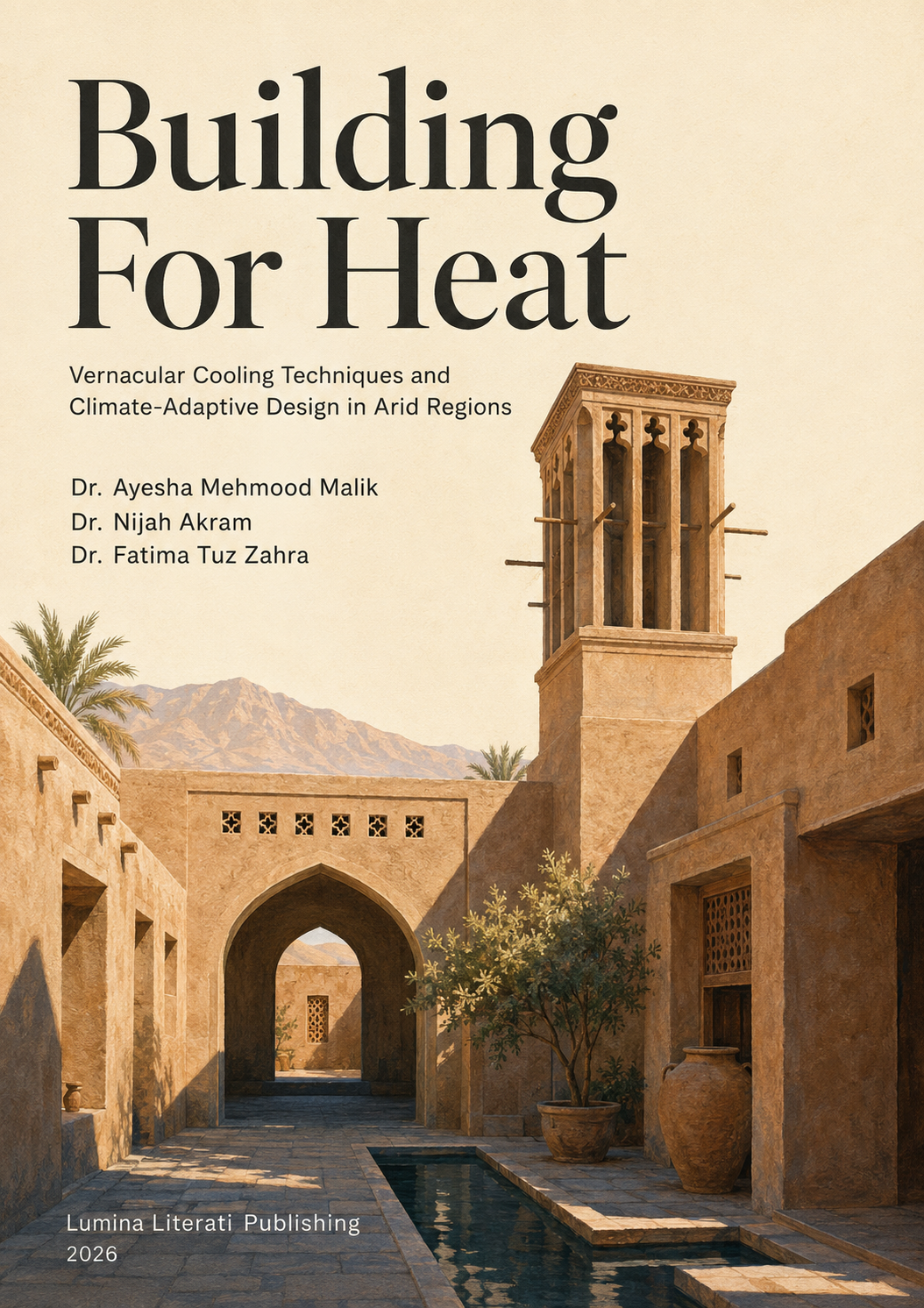
Building For Heat
Vernacular Cooling Techniques and Climate-Adaptive Design in Arid Regions
Book overview
Building For Heat examines how vernacular buildings and settlements moderate heat, and how their environmental principles can inform contemporary design in arid regions. It connects climatic exposure, building physics, patterns of occupation, and access to cooling, with attention to the conditions under which inherited approaches remain useful.
Across five chapters, the book explores shade, courtyards, windcatchers, ventilation, thermal mass, and evaporative cooling; considers ways to evaluate indoor comfort and neighbourhood microclimates; and examines the consequences of standardized construction and dependence on mechanical cooling. It then brings these themes into design, retrofit, and policy discussions for arid environments.
Written for architects, architectural engineers, researchers, students, and practitioners, the book presents the Vernacular Cooling Performance Framework and Passive Cooling Gap Index as proposed tools for organizing evidence and assessment. It emphasizes local validation, climate limits, maintenance, water availability, air quality, and occupant needs when translating vernacular knowledge into climate-adaptive practice.
Inside the book
- 01
Reading Heat
Climate, Aridity, and the Logic of Vernacular Adaptation
- 02
The Cooling Grammar
How Vernacular Buildings Control Heat
- 03
Does It Still Work?
Measuring Performance Across Buildings, Settlements, and Futures
- 04
The Cooling Transition
Standardized Construction, Mechanical Dependence, and Thermal Inequality
- 05
From Inheritance to Implementation
A Climate-Adaptive Design and Policy Toolkit
Free to read
Read Building For Heat
Open the cover to browse the complete book in the online reader, or download the PDF to read offline.
Download the complete PDF229 pages · English · PDF
© 2026 Ayesha Mehmood Malik, Nijah Akram, and Fatima Tuz Zahra. The authors retain full copyright ownership of this work. Published open access under the Creative Commons Attribution-NonCommercial-NoDerivatives 4.0 International (CC BY-NC-ND 4.0) licence. Sharing is permitted for noncommercial purposes with attribution; adapted versions may not be distributed under this licence.
Cite this book
Malik, A. M., Akram, N., & Zahra, F. T. (2026). Building for heat: Vernacular cooling techniques and climate-adaptive design in arid regions. Lumina Literati Publishing. https://doi.org/10.65758/isbn.9786277813628
References
The complete bibliography from the book, with links to the cited sources.
View all 283 references
- Abdelhafez, M. H. H., Altaf, F., Alshenaifi, M., Hamdy, O., & Ragab, A. (2022). Achieving Effective Thermal Performance of Street Canyons in Various Climatic Zones. Sustainability, 14(17), 10780. https://doi.org/10.3390/su141710780
- Abdo, P., Taghipour, R., & Huynh, B. P. (2019). Three-Dimensional Simulation of Wind-Driven Ventilation Through a Windcatcher With Different Inlet Designs. Journal of Thermal Science and Engineering Applications, 12(4). https://doi.org/10.1115/1.4045513
- Abdulbasit, A., Norhati, I., Ahmad, S. S., & Salleh, W. M. N. W. (2014). Courtyard as a Microclimatic Modifier Experimental Study on Actual Site. Applied Mechanics and Materials, 567, 14–19. https://doi.org/10.4028/www.scientific.net/amm.567.14
- Abed, S. S., & Selmane, A. N. E. I. (2023). Spatiotemporal projections of extreme Temperatures over Algeria using CMIP6-MME global climate models outputs. [Preprint]. https://doi.org/10.21203/rs.3.rs-3552530/v1
- Adenaike, F. A. (2024). Erosion and Resurgence of Biohiphilia in the Evolution of Yoruba Architecture. European Journal of Theoretical and Applied Sciences, 2(2), 774–786. https://doi.org/10.59324/ejtas.2024.2(2).69
- Agbenyo, F., Appau, M. W., & Yorgri, E. (2023). Health care support systems for informal settlement rental housing during the COVID-19 season: landlord’s perspective. Housing Care and Support, 26(3/4), 134–151. https://doi.org/10.1108/hcs-02-2022-0007
- Akbar, A., Alnaim, A. S., & Falahat, S. H. (2024). Gendered spaces in islamic cities: Bridging sharia law and urban planning goals. Syariat Akhwal Syaksiyah Jinayah Siyasah and Muamalah, 1(1), 18–35. https://doi.org/10.35335/p2z6ag82
- Al-Jubainawi, A., Mohammad, O. A. M., Al-Maidi, A. A. H., Hussein, Z. A., & Abdelzaher, M. A. (2025). Sustainable Thermal comfort assessment of evaporative cooling systems in hot and arid climates. [Preprint]. https://doi.org/10.21203/rs.3.rs-7707208/v1
- Al-Tamimi, N. (2021). An Optimum Thermal Insulation Type and Thickness for Residential Buildings in Three Different Climatic Regions of Saudi Arabia. Civil Engineering and Architecture, 9(2), 317–327. https://doi.org/10.13189/cea.2021.090205
- Al-Tamimi, N. (2022). Passive Design Strategies for Energy Efficient Buildings in the Arabian Desert. Frontiers in Built Environment, 7. https://doi.org/10.3389/fbuil.2021.805603
- Albatayneh, A., Tayara, T., Jaradat, M., Al-Omary, M., Hindiyeh, M., Alterman, D., & Ishbeytah, M. (2021). Optimum Building Design Variables in a Warm Saharan Mediterranean Climate Zone. International Journal of Photoenergy, 2021, 1–13. https://doi.org/10.1155/2021/6672260
- Aldersoni, A., Albaker, A., Alturki, M., & Said, M. A. (2022). The Impact of Passive Strategies on the Overall Energy Performance of Traditional Houses in the Kingdom of Saudi Arabia. Buildings, 12(11), 1837. https://doi.org/10.3390/buildings12111837
- Ali, A. M., Martinson, B. D., & Al-Maiyah, S. (2022). EFFECTS OF CEILING FANS ON THE THERMAL COMFORT OF STUDENTS IN LEARNING ENVIRONMENTS OF BAYERO UNIVERSITY, KANO, NIGERIA. Bima Journal of Science and Technology (2536-6041), 6(01), 73–87. https://doi.org/10.56892/bimajst.v6i01.315
- Amangeldy, B., Tasmurzayev, N., Imankulov, T., Baigarayeva, Z., Izmailov, N., Riza, T., Abdukarimov, A., Mukazhan, M., & Zhumagulov, B. (2025). AI-Powered Building Ecosystems: A Narrative Mapping Review on the Integration of Digital Twins and LLMs for Proactive Comfort, IEQ, and Energy Management. Sensors, 25(17), 5265. https://doi.org/10.3390/s25175265
- Anber, M. (2024). The Efficiency of Using mineral insulating solution in Build-ings in Egypt. التصميم الدولية, 14(1), 371–379. https://doi.org/10.21608/idj.2023.249201.1099
- Antoszewski, P., Krzyżaniak, M., & Świerk, D. (2022). The Future of Climate-Resilient and Climate-Neutral City in the Temperate Climate Zone. International Journal of Environmental Research and Public Health, 19(7), 4365. https://doi.org/10.3390/ijerph19074365
- Approaches for Passive Cooling Systems for Sustainable Building Design for Various Climates. (2024). Isvs E-Journal, 11(2), 164–177. https://doi.org/10.61275/isvsej-2024-11-02-11
- Asadpour, A. (2020). DEFINING THE CONCEPTS & APPROACHES IN VERNACULAR ARCHITECTURE STUDIES. Nature National Academic Journal of Architecture, 7(2), 241. https://doi.org/10.24252/nature.v7i2a8
- Ashby, M. F. (2021). Renewable materials, natural materials. 267–294. https://doi.org/10.1016/b978-0-12-821521-0.00011-6
- Attia, S., & Carlucci, S. (2015). Impact of different thermal comfort models on zero energy residential buildings in hot climate. Energy and Buildings, 102, 117–128. https://doi.org/10.1016/j.enbuild.2015.05.017
- Attia, S., & Gobin, C. (2020). Climate Change Effects on Belgian Households: A Case Study of a Nearly Zero Energy Building. Energies, 13(20), 5357. https://doi.org/10.3390/en13205357
- Axley, J. W. (2001). Application of natural ventilation for U.S. commercial buildings : climate suitability design strategies [and] methods modeling studies. https://doi.org/10.6028/nist.gcr.01-820
- Ayoub, M., & Elseragy, A. (2017). Parameterization of traditional domed-roofs insolation in hot-arid climates in Aswan, Egypt. Energy & Environment, 29(1), 109–130. https://doi.org/10.1177/0958305X17741285
- Baghel, A., Mehta, P., & Agrawal, A. (2024). VERNACULAR ARCHITECTURE OF JODHPUR: A RESILIENT APPROACH TO SUSTAINABLE ENVIRONMENT. Shodhkosh Journal of Visual and Performing Arts, 5(1). https://doi.org/10.29121/shodhkosh.v5.i1.2024.732
- Balabel, A., Alwetaishi, M., El-Askary, W. A., & Fawzy, H. (2021). Numerical Study on Natural Ventilation Characteristics of a Partial-Cylinder Opening for One-Sided-Windcatcher of Variable Air-Feeding Orientations in Taif, Saudi Arabia. Sustainability, 13(20), 11310. https://doi.org/10.3390/su132011310
- Bande, L., Manandhar, P., Ghazal, R., & Marpu, P. (2020). Characterization of Local Climate Zones Using ENVI-met and Site Data in the City of Al-Ain, UAE. International Journal of Sustainable Development and Planning, 15(5), 751–760. https://doi.org/10.18280/ijsdp.150517
- Bartesaghi Koc, C., Osmond, P., & Peters, A. (2018). Evaluating the cooling effects of green infrastructure: A systematic review of methods, indicators and data sources. Solar Energy, 166, 486–508. https://doi.org/10.1016/j.solener.2018.03.008
- Baumgartner, J., Rodriguez, J., Berkhout, F., Doyle, Y., Ezzati, M., Owuso, G., Quayyum, Z., Solomon, B., Winters, M., Adamkiewicz, G., & Robinson, B. E. (2023). Synthesizing the links between secure housing tenure and health for more equitable cities. Wellcome Open Research, 7, 18. https://doi.org/10.12688/wellcomeopenres.17244.2
- Beating the Heat. (2022). https://doi.org/10.22617/tcs220299-2
- Benavides Santacruz, W. A., & Carranco Munoz, J. M. (2023). Design and Construction of Energy Saving Buildings in Varied Climates: Bioclimatic Approach and Sustainability. Minerva, 2023(Special), 124–135. https://doi.org/10.47460/minerva.v2023ispecial.130
- Benoudjafer, I. (2022). When social practices produce space and create passive cooling systems in hot arid region. Technium Social Sciences Journal, 27, 932–944. https://doi.org/10.47577/tssj.v27i1.5316
- Bensayah, A., Bencheikh, H., & Abdessemed, A. (2019). Mzabite Heritage in Southern Algeria: What Bioclimatic Lessons can Be Learned to Optimize Thermal Comfort? Matec Web of Conferences, 278, 04005. https://doi.org/10.1051/matecconf/201927804005
- Benslimane, N., & Biara, W. R. (2019). Collective ingeniosity in the construction of the popular home: The challenge of the know-how in Sahara. A/Z Itu Journal of Faculty of Architecture, 16(1), 67–81. https://doi.org/10.5505/itujfa.2019.99705
- Benslimane, N., Biara, W. R., & Bougdah, H. (2020). Traditional Versus Contemporary Dwellings in a Desert Environment: The Case of Bechar, Algeria. Environmental Research Engineering and Management, 76(4), 118–130. https://doi.org/10.5755/j01.erem.76.4.21595
- Benzarti Ghedas, H. (n.d.). Modeling and thermal optimization of residential buildings using BIM and based on RTS method : application to traditional and standard house in Sousse city. https://doi.org/10.5821/dissertation-2117-108226
- Berbouche, C., Sriti, L., & Latreche, S. (2023). Vernacular Features in Rural Housing of the Aurassien massif between Traditional Practices and Bioclimatic Aspect. Case study of Ain Zaatout (Algeria). Technium Social Sciences Journal, 39, 730–741. https://doi.org/10.47577/tssj.v39i1.8281
- Berghout, B., & Forgues, D. (2019). Passive Ambient Comfort and Correlation of Strategies and Vernacular Devices for Habitat Design in Arid Zones: The Case of Biskra, Algeria. Buildings, 9(4), 87. https://doi.org/10.3390/buildings9040087
- Bertolin, C., & Perry, J. (2020). World Heritage and Climate Change. https://doi.org/10.3390/books978-3-03943-944-7
- Berwal, A. K., & Yadav, M. (2021). Retrofit Strategy in Existing Building for Implementing Energy Conservation Building Code in India. European Journal of Engineering and Technology Research, 6(5), 134–140. https://doi.org/10.24018/ejeng.2021.6.5.2535
- Beuster, L., Selm, M. V., Venverloo, T., García-Sánchez, C., Duarte, F., & Ledoux, H. (2025). (Slim) Shady – The relative role of buildings and trees in urban shade provision for pedestrians. [Preprint]. https://doi.org/10.21203/rs.3.rs-6966874/v1
- Bhattacharya, Y. (n.d.). Integrating Passive Thermal Comfort Features with Seismic Retrofitting Techniques for Nonengineered Housing in India. https://doi.org/10.26686/wgtn.17011637
- Bobde, V., Akinsanola, A. A., & Taguela, T. N. (2025). Future Intensification of Compound Heatwaves and Socioeconomic Exposure in Africa. Earth S Future, 13(12). https://doi.org/10.1029/2025ef007022
- Bocco Guarneri, A., & Habert, G. (2024). New vernacular construction: Environmental awareness and territorial inclusivity. Iop Conference Series Earth and Environmental Science, 1363(1), 012114. https://doi.org/10.1088/1755-1315/1363/1/012114
- Borah, S., Das, S., & Kumar, C. (2026). Heatwave Impacts and Resilience Mechanisms in Urban Informal Settlements in India: A Systematic Review. Urbanisation, 11(1), 68–85. https://doi.org/10.1177/24557471261452464
- Bravo Morales, G. C. (n.d.). Temperaturas de confort e implicaciones energéticas en viviendas climatizadas mecánicamente. Estudio en clima cálido y húmedo. https://doi.org/10.20868/upm.thesis.32901
- Broomandi, P., Bagheri, M., Fard, A. M., Hadei, M., Abdoli, M., Roshani, A., Fathian, A., Shafiei, S., Leuchner, M., Kumar, P., & Kim, J. R. (2025). The Escalating Threat of Heatwaves in Central Asia: Climate Change Impacts and Public Health Risks. Global Challenges, 9(12). https://doi.org/10.1002/gch2.202500401
- Bulgaria Housing Sector Assessment. (2017). https://doi.org/10.1596/28563
- Bulus, M., Hamid, M., & Lim, Y. W. (2017a). Courtyard as a Passive Cooling Strategy in Buildings. International Journal of Built Environment and Sustainability, 4(1). https://doi.org/10.11113/ijbes.v4.n1.159
- Bulus, M., Hamid, M., & Lim, Y. W. (2017b). Microclimatic Performance of Courtyards in Residential Buildings in Kafanchan-Nigeria. International Journal of Built Environment and Sustainability, 4(3). https://doi.org/10.11113/ijbes.v4.n3.215
- Calautit, J. K., Hughes, B. R., & Nasir, D. S. (2017). Climatic analysis of a passive cooling technology for the built environment in hot countries. Applied Energy, 186, 321–335. https://doi.org/10.1016/j.apenergy.2016.05.096
- Can, R., & Akin, T. C. (2024). A Comparative Analysis of Traditional Turkish Courtyards in Hot-Dry and Hot-Humid Climate. 36(2). https://doi.org/10.33948/jap-ksu-36-2-4
- Carlos, G., Ribeiro, T., Achenza, M., de Oliveira, C. C. F., & Varum, H. (2022). Literature review on earthen vernacular heritage: contributions to a referential framework. Built Heritage, 6(1). https://doi.org/10.1186/s43238-022-00061-1
- Carlucci, S., Bai, L., de Dear, R., & Yang, L. (2018). Review of adaptive thermal comfort models in built environmental regulatory documents. Building and Environment, 137, 73–89. https://doi.org/10.1016/j.buildenv.2018.03.053
- Carlucci, S., Erba, S., Pagliano, L., & de Dear, R. (2021). ASHRAE Likelihood of Dissatisfaction: A new right-here and right-now thermal comfort index for assessing the Likelihood of dissatisfaction according to the ASHRAE adaptive comfort model. Energy and Buildings, 250, 111286. https://doi.org/10.1016/j.enbuild.2021.111286
- Carlucci, S., Pagliano, L., & Sangalli, A. (2014). Statistical analysis of the ranking capability of long-term thermal discomfort indices and their adoption in optimization processes to support building design. Building and Environment, 75, 114–131. https://doi.org/10.1016/j.buildenv.2013.12.017
- Carrillo Salas, E. A. (n.d.). Caracterización de sistemas de enfriamiento evaporativo indirecto en cubiertas para obtener confort higrotérmico en edificaciones en climas cálido-húmedos. https://doi.org/10.24275/uama.5761.7658
- Cavus, M. (2024). Integration Smart Grids, Distributed Generation, and Cybersecurity: Strategies for Securing and Optimizing Future Energy Systems. [Preprint]. https://doi.org/10.20944/preprints202410.1225.v1
- Chang, X. (2024). Climate-Responsive Architectural Design: Analyzing and Adapting to Diverse Climates in U.S. Cities. Highlights in Science Engineering and Technology, 113, 115–130. https://doi.org/10.54097/kw0e0c23
- Chen Austin, M. A. (2022). Análisis de la influencia de la masa térmica en climas tropicales mediante simulación con Energy 2D. Prisma Tecnológico, 13(1), 27–35. https://doi.org/10.33412/pri.v13.1.3262
- Chohan, A. H., Awad, J., Ismail, M. A., & Arar, M. S. (2024). Integrating Technology and Heritage Design for Climate Resilient Courtyard House in Arid Region. Civil Engineering Journal, 10(3), 928–952. https://doi.org/10.28991/cej-2024-010-03-018
- Cojocaru, A., & Isopescu, D. N. (2021). Passive Strategies of Vernacular Architecture for Energy Efficiency. Bulletin of the Polytechnic Institute of Iași Construction Architecture Section, 67(2), 33–44. https://doi.org/10.2478/bipca-2021-0013
- Compendium to the Primer for Space Cooling. (2020). https://doi.org/10.1596/34568
- Cooke, P. W. (1979). Research and innovation in the building regulatory process. https://doi.org/10.6028/nbs.sp.552
- Cornelis, M. (2020). Energy Efficiency, the Overlooked Climate Emergency Solution. Economic Policy, 15(2), 48–67. https://doi.org/10.18288/1994-5124-2020-2-48-67
- Cortiços, N. D. (2026). Integrating Vernacular Wisdom and Contemporary Performance in Mediterranean Residential Architecture: Santarém, Portugal Case Study. Advances in Science and Technology, 173, 33–54. https://doi.org/10.4028/p-ja4lgw
- Crowe, T. (2013). Public-Private roundtables at the fourth Clean Energy Ministerial, 17-18 April 2013, New Delhi, India. https://doi.org/10.2172/1087113
- D’Amanzo, M., Ganem, C., & Mercado, M. V. (2022). Comportamiento térmico y balance energético neto de un edificio de oficina de Mendoza con tendencia hacia la energía casi nula (nZEB). Arquitecno, (20), 22. https://doi.org/10.30972/arq.0206256
- de Dear, R. J., Akimoto, T., Arens, E. A., Brager, G., Candido, C., Cheong, K. W. D., Li, B., Nishihara, N., Sekhar, S. C., Tanabe, S., Toftum, J., Zhang, H., & Zhu, Y. (2013). Progress in thermal comfort research over the last twenty years. Indoor Air, 23(6), 442–461. https://doi.org/10.1111/ina.12046
- de la Rue du Can, S., & Covary, T. (2023). South Africa National Cooling Plan. https://doi.org/10.2172/1973109
- de la Rue du Can, S., Pudleiner, D., Jones, D., & Khan, A. (2017). Energy Efficiency Roadmap for Uganda, Making Energy Efficiency Count. Executive Summary. https://doi.org/10.2172/1398496
- Dhaka, S., Mathur, J., Brager, G., & Honnekeri, A. (2015). Assessment of thermal environmental conditions and quantification of thermal adaptation in naturally ventilated buildings in composite climate of India. Building and Environment, 86, 17–28. https://doi.org/10.1016/j.buildenv.2014.11.024
- Du, X. (2019a). Passive cooling techniques. Architecture and the Built Environment. https://doi.org/10.59490/abe.19.10.4104
- Du, X. (2019b). A review of thermal comfort. Architecture and the Built Environment. https://doi.org/10.59490/abe.19.10.4103
- Du, X. (2019c). Space Design for Thermal Comfort and Energy Efficiency in Summer. Architecture and the Built Environment. https://doi.org/10.59490/abe.19.10.4101
- Duan, Z., Sun, Y., Wang, M., Hu, R., & Dong, X. (2022). Evaluation of Mixed-Mode Ventilation Thermal Performance and Energy Saving Potential from Retrofitting a Beijing Office Building. Buildings, 12(6), 793. https://doi.org/10.3390/buildings12060793
- El Azhary, K., Ouakarrouch, M., Laaroussi, N., & Garoum, M. (2021). Energy Efficiency of a Vernacular Building Design and Materials in Hot Arid Climate: Experimental and Numerical Approach. International Journal of Renewable Energy Development, 10(3), 481–494. https://doi.org/10.14710/ijred.2021.35310
- El Harrouni, K. (2024). Traditional Earth Architecture as a Tool for Sustainability and Adaptation to Climate Change of Heat and Cold Extremes. 40, 218–225. https://doi.org/10.21741/9781644903117-23
- El-Bastawissi, I. Y., Raslan, R., Mohsen, H., & Zeayter, H. (2022). Conservation of Beirut’s Urban Heritage Values Through the Historic Urban Landscape Approach. Urban Planning, 7(1). https://doi.org/10.17645/up.v7i1.4762
- Elantary, A. R., & Eldeeb, A. S. (2023). Courtyard Existence between the Past and the Present, Case Study: Central Region, Saudi Arabia. Civil Engineering and Architecture, 11(2), 675–695. https://doi.org/10.13189/cea.2023.110211
- Elmualim, A. A., & Awbi, H. B. (2003). Post occupancy evaluation of a building employing windcatchers for summer ventilation. Facilities, 21(13/14), 323–332. https://doi.org/10.1108/02632770310507980
- Elshafei, G. (2021). Bioclimatic Design Strategies Recommendations for Thermal Comfort Using Mahoney Tables in Hot Desert Bioclimatic Region. Journal of Urban Research, 39(1), 59–74. https://doi.org/10.21608/jur.2021.39201.1019
- Elshafei, G., Zeleňáková, M., Katunský, D., & Negm, A. (2024). Architectural Design Recommendations Based on Bioclimatic Features Using Climate Consultant and Mahony Tables Strategies. Civil and Environmental Engineering, 20(1), 600–620. https://doi.org/10.2478/cee-2024-0046
- Emmanuel, R., Jalal, M., Ogunfuyi, S., Maharoof, N., Zala, M., Perera, N., & Ratnayake, R. (2023). Urban Heat Risk: Protocols for Mapping and Implications for Colombo, Sri Lanka. Atmosphere, 14(2), 343. https://doi.org/10.3390/atmos14020343
- Energy-Efficient Buildings. (2023). 1391–1391. https://doi.org/10.1007/978-3-031-25984-5_300781
- Fahmy, M., Mahmoud, S., Elwy, I., & Mahmoud, H. (2020). A Review and Insights for Eleven Years of Urban Microclimate Research Towards a New Egyptian ERA of Low Carbon, Comfortable and Energy-Efficient Housing Typologies. Atmosphere, 11(3), 236. https://doi.org/10.3390/atmos11030236
- Fahmy, M., Sharples, S., & Al-Kady, A. W. (2008). Extensive review for urban climatology: definitions, aspects and scales. The International Conference on Civil and Architecture Engineering, 7(7), 550–593. https://doi.org/10.21608/iccae.2008.45414
- Falchetta, G., & Mistry, M. N. (2021). The role of residential air circulation and cooling demand for electrification planning: Implications of climate change in sub-Saharan Africa. Energy Economics, 99, 105307. https://doi.org/10.1016/j.eneco.2021.105307
- Fang, K., & Wu, Y. (2025). Key barriers and decision supports in revitalizing heritage buildings from investors’ perspective in China: A case study in Guangzhou, China. Plos One, 20(1), e0311757. https://doi.org/10.1371/journal.pone.0311757
- Feinbaum, R. (1981). California experience with energy conservation standards for buildings. https://doi.org/10.2172/5912448
- Felimban, A., Knaack, U., & Konstantinou, T. (2023). Evaluating Savings Potentials Using Energy Retrofitting Measures for a Residential Building in Jeddah, KSA. Buildings, 13(7), 1645. https://doi.org/10.3390/buildings13071645
- Femmam, A., & Sriti, L. (2022). Towards Sustainable Residential Buildings in Hot Arid Climates: Learning from Traditional Architecture of the Souf Region (Algeria). Technium Social Sciences Journal, 37, 683–700. https://doi.org/10.47577/tssj.v37i1.7724
- Feng, Z., Zheng, L., & Zhu, Y. (2026). Calibration strategies and measurement frameworks for low-cost particulate matter sensors: a comprehensive review. Measurement Science and Technology, 37(20), 202001. https://doi.org/10.1088/1361-6501/ae6298
- Ferhat, Z., & Zemmouri, N. (2022). Study of the Effects of Dead-End Street Configuration on Pedestrian Hygrothermal Comfort Using an Advanced Simulation Method. Case study: Sahat El Houria District Biskra, Algeria. International Journal of Innovative Studies in Sociology and Humanities, 7(11), 26–41. https://doi.org/10.20431/2456-4931.071103
- Fezai, M., Tashtoush, B., Ghoulem, M., Elmoueddeb, K., & Elakhdar, M. (2023). Investigation of the effectiveness of top-down natural ventilation of a poultry building in a hot-summer mediterranean climate. Building Services Engineering Research and Technology, 45(1), 53–73. https://doi.org/10.1177/01436244231215454
- Foroozesh, J., Hosseini, S. H., Ahmadian Hosseini, A. J., Parvaz, F., Elsayed, K., Uygur Babaoğlu, N., Hooman, K., & Ahmadi, G. (2022). CFD modeling of the building integrated with a novel design of a one-sided wind-catcher with water spray: Focus on thermal comfort. Sustainable Energy Technologies and Assessments, 53, 102736. https://doi.org/10.1016/j.seta.2022.102736
- Galan, J., Bourgeau, F., & Pedroli, B. (2020). A Multidimensional Model for the Vernacular: Linking Disciplines and Connecting the Vernacular Landscape to Sustainability Challenges. Sustainability, 12(16), 6347. https://doi.org/10.3390/su12166347
- Gamage, A., Upadhyay, A., & Hyde, R. (2025). Exploring Bioinspired Climatic Design Strategies for a Low-Carbon Future: A Case Study of a Hot–Humid Climate in Sri Lanka. Biomimetics, 10(10), 671. https://doi.org/10.3390/biomimetics10100671
- Gelet, G. B., Woldemichael, S. M., & Beyene, E. G. (2023). The Spatial Pattern of Deprivations and Inequalities: The Case of Addis Ababa, Ethiopia. Sustainability, 15(3), 1934. https://doi.org/10.3390/su15031934
- Ghertner, D. A. (2026). Manufactured housing and the dialectics of enclosure and commoning. Urban Studies, 63(10), 2299–2306. https://doi.org/10.1177/00420980261444506
- Ghoulem, M., El Moueddeb, K., Nehdi, E., Zhong, F., & Calautit, J. (2020). Design of a Passive Downdraught Evaporative Cooling Windcatcher (PDEC-WC) System for Greenhouses in Hot Climates. Energies, 13(11), 2934. https://doi.org/10.3390/en13112934
- Giridharan, R., & Emmanuel, R. (2018). The impact of urban compactness, comfort strategies and energy consumption on tropical urban heat island intensity: A review. Sustainable Cities and Society, 40, 677–687. https://doi.org/10.1016/j.scs.2018.01.024
- González Vásquez, M. R., & Molina-Prieto, L. F. (2018). Envolvente arquitectónica: un espacio para la sostenibilidad. Arkitekturax Visión Fua, 1(1), 49–61. https://doi.org/10.29097/26191709.201
- Govertsen, K. J. (n.d.). Measuring heat vulnerability with models, maps, and workshops. https://doi.org/10.17760/d20592326
- Grichting Solder, A., & Alfaraidy, M. (2024). Women, sustainable development and heritage regeneration in Qatar and Bahrain. International Journal of Architectural Research Archnet-Ijar, 18(3), 481–500. https://doi.org/10.1108/arch-09-2023-0263
- Haggerty, B., DiLeo, K., Nonnamaker, M., Thompson, J., & Walters, J. (2024). Health impacts of excessive heat in Multnomah County, OR, 2021. Environmental Research Health, 2(4), 045005. https://doi.org/10.1088/2752-5309/ad7976
- Hajar, M. U., Putra, D. D., Perdana, A., Ibrohim, & Nur, H. (2025). Climate-responsive strategies for sustainable building design: A case study of the Javanese indigenous house in Indonesia. Iop Conference Series Earth and Environmental Science, 1574(1), 012028. https://doi.org/10.1088/1755-1315/1574/1/012028
- Handoko, J. P. S., & Ikaputra, I. (2019). PRINSIP DESAIN ARSITEKTUR BIOKLIMATIK PADA IKLIM TROPIS. Langkau Betang Jurnal Arsitektur, 6(2), 87–100. https://doi.org/10.26418/lantang.v6i2.34791
- Hao, S., Yu, C., Xu, Y., & Song, Y. (2019). The Effects of Courtyards on the Thermal Performance of a Vernacular House in a Hot-Summer and Cold-Winter Climate. Energies, 12(6), 1042. https://doi.org/10.3390/en12061042
- Hassan, M. (2023). Adaptive Reuse of Historic Buildings towards a Resilient Heritage. https://doi.org/10.5772/intechopen.110280
- He, C., Tian, W., & Shao, Z. (2022). Impacts of Courtyard Envelope Design on Energy Performance in the Hot Summer–Cold Winter Region of China. Buildings, 12(2), 173. https://doi.org/10.3390/buildings12020173
- Hernández López, H. (n.d.). Variables técnicas y económicas asociadas al acondicionamiento térmico de viviendas : una mirada centrada en el desempeño de la vivienda social chilena. https://doi.org/10.20868/upm.thesis.64631
- Herrera Sosa, L. C. (2014). Eficiencia de estrategias de enfriamiento pasivo en clima cálido seco. Revista De Arquitectura (Bogotá), 16(1), 86–95. https://doi.org/10.14718/revarq.2014.16.10
- Hesse, S. V., Krayenhoff, E. S., Gaur, A., Lu, H., & Martilli, A. (2025). Different urban heat mitigation strategies are optimal day versus night and for distinct synoptic weather types. Environmental Research Climate, 4(4), 045006. https://doi.org/10.1088/2752-5295/ae095c
- Hmood, K. F. (2019). Urban and Architectural Heritage Conservation within Sustainability. https://doi.org/10.5772/intechopen.78244
- Holzer, P., & Stern, P. (Eds.). (2022). International Energy Agency EBC Annex 80 — Resilient Cooling of Buildings — State of the Art Review. Institute of Building Research & Innovation. https://doi.org/10.52776/coxk4763
- Hossein Ghadiri, M., Lukman, N., Ibrahim, N., & Farid Mohamed, M. (2014). Applying Computational Fluid Dynamic to Evaluate the Performance of Four-Sided Rectangular Wind Catcher with Different Height. Research Journal of Applied Sciences Engineering and Technology, 7(3), 502–509. https://doi.org/10.19026/rjaset.7.282
- Howden-Chapman, P., Bennett, J., Edwards, R., Jacobs, D., Nathan, K., & Ormandy, D. (2023). Review of the Impact of Housing Quality on Inequalities in Health and Well-Being. Annual Review of Public Health, 44(1), 233–254. https://doi.org/10.1146/annurev-publhealth-071521-111836
- Huang, J., Tang, X., Jones, P., Hao, T., Tundokova, R., Walmsley, C., Lannon, S., Frost, P., & Jackson, J. (2024). Mapping pedestrian heat stress in current and future heatwaves in Cardiff, Newport, and Wrexham in Wales, UK. Building and Environment, 251, 111168. https://doi.org/10.1016/j.buildenv.2024.111168
- Hulley, G., Shivers, S., Wetherley, E., & Cudd, R. (2019). New ECOSTRESS and MODIS Land Surface Temperature Data Reveal Fine-Scale Heat Vulnerability in Cities: A Case Study for Los Angeles County, California. Remote Sensing, 11(18), 2136. https://doi.org/10.3390/rs11182136
- Ibrahim, I. (2018). ECO-TRADITIONAL COURTYARD HOUSES IN UAE: A CASE STUDY OF THE SHARJAH MUSEUMS. 1, 15–24. https://doi.org/10.2495/arc180021
- Ibrahim, M. (2021). Mitigation strategies of the urban heat island over Greater Cairo Metropolitan Area, Egypt utilizing ENVI-met model. Catrina the International Journal of Environmental Sciences, 35–47. https://doi.org/10.21608/cat.2022.214538
- Ibrahim, Y. (2025). Thermal, energy and daylighting performance of solar envelope courtyard blocks in Cairo, Egypt. Iop Conference Series Earth and Environmental Science, 1530(1), 012007. https://doi.org/10.1088/1755-1315/1530/1/012007
- Iranfar, M., & Al-Din, S. S. M. (2020). The Cognition of the Architectural Styles Role on Thermal Performance in Houses of Semi-Arid Climates: Analysis of Building Envelope Materials. Civil Engineering and Architecture, 8(5), 929–941. https://doi.org/10.13189/cea.2020.080520
- Iwuanyanwu, O., Gil-Ozoudeh, I., Okwandu, A. C., & Ike, C. S. (2024). Cultural and social dimensions of green architecture: Designing for sustainability and community well-being. International Journal of Applied Research in Social Sciences, 6(8), 1951–1968. https://doi.org/10.51594/ijarss.v6i8.1477
- Jayaweera, N., & Rajapaksha, U. (2016). Diagnosing thermal behaviour of the administration block of the University of Colombo for retrofitting passive design strategies. Bhumi the Planning Research Journal, 3(1), 25. https://doi.org/10.4038/bhumi.v3i1.12
- Ji, H., Wu, S., Ye, B., Wang, S., Chen, Y., & Deng, J. Y. (2023). Exploring the Implementation Path of Passive Heat-Protection Design Heritage in Lingnan Buildings. Buildings, 13(12), 2954. https://doi.org/10.3390/buildings13122954
- Jiang, T., Krayenhoff, E. S., Martilli, A., Nazarian, N., Stone, B., & Voogt, J. A. (2025). Prioritizing urban heat adaptation infrastructure based on multiple outcomes: Comfort, health, and energy. Proceedings of the National Academy of Sciences, 122(19). https://doi.org/10.1073/pnas.2411144122
- Jomehzadeh, F., Nejat, P., Calautit, J. K., Yusof, M. B. M., Zaki, S. A., Hughes, B. R., & Yazid, M. N. A. W. M. (2017). A review on windcatcher for passive cooling and natural ventilation in buildings, Part 1: Indoor air quality and thermal comfort assessment. Renewable and Sustainable Energy Reviews, 70, 736–756. https://doi.org/10.1016/j.rser.2016.11.254
- Jones, C. G., Adloff, F., Booth, B., Cox, P., Eyring, V., Friedlingstein, P., Frieler, K., Hewitt, H., Jeffery, H., Joussaume, S., Koenigk, T., Lawrence, B. N., O’Rourke, E., Roberts, M., Sanderson, B., Séférian, R., Somot, S., Vidale, P. L., van Vuuren, D., … Zaehle, S. (2024). Bringing it all together: Science and modelling priorities to support international climate policy. [Preprint]. https://doi.org/10.5194/egusphere-2024-453
- Kalakoski, I., & Thorgrimsdottir, S. (2022). Learning from the secondary: Rethinking architectural conservation through ‘barn architecture.’ Journal of Material Culture, 28(2), 199–220. https://doi.org/10.1177/13591835221123953
- Kamal, M. A. (2021). ASSESSMENT OF TRADITIONAL ARCHITECTURE OF LUCKNOW WITH REFERENCE TO CLIMATIC RESPONSIVENESS. Architecture and Engineering, 6(1), 19–31. https://doi.org/10.23968/2500-0055-2021-6-1-19-31
- Kamalipour, H., & Zaroudi, M. (2014). Sociocultural Context and Vernacular Housing Morphology: A Case Study. Current Urban Studies, 02(03), 220–232. https://doi.org/10.4236/cus.2014.23022
- Keravec-Balbot, T., Schoetter, R., & Masson, V. (2026). Adapting cities to heat: an umbrella review of the effectiveness of urban cooling measures across climates. Environmental Research Letters, 21(14), 143003. https://doi.org/10.1088/1748-9326/ae870e
- Khalil, M., & Gira, A. (2012). The Bio-Climatic Analysis and Thermal Performance of Residential Building in Upper Egypt A Case Study, “East El-Owauinat Region.” The International Conference on Civil and Architecture Engineering, 9(9), 1–20. https://doi.org/10.21608/iccae.2012.44239
- Khan, H. M., Al-Saadi, S., & Al-Hashim, A. (2025). Numerical Simulation of Ventilation Potential in Traditional Omani House: Bait Al Khandaq as an example. The Journal of Engineering Research, 18(2), 91–100. https://doi.org/10.53540/tjer.vol18iss2pp91-100
- Kourgiozou, V., Commin, A., Dowson, M., Rovas, D., & Mumovic, D. (2021). Scalable pathways to net zero carbon in the UK higher education sector: A systematic review of smart energy systems in university campuses. Renewable and Sustainable Energy Reviews, 147, 111234. https://doi.org/10.1016/j.rser.2021.111234
- Krezlik, A. (2021). Many beginnings: the thought, thinkers and actions behind the planet-oriented architecture. Budownictwo I Architektura / Civil and Architectural Engineering, 20(1), 005–024. https://doi.org/10.35784/bud-arch.2021
- Krisdianto, J., Defiana, I., Irvansjah, I., & Prasetyo, E. Y. (2011). THE CONCEPT OF HOUSING WITH ARCHITECTURE BIOCLIMATIC APPROACH THAT CONSIDER HUMAN PERSPECTIVE TO OBTAIN A BETTER SETTLEMENT AND CONSERVATION ENERGY. Journal of Architecture&environment, 10(2), 149. https://doi.org/10.12962/j2355262x.v10i2.a510
- Kumar, P., Corada Perez, K., Biswal, A., Sun, H., Dwivedi, A. K., Hama, S., Khalili, S., Ahlawat, A., Andrade, M. D. F., Alves, R. A., dos Santos, E. A. A., Athanassiadou, M., Ribeiro, C. B., Bhusal, P., Bucalem, M. L., Buchanan, B. G., Candido, L. F., Cao, S. J., Casteli Figueiredo Gallardo, A. L., … Yao, R. (2026). Overlooked considerations in prescribing green and blue infrastructure solutions for urban environments. The Innovation, 7(5), 101184. https://doi.org/10.1016/j.xinn.2025.101184
- Květoňová, V., Pánek, J., Geletič, J., Šimáček, P., & Lehnert, M. (2024). Where is the heat threat in a city? Different perspectives on people-oriented and remote sensing methods: The case of Prague. Heliyon, 10(16), e36101. https://doi.org/10.1016/j.heliyon.2024.e36101
- Leão, A. L. F., Silva, M. F., Goulardins, G. S., Silva, A. A. D. P. D., Wang, Y., Boda, D., Velardi, M., Rios-Hernandez, M., Neto, P. N., Florindo, A. A., & Reis, R. S. (2026). Affordable housing, health, and climate resilience: Insights from residents and stakeholders in the Brazil’s Minha Casa, Minha Vida Program. [Preprint]. https://doi.org/10.21203/rs.3.rs-8853378/v1
- Lee, K., Cooper, A., Wood, L., Shuster, M., Hoskins, A., Worley, C., Barbato, K., Kates-Garnick, B., & McCafferty, M. (2022). The Role of Innovation in the Electric Utility Sector. https://doi.org/10.2172/1864544
- León Rojas, J. J. (2019). Elementos de la arquitectura patronal como reguladores medioambientales: Interpretación del volumen, corredor y patio como clave para ampliar y renovar el conjunto patronal. Anales De Arquitectura Uc, (1), 150–163. https://doi.org/10.7764/aa.2019.13
- Li, A., Toll, M., & Bentley, R. (2022). Social vulnerability indicators to the Health Impacts of Climate Change: A Scoping Review. [Preprint]. https://doi.org/10.31235/osf.io/qxge3
- Li, C., Zwiers, F. W., Zhang, X., Fischer, E. M., Du, F., Liu, J., Wang, J., Liang, Y., Li, T., & Yuan, L. (2025). Constraining the entire Earth system projections for more reliable climate change adaptation planning. Science Advances, 11(9). https://doi.org/10.1126/sciadv.adr5346
- Li, H. (n.d.). Characteristics, effects and mitigation of urban heat island in developing urban regions. https://doi.org/10.54598/001070
- Li, J., Calautit, J. K., & Jimenez-Bescos, C. (2023). Experiment and Numerical Investigation of a Novel Flap Fin Louver Windcatcher for Multidirectional Natural Ventilation and Passive Technology Integration. [Preprint]. https://doi.org/10.2139/ssrn.4364216
- Li, W., Xu, X., Yao, J., Makvandi, M., Chen, Q., Sun, Z., & Yuan, P. F. (2024). Natural Ventilation Cooling Effectiveness Classification for Building Design Addressing Climate Characteristics. [Preprint]. https://doi.org/10.21203/rs.3.rs-4175529/v1
- Li, Z., Diao, J., Lu, S., Tao, C., & Krauth, J. (2022). Exploring a Sustainable Approach to Vernacular Dwelling Spaces with a Multiple Evidence Base Method: A Case Study of the Bai People’s Courtyard Houses in China. Sustainability, 14(7), 3856. https://doi.org/10.3390/su14073856
- Libertun de Duren, N. R., López Benítez, B., Bonilla, J. P., Regalia, F., Bilal, U., Ibáñez, A. M., Schady, N., Chauvin, J. P., Pinillos, J., Hoffmann, B., Medina, M. P., Blackman, A., Savedoff, W. D., Slesinski, C., Cortínez-O’Ryan, A., Indvik, K., Mazariego, M., Morais, L. M. D. O., Vidaña-Pérez, D., … Martinez-Herrera, E. (2022). Inclusive Cities: Healthy Cities for All. https://doi.org/10.18235/0004459
- Lidón de Miguel, M., García-Soriano, L., Mileto, C., & Trizio, F. (2020). BALANCING TRADITION AND DEVELOPMENT? EARLY TRIALS OF A METHODOLOGY FOR STUDYING VERNACULAR ARCHITECTURE AND ITS TRANSFORMATIONS. The International Archives of the Photogrammetry Remote Sensing and Spatial Information Sciences, XLIV-M-1–2020, 781–788. https://doi.org/10.5194/isprs-archives-xliv-m-1-2020-781-2020
- Liu, M., Jimenez-Bescos, C., & Calautit, J. (2022). CFD investigation of a natural ventilation wind tower system with solid tube banks heat recovery for mild-cold climate. Journal of Building Engineering, 45, 103570. https://doi.org/10.1016/j.jobe.2021.103570
- Lozoya-Peral, A., Pérez-Carramiñana, C., Galiano-Garrigós, A., González-Avilés, Á. B., & Emmitt, S. (2023). Exploring Energy Retrofitting Strategies and Their Effect on Comfort in a Vernacular Building in a Dry Mediterranean Climate. Buildings, 13(6), 1381. https://doi.org/10.3390/buildings13061381
- Lynda, D., Logeswari, G., Tamilarasi, K., & Rakesh, S. (2025). Hybrid Bayesian deep learning model for predicting urban heat island intensity in African cities. Scientific Reports, 15, 31280. https://doi.org/10.1038/s41598-025-13492-4
- Ma’bdeh, S. N., Al-Zghoul, A., Alradaideh, T., Bataineh, A., & Ahmad, S. (2020). Simulation study for natural ventilation retrofitting techniques in educational classrooms – A case study. Heliyon, 6(10), e05171. https://doi.org/10.1016/j.heliyon.2020.e05171
- Mangeli, M., Aram, F., & Abouei, R. (2024). Energy consumption and thermal comfort of rock-cut and modern buildings. Heliyon, 10(14), e34217. https://doi.org/10.1016/j.heliyon.2024.e34217
- Manshour, S., & Lehmann, S. (2026). A systematic review of passive cooling strategies integrating traditional wisdom and modern innovations for sustainable development in arid urban environments. Discover Cities, 3, 42. https://doi.org/10.1007/s44327-026-00204-4
- Manyele, S., & Anicetus, H. (2025). Building Climate‐Resilient Healthcare in Tanzania: Strengthening Infrastructure, Sustainability and Policy for Inclusive Health Security. Climate Resilience and Sustainability, 4(2). https://doi.org/10.1002/cli2.70024
- Marji, N., Chen, L., Ravi Kumar, A., Emir Isik, G., & Kohout, M. (2024). Transitional Typologies of Refugee Camps in Jordan. https://doi.org/10.5772/intechopen.1004922
- Martinovic, S., & Zecevic, N. (2023). Energy efficiency features of vernacular house in Bosnia and Herzegovina: A case study of Svrzo’s house complex. Heritage and Sustainable Development Issn 2712-0554, 5(1), 77–98. https://doi.org/10.37868/hsd.v5i1.140
- Masoud, B. G. (n.d.). Enhancement of pedestrian comfort in the hot climate city of Jeddah. https://doi.org/10.5821/dissertation-2117-354949
- Masoud, B. G., Coch Roura, H., & Beckers, B. (2019). The Oasis effect concept in hot desert climate cities: densifying and compacting around metro stations to enhance pedestrian comfort. https://doi.org/10.5821/ctv.8641
- Massia, M., & Devillers, P. (2023). Energy Performance of Vernacular Architecture in Various Desert Climates. Journal of Salutogenic Architecture, 2(1), 19–30. https://doi.org/10.38027/jsalutogenic_vol2no1_2
- May-Tzuc, O., Jiménez-Torres, M. A., Cruz y Cruz, A. D. R., Canul-Turriza, R., Andrade-Durán, J. E., & Noh-Pat, F. (2023). Viabilidad del modelo de confort térmico adaptativo bajo condiciones de clima cálido subhúmedo: Ahorro energético en refrigeración en Campeche, México. Revista Hábitat Sustentable, 120–131. https://doi.org/10.22320/07190700.2023.13.01.10
- Michoud, B., & Hafner, M. (2021). Energy Access in Sub-Saharan Africa: General Context. 7–26. https://doi.org/10.1007/978-3-030-75829-5_2
- Modi, S., Isyaku, I. S., Kogi, T. M., Danladi, A., Sambo, B. P., & Gado, E. A. (2022). Orientation as a panacea for improving the Thermal Performance of a fully enclosed courtyard in a typical tropical climate. Journal of Environmental Science and Economics, 1(3), 51–59. https://doi.org/10.56556/jescae.v1i3.240
- Mohamed, M. A. A., & El-Amin, M. F. (2022). Inward and Outward Opening Properties of One-Sided Windcatchers: Experimental and Analytical Evaluation. Sustainability, 14(7), 4048. https://doi.org/10.3390/su14074048
- Mohamed, M., Othman, A., Abotalib, A. Z., & Majrashi, A. (2021). Urban Heat Island Effects on Megacities in Desert Environments Using Spatial Network Analysis and Remote Sensing Data: A Case Study from Western Saudi Arabia. Remote Sensing, 13(10), 1941. https://doi.org/10.3390/rs13101941
- Monzur, N., & Jany, M. R. (2022). Sustaining Traditionalism: an investigation into the vernacular transformation of the Khasi tribal houses of Sylhet. Archnet-Ijar International Journal of Architectural Research, 17(1), 70–87. https://doi.org/10.1108/arch-12-2021-0352
- Mossad, G., Ezzat, H., & Talaat, N. (2016). NATURAL VENTILATION IN OLD ISLAMIC HOUSES THE STUDY OF COURTYARD IN OLD CAIRO CASE STUDY: Journal of Al-Azhar University Engineering Sector, 11(39), 601–615. https://doi.org/10.21608/auej.2016.19463
- Mushtaha, E. S., Noguchi, T., & Enai, M. (2005). DESIGN STRATEGIES FOR THE RESIDENCES OF GAZA CITY(Architectural Planning and Design). Aij Journal of Technology and Design, 11(22), 363–368. https://doi.org/10.3130/aijt.11.363
- Mwoka, M., Biermann, O., Ettman, C. K., Abdalla, S. M., Ambuko, J., Pearson, M., Rashid, S. F., Zeinali, Z., Galea, S., Valladares, L. M., & Mberu, B. (2021). Housing as a Social Determinant of Health: Evidence from Singapore, the UK, and Kenya: the 3-D Commission. Journal of Urban Health, 98(S1), 15–30. https://doi.org/10.1007/s11524-021-00557-8
- Nasrollahi, N., Ghosouri, A., Khodakarami, J., & Taleghani, M. (2020). Heat-Mitigation Strategies to Improve Pedestrian Thermal Comfort in Urban Environments: A Review. Sustainability, 12(23), 10000. https://doi.org/10.3390/su122310000
- Nasrollahi, N., Hatami, M., Khastar, S. R., & Taleghani, M. (2017). Numerical evaluation of thermal comfort in traditional courtyards to develop new microclimate design in a hot and dry climate. Sustainable Cities and Society, 35, 449–467. https://doi.org/10.1016/j.scs.2017.08.017
- Nasrollahi, N., Namazi, Y., & Taleghani, M. (2021). The effect of urban shading and canyon geometry on outdoor thermal comfort in hot climates: A case study of Ahvaz, Iran. Sustainable Cities and Society, 65, 102638. https://doi.org/10.1016/j.scs.2020.102638
- Nazarian, N., Krayenhoff, S., Bechtel, B., Hondula, D., Paolini, R., Vanos, J. K., Cheung, T., Chow, W., Dear, R. D., Jay, O., Lee, J. K., Martilli, A., Middel, A., Norford, L. K., Sadeghi, M., Santamouris, M., & Schiavon, S. (2021). Integrated Assessment of Urban Overheating Impacts on Human Life. [Preprint]. https://doi.org/10.1002/essoar.10508877.2
- Nazir, H., Abro, S., & Iqbal, A. (2024). Windcatchers as a Green Ventilation Device: A Lost Tale From Hyderabad, Sindh, Pakistan. Journal of Asian and African Studies, 60(6), 3526–3544. https://doi.org/10.1177/00219096241230486
- Necira, H., Matallah, M. E., Bouzaher, S., Mahar, W. A., & Ahriz, A. (2024). Effect of Street Asymmetry, Albedo, and Shading on Pedestrian Outdoor Thermal Comfort in Hot Desert Climates. Sustainability, 16(3), 1291. https://doi.org/10.3390/su16031291
- Negev, M., Khreis, H., Rogers, B. C., Shaheen, M., & Erell, E. (2020). City design for health and resilience in hot and dry climates. BMJ, m3000. https://doi.org/10.1136/bmj.m3000
- Nejat, P., Calautit, J. K., Majid, M. Z. A., Hughes, B. R., & Jomehzadeh, F. (2016a). Anti-short-circuit device: A new solution for short-circuiting in windcatcher and improvement of natural ventilation performance. Building and Environment, 105, 24–39. https://doi.org/10.1016/j.buildenv.2016.05.023
- Nejat, P., Calautit, J. K., Majid, M. Z. A., Hughes, B. R., Zeynali, I., & Jomehzadeh, F. (2016b). Evaluation of a two-sided windcatcher integrated with wing wall (as a new design) and comparison with a conventional windcatcher. Energy and Buildings, 126, 287–300. https://doi.org/10.1016/j.enbuild.2016.05.025
- Nguyen, A. T., Singh, M. K., & Reiter, S. (2012). An adaptive thermal comfort model for hot humid South-East Asia. Building and Environment, 56, 291–300. https://doi.org/10.1016/j.buildenv.2012.03.021
- Niktash, A., & Huynh, B. P. (2017). ICCM2015: A Comparison of RANS and LES Computational Methods in Analyzing Ventilation Flow Through a Room Fitted with a Two-Sided Windcatcher. International Journal of Computational Methods, 14(03), 1750021. https://doi.org/10.1142/s0219876217500219
- Nugroho, A. M. (2023). The Impact of Tropical Vernacular Courtyard on Air Temperature Reduction The Case Study of Djaduk Ferianto’s House. Local Wisdom Jurnal Ilmiah Kajian Kearifan Lokal, 15(2), 81–94. https://doi.org/10.26905/lw.v15i2.8837
- Nugroho, A. M., Citraningrum, A., Iyati, W., & Ahmad, M. H. (2020). Courtyard as Tropical Hot Humid Passive Design Strategy: Case Study of Indonesian Contemporary Houses in Surabaya Indonesia. Journal of Design and Built Environment, 20(2), 1–12. https://doi.org/10.22452/jdbe.vol20no2.1
- Obeidat, B., Kamal, H., & Almalkawi, A. (2021). CFD Analysis of an Innovative Wind Tower Design with Wind-Inducing Natural Ventilation Technique for Arid Climatic Conditions. Journal of Ecological Engineering, 22(2), 86–97. https://doi.org/10.12911/22998993/130894
- OECD. (2022). OECD blended finance guidance for clean energy. https://doi.org/10.1787/596e2436-en
- Olanrewaju, O. I. K., Ekechukwu, D. E., & Simpa, P. (2024). Driving energy transition through financial innovation: The critical role of Big Data and ESG metrics. Computer Science & It Research Journal, 5(6), 1434–1452. https://doi.org/10.51594/csitrj.v5i6.1226
- Ouedraogo, A. L. S. N., Messan, A., Yamegueu, D., & Coulibaly, Y. (2021). A model for thermal comfort assessment of naturally ventilated housing in the hot and dry tropical climate. International Journal of Building Pathology and Adaptation, 40(2), 183–201. https://doi.org/10.1108/ijbpa-02-2021-0011
- Oulmouden, S., Mastouri, H., Martinez, A. G., & Dominguez, S. A. (2025). Review of passive and hybrid strategies for natural cooling of buildings in Morocco. Iop Conference Series Earth and Environmental Science, 1568(1), 012013. https://doi.org/10.1088/1755-1315/1568/1/012013
- Örgev, Z., & Türkmenoğlu Bayraktar, N. (2023). Geleneksel Havalandırma Bacası Terminolojisine Yönelik Bir Değerlendirme. Artium, 11(2), 163–180. https://doi.org/10.51664/artium.1286734
- Pajek, L., & Košir, M. (2026). BcChart v3.0 – A Tool for Bioclimatic Potential Assessment in the Early Stages of Building Design. Iop Conference Series Earth and Environmental Science, 1615(1), 012073. https://doi.org/10.1088/1755-1315/1615/1/012073
- Parkinson, T., de Dear, R., & Brager, G. (2020). Nudging the adaptive thermal comfort model. Energy and Buildings, 206, 109559. https://doi.org/10.1016/j.enbuild.2019.109559
- Pearlmutter, D. (2007). Architecture and Climate: The Environmental Continuum. Geography Compass, 1(4), 752–778. https://doi.org/10.1111/j.1749-8198.2007.00045.x
- Pesic, N. (n.d.). Geo-climatic potential for advanced natural ventilation comfort cooling approach in mid-rise office buildings in the north-western Mediterranean. https://doi.org/10.5821/dissertation-2117-340967
- Pesic, N., & Muros Alcojor, A. (2022). Developing the Prototype of the Climate-Responsive Building Form: Merging Passive and Active Space Cooling Strategies. Ace Arquitectura Ciudad Y Entorno, 17(50). https://doi.org/10.5821/ace.17.50.11406
- Pietrzyk, K. (2018). Bioclimatic tools for sustainable design – uncertainty perspective. https://doi.org/10.14305/ibpc.2018.gb-1.02
- Poon, S. T. F. (2019). CONTRIBUTION OF ECOLOGICAL DESIGN TO CRITICAL REGIONALISM: ANALYSING SUSTAINABILITY EFFECTIVENESS IN VERNACULAR URBAN BUILDING. Isprs Annals of the Photogrammetry Remote Sensing and Spatial Information Sciences, IV-4/W9, 103–109. https://doi.org/10.5194/isprs-annals-iv-4-w9-103-2019
- Prabhakar, M., Saffari, M., de Gracia, A., & Cabeza, L. F. (2020). Improving the energy efficiency of passive PCM system using controlled natural ventilation. Energy and Buildings, 228, 110483. https://doi.org/10.1016/j.enbuild.2020.110483
- Prima, Y., & Prima, S. (2019). Wind Catcher and Solar Chimney Integrated As An Alternative Ventilation For Urban Dense Settlements In Tropical Climate. International Journal of Architecture and Urbanism, 3(1), 51–68. https://doi.org/10.32734/ijau.v3i1.773
- Prosdocimi, D., Klima, K., & DeYoreo, M. (2025). Upgrading Slums as a Pathway to Climate Resiliency: Evaluating urban infrastructure projects impact on risk and health impacts during heatwaves. [Preprint]. https://doi.org/10.21203/rs.3.rs-6516379/v1
- Punpairoj, P. (2018). Recalibrating the New Thai Vernacular Architecture. Journal of Architectural/Planning Research and Studies (Jars), 7(2), 65–80. https://doi.org/10.56261/jars.v7i2.168844
- Qtaishat, Y., Emmitt, S., & Adeyeye, K. (2020). Exploring the socio‐cultural sustainability of old and new housing: Two cases from Jordan. Sustainable Cities and Society, 61, 102250. https://doi.org/10.1016/j.scs.2020.102250
- Quan, J. (2019). Multi-Temporal Effects of Urban Forms and Functions on Urban Heat Islands Based on Local Climate Zone Classification. International Journal of Environmental Research and Public Health, 16(12), 2140. https://doi.org/10.3390/ijerph16122140
- Ragab, A., Hassieb, M. M., & Mohamed, A. F. (2025). Exploring the impact of window design and ventilation strategies on air quality and thermal comfort in arid educational buildings. Scientific Reports, 15(1). https://doi.org/10.1038/s41598-025-01362-y
- Rahif, R., Kazemi, M., & Attia, S. (2023). Overheating analysis of optimized nearly Zero-Energy dwelling during current and future heatwaves coincided with cooling system outage. Energy and Buildings, 287, 112998. https://doi.org/10.1016/j.enbuild.2023.112998
- Rahif, R., Norouziasas, A., Elnagar, E., Doutreloup, S., Pourkiaei, S. M., Amaripadath, D., Romain, A. C., Fettweis, X., & Attia, S. (2022). Impact of climate change on nearly zero-energy dwelling in temperate climate: Time-integrated discomfort, HVAC energy performance, and GHG emissions. Building and Environment, 223, 109397. https://doi.org/10.1016/j.buildenv.2022.109397
- Ramaraj, A., Selvaraj, C., & Venkata Varadan, S. (2021). Exploring the Language of Vernacular Architecture in Today’s Context: A Case of ‘Kavunji,’ India. Space and Culture India, 8(4), 120–133. https://doi.org/10.20896/saci.v8i4.1078
- Rashdan, W., & Mhatre, V. (2019). IMPACT OF HERITAGE ON CONTEMPORARY SUSTAINABLE INTERIOR DESIGN SOLUTIONS. 1, 47–58. https://doi.org/10.2495/sc190051
- Ravindra, K., Bhardwaj, S., Ram, C., Goyal, A., Singh, V., Venkataraman, C., Bhan, S. C., Sokhi, R. S., & Mor, S. (2024). Temperature projections and heatwave attribution scenarios over India: A systematic review. Heliyon, 10(4), e26431. https://doi.org/10.1016/j.heliyon.2024.e26431
- Raza, K., Mohazzam, S., Qayyum, S., & Soomro, M. H. (2021). Leveraging Global Partnerships to Achieve SDG 7: A Case Study of Pakistan. [Preprint]. https://doi.org/10.21203/rs.3.rs-397976/v1
- Rivera-Gómez, C., Diz-Mellado, E., Galán-Marín, C., & López-Cabeza, V. (2019). Tempering potential-based evaluation of the courtyard microclimate as a combined function of aspect ratio and outdoor temperature. Sustainable Cities and Society, 51, 101740. https://doi.org/10.1016/j.scs.2019.101740
- Robledo Fava, R. (n.d.). Desarrollo de modelos matemáticos y análisis de sensibilidad para el estudio energético de edificaciones. https://doi.org/10.4995/thesis/10251/114795
- Roshan, G., Farrokhzad, M., & Attia, S. (2019). Climatic clustering analysis for novel atlas mapping and bioclimatic design recommendations. Indoor and Built Environment, 30(3), 313–333. https://doi.org/10.1177/1420326X19888572
- Roshan, G., Oji, R., & Attia, S. (2019). Projecting the impact of climate change on design recommendations for residential buildings in Iran. Building and Environment, 155, 283–297. https://doi.org/10.1016/j.buildenv.2019.03.053
- Sabzevar, H. B., Ahmad, M. H., & Gharakhani, A. (2014). Courtyard Geometry on Solar Heat Gain in Hot-Dry Region. Advanced Materials Research, 935, 76–79. https://doi.org/10.4028/www.scientific.net/amr.935.76
- Sadeghi, A. R., & Bahadori, Y. (2021). Urban Sustainability and Climate Issues: The Effect of Physical Parameters of Streetscape on the Thermal Comfort in Urban Public Spaces; Case Study: Karimkhan-e-Zand Street, Shiraz, Iran. Sustainability, 13(19), 10886. https://doi.org/10.3390/su131910886
- Saffari, M., Prabhakar, M., de Gracia, A., Mangina, E., Finn, D. P., & Cabeza, L. F. (2019). Controlled Natural Ventilation Coupled With Passive PCM System To Improve The Cooling Energy Performance In Office Buildings. 16, 1732–1739. https://doi.org/10.26868/25222708.2019.211261
- Sahebzadeh, S., Dalvand, Z., Sadeghfar, M., & Heidari, A. (2018). Vernacular architecture of Iran’s hot regions; elements and strategies for a comfortable living environment. Smart and Sustainable Built Environment, 9(4), 573–593. https://doi.org/10.1108/sasbe-11-2017-0065
- Saleh, O. H. (2023). Vernacular Houses in the United Arab Emirates, Case Study: Sheikh Saeed Al Maktoum House. Neu Journal of Faculty of Architecture, 5(1), 31–44. https://doi.org/10.32955/neujfa202351701
- Sami, H., Akin, T. C., ÖZEN, N., & Kakamand, N. (2021). Sustainability Analysis of Climate Responsive Elements in Erbil Vernacular Architecture. Eurasian Journal of Science and Engineering, 7(1). https://doi.org/10.23918/eajse.v7i1p217
- Sawadogo, W., Neya, T., Semdé, D., Korahiré, J. A., Combasséré, A. C. A., Etienne, T. D., Ouedraogo, P., Diasso, U. J., Abiodun, B. J., Bliefernicht, J., & Kunstmann, H. G. (2023). Potential Impacts of Climate Change on the Sudan-Sahel Region in West Africa – Insights from Burkina Faso. [Preprint]. https://doi.org/10.22541/essoar.169462048.86647744/v1
- Schmidt, V. (2024). Urban morphology as a key parameter for mitigating urban heat? – A literature review. Iop Conference Series Earth and Environmental Science, 1363(1), 012074. https://doi.org/10.1088/1755-1315/1363/1/012074
- Seidabadi, L., Ghadamian, H., & Aminy, M. (2019). A Novel Integration of PCM with Wind-Catcher Skin Material in Order to Increase Heat Transfer Rate. International Journal of Renewable Energy Development, 8(1), 1–6. https://doi.org/10.14710/ijred.8.1.1-6
- Selim, D., Mostafa, A., & Faggal, A. (2023). ENHANCING THE PERFORMANCE OF NATURAL VENTILATION BY THE EFFECT OF SPATIAL CONFIGURATIONSIN HOT-ARID CLIMATE. Journal of Al-Azhar University Engineering Sector, 18(66), 152–168. https://doi.org/10.21608/auej.2023.283036
- Shahda, M., & Noseir, S. (2021). Traditional Environmental Treatments in Arab Architecture: As a Guide to Contemporary Architecture. Port-Said Engineering Research Journal. https://doi.org/10.21608/pserj.2021.72763.1106
- Shakya, A., Landry, S., Bosman, M. M., Reader, S., & Culhane, T. H. (2026). Urban heat inequities in the United States: a scoping review. Environmental Research Communications, 8(1), 012002. https://doi.org/10.1088/2515-7620/ae3a4f
- Sharma, A., & Aulakh, R. S. (2023). Sustainable Development Goals2030 and Management of Heritage: Indian and Global Contexts. 290. https://doi.org/10.3390/asec2023-15249
- Sharma, L., Singh, J., Dhiman, R., Vargas Nunez, D. R., Ba, A. E., Joshi, K. J., Modi, B., Padhi, A., Tandon, J. K., & Seidel, M. (2024). Advancing Solar Energy for Primary Healthcare in Developing Nations: Addressing Current Challenges and Enabling Progress Through UNICEF and Collaborative Partnerships. Cureus. https://doi.org/10.7759/cureus.51571
- Sharpe, R. A., Taylor, T., Fleming, L. E., Morrissey, K., Morris, G., & Wigglesworth, R. (2018). Making the Case for “Whole System” Approaches: Integrating Public Health and Housing. International Journal of Environmental Research and Public Health, 15(11), 2345. https://doi.org/10.3390/ijerph15112345
- Shayegani, A., & Joklová, V. (2023). Investigating privacy principles’ formation in vernacular architecture of arid and semi-arid parts of Iran. Architecture Papers of the Faculty of Architecture and Design Stu, 28(1), 3–16. https://doi.org/10.2478/alfa-2023-0002
- Shehata, A. M. (2022). Current Trends in Urban Heritage Conservation: Medieval Historic Arab City Centers. Sustainability, 14(2), 607. https://doi.org/10.3390/su14020607
- Shih, W. Y., Ahmad, S., Chen, Y. C., Lin, T. P., & Mabon, L. (2020). Spatial relationship between land development pattern and intra-urban thermal variations in Taipei. Sustainable Cities and Society, 62, 102415. https://doi.org/10.1016/j.scs.2020.102415
- Sholihah, A. B. (2024). Vernacular Architecture of Java: The Production and Reproduction of Space. Isvs E-Journal, 11(3), 120–134. https://doi.org/10.61275/isvsej-2024-11-03-09
- Sim, S. (n.d.). Redefining the Vernacular in the Hybrid Architecture of Malaysia. https://doi.org/10.26686/wgtn.16984657
- Singh, S., & Popli, S. (2020). Phenomenology of vernacular environments: Wancho settlements in Arunachal Pradesh, in the north east of India. Journal of Traditional Building Architecture and Urbanism, (1), 539–550. https://doi.org/10.51303/jtbau.vi1.377
- Sobhy, I., Brakez, A., & Benhamou, B. (2024). Impact of climate change on the potential of free-cooling strategies for a retrofitted building in a hot climate. Indoor and Built Environment, 33(6), 1030–1051. https://doi.org/10.1177/1420326X241231198
- Solgi, E., Hamedani, Z., Fernando, R., Skates, H., & Orji, N. E. (2018). A literature review of night ventilation strategies in buildings. Energy and Buildings, 173, 337–352. https://doi.org/10.1016/j.enbuild.2018.05.052
- Sourbron, M., & Helsen, L. (2011). Evaluation of adaptive thermal comfort models in moderate climates and their impact on energy use in office buildings. Energy and Buildings, 43(2–3), 423–432. https://doi.org/10.1016/j.enbuild.2010.10.005
- Sözen, I. (2019). Evaluation of parameters affecting energy efficiency of vernacular Mardin houses: a case study. Megaron / Yıldız Technical University Faculty of Architecture E-Journal. https://doi.org/10.14744/megaron.2018.40327
- Stewart, I. D., Krayenhoff, E. S., Voogt, J. A., Lachapelle, J. A., Allen, M. A., & Broadbent, A. M. (2021). Time Evolution of the Surface Urban Heat Island. Earth S Future, 9(10). https://doi.org/10.1029/2021ef002178
- Stone, C., Katunský, D., & Bagoňa, M. (2013). Embodied Energy of Stabilized Rammed Earth. Advanced Materials Research, 649, 151–154. https://doi.org/10.4028/www.scientific.net/amr.649.151
- Sun, K., Specian, M., & Hong, T. (2020). Nexus of thermal resilience and energy efficiency in buildings: A case study of a nursing home. Building and Environment, 177, 106842. https://doi.org/10.1016/j.buildenv.2020.106842
- Susanti, R., Mussadun, & Dewi, S. P. (2025). Revitalising Semarang’s Coastal Area: Balancing Tourism, Heritage Conservation and Environmental Sustainability. Iop Conference Series Earth and Environmental Science, 1543(1), 012022. https://doi.org/10.1088/1755-1315/1543/1/012022
- Taha, S. I., & Al-Dujaili, S. H. (2018). Adaptive Use of the Courtyard in Contemporary Residential Houses. Cihan University-Erbil Scientific Journal, 2(Special Issue No. 1), 208–231. https://doi.org/10.24086/cuesj.si.2018.n1a14
- Taheri, J., Moghadam, T. T., Taheri, S., Safari, M. K., & Eslami, F. (2021). Assessment of passive design strategies in traditional houses of Sabzevar, Iran. Journal of Cultural Heritage Management and Sustainable Development, 12(4), 570–592. https://doi.org/10.1108/jchmsd-10-2020-0145
- Tantasavasdi, C., Chenvidyakarn, T., & Pichaisak, M. (2011). Integrative Passive Design for Climate Change: A New Approach for Tropical House Design in the 21st Century. International Journal of Building Urban Interior and Landscape Technology, 1, 5–20. https://doi.org/10.56261/built.v1.170307
- Tawil, I., Abeid, M., Abraheem, E., Alghoul, S., & Dekam, E. (2018). Review on Solar Space Heating – Cooling in Libyan Residential Buildings. Solar Energy and Sustainable Development, 7(SI), 78–112. https://doi.org/10.51646/jsesd.v7isi.76
- Tejero-González, A., Andrés-Chicote, M., García-Ibáñez, P., Velasco-Gómez, E., & Rey-Martínez, F. J. (2016). Assessing the applicability of passive cooling and heating techniques through climate factors: An overview. Renewable and Sustainable Energy Reviews, 65, 727–742. https://doi.org/10.1016/j.rser.2016.06.077
- Tendero Caballero, R. (2019). Aplicación del análisis bioclimático a la prescripción arquitectónica. Revistarquis, 9(1), 47–69. https://doi.org/10.15517/ra.v9i1.40252
- Tiepolo, M., Galligari, A., Tonolo, F. G., Moretto, E., & Stefani, S. (2023). LST-R: A method for assessing land surface temperature reduction in urban, hot and semi-arid Global South. Methodsx, 10, 101977. https://doi.org/10.1016/j.mex.2022.101977
- Toris-Guitron, M. G., Esparza-López, C. J., Luna-León, A., & Pozo, C. E. D. (2022). Evaluation of the thermal performance of traditional courtyard houses in a warm humid climate: Colima, Mexico. [Preprint]. https://doi.org/10.21203/rs.3.rs-1742530/v1
- Tsenkova, S. (2023). Perspective Chapter: Reimaging Affordable Housing through Adaptive Reuse of Built Heritage. https://doi.org/10.5772/intechopen.110072
- Turcu, C., Crane, M., Hutchinson, E., Lloyd, S., Belesova, K., Wilkinson, P., & Davies, M. (2021). A multi-scalar perspective on health and urban housing: an umbrella review. Buildings and Cities, 2(1), 734. https://doi.org/10.5334/bc.119
- Ulpiani, G. (2021). On the linkage between urban heat island and urban pollution island: Three-decade literature review towards a conceptual framework. The Science of the Total Environment, 751, 141727. https://doi.org/10.1016/j.scitotenv.2020.141727
- Ulusoy, N., & Arslangazi Uzunahmet, H. (2022). Vernacular or Modern; It’s All aboutChoosing Right Applications for Environmentally Friendly Architecture. Neu Journal of Faculty of Architecture, 4(1), 1–21. https://doi.org/10.32955/neujfa202241362
- Unakul, M. (n.d.). Institutional dynamics and adaptive capacity in world heritage management: case studies from Southeast Asia. https://doi.org/10.58837/chula.the.2019.528
- Urban Design Guidelines for Climate Change. (2023). https://doi.org/10.3390/books978-3-0365-6340-4
- Usman, R., & Okeke, O. J. (2026). Climate Vulnerability and Community Health: Identifying Greensboro Neighborhoods at Intersectional Risk. [Preprint]. https://doi.org/10.48550/arxiv.2601.15675
- Vaisman, G. (2022). Influence of Internal Courtyards on the Energy Load and Hours of Illuminance in Row Houses in Toronto. https://doi.org/10.32920/ryerson.14661558.v2
- van Hoof, J. (2008). Forty years of Fanger’s model of thermal comfort: comfort for all? Indoor Air, 18(3), 182–201. https://doi.org/10.1111/j.1600-0668.2007.00516.x
- van Hoof, J., & Hensen, J. L. M. (2007). Quantifying the relevance of adaptive thermal comfort models in moderate thermal climate zones. Building and Environment, 42(1), 156–170. https://doi.org/10.1016/j.buildenv.2005.08.023
- Vargas Soto, E. (2019). Explorando las posibilidades de mejora de la calidad térmica y energética en aulas escolares de Costa Rica a través del uso de estrategias pasivas. Revistarquis, 9(1), 27–46. https://doi.org/10.15517/ra.v9i1.40256
- Viola, S., & Diano, D. (2019). Repurposing the Built Environment: Emerging Challenges and Key Entry Points for Future Research. Sustainability, 11(17), 4669. https://doi.org/10.3390/su11174669
- Wang, Z., Cao, S., Du, M., Song, W., Quan, J., & Lv, Y. (2023). Local Climate Zone Classification by Seasonal and Diurnal Satellite Observations: An Integration of Daytime Thermal Infrared Multispectral Imageries and High-Resolution Night-Time Light Data. Remote Sensing, 15(10), 2599. https://doi.org/10.3390/rs15102599
- Wei, Y., Yuan, H., & Li, H. (2024). Exploring the Contribution of Advanced Systems in Smart City Development for the Regeneration of Urban Industrial Heritage. Buildings, 14(3), 583. https://doi.org/10.3390/buildings14030583
- William, M. A., Suárez‐López, M. J., Soutullo, S., & Hanafy, A. A. (2021). Building envelopes toward energy‐efficient buildings: A balanced multi‐approach decision making. International Journal of Energy Research, 45(15), 21096–21113. https://doi.org/10.1002/er.7166
- Wong, N. H., Chen, Y., Ong, C. L., & Sia, A. (2003). Investigation of thermal benefits of rooftop garden in the tropical environment. Building and Environment, 38(2), 261–270. https://doi.org/10.1016/s0360-1323(02)00066-5
- Yang, J., Wang, Z. H., Kaloush, K. E., & Dylla, H. (2016). Effect of pavement thermal properties on mitigating urban heat islands: A multi-scale modeling case study in Phoenix. Building and Environment, 108, 110–121. https://doi.org/10.1016/j.buildenv.2016.08.021
- Ye, X. J., Zhou, Z. P., Lian, Z. W., Liu, H. M., Li, C. Z., & Liu, Y. M. (2006). Field study of a thermal environment and adaptive model in Shanghai. Indoor Air, 16(4), 320–326. https://doi.org/10.1111/j.1600-0668.2006.00434.x
- Yin, S., Lang, W., Xiao, Y., & Xu, Z. (2019). Correlative Impact of Shading Strategies and Configurations Design on Pedestrian-Level Thermal Comfort in Traditional Shophouse Neighbourhoods, Southern China. Sustainability, 11(5), 1355. https://doi.org/10.3390/su11051355
- Yoon, J., & Lee, J. (2019). Adaptive Reuse of Apartments as Heritage Assets in the Seoul Station Urban Regeneration Area. Sustainability, 11(11), 3124. https://doi.org/10.3390/su11113124
- Yu, S., Evans, M., Kumar, P., Van Wie, L., & Bhatt, V. (2013). Using Third-Party Inspectors in Building Energy Codes Enforcement in India. https://doi.org/10.2172/1063732
- Yun, G. Y., Lee, J. H., & Steemers, K. (2016). Extending the applicability of the adaptive comfort model to the control of air-conditioning systems. Building and Environment, 105, 13–23. https://doi.org/10.1016/j.buildenv.2016.05.027
- Zakaria, M. A., & Kubota, T. (2014). Environmental Design Consideration for Courtyards in Residential Buildings in Hot-humid Climates: A Review. International Journal of Built Environment and Sustainability, 1(1). https://doi.org/10.11113/ijbes.v1.n1.7
- Zambri, M. (2021). Exploring The Nexus Between Heritage And Sustainability: How Business Improvement Areas (BIAs) Can Contribute To The Process. https://doi.org/10.32920/ryerson.14649012
- Zhang, N. B., Kang, Y. M., Zhong, K., & Liu, J. P. (2014). Air Environment and Energy Performance of a Building Courtyard in the Heating Season. Applied Mechanics and Materials, 501–504, 2231–2239. https://doi.org/10.4028/www.scientific.net/amm.501-504.2231
- Zhou, J., Zhang, G., Lin, Y., & Li, Y. (2008). Coupling of thermal mass and natural ventilation in buildings. Energy and Buildings, 40(6), 979–986. https://doi.org/10.1016/j.enbuild.2007.08.001
- Ziad, S., Benoudjafer, I., & Benoudjafer, I. (2023). Does the shared vision of social identities influence the quality of civil construction by reinforcing the type of thermal insulation, and by creating or improving thermal comfort? Technium Social Sciences Journal, 40, 366–377. https://doi.org/10.47577/tssj.v40i1.8256
- Zittis, G., Almazroui, M., Alpert, P., Ciais, P., Cramer, W., Dahdal, Y., Fnais, M., Francis, D., Hadjinicolaou, P., Howari, F., Jrrar, A., Kaskaoutis, D. G., Kulmala, M., Lazoglou, G., Mihalopoulos, N., Lin, X., Rudich, Y., Sciare, J., Stenchikov, G., … Lelieveld, J. (2022). Climate Change and Weather Extremes in the Eastern Mediterranean and Middle East. Reviews of Geophysics, 60(3). https://doi.org/10.1029/2021rg000762
- Zoure, A. N., & Genovese, P. V. (2022). Development of Bioclimatic Passive Designs for Office Building in Burkina Faso. Sustainability, 14(7), 4332. https://doi.org/10.3390/su14074332
- Zwerger, K. (2019). Vernacular Architecture: A Term Denoting and Transporting Diverse Content. Built Heritage, 3(4), 14–25. https://doi.org/10.1186/bf03545716
- أبو قدوره, ج. (2023). التحقق من أداء مصائد الرياح في المباني متعددة الطوابق في المناخ الحار والجاف باستخدام محاكاة ديناميكيات السوائل الحسابية. Mutah Journal of Natural Applied and Health Sciences, 38(1). https://doi.org/10.35682/mjnahs.v38i1.734