
Open access · 2026
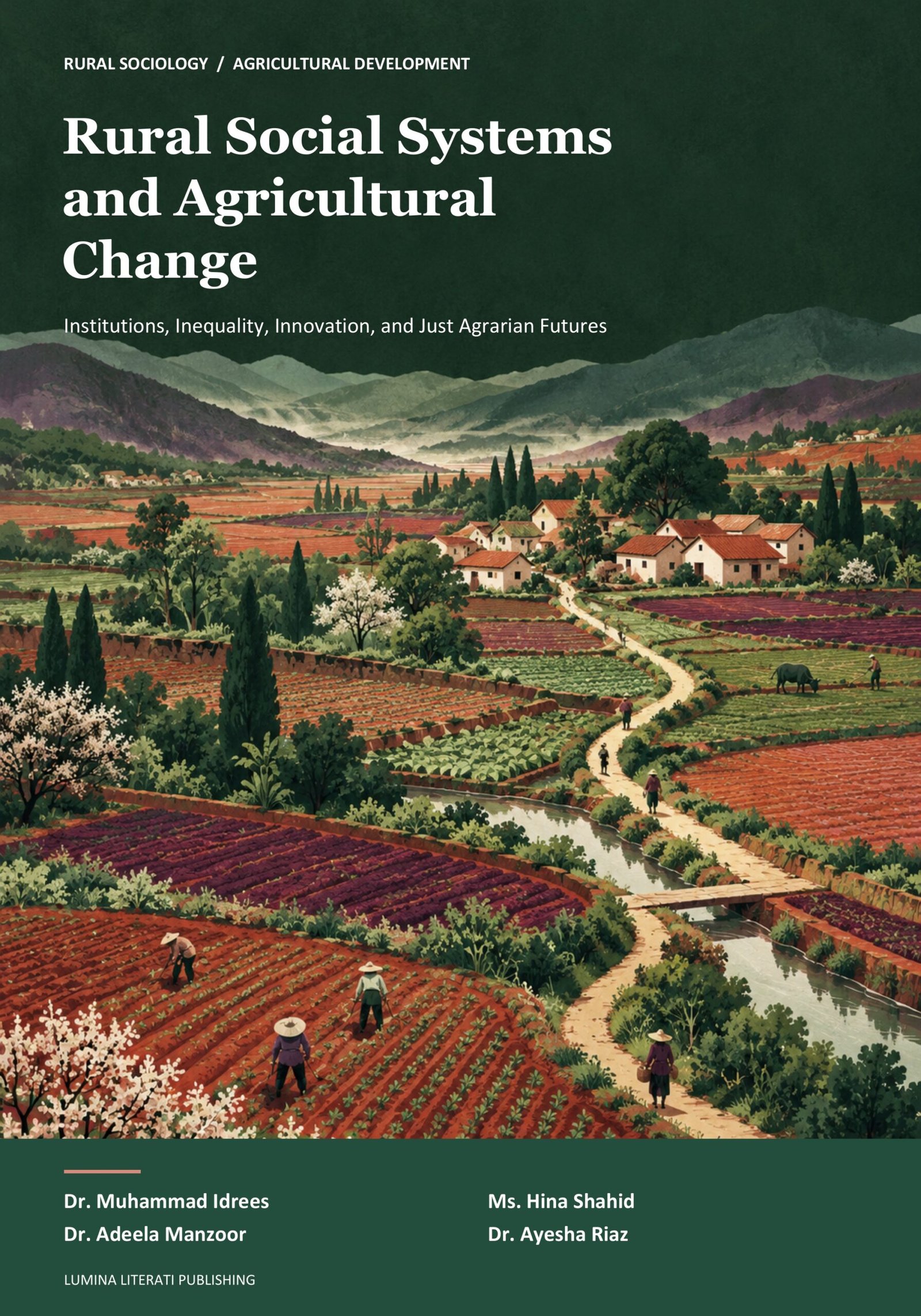
Rural Social Systems and Agricultural Change
Institutions, Inequality, Innovation, and Just Agrarian Futures
Book overview
Rural Social Systems and Agricultural Change examines how institutions, inequality, knowledge, and mobility shape agricultural transformation. It follows the relationships through which people gain access to land, labour, markets, technology, and public support, asking who can act, who benefits, and who carries the costs of change.
The book’s Rural Systems Mediation Framework connects drivers of change with social mediators, negotiated responses, differentiated outcomes, and feedbacks. Five chapters develop this approach: concepts and evidence; households, land, and labour; institutions, networks, and collective action; knowledge, technology, and innovation; and markets, migration, and rural livelihoods.
Drawing on published research and guidance on open evidence, the discussion distinguishes descriptive patterns, associations, and causal explanations. It considers production and income alongside agency, care, employment quality, livelihood security, and ecological consequences. Diagnostic matrices and practical questions help readers examine particular settings without treating rural households or communities as uniform groups.
The book offers students, researchers, educators, extension professionals, development practitioners, and policy analysts a way to connect social analysis with agricultural policy and practice. Its emphasis is on understanding context, assessing unequal outcomes, and making rural development choices more accountable.
Inside the book
- 01
Seeing the Rural System
Concepts, Change Mechanisms, and an Open-Evidence Strategy
- 02
Households in Motion
Land, Labor, and Agrarian Differentiation
- 03
Rules and Relationships
Institutions, Networks, and Collective Action
- 04
Uneven Innovation
Knowledge, Technology, and Power
- 05
Markets on the Move
Mobility and the Recomposition of Rural Livelihoods
Free to read
Read Rural Social Systems and Agricultural Change
Open the cover to browse the complete book in the online reader, or download the PDF to read offline.
Download the complete PDF185 pages · English · PDF
© 2026 Muhammad Idrees, Hina Shahid, Adeela Manzoor, and Ayesha Riaz. Copyright remains with the authors. Reproduction and reuse are subject to applicable law and any licence granted by the rights holders. The complete book is free to read and download.
Cite this book
Idrees, M., Shahid, H., Manzoor, A., & Riaz, A. (2026). Rural social systems and agricultural change: Institutions, inequality, innovation, and just agrarian futures. Lumina Literati Publishing. https://doi.org/10.65758/isbn.9786277813680
References
The complete bibliography from the book, with links to the cited sources.
View all 234 references
- ACCESS Advisory. (2019). Guidebook for mobilizing inclusive remittances for rural investment. https://www.ifad.org/documents/d/new-ifad.org/guidebook_mobilizing_remittances-pdf
- Adams, R. H., Jr. (2011). Evaluating the Economic Impact of International Remittances on Developing Countries Using Household Surveys: A Literature Review. Journal of Development Studies, 47(6), 809–828. https://doi.org/10.1080/00220388.2011.563299
- Adams, R. H., Jr., and A. Cuecuecha. (2010). Remittances, Household Expenditure and Investment in Guatemala. World Development, 38(11), 1626–1641. https://doi.org/10.1016/j.worlddev.2010.03.003
- Addati, L., Cattaneo, U., Esquivel, V., and Valarino, I. (2018). Care Work and Care Jobs for the Future of Decent Work. Geneva: International Labour Organization. https://www.ilo.org/publications/major-publications/care-work-and-care-jobs-future-decent-work
- Afridi, F., Bishnu, M., & Mahajan, K. (2023). Gender and mechanization: Evidence from Indian agriculture. American Journal of Agricultural Economics, 105(1), 52–75. https://doi.org/10.1111/ajae.12315
- Agarwal, B. (1997). “Bargaining” and gender relations: Within and beyond the household. Feminist Economics, 3(1), 1–51. https://doi.org/10.1080/135457097338799
- Agarwal, B. (2001). Participatory exclusions, community forestry, and gender: An analysis for South Asia and a conceptual framework. World Development, 29(10), 1623–1648. https://doi.org/10.1016/S0305-750X(01)00066-3
- Aker, J. C. (2010). Information from markets near and far: Mobile phones and agricultural markets in Niger. American Economic Journal: Applied Economics, 2(3), 46–59. https://doi.org/10.1257/app.2.3.46
- Aker, J. C. (2011). Dial “A” for agriculture: A review of information and communication technologies for agricultural extension in developing countries. Agricultural Economics, 42(6), 631–647. https://doi.org/10.1111/j.1574-0862.2011.00545.x
- Akram-Lodhi, A. H., & Kay, C. (2010a). Surveying the agrarian question (part 1): Unearthing foundations, exploring diversity. The Journal of Peasant Studies, 37(1), 177–202. https://doi.org/10.1080/03066150903498838
- Akram-Lodhi, A. H., & Kay, C. (2010b). Surveying the agrarian question (part 2): Current debates and beyond. The Journal of Peasant Studies, 37(2), 255–284. https://doi.org/10.1080/03066151003594906
- Albizua, A., Bennett, E. M., Pascual, U., & Larocque, G. (2020). The role of the social network structure on the spread of intensive agriculture: An example from Navarre, Spain. Regional Environmental Change, 20(3), Article 99. https://doi.org/10.1007/s10113-020-01676-9
- Alene, A. D., Manyong, V. M., Omanya, G., Mignouna, H. D., Bokanga, M., & Odhiambo, G. (2008). Smallholder market participation under transactions costs: Maize supply and fertilizer demand in Kenya. Food Policy, 33(4), 318–328. https://doi.org/10.1016/j.foodpol.2007.12.001
- Alkire, S., Meinzen-Dick, R., Peterman, A., Quisumbing, A. R., Seymour, G. and Vaz, A. (2013). The Women’s Empowerment in Agriculture Index. World Development, 52, 71–91. https://doi.org/10.1016/j.worlddev.2013.06.007. Open working-paper version: https://hdl.handle.net/10568/154140.
- Alobo Loison, S. (2015). Rural livelihood diversification in sub-Saharan Africa: A literature review. Journal of Development Studies, 51(9), 1125–1138. https://doi.org/10.1080/00220388.2015.1046445
- Andersson Djurfeldt, A., E. Hillbom, W. O. Mulwafu, P. Mvula, and G. Djurfeldt. (2018). ‘The Family Farms Together, the Decisions, However Are Made by the Man’: Matrilineal Land Tenure Systems, Welfare and Decision Making in Rural Malawi. Land Use Policy, 70, 601–610. https://doi.org/10.1016/j.landusepol.2017.10.048
- Arthi, V., Beegle, K., De Weerdt, J., & Palacios-López, A. (2018). Not your average job: Measuring farm labor in Tanzania. Journal of Development Economics, 130, 160–172. https://doi.org/10.1016/j.jdeveco.2017.10.005
- Baada, J. N., & Najjar, D. (2020). A review of the effects of migration on the feminization of agrarian dryland economies. Journal of Gender, Agriculture and Food Security, 5(2), 1–12. https://doi.org/10.19268/JGAFS.522020.1
- Barrett, C. B. (2005). Rural poverty dynamics: Development policy implications. Agricultural Economics, 32(s1), 45–60. https://doi.org/10.1111/j.0169-5150.2004.00013.x
- Barrett, C. B. (2008). Smallholder market participation: Concepts and evidence from eastern and southern Africa. Food Policy, 33(4), 299–317. https://doi.org/10.1016/j.foodpol.2007.10.005
- Barrett, C. B., Reardon, T., & Webb, P. (2001). Nonfarm income diversification and household livelihood strategies in rural Africa: Concepts, dynamics, and policy implications. Food Policy, 26(4), 315–331. https://doi.org/10.1016/S0306-9192(01)00014-8
- Beaman, L., BenYishay, A., Magruder, J., & Mobarak, A. M. (2021). Can network theory-based targeting increase technology adoption? American Economic Review, 111(6), 1918–1943. https://doi.org/10.1257/aer.20200295
- Bebbington, A. (1999). Capitals and capabilities: A framework for analyzing peasant viability, rural livelihoods and poverty. World Development, 27(12), 2021–2044. https://doi.org/10.1016/S0305-750X(99)00104-7
- Befani, B. (2013). Between complexity and generalization: Addressing evaluation challenges with QCA. Evaluation, 19(3), 269–283. https://doi.org/10.1177/1474022213493839
- Bellemare, M. F., & Bloem, J. R. (2018). Does contract farming improve welfare? A review. World Development, 112, 259–271. https://doi.org/10.1016/j.worlddev.2018.08.018
- Bentley, J. W. (1987). Economic and ecological approaches to land fragmentation: In defense of a much-maligned phenomenon. Annual Review of Anthropology, 16, 31–67. https://doi.org/10.1146/annurev.an.16.100187.000335
- BenYishay, A., & Mobarak, A. M. (2019). Social learning and incentives for experimentation and communication. Review of Economic Studies, 86(3), 976–1009. https://doi.org/10.1093/restud/rdy039
- Berdegué, J. A., Carriazo, F., Jara, B., Modrego, F. and Soloaga, I. (2015). Cities, Territories, and Inclusive Growth: Unraveling Urban–Rural Linkages in Chile, Colombia, and Mexico. World Development, 73, 56–71. https://doi.org/10.1016/j.worlddev.2014.12.013.
- Berdegué, J. A., Proctor, F. J., & Cazzuffi, C. (2014). Inclusive rural–urban linkages (Working Paper Series No. 123). Rimisp–Latin American Center for Rural Development. http://rimisp.org/wp-content/files_mf/1422296516InclusiveRural_UrbanLinkages_edited.pdf
- Bernard, T., & Spielman, D. J. (2009). Reaching the rural poor through rural producer organizations? A study of agricultural marketing cooperatives in Ethiopia. Food Policy, 34(1), 60–69. https://doi.org/10.1016/j.foodpol.2008.08.001
- Bernstein, H. (2010). Class dynamics of agrarian change. Fernwood Publishing. https://fernwoodpublishing.ca/books/class-dynamics-of-agrarian-change
- Bezner Kerr, R., Hasegawa, T., Lasco, R., Bhatt, I., Deryng, D., Farrell, A., Gurney-Smith, H., Ju, H., Lluch-Cota, S., Meza, F., Nelson, G., Neufeldt, H., & Thornton, P. (2022). Food, fibre, and other ecosystem products. In H.-O. Pörtner, D. C. Roberts, M. Tignor, E. S. Poloczanska, K. Mintenbeck, A. Alegría, M. Craig, S. Langsdorf, S. Löschke, V. Möller, A. Okem, & B. Rama (Eds.), Climate change 2022: Impacts, adaptation and vulnerability (pp. 713–906). Cambridge University Press. https://doi.org/10.1017/9781009325844.007
- Bezu, S., & Barrett, C. B. (2012). Employment dynamics in the rural nonfarm sector in Ethiopia: Do the poor have time on their side? Journal of Development Studies, 48(9), 1223–1240. https://doi.org/10.1080/00220388.2012.671476
- Bezu, S., Barrett, C. B., & Holden, S. T. (2012). Does the nonfarm economy offer pathways for upward mobility? Evidence from a panel data study in Ethiopia. World Development, 40(8), 1634–1646. https://doi.org/10.1016/j.worlddev.2012.04.019
- Biggs, R., Schlüter, M., Biggs, D., Bohensky, E. L., BurnSilver, S., Cundill, G., Dakos, V., Daw, T. M., Evans, L. S., Kotschy, K., Leitch, A. M., Meek, C., Quinlan, A., Raudsepp-Hearne, C., Robards, M. D., Schoon, M. L., Schultz, L., & West, P. C. (2012). Toward principles for enhancing the resilience of ecosystem services. Annual Review of Environment and Resources, 37, 421–448. https://doi.org/10.1146/annurev-environ-051211-123836
- Birner, R., Davis, K., Pender, J., Nkonya, E., Anandajayasekeram, P., Ekboir, J., Mbabu, A., Spielman, D. J., Horna, D., Benin, S., & Cohen, M. (2009). From best practice to best fit: A framework for designing and analyzing pluralistic agricultural advisory services worldwide. Journal of Agricultural Education and Extension, 15(4), 341–355. https://doi.org/10.1080/13892240903309595
- Bitzer, V., Wongtschowski, M., Hani, M., Blum, M., & Flink, I. (2016). Towards inclusive pluralistic service systems: Insights for innovative thinking. Food and Agriculture Organization of the United Nations & Royal Tropical Institute. https://www.kit.nl/institute/publication/towards-inclusive-pluralistic-service-systems/
- Böhme, M. H. (2015). Does Migration Raise Agricultural Investment? An Empirical Analysis for Rural Mexico. Agricultural Economics, 46(2), 211–225. https://doi.org/10.1111/agec.12152
- Bolin, A. (Ed.). (2020). Women’s empowerment through collective action: How forest and farm producer organisations can make a difference. Food and Agriculture Organization of the United Nations & International Institute for Environment and Development. https://doi.org/10.4060/ca8713en
- Borras, S. M., Jr. (2009). Agrarian change and peasant studies: Changes, continuities and challenges—An introduction. The Journal of Peasant Studies, 36(1), 5–31. https://doi.org/10.1080/03066150902820297
- Bronson, K., & Knezevic, I. (2016). Big Data in food and agriculture. Big Data & Society, 3(1). https://doi.org/10.1177/2053951716648174
- Bryceson, D. F. (2002). The scramble in Africa: Reorienting rural livelihoods. World Development, 30(5), 725–739. https://doi.org/10.1016/S0305-750X(02)00006-2
- Burton, R. J. F., Forney, J., Stock, P., & Sutherland, L.-A. (2021). The good farmer: Culture and identity in food and agriculture. Routledge. https://doi.org/10.4324/9781315190655
- Callaway, B., & Sant’Anna, P. H. C. (2021). Difference-in-differences with multiple time periods. Journal of Econometrics, 225(2), 200–230. https://doi.org/10.1016/j.jeconom.2020.12.001
- Carletto, C., Gourlay, S., & Winters, P. (2015). From guesstimates to GPStimates: Land area measurement and implications for agricultural analysis. Journal of African Economies, 24(5), 593–628. https://doi.org/10.1093/jae/ejv011
- Carroll, S. R., Garba, I., Figueroa-Rodríguez, O. L., Holbrook, J., Lovett, R., Materechera, S., Parsons, M., Raseroka, K., Rodriguez-Lonebear, D., Rowe, R., Sara, R., Walker, J. D., Anderson, J., & Hudson, M. (2020). The CARE Principles for Indigenous Data Governance. Data Science Journal, 19, Article 43. https://doi.org/10.5334/dsj-2020-043
- Carter, M. R., & Barrett, C. B. (2006). The economics of poverty traps and persistent poverty: An asset-based approach. The Journal of Development Studies, 42(2), 178–199. https://doi.org/10.1080/00220380500405261
- Carter, M. R., Little, P. D., Mogues, T., & Negatu, W. (2007). Poverty traps and natural disasters in Ethiopia and Honduras. World Development, 35(5), 835–856. https://doi.org/10.1016/j.worlddev.2006.09.010
- Chamberlin, J., & Jayne, T. S. (2013). Unpacking the meaning of “market access”: Evidence from rural Kenya. World Development, 41, 245–264. https://doi.org/10.1016/j.worlddev.2012.06.004
- Chimhowu, A., & Woodhouse, P. (2006). Customary vs private property rights? Dynamics and trajectories of vernacular land markets in sub-Saharan Africa. Journal of Agrarian Change, 6(3), 346–371. https://doi.org/10.1111/j.1471-0366.2006.00125.x
- Christiaensen, L., De Weerdt, J. and Todo, Y. (2013). Urbanization and Poverty Reduction: The Role of Rural Diversification and Secondary Towns. Agricultural Economics, 44(4–5), 435–447. https://doi.org/10.1111/agec.12028. Open working-paper version: https://doi.org/10.1596/1813-9450-6422.
- Christiaensen, L., & Todo, Y. (2014). Poverty reduction during the rural–urban transformation: The role of the missing middle. World Development, 63, 43–58. https://doi.org/10.1016/j.worlddev.2013.10.002
- Cleaver, F. (2012). Development through bricolage: Rethinking institutions for natural resource management. Routledge. https://doi.org/10.4324/9781315094915
- Cohn, A. S., Newton, P., Dias Bernardes Gil, J., Kuhl, L., Samberg, L., Ricciardi, V., Manly, J. R., & Northrop, S. (2017). Smallholder agriculture and climate change. Annual Review of Environment and Resources, 42, 347–375. https://doi.org/10.1146/annurev-environ-102016-060946
- Collier, D. (2011). Understanding process tracing. PS: Political Science & Politics, 44(4), 823–830. https://doi.org/10.1017/S1049096511001429
- Committee on World Food Security. (2014). Principles for responsible investment in agriculture and food systems. https://www.fao.org/cfs/policy-products/voluntary-guidelines-and-policy-recommendations/principles-for-responsible-investment-in-agriculture-and-food-systems
- Conley, T. G., & Udry, C. R. (2010). Learning about a new technology: Pineapple in Ghana. American Economic Review, 100(1), 35–69. https://doi.org/10.1257/aer.100.1.35
- Correa, J. S., Daidone, S., Davis, B., and Sitko, N. J. (2023). Social Protection and Rural Transformation in Africa. Annual Review of Resource Economics, 15, 305–327. https://doi.org/10.1146/annurev-resource-101422-100158
- Cote, M., & Nightingale, A. J. (2012). Resilience thinking meets social theory: Situating social change in socio-ecological systems research. Progress in Human Geography, 36(4), 475–489. https://doi.org/10.1177/0309132511425708
- Cotula, L. (2012). The international political economy of the global land rush: A critical appraisal of trends, scale, geography and drivers. The Journal of Peasant Studies, 39(3–4), 649–680. https://doi.org/10.1080/03066150.2012.674940
- Courtois, P., & Subervie, J. (2015). Farmer bargaining power and market information services. American Journal of Agricultural Economics, 97(3), 953–977. https://doi.org/10.1093/ajae/aau051
- Cox, M., Arnold, G., & Villamayor Tomás, S. (2010). A review of design principles for community-based natural resource management. Ecology and Society, 15(4), Article 38. https://www.ecologyandsociety.org/vol15/iss4/art38/
- Daum, T., & Birner, R. (2020). Agricultural mechanization in Africa: Myths, realities and an emerging research agenda. Global Food Security, 26, Article 100393. https://doi.org/10.1016/j.gfs.2020.100393
- Davis, B., Di Giuseppe, S., & Zezza, A. (2017). Are African households (not) leaving agriculture? Patterns of households’ income sources in rural Sub-Saharan Africa. Food Policy, 67, 153–174. https://doi.org/10.1016/j.foodpol.2016.09.018
- Davis, B., Winters, P., Carletto, G., Covarrubias, K., Quiñones, E. J., Zezza, A., Stamoulis, K., Azzarri, C., & DiGiuseppe, S. (2010). A cross-country comparison of rural income generating activities. World Development, 38(1), 48–63. https://doi.org/10.1016/j.worlddev.2009.01.003
- Deaton, A., & Cartwright, N. (2018). Understanding and misunderstanding randomized controlled trials. Social Science & Medicine, 210, 2–21. https://doi.org/10.1016/j.socscimed.2017.12.005
- Deininger, K., Savastano, S., & Xia, F. (2017). Smallholders’ land access in sub-Saharan Africa: A new landscape? Food Policy, 67, 78–92. https://doi.org/10.1016/j.foodpol.2016.09.012
- de Janvry, A., Fafchamps, M., & Sadoulet, E. (1991). Peasant household behaviour with missing markets: Some paradoxes explained. The Economic Journal, 101(409), 1400–1417. https://doi.org/10.2307/2234892
- De La O Campos, A. P., Admasu, Y., Covarrubias, K. A., Davis, B., & Diaz, A. M. (2023). Economic transformation and diversification towards off-farm income in rural and urban areas: A global update with a focus on sub-Saharan Africa (FAO Agricultural Development Economics Working Paper No. 23-05). Food and Agriculture Organization of the United Nations. https://doi.org/10.4060/cc4796en
- Dercon, S. (2002). Income risk, coping strategies, and safety nets. The World Bank Research Observer, 17(2), 141–166. https://doi.org/10.1093/wbro/17.2.141
- Dorward, A., Anderson, S., Nava Bernal, Y., Sánchez Vera, E., Rushton, J., Pattison, J., & Paz, R. (2009). Hanging in, stepping up and stepping out: Livelihood aspirations and strategies of the poor. Development in Practice, 19(2), 240–247. https://doi.org/10.1080/09614520802689535
- Doss, C. (2013). Intrahousehold bargaining and resource allocation in developing countries. The World Bank Research Observer, 28(1), 52–78. https://doi.org/10.1093/wbro/lkt001
- Doss, C., Meinzen-Dick, R., & Bomuhangi, A. (2014). Who owns the land? Perspectives from rural Ugandans and implications for large-scale land acquisitions. Feminist Economics, 20(1), 76–100. https://doi.org/10.1080/13545701.2013.855320
- Doss, C., Meinzen-Dick, R., Quisumbing, A., & Theis, S. (2018). Women in agriculture: Four myths. Global Food Security, 16, 69–74. https://doi.org/10.1016/j.gfs.2017.10.001
- Doss, C. R. (2006). Analyzing technology adoption using microstudies: Limitations, challenges, and opportunities for improvement. Agricultural Economics, 34(3), 207–219. https://doi.org/10.1111/j.1574-0864.2006.00119.x
- Doss, C. R., & Morris, M. L. (2001). How does gender affect the adoption of agricultural innovations? The case of improved maize technology in Ghana. Agricultural Economics, 25(1), 27–39. https://doi.org/10.1111/j.1574-0862.2001.tb00233.x
- Doss, C. R., Qaisrani, A., Kosec, K., Slavchevska, V., Galiè, A., & Kawarazuka, N. (2021). From the ‘feminization of agriculture’ to gender equality. In R. Pyburn & A. van Eerdewijk (Eds.), Advancing gender equality through agricultural and environmental research (pp. 297–327). International Food Policy Research Institute. https://doi.org/10.2499/9780896293915_08
- Doss, C., Truong, M., Nabanoga, G., & Namaalwa, J. (2012). Women, marriage and asset inheritance in Uganda. Development Policy Review, 30(5), 597–616. https://doi.org/10.1111/j.1467-7679.2012.00590.x
- Duflo, E., & Udry, C. (2004). Intrahousehold resource allocation in Côte d’Ivoire: Social norms, separate accounts and consumption choices (NBER Working Paper No. 10498). National Bureau of Economic Research. https://doi.org/10.3386/w10498
- Dwomoh, D., Agyabeng, K., Tuffour, H. O., Tetteh, A., Godi, A., & Aryeetey, R. (2023). Modeling inequality in access to agricultural productive resources and socioeconomic determinants of household food security in Ghana: A cross-sectional study. Agricultural and Food Economics, 11, Article 24. https://doi.org/10.1186/s40100-023-00267-6
- Ellis, F. (1998). Household strategies and rural livelihood diversification. Journal of Development Studies, 35(1), 1–38. https://doi.org/10.1080/00220389808422553
- Emerick, K., de Janvry, A., Sadoulet, E., & Dar, M. H. (2016). Technological innovations, downside risk, and the modernization of agriculture. American Economic Review, 106(6), 1537–1561. https://doi.org/10.1257/aer.20150474
- European Commission, Food and Agriculture Organization of the United Nations, United Nations Human Settlements Programme, International Labour Organization, Organisation for Economic Co-operation and Development, & World Bank. (2021). Applying the degree of urbanisation: A methodological manual to define cities, towns and rural areas for international comparisons (2021 ed.). Publications Office of the European Union. https://doi.org/10.2785/706535
- European Space Agency. (n.d.). Data—ESA WorldCover. Retrieved August 23, 2026, from https://esa-worldcover.org/en/data-access
- Fabinyi, M., Evans, L., & Foale, S. J. (2014). Social-ecological systems, social diversity, and power: Insights from anthropology and political ecology. Ecology and Society, 19(4), Article 28. https://doi.org/10.5751/ES-07029-190428
- Fabregas, R., Kremer, M., & Schilbach, F. (2019). Realizing the potential of digital development: The case of agricultural advice. Science, 366(6471), Article eaay3038. https://doi.org/10.1126/science.aay3038
- Fafchamps, M., & Minten, B. (2012). Impact of SMS-based agricultural information on Indian farmers. World Bank Economic Review, 26(3), 383–414. https://doi.org/10.1093/wber/lhr056
- Fałkowski, J., & Ciaian, P. (2016). Factors supporting the development of producer organizations and their impacts in the light of ongoing changes in food supply chains. European Commission Joint Research Centre. https://www.fao.org/family-farming/detail/en/c/426495/
- Farnworth, C. R., Lecoutere, E., Galiè, A., Van Campenhout, B., Elias, M., Ihalainen, M., Roeven, L., Bharati, P., Paez Valencia, A. M., Crossland, M., Vinceti, B., & Monterroso, I. (2023). Methodologies for researching feminization of agriculture: What do they tell us? Progress in Development Studies, 23(3), 294–316. https://doi.org/10.1177/14649934231173821
- Fernando, A. N. (2021). Seeking the treated: The impact of mobile extension on farmer information exchange in India. Journal of Development Economics, 153, 102713. https://doi.org/10.1016/j.jdeveco.2021.102713
- Fischer, E., & Qaim, M. (2012). Linking smallholders to markets: Determinants and impacts of farmer collective action in Kenya. World Development, 40(6), 1255–1268. https://doi.org/10.1016/j.worlddev.2011.11.018
- Folke, C. (2006). Resilience: The emergence of a perspective for social-ecological systems analyses. Global Environmental Change, 16(3), 253–267. https://doi.org/10.1016/j.gloenvcha.2006.04.002
- Food and Agriculture Organization of the United Nations. (2012). Voluntary guidelines on the responsible governance of tenure of land, fisheries and forests in the context of national food security. https://openknowledge.fao.org/handle/20.500.14283/i2801e
- Food and Agriculture Organization of the United Nations. (2014). The state of food and agriculture 2014: Innovation in family farming. https://openknowledge.fao.org/handle/20.500.14283/i4040e
- Food and Agriculture Organization of the United Nations. (2015). The State of Food and Agriculture 2015: Social Protection and Agriculture—Breaking the Cycle of Rural Poverty. Rome: FAO. https://www.fao.org/3/i4910e/i4910e.pdf.
- Food and Agriculture Organization of the United Nations. (2017). The state of food and agriculture 2017: Leveraging food systems for inclusive rural transformation. https://openknowledge.fao.org/handle/20.500.14283/i7658en
- Food and Agriculture Organization of the United Nations. (2018). The state of food and agriculture 2018: Migration, agriculture and rural development. https://openknowledge.fao.org/handle/20.500.14283/i9549en
- Food and Agriculture Organization of the United Nations. (2019). Tool for Agroecology Performance Evaluation (TAPE): Process of Development and Guidelines for Application. Rome: FAO. https://www.fao.org/3/ca7407en/ca7407en.pdf.
- Food and Agriculture Organization of the United Nations. (2022). The state of food and agriculture 2022: Leveraging automation in agriculture for transforming agrifood systems. https://doi.org/10.4060/cb9479en
- Food and Agriculture Organization of the United Nations. (2023a). Guide on digital agricultural extension and advisory services: Use of smartphone applications by smallholder farmers. https://www.fao.org/3/cc4022en/cc4022en.pdf
- Food and Agriculture Organization of the United Nations. (2023b). The status of women in agrifood systems. https://doi.org/10.4060/cc5343en
- Food and Agriculture Organization of the United Nations. (2023c). Strengthening digital agricultural extension and advisory services in smallholder farming. https://doi.org/10.4060/cc6267en
- Food and Agriculture Organization of the United Nations. (2026). World Programme for the Census of Agriculture 2030: Programme, concepts and definitions. https://doi.org/10.4060/cd9437en
- Food and Agriculture Organization of the United Nations, Alliance of Bioversity International and CIAT, & Editora da UFRGS. (2021). Public food procurement for sustainable food systems and healthy diets (Vol. 1). https://doi.org/10.4060/cb7960en
- Food and Agriculture Organization of the United Nations, International Fund for Agricultural Development, International Organization for Migration, & World Food Programme. (2018). The linkages between migration, agriculture, food security and rural development. Food and Agriculture Organization of the United Nations. https://www.fao.org/3/ca0922en/ca0922en.pdf
- Food and Agriculture Organization of the United Nations, International Fund for Agricultural Development, United Nations Children’s Fund, World Food Programme, & World Health Organization. (2023). The state of food security and nutrition in the world 2023: Urbanization, agrifood systems transformation and healthy diets across the rural–urban continuum. Food and Agriculture Organization of the United Nations. https://doi.org/10.4060/cc3017en
- Food and Agriculture Organization of the United Nations & International Labour Organization. (2021). Extending Social Protection to Rural Populations: Perspectives for a Common FAO and ILO Approach. Geneva: International Labour Organization. https://www.ilo.org/publications/extending-social-protection-rural-populations-perspectives-common-fao-and
- Food and Agriculture Organization of the United Nations. (n.d.-a). FAOSTAT. Retrieved August 23, 2026, from https://www.fao.org/faostat/en/
- Food and Agriculture Organization of the United Nations. (n.d.-b). WaPOR database. Retrieved August 23, 2026, from https://www.fao.org/aquastat/en/geospatial-information/wapor/
- Funk, C. C., Peterson, P. J., Landsfeld, M. F., Pedreros, D. H., Verdin, J. P., Rowland, J. D., Romero, B. E., Husak, G. J., Michaelsen, J. C., & Verdin, A. P. (2014). A quasi-global precipitation time series for drought monitoring (U.S. Geological Survey Data Series 832). U.S. Geological Survey. https://doi.org/10.3133/ds832
- Gálvez-Nogales, E. and Webber, M., eds. (2017). Territorial Tools for Agro-Industry Development: A Sourcebook. Rome: FAO. https://www.fao.org/3/i6862e/i6862e.pdf.
- Garner, E., & de la O Campos, A. P. (2014). Identifying the “family farm”: An informal discussion of the concepts and definitions (ESA Working Paper No. 14-10). Food and Agriculture Organization of the United Nations. https://openknowledge.fao.org/handle/20.500.14283/i4306e
- Girard, A. W., Self, J. L., McAuliffe, C., & Olude, O. (2012). The effects of household food production strategies on the health and nutrition outcomes of women and young children: A systematic review. Paediatric and Perinatal Epidemiology, 26(Suppl. 1), 205–222. https://doi.org/10.1111/j.1365-3016.2012.01282.x
- Glover, D., Sumberg, J., Ton, G., Andersson, J., & Badstue, L. (2019). Rethinking technological change in smallholder agriculture. Outlook on Agriculture, 48(3), 169–180. https://doi.org/10.1177/0030727019864978
- Goldstein, M., & Udry, C. (2008). The profits of power: Land rights and agricultural investment in Ghana. Journal of Political Economy, 116(6), 981–1022. https://doi.org/10.1086/595561
- Goyal, A. (2010). Information, direct access to farmers, and rural market performance in Central India. American Economic Journal: Applied Economics, 2(3), 22–45. https://doi.org/10.1257/app.2.3.22
- Green, W. N. (2022). Financing agrarian change: Geographies of credit and debt in the Global South. Progress in Human Geography, 46(3), 849–869. https://doi.org/10.1177/03091325221083211
- Haddaway, N. R., Macura, B., Whaley, P., & Pullin, A. S. (2018). ROSES RepOrting standards for Systematic Evidence Syntheses: Pro forma, flow-diagram and descriptive summary of the plan and conduct of environmental systematic reviews and systematic maps. Environmental Evidence, 7, Article 7. https://doi.org/10.1186/s13750-018-0121-7
- Haggblade, S., Hazell, P. B. R., & Reardon, T. (2010). The rural non-farm economy: Prospects for growth and poverty reduction. World Development, 38(10), 1429–1441. https://doi.org/10.1016/j.worlddev.2009.06.008
- Heley, J., & Jones, L. (2012). Relational rurals: Some thoughts on relating things and theory in rural studies. Journal of Rural Studies, 28(3), 208–217. https://doi.org/10.1016/j.jrurstud.2012.01.011
- Hemming, D. J., Chirwa, E. W., Dorward, A., Ruffhead, H. J., Hill, R., Osborn, J., Langer, L., Harman, L., Asaoka, H., Coffey, C., & Phillips, D. (2018). Agricultural input subsidies for improving productivity, farm income, consumer welfare and wider growth in low- and lower-middle-income countries: A systematic review. Campbell Systematic Reviews, 14(1), 1–153. https://doi.org/10.4073/csr.2018.4
- High Level Panel of Experts on Food Security and Nutrition (HLPE-FSN). (2024). Strengthening Urban and Peri-Urban Food Systems to Achieve Food Security and Nutrition, in the Context of Urbanization and Rural Transformation. HLPE-FSN Report 19. Rome: Committee on World Food Security. https://www.fao.org/cfs/cfs-hlpe/publications/hlpe-19.
- Hillenbrand, E., & Miruka, M. (2019). Gender and social norms in agriculture: A review. In A. R. Quisumbing, R. S. Meinzen-Dick, & J. Njuki (Eds.), 2019 annual trends and outlook report: Gender equality in rural Africa—From commitments to outcomes (pp. 11–31). International Food Policy Research Institute. https://doi.org/10.2499/9780896293649_02
- Hull, J. R. (2007). Migration, remittances and monetization of farm labor in subsistence sending areas. Asian and Pacific Migration Journal, 16(4), 451–484. https://doi.org/10.1177/011719680701600402
- Huntington, H., & Shenoy, A. (2021). Does insecure land tenure deter investment? Evidence from a randomized controlled trial. Journal of Development Economics, 150, 102632. https://doi.org/10.1016/j.jdeveco.2021.102632
- International Fund for Agricultural Development. (2016). Rural development report 2016: Fostering inclusive rural transformation. https://www.ifad.org/en/w/publications/rural-development-report-2016
- International Initiative for Impact Evaluation. (n.d.). Evidence gap maps. Retrieved August 23, 2026, from https://www.3ieimpact.org/evidence-hub/evidence-gap-maps
- International Labour Organization. (2012). Social Protection Floors Recommendation, 2012 (No. 202). Geneva: International Labour Organization. https://www.ilo.org/resource/record-proceedings/ilc/ilc101/text-recommendation-concerning-national-floors-social-protection.
- International Labour Organization. (2013a). Decent Work Indicators: Guidelines for Producers and Users of Statistical and Legal Framework Indicators. Geneva: International Labour Organization. https://www.ilo.org/publications/decent-work-indicators-guidelines-producers-and-users-statistical-and-legal.
- International Labour Organization. (2013b). Resolution concerning statistics of work, employment and labour underutilization. 19th International Conference of Labour Statisticians. https://www.ilo.org/resource/resolution-concerning-statistics-work-employment-and-labour-0
- International Labour Organization. (2019a). Decent and productive work in agriculture. https://www.ilo.org/publications/decent-and-productive-work-agriculture
- International Labour Organization. (2019b). Ensuring Access to Social Protection and Portability of Social Security Rights and Benefits for Migrant Workers and Their Families. Geneva: International Labour Organization. https://www.ilo.org/publications/ensuring-access-social-protection-and-portability-social-security-rights
- International Labour Organization. (2019c). Promoting Fair and Effective Labour Migration Policies in Agriculture and Rural Areas. Geneva: International Labour Organization. https://www.ilo.org/publications/promoting-fair-and-effective-labour-migration-policies-agriculture-and
- International Labour Organization. (2024). ILO Strategy on Extending Social Protection to Migrant Workers, Refugees and Their Families. Geneva: International Labour Organization. https://www.ilo.org/publications/ilo-strategy-extending-social-protection-migrant-workers-refugees-and-their
- International Labour Organization. (n.d.). ILOSTAT: The leading source of labour statistics. Retrieved August 23, 2026, from https://ilostat.ilo.org/
- Jayne, T. S., Chamberlin, J., Traub, L., Sitko, N., Muyanga, M., Yeboah, F. K., Anseeuw, W., Chapoto, A., Wineman, A., Nkonde, C., & Kachule, R. (2016). Africa’s changing farm size distribution patterns: The rise of medium-scale farms. Agricultural Economics, 47(S1), 197–214. https://doi.org/10.1111/agec.12308
- Jayne, T. S., Muyanga, M., Wineman, A., Ghebru, H., Stevens, C., Stickler, M., Chapoto, A., Anseeuw, W., van der Westhuizen, D., & Nyange, D. (2019). Are medium-scale farms driving agricultural transformation in sub-Saharan Africa? Agricultural Economics, 50(S1), 75–95. https://doi.org/10.1111/agec.12535
- Jiao, X., Pouliot, M., & Walelign, S. Z. (2017). Livelihood strategies and dynamics in rural Cambodia. World Development, 97, 266–278. https://doi.org/10.1016/j.worlddev.2017.04.019
- Johnson, N. L., C. Kovarik, R. Meinzen-Dick, J. Njuki, and A. R. Quisumbing. (2016). Gender, Assets, and Agricultural Development: Lessons from Eight Projects. World Development, 83, 295–311. https://doi.org/10.1016/j.worlddev.2016.01.009
- Jouanjean, M.-A., Casalini, F., Wiseman, L., & Gray, E. (2020). Issues around data governance in the digital transformation of agriculture: The farmers’ perspective (OECD Food, Agriculture and Fisheries Paper No. 146). OECD Publishing. https://doi.org/10.1787/53ecf2ab-en
- Kabeer, N. (1999). Resources, agency, achievements: Reflections on the measurement of women’s empowerment. Development and Change, 30(3), 435–464. https://doi.org/10.1111/1467-7660.00125
- Kansiime, M. K., Mugambi, I., Rware, H., Alokit, C., Aliamo, C., Zhang, F., Latzko, J., Yang, P., Karanja, D., & Romney, D. (2022). Challenges and capacity gaps in smallholder access to digital extension and advisory services in Kenya and Uganda. Frontiers of Agricultural Science and Engineering, 9(4), 642–654. https://doi.org/10.15302/J-FASE-2021423
- Kilelu, C. W., Klerkx, L., & Leeuwis, C. (2013). Unravelling the role of innovation platforms in supporting co-evolution of innovation: Contributions and tensions in a smallholder dairy development programme. Agricultural Systems, 118, 65–77. https://doi.org/10.1016/j.agsy.2013.03.003
- Klerkx, L. W. A., van Mierlo, B., & Leeuwis, C. (2012). Evolution of systems approaches to agricultural innovation: Concepts, analysis and interventions. In I. Darnhofer, D. Gibbon, & B. Dedieu (Eds.), Farming systems research into the 21st century: The new dynamic (pp. 457–483). Springer. https://doi.org/10.1007/978-94-007-4503-2_20
- K M, S. M., & Damani, O. (2019). Design of Farm Assessment Index (FAI) for a holistic comparison of farming practices: Case of organic and conventional farming systems from two Indian states. Agroecology and Sustainable Food Systems, 43(3), 329–357. https://doi.org/10.1080/21683565.2018.1547941
- Koirala, S., and S. Bashyal. (2025). The Land Left Behind: A Systematic Review of Transnational Migration-Induced Change and Its Implication for Rural Sustainability in Nepal. Humanities and Social Sciences Communications, 12, 38. https://doi.org/10.1057/s41599-024-04180-1
- Kok, K. P. W., & Klerkx, L. (2023). Addressing the politics of mission-oriented agricultural innovation systems. Agricultural Systems, 211, Article 103747. https://doi.org/10.1016/j.agsy.2023.103747
- Kosmützky, A., Nokkala, T., & Diogo, S. (2020). Between context and comparability: Exploring new solutions for a familiar methodological challenge in qualitative comparative research. Higher Education Quarterly, 74(2), 176–192. https://doi.org/10.1111/hequ.12255
- Lawry, S., Samii, C., Hall, R., Leopold, A., Hornby, D., & Mtero, F. (2017). The impact of land property rights interventions on investment and agricultural productivity in developing countries: A systematic review. Journal of Development Effectiveness, 9(1), 61–81. https://doi.org/10.1080/19439342.2016.1160947
- Lewin, S., Booth, A., Glenton, C., Munthe-Kaas, H., Rashidian, A., Wainwright, M., Bohren, M. A., Tunçalp, Ö., Colvin, C. J., Garside, R., Carlsen, B., Langlois, E. V., & Noyes, J. (2018). Applying GRADE-CERQual to qualitative evidence synthesis findings: Introduction to the series. Implementation Science, 13(Suppl 1), Article 2. https://doi.org/10.1186/s13012-017-0688-3
- Li, T. M. (2010). To make live or let die? Rural dispossession and the protection of surplus populations. Antipode, 41(S1), 66–93. https://doi.org/10.1111/j.1467-8330.2009.00717.x
- Losch, B., Fréguin-Gresh, S., & White, E. T. (2012). Structural transformation and rural change revisited: Challenges for late developing countries in a globalizing world. World Bank. https://doi.org/10.1596/978-0-8213-9512-7
- Lowder, S. K., Skoet, J., & Raney, T. (2016). The number, size, and distribution of farms, smallholder farms, and family farms worldwide. World Development, 87, 16–29. https://doi.org/10.1016/j.worlddev.2015.10.041
- Mack, E. A., Sauls, L. A., Jokisch, B. D., Nolte, K., Schmook, B., He, Y., Radel, C., Allington, G. R. H., Kelley, L. C., Scott, C. K., Leisz, S., Chi, G., Sagynbekova, L., Cuba, N., & Henebry, G. M. (2023). Remittances and land change: A systematic review. World Development, 168, Article 106251. https://doi.org/10.1016/j.worlddev.2023.106251
- Mahoney, J., & Thelen, K. (2010). A theory of gradual institutional change. In J. Mahoney & K. Thelen (Eds.), Explaining institutional change: Ambiguity, agency, and power (pp. 1–37). Cambridge University Press. https://doi.org/10.1017/CBO9780511806414.003
- Malhotra, S. K., Mantri, S., Gupta, N., Bhandari, R., Armah, R. N., Alhassan, H., Young, S., White, H., Puskur, R., Waddington, H. S., & Masset, E. (2024). Value chain interventions for improving women’s economic empowerment: A mixed-methods systematic review and meta-analysis. Campbell Systematic Reviews, 20(3), e1428. https://doi.org/10.1002/cl2.1428
- Mansuri, G., & Rao, V. (2013). Localizing development: Does participation work? World Bank. https://doi.org/10.1596/978-0-8213-8256-1
- Marion, P., Lwamba, E., Floridi, A., Pande, S., Bhattacharyya, M., Young, S., Fenton Villar, P., & Shisler, S. (2024). The effects of agricultural output market access interventions on agricultural, socio-economic, food security, and nutrition outcomes in low- and middle-income countries: A systematic review. Campbell Systematic Reviews, 20(2), e1411. https://doi.org/10.1002/cl2.1411
- Markelova, H., Meinzen-Dick, R., Hellin, J., & Dohrn, S. (2009). Collective action for smallholder market access. Food Policy, 34(1), 1–7. https://doi.org/10.1016/j.foodpol.2008.10.001
- Matita, M., Chirwa, E. W., Kaiyatsa, S., Mazalale, J., Chimombo, M., Msofi Mgalamadzi, L., & Chinsinga, B. (2022). Determinants of smallholder farmers’ livelihood trajectories: Evidence from rural Malawi. Agrekon, 61(4), 399–411. https://doi.org/10.1080/03031853.2022.2107030
- McGinnis, M. D., & Ostrom, E. (2014). Social-ecological system framework: Initial changes and continuing challenges. Ecology and Society, 19(2), Article 30. https://doi.org/10.5751/ES-06387-190230
- Meemken, E.-M., & Bellemare, M. F. (2020). Smallholder farmers and contract farming in developing countries. Proceedings of the National Academy of Sciences, 117(1), 259–264. https://doi.org/10.1073/pnas.1909501116
- Mehrabi, Z., McDowell, M. J., Ricciardi, V., Levers, C., Martinez, J. D., Mehrabi, N., Wittman, H., Ramankutty, N., & Jarvis, A. (2021). The global divide in data-driven farming. Nature Sustainability, 4, 154–160. https://doi.org/10.1038/s41893-020-00631-0
- Melesse, M. B., & Bulte, E. (2015). Does land registration and certification boost farm productivity? Evidence from Ethiopia. Agricultural Economics, 46(6), 757–768. https://doi.org/10.1111/agec.12191
- Mendola, M. (2008). Migration and technological change in rural households: Complements or substitutes? Journal of Development Economics, 85(1–2), 150–175. https://doi.org/10.1016/j.jdeveco.2006.07.003
- Mendola, M. (2012). Rural out-migration and economic development at origin: A review of the evidence. Journal of International Development, 24(1), 102–122. https://doi.org/10.1002/jid.1684
- Meyfroidt, P., Roy Chowdhury, R., de Bremond, A., Ellis, E. C., Erb, K. H., Filatova, T., Garrett, R. D., Grove, J. M., Heinimann, A., Kuemmerle, T., Kull, C. A., Lambin, E. F., Landon, Y., le Polain de Waroux, Y., Messerli, P., Müller, D., Nielsen, J., Peterson, G. D., Rodriguez García, V., . . . Verburg, P. H. (2018). Middle-range theories of land system change. Global Environmental Change, 53, 52–67. https://doi.org/10.1016/j.gloenvcha.2018.08.006
- Miluka, J., G. Carletto, B. Davis, and A. Zezza. (2010). The Vanishing Farms? The Impact of International Migration on Albanian Family Farming. Journal of Development Studies, 46(1), 140–161. https://doi.org/10.1080/00220380903197978
- Moser, C. M., & Barrett, C. B. (2006). The complex dynamics of smallholder technology adoption: The case of SRI in Madagascar. Agricultural Economics, 35(3), 373–388. https://doi.org/10.1111/j.1574-0862.2006.00169.x
- Mulyoutami, E., B. Lusiana, and M. van Noordwijk. (2020). Gendered Migration and Agroforestry in Indonesia: Livelihoods, Labor, Know-How, Networks. Land, 9(12), 529. https://doi.org/10.3390/land9120529
- Musumba, M., Palm, C. A., Komarek, A. M., Mutuo, P. K., & Kaya, B. (2022). Household livelihood diversification in rural Africa. Agricultural Economics, 53(2), 246–256. https://doi.org/10.1111/agec.12694
- Mwambi, M., Bijman, J., & Mshenga, P. (2020). Which type of producer organization is (more) inclusive? Dynamics of farmers’ membership and participation in the decision-making process. Annals of Public and Cooperative Economics, 91(2), 213–236. https://doi.org/10.1111/apce.12269
- Nagler, P., & Naudé, W. (2017). Non-farm entrepreneurship in rural sub-Saharan Africa: New empirical evidence. Food Policy, 67, 175–191. https://doi.org/10.1016/j.foodpol.2016.09.019
- Nandi, R., C. M. Pratheepa, S. Nedumaran, N. Rao, and R. Rengalakshmi. (2022). Farm Parent and Youth Aspirations on the Generational Succession of Farming: Evidence from South India. Frontiers in Sustainable Food Systems, 5, 804581. https://doi.org/10.3389/fsufs.2021.804581
- Natarajan, N., Newsham, A., Rigg, J., & Suhardiman, D. (2022). A sustainable livelihoods framework for the 21st century. World Development, 155, Article 105898. https://doi.org/10.1016/j.worlddev.2022.105898
- Neef, A., & Neubert, D. (2011). Stakeholder participation in agricultural research projects: A conceptual framework for reflection and decision-making. Agriculture and Human Values, 28, 179–194. https://doi.org/10.1007/s10460-010-9272-z
- Obi, C., F. Bartolini, G. Brunori, and M. D’Haese. (2020). How Does International Migration Impact on Rural Areas in Developing Countries? A Systematic Review. Journal of Rural Studies, 80, 273–290. https://doi.org/10.1016/j.jrurstud.2020.09.016
- Ogutu, S. O., Gödecke, T., & Qaim, M. (2020). Agricultural commercialisation and nutrition in smallholder farm households. Journal of Agricultural Economics, 71(2), 534–555. https://doi.org/10.1111/1477-9552.12359
- Organisation for Economic Co-operation and Development, Food and Agriculture Organization of the United Nations, & United Nations Capital Development Fund. (2016). Adopting a Territorial Approach to Food Security and Nutrition Policy. Paris: OECD Publishing. https://doi.org/10.1787/9789264257108-en.
- Ostrom, E. (1990). Governing the commons: The evolution of institutions for collective action. Cambridge University Press. https://doi.org/10.1017/CBO9780511807763
- Ostrom, E. (2009). A general framework for analyzing sustainability of social-ecological systems. Science, 325(5939), 419–422. https://doi.org/10.1126/science.1172133
- Ostrom, E. (2010). Polycentric systems for coping with collective action and global environmental change. Global Environmental Change, 20(4), 550–557. https://doi.org/10.1016/j.gloenvcha.2010.07.004
- Oya, C. (2013). Rural wage employment in Africa: Methodological issues and emerging evidence. Review of African Political Economy, 40(136), 251–273. https://doi.org/10.1080/03056244.2013.794728
- Oya, C., Schaefer, F., Skalidou, D., McCosker, C., & Langer, L. (2017). Effects of certification schemes for agricultural production on socio-economic outcomes in low- and middle-income countries: A systematic review. Campbell Systematic Reviews, 13(1), 1–346. https://doi.org/10.4073/csr.2017.3
- Page, M. J., McKenzie, J. E., Bossuyt, P. M., Boutron, I., Hoffmann, T. C., Mulrow, C. D., Shamseer, L., Tetzlaff, J. M., Akl, E. A., Brennan, S. E., Chou, R., Glanville, J., Grimshaw, J. M., Hróbjartsson, A., Lalu, M. M., Li, T., Loder, E. W., Mayo-Wilson, E., McDonald, S., . . . Moher, D. (2021). The PRISMA 2020 statement: An updated guideline for reporting systematic reviews. BMJ, 372, n71. https://doi.org/10.1136/bmj.n71
- Palacios-López, A., Christiaensen, L., & Kilic, T. (2017). How much of the labor in African agriculture is provided by women? Food Policy, 67, 52–63. https://doi.org/10.1016/j.foodpol.2016.09.017
- Pannell, D. J., Marshall, G. R., Barr, N., Curtis, A., Vanclay, F., & Wilkinson, R. (2006). Understanding and promoting adoption of conservation practices by rural landholders. Australian Journal of Experimental Agriculture, 46(11), 1407–1424. https://doi.org/10.1071/EA05037
- Pfeiffer, L., López-Feldman, A., & Taylor, J. E. (2009). Is off-farm income reforming the farm? Evidence from Mexico. Agricultural Economics, 40(2), 125–138. https://doi.org/10.1111/j.1574-0862.2009.00365.x
- Porst, L., and P. Sakdapolrak. (2020). Gendered Translocal Connectedness: Rural–Urban Migration, Remittances, and Social Resilience in Thailand. Population, Space and Place, 26(4), e2314. https://doi.org/10.1002/psp.2314
- Pritchard, B., Vicol, M., & Jones, R. (2017). How does the ownership of land affect household livelihood pathways under conditions of deagrarianization? “Hanging in,” “stepping up” and “stepping out” in two north Indian villages. Singapore Journal of Tropical Geography, 38(1), 41–57. https://doi.org/10.1111/sjtg.12180
- Ramírez-Gómez, C. J. (2023). La multifuncionalidad de las organizaciones asociativas rurales [The multifunctionality of rural associative organizations]. Tropical and Subtropical Agroecosystems, 26(2), Article 062. https://doi.org/10.56369/tsaes.4729
- Reardon, T., Barrett, C. B., Berdegué, J. A., & Swinnen, J. F. M. (2009). Agrifood industry transformation and small farmers in developing countries. World Development, 37(11), 1717–1727. https://doi.org/10.1016/j.worlddev.2008.08.023
- Ribot, J. C., & Peluso, N. L. (2003). A theory of access. Rural Sociology, 68(2), 153–181. https://doi.org/10.1111/j.1549-0831.2003.tb00133.x
- Rijkers, B., & Costa, R. (2012). Gender and rural non-farm entrepreneurship. World Development, 40(12), 2411–2426. https://doi.org/10.1016/j.worlddev.2012.05.017
- Rose, D. C., & Chilvers, J. (2018). Agriculture 4.0: Broadening responsible innovation in an era of smart farming. Frontiers in Sustainable Food Systems, 2, Article 87. https://doi.org/10.3389/fsufs.2018.00087
- Sartas, M., Schut, M., Proietti, C., Thiele, G., & Leeuwis, C. (2020). Scaling Readiness: Science and practice of an approach to enhance impact of research for development. Agricultural Systems, 183, 102874. https://doi.org/10.1016/j.agsy.2020.102874
- Scoones, I. (1998). Sustainable rural livelihoods: A framework for analysis (IDS Working Paper No. 72). Institute of Development Studies. https://www.ids.ac.uk/publications/sustainable-rural-livelihoods-a-framework-for-analysis/
- Scoones, I. (2009). Livelihoods perspectives and rural development. The Journal of Peasant Studies, 36(1), 171–196. https://doi.org/10.1080/03066150902820503
- Shan, Y., & Williamson, J. (2021). Applying Evidential Pluralism to the social sciences. European Journal for Philosophy of Science, 11, Article 96. https://doi.org/10.1007/s13194-021-00415-z
- Shiferaw, B. A., Obare, G. A., Muricho, G., & Silim, S. (2009). Leveraging institutions for collective action to improve markets for smallholder producers in less-favored areas. African Journal of Agricultural and Resource Economics, 3(1), 1–18. https://ageconsearch.umn.edu/record/56941
- Singh, I., Squire, L., & Strauss, J. (Eds.). (1986). Agricultural household models: Extensions, applications, and policy. Johns Hopkins University Press for the World Bank. https://documents.worldbank.org/curated/en/621291468739297175/
- Stilgoe, J., Owen, R., & Macnaghten, P. (2013). Developing a framework for responsible innovation. Research Policy, 42(9), 1568–1580. https://doi.org/10.1016/j.respol.2013.05.008
- Sulaiman V., R., Chuluunbaatar, D., Djamen, P., Grovermann, C., & Holley, A. (2022). Indicator framework for national extension and advisory service systems: Metrics for performance and outcome measurement. FAO. https://doi.org/10.4060/cb8409en
- Suri, T. (2011). Selection and comparative advantage in technology adoption. Econometrica, 79(1), 159–209. https://doi.org/10.3982/ECTA7749
- Tacoli, C. (1998). Rural–urban interactions: A guide to the literature. Environment and Urbanization, 10(1), 147–166. https://doi.org/10.1177/095624789801000105
- Taylor, J. E., & Adelman, I. (2003). Agricultural household models: Genesis, evolution, and extensions. Review of Economics of the Household, 1(1–2), 33–58. https://doi.org/10.1023/A:1021847430758
- Taylor, J. E., and A. López-Feldman. (2010). Does Migration Make Rural Households More Productive? Evidence from Mexico. Journal of Development Studies, 46(1), 68–90. https://doi.org/10.1080/00220380903198463
- Tengö, M., Brondizio, E. S., Elmqvist, T., Malmer, P., & Spierenburg, M. (2014). Connecting diverse knowledge systems for enhanced ecosystem governance: The multiple evidence base approach. Ambio, 43, 579–591. https://doi.org/10.1007/s13280-014-0501-3
- The DHS Program. (n.d.-a). Data. Retrieved August 23, 2026, from https://dhsprogram.com/data/
- The DHS Program. (n.d.-b). GPS data collection. Retrieved August 23, 2026, from https://dhsprogram.com/Methodology/GPS-Data.cfm
- Tirivayi, N., Knowles, M., & Davis, B. (2016). The interaction between social protection and agriculture: A review of evidence. Global Food Security, 10, 52–62. https://doi.org/10.1016/j.gfs.2016.08.004
- Ton, G., Desiere, S., Vellema, W., Weituschat, S., & D’Haese, M. (2017). The effectiveness of contract farming for raising income of smallholder farmers in low- and middle-income countries: A systematic review. Campbell Systematic Reviews, 13(1), 1–131. https://doi.org/10.4073/csr.2017.13
- Ton, G., Vellema, W., Desiere, S., Weituschat, S., & D’Haese, M. (2018). Contract farming for improving smallholder incomes: What can we learn from effectiveness studies? World Development, 104, 46–64. https://doi.org/10.1016/j.worlddev.2017.11.015
- Tran, T. A., Cook, B. R., & Touch, V. (2025). Agricultural extension institutions in rural Cambodia: Unpacking extension agent–farmer relations and interactions. Journal of Rural Studies, 117, Article 103671. https://doi.org/10.1016/j.jrurstud.2025.103671
- Udry, C. (1996). Gender, agricultural production, and the theory of the household. Journal of Political Economy, 104(5), 1010–1046. https://doi.org/10.1086/262050
- United Nations Human Settlements Programme (UN-Habitat). (2019). Urban–rural linkages: Guiding principles and framework for action to advance integrated territorial development. https://unhabitat.org/sites/default/files/2020/03/url-gp-1.pdf
- Vandercasteelen, J., Beyene, S. T., Minten, B. and Swinnen, J. (2018). Big Cities, Small Towns, and Poor Farmers: Evidence from Ethiopia. World Development, 106, 393–406. https://doi.org/10.1016/j.worlddev.2018.03.006.
- van Etten, J., de Sousa, K., Aguilar, A., Barrios, M., Coto, A., Dell’Acqua, M., Fadda, C., Gebrehawaryat, Y., van de Gevel, J., Gupta, A., Kiros, A. Y., Madriz, B., Mathur, P., Mengistu, D. K., Mercado, L., Nurhisen Mohammed, J., Paliwal, A., Pè, M. E., Quirós, C. F., Rosas, J. C., Sharma, N., Singh, S. S., Solanki, I. S., & Steinke, J. (2019). Crop variety management for climate adaptation supported by citizen science. Proceedings of the National Academy of Sciences, 116(10), 4194–4199. https://doi.org/10.1073/pnas.1813720116
- Verger, E. O., Gaillard, C., Jones, A. D., Remans, R., & Kennedy, G. (2021). Construction and interpretation of production and market metrics used to understand relationships with dietary diversity of rural smallholder farming households. Agriculture, 11(8), Article 749. https://doi.org/10.3390/agriculture11080749
- Verhofstadt, E., & Maertens, M. (2014). Smallholder cooperatives and agricultural performance in Rwanda: Do organizational differences matter? Agricultural Economics, 45(S1), 39–52. https://doi.org/10.1111/agec.12128
- Waddington, H., Snilstveit, B., Hombrados, J. G., Vojtkova, M., Phillips, D., Davies, P., & White, H. (2014). Farmer field schools for improving farming practices and farmer outcomes: A systematic review. Campbell Systematic Reviews, 10(1), 1–335. https://doi.org/10.4073/csr.2014.6
- Walelign, S. Z. (2017). Getting stuck, falling behind or moving forward: Rural livelihood movements and persistence in Nepal. Land Use Policy, 65, 294–307. https://doi.org/10.1016/j.landusepol.2017.04.017
- White, B. (2012). Agriculture and the generation problem: Rural youth, employment and the future of farming. IDS Bulletin, 43(6), 9–19. https://doi.org/10.1111/j.1759-5436.2012.00375.x
- White, B. (2015). Generational Dynamics in Agriculture: Reflections on Rural Youth and Farming Futures. Cahiers Agricultures, 24(6), 330–334. https://doi.org/10.1684/agr.2015.0787
- Wigboldus, S., Klerkx, L., Leeuwis, C., Schut, M., Muilerman, S., & Jochemsen, H. (2016). Systemic perspectives on scaling agricultural innovations: A review. Agronomy for Sustainable Development, 36, Article 46. https://doi.org/10.1007/s13593-016-0380-z
- Winters, P., Davis, B., Carletto, G., Covarrubias, K., Quiñones, E. J., Zezza, A., Azzarri, C., & Stamoulis, K. (2009). Assets, activities and rural income generation: Evidence from a multicountry analysis. World Development, 37(9), 1435–1452. https://doi.org/10.1016/j.worlddev.2009.01.010
- Woltering, L., Fehlenberg, K., Gérard, B., Ubels, J., & Cooley, L. (2019). Scaling from “reaching many” to sustainable systems change at scale: A critical shift in mindset. Agricultural Systems, 176, 102652. https://doi.org/10.1016/j.agsy.2019.102652
- Woods, M. (2007). Engaging the global countryside: Globalization, hybridity and the reconstitution of rural place. Progress in Human Geography, 31(4), 485–507. https://doi.org/10.1177/0309132507079503
- World Bank. (2007). World development report 2008: Agriculture for development. https://doi.org/10.1596/978-0-8213-6807-7
- World Bank. (2012). Agricultural innovation systems: An investment sourcebook. https://doi.org/10.1596/978-0-8213-8684-2
- World Bank. (n.d.-a). LSMS-ISA: Living Standards Measurement Study—Integrated Surveys on Agriculture. Retrieved August 23, 2026, from https://www.worldbank.org/en/programs/lsms/initiatives/lsms-ISA
- World Bank. (n.d.-b). Microdata Library. Retrieved August 23, 2026, from https://microdata.worldbank.org/
- WorldPop. (n.d.). WorldPop methods. Retrieved August 23, 2026, from https://www.worldpop.org/methods/
- Zhang, A. J., Matous, P., & Tan, D. K. Y. (2020). Forget opinion leaders: The role of social network brokers in the adoption of innovative farming practices in North-western Cambodia. International Journal of Agricultural Sustainability, 18(4), 266–284. https://doi.org/10.1080/14735903.2020.1769808