
The Retrofit Reality: A Longitudinal Meta Analysis of Energy Performance Gaps in Adaptive Reuse – Lumina Literati Publishing
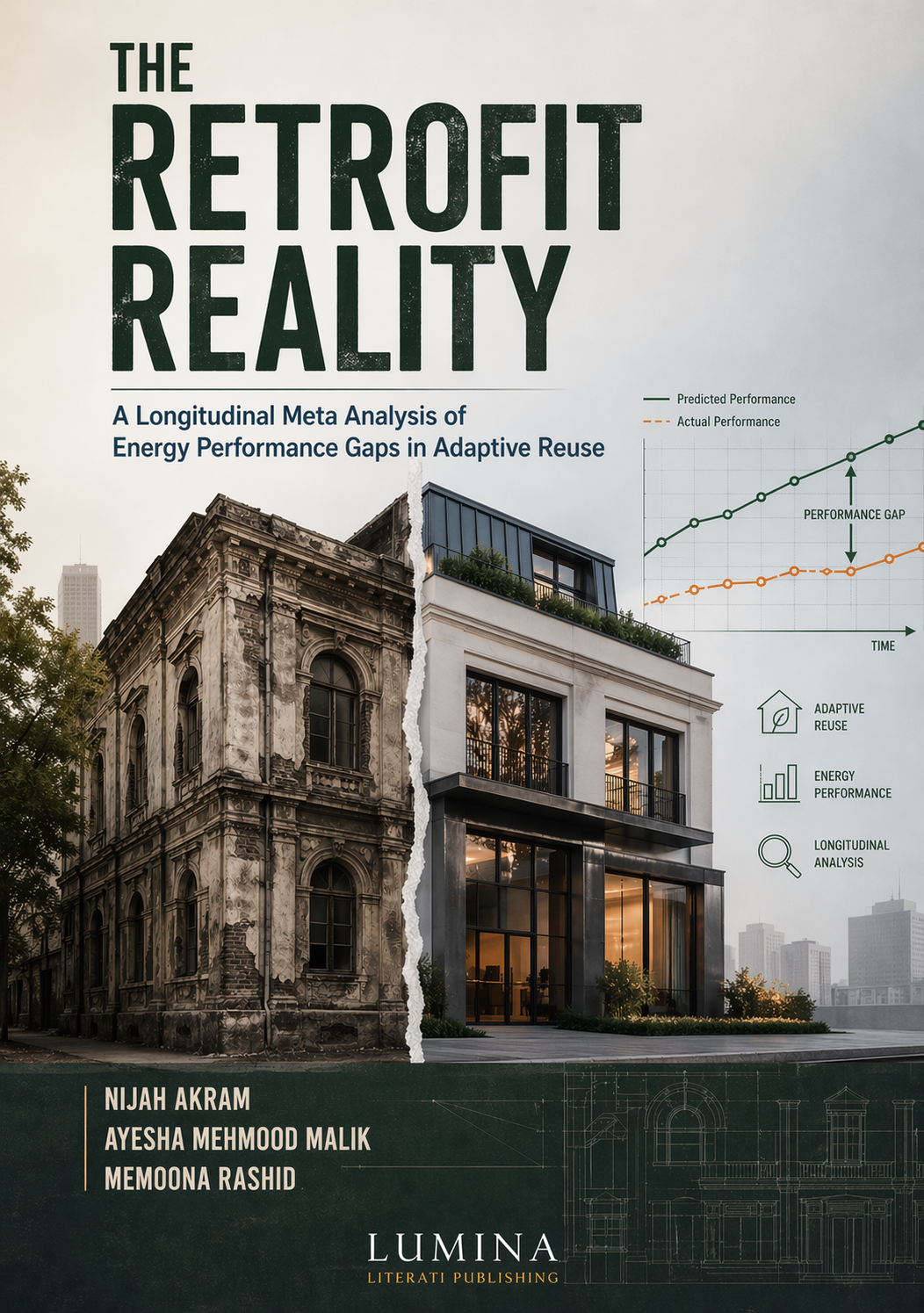
The Retrofit Reality: A Longitudinal Meta Analysis of Energy Performance Gaps in Adaptive Reuse book cover

The Retrofit Reality

A Longitudinal Meta Analysis of Energy Performance Gaps in Adaptive Reuse

By , , and

Published by Lumina Literati Publishing
Publication Year:
ISBN: 978-627-7813-50-5

Book Overview

The Retrofit Reality: A Longitudinal Meta Analysis of Energy Performance Gaps in Adaptive Reuse emerges from the urgent global conversation surrounding urban growth, resource depletion, and heritage. While adaptive reuse is widely celebrated for preserving embodied carbon and cultural heritage, far less attention has been given to the operational realities that unfold after renovation. This monograph investigates whether retrofitted buildings truly perform as predicted and if design promises translate into measurable energy efficiency over time.

Moving beyond symbolic sustainability claims, this work meticulously explores the measurable gap between intended and actual performance through a rigorous, forward-looking lens. By focusing on longitudinal evidence, the authors illuminate how retrofitted buildings behave not only at handover but throughout years of occupation. This essential volume provides clarity to researchers, policymakers, architects, engineers, and facility managers, emphasizing that sustainable futures require honest buildings, not merely beautiful intentions.

About the Authors

Dr. Nijah Akram

Dr. Nijah Akram is an academic and architectural engineering professional with over sixteen years of experience in higher education, research, academic leadership, and professional practice. She holds a Ph.D. in Architectural Engineering from UET Lahore, specializing in integrated lighting systems, human-centric design, and energy-economic efficiency in healthcare buildings. She currently serves as Head of the Department of Architectural Engineering Technology at Punjab Tianjin University of Technology, Lahore.

Dr. Ayesha Mehmood Malik

Dr. Ayesha Mehmood Malik is an accomplished academic, researcher, and architectural professional with more than twenty years of experience in teaching, research, academic leadership, and professional practice. She holds a Ph.D. in Architecture and is currently Head of the School of Architecture at the University of Lahore. She is Editor-in-Chief of the Journal of Architecture and Built Environment Research and serves on advisory boards of several national and international journals.

Memoona Rashid

Memoona Rashid is Associate Professor at the School of Architecture, Faculty of Arts and Architecture, The University of Lahore, Pakistan. She possesses fifteen years of professional and academic experience, including fourteen years in higher education. A proud graduate of UET Lahore, she completed her Master of Architecture in 2021 from the Department of Architecture, University of the Punjab. Since 2016, she has been actively engaged in research on Sustainable Architecture, with a focus on energy-efficient buildings, climate-responsive architecture, and sustainable development.

Endorsements & Reviews

“This book addresses that gap with clarity and academic seriousness. The authors examine retrofit practice through the important lens of energy performance, exposing how assumptions made during design stages may diverge from lived building outcomes.”

“Their work is especially valuable because it recognizes that buildings are social systems as much as technical systems. Occupants, management cultures, maintenance regimes, institutional priorities, and user expectations all shape performance trajectories.”

“I commend the authors for producing a timely and meaningful contribution to the built environment literature. This publication therefore contributes not only to architecture and engineering, but also to wider interdisciplinary scholarship.”

— Dr. Saira Siddiqui, Assistant Professor, Department of Sociology, Government College University Faisalabad

— Dr. Basharat Ali, Assistant Professor and Focal Person, Department of Sociology, Government College University Faisalabad

— Dr. Muhammad Atif, Assistant Professor, Department of Rural Sociology, University of Agriculture Faisalabad

Open Access Promotion – Final Design

Free & Open Access

This scholarly work is available to everyone. Click the cover to start reading our new publication without barriers.

The Retrofit Reality: A Longitudinal Meta Analysis of Energy Performance Gaps in Adaptive Reuse

References

Showing 10 of 335 referencesShowing all 335 references

1
Aoidh, C. M., & Cleempoel, K. V. (2022). Translated anthologies: (Re)establishing adaptive reuse as a transdisciplinary cultural practice. https://doi.org/10.4995/vibrarch2022.2022.15194
2
Askar, R., Bragança, L., & Gervásio, H. (2021). Adaptability of Buildings: A Critical Review on the Concept Evolution. Applied Sciences, 11(10), 4483. https://doi.org/10.3390/app11104483
3
Askar, R., Bragança, L., & Gervásio, H. (2022). Design for Adaptability (DfA) Frameworks and Assessment Models for Enhanced Circularity in Buildings. Applied System Innovation, 5(1), 24. https://doi.org/10.3390/asi5010024
4
Bosone, M., Toro, P. D., Girard, L. F., Gravagnuolo, A., & Iodice, S. (2021). Indicators for Ex-Post Evaluation of Cultural Heritage Adaptive Reuse Impacts in the Perspective of the Circular Economy. Sustainability, 13(9), 4759. https://doi.org/10.3390/su13094759
5
Celadyn, M. (2019). Interior Architectural Design for Adaptive Reuse in Application of Environmental Sustainability Principles. Sustainability, 11(14), 3820. https://doi.org/10.3390/su11143820
6
Farooq, S., & Qureshi, A. K. (2020). Sustainable Viability for Restoration and Adaptive Reuse of Sikh Era Havelis in Lahore, Pakistan. Sir Syed University Research Journal of Engineering & Technology, 10(2). https://doi.org/10.33317/ssurj.162
7
Gruis, V., & Remøy, H. (2023). A comprehensive literature review on the decision criteria for adaptive reuse throughout the AR process. https://doi.org/10.15396/eres2023_184
8
Hamida, M. B., Remøy, H., Gruis, V., & Laar, B. van. (2024). Towards promoting circular building adaptability in adaptive reuse projects: a co-developed framework. Smart and Sustainable Built Environment. https://doi.org/10.1108/sasbe-03-2024-0087
9
Hassanain, M. A., & Hamida, M. B. (2023). AEC/FM performance in adaptive reuse projects: investigation of challenges and development of practical guidelines. Facilities, 41(7/8), 477–497. https://doi.org/10.1108/f-04-2022-0053
10
Lerario, A. (2022). The Role of Built Heritage for Sustainable Development Goals: From Statement to Action. Heritage, 5(3), 2444–2463. https://doi.org/10.3390/heritage5030127
11
Li, Y., Zhao, L., Huang, J., & Law, A. (2021). Research frameworks, methodologies, and assessment methods concerning the adaptive reuse of architectural heritage: a review. Built Heritage, 5(1). https://doi.org/10.1186/s43238-021-00025-x
12
Lorens, P., & Bugalski, Ł. (2021). Reshaping the Gdańsk Shipyard The Birthplace of the Solidarity Movement. The Complexity of Adaptive Reuse in the Heritage Context. Sustainability, 13(13), 7183. https://doi.org/10.3390/su13137183
13
Mustafa, F. A. (2023). Adaptive Reuse of Historical Buildings Using ARP Model: The Case of Qishla Castle in Koya City. Sage Open, 13(3). https://doi.org/10.1177/21582440231193717
14
Nikolić, M., Drobnjak, B., & Ćulafić, I. K. (2020). The Possibilities of Preservation, Regeneration and Presentation of Industrial Heritage: The Case of Old Mint “A.D.” on Belgrade Riverfront. Sustainability, 12(13), 5264. https://doi.org/10.3390/su12135264
15
Owojori, O. M., Okoro, C., & Chileshe, N. (2021). Current Status and Emerging Trends on the Adaptive Reuse of Buildings: A Bibliometric Analysis. Sustainability, 13(21), 11646. https://doi.org/10.3390/su132111646
16
Samaranayake, R. A. D. I. U., Jayawickrama, T. S., Melagoda, D. G., & Rathnayake, R. M. D. I. M. (2019). Decision making on adaptive reuse of historic buildings in Sri Lanka. 239–247. https://doi.org/10.31705/wcs.2019.24
17
Stone, S. (2023). Notes towards a Definition of Adaptive Reuse. Architecture, 3(3), 477–489. https://doi.org/10.3390/architecture3030026
18
Strzelecki, S. (2025). Life Cycle Assessment (LCA) perspective for the decision-making methodology involved in adaptive reuse of buildings. Iop Conference Series Earth and Environmental Science, 1554(1), 012004. https://doi.org/10.1088/1755-1315/1554/1/012004
19
Vardopoulos, I., Tsilika, E., Sarantakou, E., Zorpas, A. A., Salvati, L., & Τσάρτας, Π. (2021). An Integrated SWOT-PESTLE-AHP Model Assessing Sustainability in Adaptive Reuse Projects. Applied Sciences, 11(15), 7134. https://doi.org/10.3390/app11157134
20
Viola, S., & Diano, D. (2019). Repurposing the Built Environment: Emerging Challenges and Key Entry Points for Future Research. Sustainability, 11(17), 4669. https://doi.org/10.3390/su11174669
21
Živković, M., Jovanović, G., & Kondić, S. (2014). Flexible planning strategies of sustainable city development. Facta Universitatis – Series Architecture and Civil Engineering, 12(3), 273–286. https://doi.org/10.2298/fuace1403273z
22
Bai, Y., Pan, W., & Yu, C. (2024). Impact of passive design measures on energy performance gap: A case study of high-rise residential buildings in Hong Kong. https://doi.org/10.46855/energy-proceedings-11021
23
Eon, C., Breadsell, J. K., Byrne, J., & Morrison, G. M. (2020). The Discrepancy between As-Built and As-Designed in Energy Efficient Buildings: A Rapid Review. Sustainability, 12(16), 6372. https://doi.org/10.3390/su12166372
24
Hernández-Moral, G., Mulero-Palencia, S., Serna-Gonzalez, V. I., Alonso, C., Sanz, R., Marinakis, V., Dimitropoulos, N., Mylona, Z., Antonucci, D., & Doukas, H. (2021). Big Data Value Chain: Multiple Perspectives for the Built Environment. Energies, 14(15), 4624. https://doi.org/10.3390/en14154624
25
Mahdavi, A., Berger, C., Amin, H., Ampatzi, E., Andersen, R. K., Azar, E., Barthelmes, V. M., Favero, M., Hahn, J., Khovalyg, D., Knudsen, H. N., Luna-Navarro, A., Roetzel, A., Sangogboye, F. C., Schweiker, M., Taheri, M., Teli, D., Touchie, M. F., & Verbruggen, S. (2021). The Role of Occupants in Buildings’ Energy Performance Gap: Myth or Reality? Sustainability, 13(6), 3146. https://doi.org/10.3390/su13063146
26
Moradi, S., Hirvonen, J., & Sormunen, P. (2024). Collaborative and life cycle-based project delivery for environmentally sustainable building construction: views of Finnish project professionals and building operation and maintenance experts. Smart and Sustainable Built Environment, 15(1), 407–430. https://doi.org/10.1108/sasbe-01-2024-0004
27
Robertson, C. W., & Mumovic, D. (2014). Building performance in the context of industry pressures. International Journal of Energy Sector Management, 8(4), 527–543. https://doi.org/10.1108/ijesm-11-2013-0005
28
Syse, H. R. (2025). Linking energy performance certificates and real-world energy use in public buildings. https://doi.org/10.21203/rs.3.rs-8096606/v1
29
Wang, X., Yuan, J., You, K., Ma, X., & Li, Z. (2023). Using Real Building Energy Use Data to Explain the Energy Performance Gap of Energy-Efficient Residential Buildings: A Case Study from the Hot Summer and Cold Winter Zone in China. Sustainability, 15(2), 1575. https://doi.org/10.3390/su15021575
30
Durosaiye, I., Hadjri, K., & Liyanage, C. (2019). A critique of post-occupancy evaluation in the UK. Journal of Housing and the Built Environment, 34(1), 345–352. https://doi.org/10.1007/s10901-019-09646-2
31
Gupta, R., Gregg, M., & Cherian, R. (2019). Developing a new framework to bring consistency and flexibility in evaluating actual building performance. International Journal of Building Pathology and Adaptation, 38(1), 228–255. https://doi.org/10.1108/ijbpa-04-2019-0032
32
Hadjri, K., & Crozier, C. R. (2009). Post‐occupancy evaluation: purpose, benefits and barriers. Facilities, 27(1/2), 21–33. https://doi.org/10.1108/02632770910923063
33
Kocbach, J., Folgerø, K., Skålvik, A. M., Wulff, M. O., Kjellberg, B., & Harsem, T. T. (2022). Framework for effective robust design of building energy systems: Bridging the gap between predicted and actual energy use. E3s Web of Conferences, 362, 10002. https://doi.org/10.1051/e3sconf/202236210002
34
Martin, R. (2023). Developing an Evaluation Protocol for the Toronto Public Library (TPL) System Through the Application of a Building Performance Evaluation (BPE) of a Branch Library to Inform its Retrofit Strategy. https://doi.org/10.32920/ryerson.14653893
35
Nouri, A., Treeck, C. van, & Frisch, J. (2024). Sensitivity Assessment of Building Energy Performance Simulations Using MARS Meta-Modeling in Combination with Sobol’ Method. Energies, 17(3), 695. https://doi.org/10.3390/en17030695
36
Riley, M., Kokkarinen, N., & Pitt, M. (2010). Assessing post occupancy evaluation in higher education facilities. Journal of Facilities Management, 8(3), 202–213. https://doi.org/10.1108/14725961011058839
37
Roberts, C., Edwards, D. J., Hosseini, M. R., García, M. M., & Owusu‐Manu, D. (2019). Post-occupancy evaluation: a review of literature. Engineering Construction & Architectural Management, 26(9), 2084–2106. https://doi.org/10.1108/ecam-09-2018-0390
38
Rogage, K., Clear, A. K., Alwan, Z., Lawrence, T., & Kelly, G. (2019). Assessing building performance in residential buildings using BIM and sensor data. International Journal of Building Pathology and Adaptation, 38(1), 176–191. https://doi.org/10.1108/ijbpa-01-2019-0012
39
Sawyer, L., Wilde, P. de, & Turpin‐Brooks, S. (2008). Energy performance and occupancy satisfaction. Facilities, 26(13/14), 542–551. https://doi.org/10.1108/02632770810914299
40
Thomsen, J., Berker, T., Hauge, Å. L., Denizou, K., Wågø, S. I., & Jerkø, S. (2013). The interaction between building and users in passive and zero‐energy housing and offices. Smart and Sustainable Built Environment, 2(1), 43–59. https://doi.org/10.1108/20466091311325845
41
Xu, X., Sunindijo, R. Y., & Mussi, E. (2020). Comparing user satisfaction of older and newer on-campus accommodation buildings in Australia. Facilities, 39(5/6), 389–410. https://doi.org/10.1108/f-11-2018-0133
42
Adeyeye, K., Piroozfar, P., Rosenkind, M., Winstanley, G., & Pegg, I. M. (2013). The impact of design decisions on post occupancy processes in school buildings. Facilities, 31(5/6), 255–278. https://doi.org/10.1108/02632771311307142
43
Anastasiadou, M., Santos, V., & Dias, M. S. (2021). Machine Learning Techniques Focusing on the Energy Performance of Buildings: A Dimensions and Methods Analysis. Buildings, 12(1), 28. https://doi.org/10.3390/buildings12010028
44
Bortolini, R., & Forcada, N. (2019). A probabilistic-based approach to support the comfort performance assessment of existing buildings. Journal of Cleaner Production, 237, 117720. https://doi.org/10.1016/j.jclepro.2019.117720
45
Cao, Y., Kamaruzzaman, S. N., & Aziz, N. M. (2022). Building Information Modeling (BIM) Capabilities in the Operation and Maintenance Phase of Green Buildings: A Systematic Review. Buildings, 12(6), 830. https://doi.org/10.3390/buildings12060830
46
Cleveland, B., & Fisher, K. (2013). The evaluation of physical learning environments: a critical review of the literature. Learning Environments Research, 17(1), 1–28. https://doi.org/10.1007/s10984-013-9149-3
47
Durosaiye, I., Hadjri, K., & Liyanage, C. (2019). A critique of post-occupancy evaluation in the UK. Journal of Housing and the Built Environment, 34(1), 345–352. https://doi.org/10.1007/s10901-019-09646-2
48
Eon, C., Breadsell, J. K., Byrne, J., & Morrison, G. M. (2020). The Discrepancy between As-Built and As-Designed in Energy Efficient Buildings: A Rapid Review. Sustainability, 12(16), 6372. https://doi.org/10.3390/su12166372
49
Foster, G., & Kreinin, H. (2020). A review of environmental impact indicators of cultural heritage buildings: a circular economy perspective. Environmental Research Letters, 15(4), 043003. https://doi.org/10.1088/1748-9326/ab751e
50
Goodarzi, F., Palaniappan, K., Pillay, M., & Ershadi, M. (2023). A scoping review of indoor air quality assessment in refurbished buildings. Smart and Sustainable Built Environment, 14(1), 93–118. https://doi.org/10.1108/sasbe-12-2022-0264
51
Gupta, R., Gregg, M., & Cherian, R. (2019). Developing a new framework to bring consistency and flexibility in evaluating actual building performance. International Journal of Building Pathology and Adaptation, 38(1), 228–255. https://doi.org/10.1108/ijbpa-04-2019-0032
52
Hadjri, K., & Crozier, C. R. (2009). Post‐occupancy evaluation: purpose, benefits and barriers. Facilities, 27(1/2), 21–33. https://doi.org/10.1108/02632770910923063
53
Husin, H. N., Nawawi, A. H., Ismail, F., & Khalil, N. (2018). Improving safety performance through post occupancy evaluations (POE). Journal of Facilities Management, 16(1), 65–86. https://doi.org/10.1108/jfm-06-2017-0028
54
Mahdavi, A., Berger, C., Amin, H., Ampatzi, E., Andersen, R. K., Azar, E., Barthelmes, V. M., Favero, M., Hahn, J., Khovalyg, D., Knudsen, H. N., Luna-Navarro, A., Roetzel, A., Sangogboye, F. C., Schweiker, M., Taheri, M., Teli, D., Touchie, M. F., & Verbruggen, S. (2021). The Role of Occupants in Buildings’ Energy Performance Gap: Myth or Reality? Sustainability, 13(6), 3146. https://doi.org/10.3390/su13063146
55
Martin, R. (2023). Developing an Evaluation Protocol for the Toronto Public Library (TPL) System Through the Application of a Building Performance Evaluation (BPE) of a Branch Library to Inform its Retrofit Strategy. https://doi.org/10.32920/ryerson.14653893
56
Mirabella, N., Röck, M., Saade, M. R. M., Spirinckx, C., BOSMANS, M., Allacker, K., & Passer, A. (2018). Strategies to Improve the Energy Performance of Buildings: A Review of Their Life Cycle Impact. Buildings, 8(8), 105. https://doi.org/10.3390/buildings8080105
57
Norton, T. A., Ayoko, O. B., & Ashkanasy, N. M. (2021). A Socio-Technical Perspective on the Application of Green Ergonomics to Open-Plan Offices. https://doi.org/10.20944/preprints202105.0044.v1
58
Riley, M., Cotgrave, A., & Kokkarinen, N. (2015). Prevalence of POE in UK higher education institutions. Structural Survey, 33(1), 4–14. https://doi.org/10.1108/ss-04-2014-0017
59
Riley, M., Kokkarinen, N., & Pitt, M. (2010). Assessing post occupancy evaluation in higher education facilities. Journal of Facilities Management, 8(3), 202–213. https://doi.org/10.1108/14725961011058839
60
Roberts, C., Edwards, D. J., Hosseini, M. R., García, M. M., & Owusu‐Manu, D. (2019). Post-occupancy evaluation: a review of literature. Engineering Construction & Architectural Management, 26(9), 2084–2106. https://doi.org/10.1108/ecam-09-2018-0390
61
Xu, X., Sunindijo, R. Y., & Mussi, E. (2020). Comparing user satisfaction of older and newer on-campus accommodation buildings in Australia. Facilities, 39(5/6), 389–410. https://doi.org/10.1108/f-11-2018-0133
62
Zuo, J., Yuan, X., & Pullen, S. (2011). Post Occupancy Evaluation Study in Hospital Buildings – a Pilot Study. Applied Mechanics and Materials, 94–96, 2248–2256. https://doi.org/10.4028/www.scientific.net/amm.94-96.2248
63
Adams, R., Smart, P., & Huff, A. S. (2016). Shades of Grey: Guidelines for Working with the Grey Literature in Systematic Reviews for Management and Organizational Studies. International Journal of Management Reviews, 19(4), 432–454. https://doi.org/10.1111/ijmr.12102
64
Birnie‐Gauvin, K., Rytwinski, T., Harper, M., Taylor, J. J., Smith, A., Smokorowski, K. E., Turgeon, K., Bradford, M. J., & Cooke, S. J. (2021). How do natural changes in flow magnitude affect fish abundance and diversity in temperate regions? A systematic review protocol. Ecological Solutions and Evidence, 2(2). https://doi.org/10.1002/2688-8319.12079
65
Blackman, F., Walsh, N., & Paskins, Z. (2025). Physiotherapy Capabilities in the Health Care of Adult Patients at Increased Risk of Osteoporotic Fractures: A Scoping Review Protocol. Musculoskeletal Care, 23(2). https://doi.org/10.1002/msc.70125
66
Boateng, R., Karim, F., Bielecki, J., Batt, A. M., Gajaria, A., Munce, S., & Rac, V. E. (2024). Development and implementation determinants of competency frameworks for mental health clinicians and service providers working with youth: a scoping review protocol. BMJ Open, 14(8), e087437. https://doi.org/10.1136/bmjopen-2024-087437
67
Brown, T. (2025). The importance of incorporating grey literature evidence in occupational therapy scoping review search protocols. Australian Occupational Therapy Journal, 72(6). https://doi.org/10.1111/1440-1630.70056
68
Endalcachew, M., DeBerg, J., Swee, M. L., Suneja, M., & Kumar, B. (2023). Professional identity formation among undergraduate pre-medical students: a scoping review protocol. Systematic Reviews, 12(1). https://doi.org/10.1186/s13643-023-02329-8
69
Eon, C., Breadsell, J. K., Byrne, J., & Morrison, G. M. (2020). The Discrepancy between As-Built and As-Designed in Energy Efficient Buildings: A Rapid Review. Sustainability, 12(16), 6372. https://doi.org/10.3390/su12166372
70
Finning, K., Moore, D., Ukoumunne, O. C., Danielsson-Waters, E., & Ford, T. (2017). The association between child and adolescent emotional disorder and poor attendance at school: a systematic review protocol. Systematic Reviews, 6(1). https://doi.org/10.1186/s13643-017-0523-6
71
Foo, Y. Z., O’Dea, R. E., Koricheva, J., Nakagawa, S., & Lagisz, M. (2021). A practical guide to question formation, systematic searching and study screening for literature reviews in ecology and evolution. Methods in Ecology and Evolution, 12(9), 1705–1720. https://doi.org/10.1111/2041-210x.13654
72
Golder, S., Loke, Y. K., Wright, K., & Norman, G. (2016). Reporting of Adverse Events in Published and Unpublished Studies of Health Care Interventions: A Systematic Review. Plos Medicine, 13(9), e1002127. https://doi.org/10.1371/journal.pmed.1002127
73
Hurissa, Z. (2025). A Comprehensive Systematic Review of Sepsis Burden and Healthcare Challenges in Ethiopia. https://doi.org/10.21203/rs.3.rs-6025779/v1
74
Ismail, F., Myburgh, C., & Downing, C. (2024). Interprofessional education interventions in undergraduate students of musculoskeletal healthcare professions: a scoping review protocol. BMJ Open, 14(3), e078483. https://doi.org/10.1136/bmjopen-2023-078483
75
Kerins, C., McSharry, J., Hayes, C., Perry, I. J., Geaney, F., & Kelly, C. (2018). Barriers and facilitators to implementation of menu labelling interventions to support healthy food choices: a mixed methods systematic review protocol. Systematic Reviews, 7(1). https://doi.org/10.1186/s13643-018-0752-3
76
Korevaar, D. A., Salameh, J., Vali, Y., Cohen, J. F., McInnes, M. D. F., Spijker, R., & Bossuyt, P. M. (2020). Searching practices and inclusion of unpublished studies in systematic reviews of diagnostic accuracy. Research Synthesis Methods, 11(3), 343–353. https://doi.org/10.1002/jrsm.1389
77
Lachance, C. C., Jurkowski, M. P., Dymarz, A., & Mackey, D. C. (2016). Compliant flooring to prevent fall-related injuries: a scoping review protocol. BMJ Open, 6(8), e011757. https://doi.org/10.1136/bmjopen-2016-011757
78
Maidana, G. M., Júnior, M. A. F., Mota, F. M., Cardoso, A. I. de Q., Abes, B. D., Dias, M., & Meza, L. L. (2025). Cost analysis of corneal tissue processing: A scoping review protocol. Plos One, 20(2), e0317681. https://doi.org/10.1371/journal.pone.0317681
79
Mertens, C., Quenzer-Alfred, C., Kamin, A.-M., & Mays, D. (2023). Publication Status as a Common Inclusion Criterion in Systematic Reviews. Medienpädagogik Zeitschrift Für Theorie Und Praxis Der Medienbildung, 54, 51–78. https://doi.org/10.21240/mpaed/54/2023.08.12.x
80
Pickup, D., Bernard, R., Borokhovski, E., Wade, A., & Tamim, R. (2019). Systematically Searching Empirical Literature in the Social Sciences: Results from Two Meta-Analyses Within the Domain of Education. Российский Психологический Журнал, 15(4), 245–265. https://doi.org/10.21702/rpj.2018.4.10
81
Stridsberg, S. L., Richardson, M. X., Redekop, K., Ehn, M., & Wamala-Andersson, S. (2022). Gray Literature in Evaluating Effectiveness in Digital Health and Health and Welfare Technology: A Source Worth Considering. Journal of Medical Internet Research, 24(3), e29307. https://doi.org/10.2196/29307
82
Tsuji, S., Cristià, A., Frank, M. C., & Bergmann, C. (2019). Addressing publication bias in meta-analysis: Empirical findings from community-augmented meta-analyses of infant language development. https://doi.org/10.31222/osf.io/q5axy
83
Zafar, I., Schuwirth, L., Waller, S., Filho, C., & Magzoub, M. (2024). Protocol for conducting a scoping review on the influence of low-stakes assessment on student learning in medical education. F1000research, 13, 1537. https://doi.org/10.12688/f1000research.158552.1
84
Berger, C., & Mahdavi, A. (2024). Users’ Impact on Buildings’ Energy Performance Gap. Int Sustain Ener Conf Proc, 1. https://doi.org/10.52825/isec.v1i.1091
85
Eon, C., Breadsell, J. K., Byrne, J., & Morrison, G. M. (2020). The Discrepancy between As-Built and As-Designed in Energy Efficient Buildings: A Rapid Review. Sustainability, 12(16), 6372. https://doi.org/10.3390/su12166372
86
Fullerton, T. M., Pastor, D. J., Pokojovy, M., & Yurachek, A. T. (2023). Small Firm Electricity Demand in Las Cruces, New Mexico, USA. Economía, 46(91), 53–71. https://doi.org/10.18800/economia.202301.004
87
Mahdavi, A., Berger, C., Amin, H., Ampatzi, E., Andersen, R. K., Azar, E., Barthelmes, V. M., Favero, M., Hahn, J., Khovalyg, D., Knudsen, H. N., Luna-Navarro, A., Roetzel, A., Sangogboye, F. C., Schweiker, M., Taheri, M., Teli, D., Touchie, M. F., & Verbruggen, S. (2021). The Role of Occupants in Buildings’ Energy Performance Gap: Myth or Reality? Sustainability, 13(6), 3146. https://doi.org/10.3390/su13063146
88
Syse, H. R. (2025). Linking energy performance certificates and real-world energy use in public buildings. https://doi.org/10.21203/rs.3.rs-8096606/v1
89
Eon, C., Breadsell, J. K., Byrne, J., & Morrison, G. M. (2020). The Discrepancy between As-Built and As-Designed in Energy Efficient Buildings: A Rapid Review. Sustainability, 12(16), 6372. https://doi.org/10.3390/su12166372
90
Hart, P. D., & Buck, D. J. (2019). The effect of resistance training on health-related quality of life in older adults: Systematic review and meta-analysis. Health Promotion Perspectives, 9(1), 1–12. https://doi.org/10.15171/hpp.2019.01
91
Kitchenham, B., Madeyski, L., & Budgen, D. (2023). SEGRESS: Software Engineering Guidelines for REporting Secondary Studies. Ieee Transactions on Software Engineering, 49(3), 1273–1298. https://doi.org/10.1109/tse.2022.3174092
92
Peters, M. D. J., Marnie, C., Colquhoun, H., Garritty, C., Hempel, S., Horsley, T., Langlois, É. V., Lillie, E., O’Brien, K. K., Tunçalp, Ö., Wilson, M. G., Zarin, W., & Tricco, A. C. (2021). Scoping reviews: reinforcing and advancing the methodology and application. Systematic Reviews, 10(1). https://doi.org/10.1186/s13643-021-01821-3
93
Alhindawi, I., & Jimenez-Bescos, C. (2021). Comparative Evaluation of Thermal Comfort Levels in Passivhaus Under the Impact of Climate Change. https://doi.org/10.46855/energy-proceedings-7327
94
Ballarini, I., Costantino, A., Fabrizio, E., & Corrado, V. (2020). A Methodology to Investigate the Deviations between Simple and Detailed Dynamic Methods for the Building Energy Performance Assessment. Energies, 13(23), 6217. https://doi.org/10.3390/en13236217
95
Converso, S., Civiero, P., Ciprigno, S., Veselinova, I., & Riffat, S. (2023). Toward a Fast but Reliable Energy Performance Evaluation Method for Existing Residential Building Stock. Energies, 16(9), 3930. https://doi.org/10.3390/en16093930
96
Costanzo, V., Fabbri, K., & Piraccini, S. (2018). Stressing the passive behavior of a Passivhaus: An evidence-based scenario analysis for a Mediterranean case study. Building and Environment, 142, 265–277. https://doi.org/10.1016/j.buildenv.2018.06.035
97
Gonçalves, V., Costanzo, V., Fabbri, K., & Rakha, T. (2022). Overheating assessment in Passivhaus dwellings: the influence of prediction tools. Buildings and Cities, 3(1), 153–167. https://doi.org/10.5334/bc.151
98
Hernández, E. G., Chrysikou, E., Nekhlyudov, L., Gilroy, D. W., & Ordóñez‐Mena, J. M. (2022). Home-built environment interventions and inflammation biomarkers: a systematic review and meta-analysis protocol. BJGP Open, 6(4), BJGPO.2022.0104. https://doi.org/10.3399/bjgpo.2022.0104
99
Jradi, M., Arendt, K., Sangogboye, F. C., Mattera, C. G., Markoska, E., Kjærgaard, M. B., Veje, C., & Jôrgensen, B. N. (2018). ObepME: An online building energy performance monitoring and evaluation tool to reduce energy performance gaps. Energy and Buildings, 166, 196–209. https://doi.org/10.1016/j.enbuild.2018.02.005
100
Langston, C. (2013). The impact of criterion weights in facilities management decision making: an Australian case study. Facilities, 31(7/8), 270–289. https://doi.org/10.1108/02632771311317448
101
Lee, S. H., Hong, T., Piette, M. A., & Taylor-Lange, S. C. (2015). Energy retrofit analysis toolkits for commercial buildings: A review. Energy, 89, 1087–1100. https://doi.org/10.1016/j.energy.2015.06.112
102
Magni, M., Ochs, F., Bonato, P., D’Antoni, M., Geisler‐Moroder, D., Vries, S. de, Loonen, R., Maccarini, A., Afshari, A., & Calabrese, T. (n.d.). Comparison Of Simulation Results For A Reference Office Building – Analysis Of Deviations For Different BES Tools. 16, 1475–1482. https://doi.org/10.26868/25222708.2019.210834
103
Mahmoud, R., Kamara, J. M., & Burford, N. (2020). Opportunities and Limitations of Building Energy Performance Simulation Tools in the Early Stages of Building Design in the UK. Sustainability, 12(22), 9702. https://doi.org/10.3390/su12229702
104
Marini, D., Buswell, R., & Hopfe, C. J. (2015). Estimating Waste Heat from Domestic Hot Water Systems in UK Dwellings. https://doi.org/10.26868/25222708.2015.3041
105
Marschall, M., & Corradini, J. P. S. (2023). An industry case study using parametric modelling to facilitate Passive House design. International Journal of Architectural Computing, 21(3), 421–444. https://doi.org/10.1177/14780771231176140
106
Marschall, M., & Sepúlveda, P. (2022). How to Prevent a Passive House from Overheating: An Industry Case Study Using Parametric Design to Propose Compliance Strategies. https://doi.org/10.52842/conf.caadria.2022.2.639
107
Seminara, P., Vand, B., Sajjadian, S. M., & Tūpėnaitė, L. (2022). Assessing and Monitoring of Building Performance by Diverse Methods. Sustainability, 14(3), 1242. https://doi.org/10.3390/su14031242
108
Wright, G. S., & Klingenberg, K. (2015). Climate-Specific Passive Building Standards. https://doi.org/10.2172/1220516
109
Østergård, T., Jensen, R. L., & Maagaard, S. (2016). Building simulations supporting decision making in early design – A review. Renewable and Sustainable Energy Reviews, 61, 187–201. https://doi.org/10.1016/j.rser.2016.03.045
110
Attia, S., Mustafà, A., Giry, N., Popineau, M., Cuchet, M., & Gulirmak, N. (2021). Developing two benchmark models for post-world war II residential buildings. Energy and Buildings, 244, 111052. https://doi.org/10.1016/j.enbuild.2021.111052
111
Attia, S., Shadmanfar, N., & Ricci, F. (2020). Developing two benchmark models for nearly zero energy schools. Applied Energy, 263, 114614. https://doi.org/10.1016/j.apenergy.2020.114614
112
Avilés, Á. B. G., Carramiñana, C. P., Galiano-Garrigós, A., Ibarra-Coves, F., & Lozano-Romero, C. (2022). Analysis of the Energy Efficiency of Le Corbusier’s Dwellings: The Cité Frugès, an Opportunity to Reuse Garden Cities Designed for Healthy and Working Life. Sustainability, 14(8), 4537. https://doi.org/10.3390/su14084537
113
Cal, B. F.-D., Garrido-Marijuán, A., Eguiarte, O., Arregi, B., Romero-Amorrortu, A., Mezzasalma, G., Ferrarini, G., & Bernardi, A. (2021). Energy Performance Assessment of Innovative Building Solutions Coming from Construction and Demolition Waste Materials. Materials, 14(5), 1226. https://doi.org/10.3390/ma14051226
114
Cangelli, E., Giancotti, A., Kia, E. B., Zaiter, H., & Fonti, V. (2024). Public Housing Stock between Recovery and Sustainability: The Case of Tor Bella Monaca in Rome. Sustainability, 16(6), 2510. https://doi.org/10.3390/su16062510
115
Carlucci, S., Simone, M. D., Firth, S. K., Kjærgaard, M. B., Markovic, R., Rahaman, M. S., Annaqeeb, M. K., Biandrate, S., Das, A., Dziedzic, J., Fajilla, G., Favero, M., Ferrando, M., Hahn, J., Han, M., Peng, Y., Salim, F. D., Schlüter, A., & Treeck, C. van. (2020). Modeling occupant behavior in buildings. Building and Environment, 174, 106768. https://doi.org/10.1016/j.buildenv.2020.106768
116
Dang, M., Dobbelsteen, A. van den, & Voskuilen, P. (2024). A Parametric Modelling Approach for Energy Retrofitting Heritage Buildings: The Case of Amsterdam City Centre. Energies, 17(5), 994. https://doi.org/10.3390/en17050994
117
Fakhari, M. (2025). Web-based tool to evaluate and compare energy efficient renovation options for buildings. Iop Conference Series Earth and Environmental Science, 1554(1), 012063. https://doi.org/10.1088/1755-1315/1554/1/012063
118
Gervásio, H., Dimova, S., & Pinto, A. V. (2018). Benchmarking the Life-Cycle Environmental Performance of Buildings. Sustainability, 10(5), 1454. https://doi.org/10.3390/su10051454
119
Keena, N., Raugei, M., Lokko, M., Aly, M., Achnani, V., Reck, B. K., & Dyson, A. (2022). A Life-Cycle Approach to Investigate the Potential of Novel Biobased Construction Materials toward a Circular Built Environment. Energies, 15(19), 7239. https://doi.org/10.3390/en15197239
120
Laaroussi, Y., Bahrar, M., Zavrl, E., Mankibi, M. E., & Stritih, U. (2020). New qualitative approach based on data analysis of European building stock and retrofit market. Sustainable Cities and Society, 63, 102452. https://doi.org/10.1016/j.scs.2020.102452
121
Lozoya-Peral, A., Carramiñana, C. P., Galiano-Garrigós, A., Avilés, Á. B. G., & Emmitt, S. (2023). Exploring Energy Retrofitting Strategies and Their Effect on Comfort in a Vernacular Building in a Dry Mediterranean Climate. Buildings, 13(6), 1381. https://doi.org/10.3390/buildings13061381
122
Mahar, W. A., Verbeeck, G., Singh, M. K., & Attia, S. (2019). An Investigation of Thermal Comfort of Houses in Dry and Semi-Arid Climates of Quetta, Pakistan. Sustainability, 11(19), 5203. https://doi.org/10.3390/su11195203
123
Mahdavi, A., Berger, C., Amin, H., Ampatzi, E., Andersen, R. K., Azar, E., Barthelmes, V. M., Favero, M., Hahn, J., Khovalyg, D., Knudsen, H. N., Luna-Navarro, A., Roetzel, A., Sangogboye, F. C., Schweiker, M., Taheri, M., Teli, D., Touchie, M. F., & Verbruggen, S. (2021). The Role of Occupants in Buildings’ Energy Performance Gap: Myth or Reality? Sustainability, 13(6), 3146. https://doi.org/10.3390/su13063146
124
Netto, G. R., Mercader-Moyano, P., & Czajkowski, J. D. (2019). Methodological Approach for the Development of a Simplified Residential Building Energy Estimation in Temperate Climate. Sustainability, 11(15), 4040. https://doi.org/10.3390/su11154040
125
Palma, R. M., Ramos, J. S., Delgado, Mc. G., Amores, T. R. P., Rodríguez, L. R., & Domínguez, S. Á. (2023). Extending the Thermal Comfort Band in Residential Buildings: A Strategy towards a Less Energy-Intensive Society. Applied Sciences, 13(12), 7020. https://doi.org/10.3390/app13127020
126
Puttoo, S. I. (2021). Evaluation of critical factors from residential adaptive reuse projects within the context of Toronto, Ontario. https://doi.org/10.32920/ryerson.14652828.v1
127
Rakotonjanahary, M., Scholzen, F., & Waldmann, D. (2020). Summertime Overheating Risk Assessment of a Flexible Plug-In Modular Unit in Luxembourg. Sustainability, 12(20), 8474. https://doi.org/10.3390/su12208474
128
Saifudeen, A., & Mani, M. (2024). Adaptation of buildings to climate change: an overview. Frontiers in Built Environment, 10. https://doi.org/10.3389/fbuil.2024.1327747
129
Salvalai, G., Sesana, M. M., Brutti, D., & Imperadori, M. (2020). Design and Performance Analysis of a Lightweight Flexible nZEB. Sustainability, 12(15), 5986. https://doi.org/10.3390/su12155986
130
Santos, M. M., Lanzinha, J., & Ferreira, A. V. (2021). Proposal for a Methodology for Sustainable Rehabilitation Strategies of the Existing Building Stock The Ponte Gêa Neighborhood. Designs, 5(2), 26. https://doi.org/10.3390/designs5020026
131
Tsenkova, S. (2023). Perspective Chapter: Reimaging Affordable Housing through Adaptive Reuse of Built Heritage. https://doi.org/10.5772/intechopen.110072
132
Vol. 8 N. 1 (2022). (2022). Rivista Tema, 8(N. 1 (2022)). https://doi.org/10.30682/tema0801
133
Foster, G., Kreinin, H., & Stagl, S. (2020). The future of circular environmental impact indicators for cultural heritage buildings in Europe. Environmental Sciences Europe, 32(1). https://doi.org/10.1186/s12302-020-00411-9
134
Fufa, S. M., Flyen, C., & Flyen, A.-C. (2021). How Can Existing Buildings with Historic Values Contribute to Achieving Emission Reduction Ambitions? Applied Sciences, 11(13), 5978. https://doi.org/10.3390/app11135978
135
Iršová, Z., Doucouliagos, H., Havránek, T., & Stanley, T. D. (2023). Meta‐analysis of social science research: A practitioner’s guide. Journal of Economic Surveys, 38(5), 1547–1566. https://doi.org/10.1111/joes.12595
136
Kristl, Ž., Salaj, A. T., & Roumboutsos, A. (2019). Sustainability and universal design aspects in heritage building refurbishment. Facilities, 38(9/10), 599–623. https://doi.org/10.1108/f-07-2018-0081
137
Roettger, T. B., Askelund, A. D., Birkenæs, V., Bjørndal, L. D., Bochyńska, A., Glaser, B. D., Kalandadze, T., Korbmacher, M., Malovic, I., Mayor, J., Parekh, P., Quintana, D., & Hannigan, L. J. (2024). Transparency in epidemiological analyses of cohort data – A case study of the Norwegian Mother, Father, and Child cohort study (MoBa). https://doi.org/10.1101/2024.12.05.24318481
138
Abouaiana, A., & Battisti, A. (2023). Insights and Evidence on Energy Retrofitting Practices in Rural Areas: Systematic Literature Review (2012–2023). Buildings, 13(7), 1586. https://doi.org/10.3390/buildings13071586
139
Armstrong, G., Wilkinson, S., & Cilliers, E. J. (2023). A framework for sustainable adaptive reuse: understanding vacancy and underuse in existing urban buildings. Frontiers in Sustainable Cities, 5. https://doi.org/10.3389/frsc.2023.985656
140
Coyne, B., & Denny, E. (2021). Mind the Energy Performance Gap: testing the accuracy of building Energy Performance Certificates in Ireland. Energy Efficiency, 14(6). https://doi.org/10.1007/s12053-021-09960-1
141
Eon, C., Breadsell, J. K., Byrne, J., & Morrison, G. M. (2020). The Discrepancy between As-Built and As-Designed in Energy Efficient Buildings: A Rapid Review. Sustainability, 12(16), 6372. https://doi.org/10.3390/su12166372
142
Fennell, P., Ebrahimigharehbaghi, S., Mata, É., Kokogiannakis, G., Amrith, S., Ignatiadou, S., & Piano, S. L. (2025). Urban building energy models: how can we improve the treatment of uncertainty for energy policy decision-making? Environmental Research Communications, 7(2), 022002. https://doi.org/10.1088/2515-7620/ad9438
143
Foster, G., & Kreinin, H. (2020). A review of environmental impact indicators of cultural heritage buildings: a circular economy perspective. Environmental Research Letters, 15(4), 043003. https://doi.org/10.1088/1748-9326/ab751e
144
Goodarzi, F., Palaniappan, K., Pillay, M., & Ershadi, M. (2023). A scoping review of indoor air quality assessment in refurbished buildings. Smart and Sustainable Built Environment, 14(1), 93–118. https://doi.org/10.1108/sasbe-12-2022-0264
145
Gorjian, M. (2025). Affordable and Sustainable Housing: A Systematic Review of Global Evidence, Equity Gaps, and Policy Pathways. https://doi.org/10.21203/rs.3.rs-7390643/v1
146
Habibi, S. (n.d.). Low-cost intelligent refurbishment of façades : a study of Barcelona public school building façades. https://doi.org/10.5821/dissertation-2117-399825
147
Kaewunruen, S., Teuffel, P., Çavdar, A. D., Valta, O., Tambovceva, T., & Bajāre, D. (2024). Comparisons of stakeholders’ influences, inter-relationships, and obstacles for circular economy implementation on existing building sectors. Scientific Reports, 14(1). https://doi.org/10.1038/s41598-024-61863-0
148
Mahdavi, A., Berger, C., Amin, H., Ampatzi, E., Andersen, R. K., Azar, E., Barthelmes, V. M., Favero, M., Hahn, J., Khovalyg, D., Knudsen, H. N., Luna-Navarro, A., Roetzel, A., Sangogboye, F. C., Schweiker, M., Taheri, M., Teli, D., Touchie, M. F., & Verbruggen, S. (2021). The Role of Occupants in Buildings’ Energy Performance Gap: Myth or Reality? Sustainability, 13(6), 3146. https://doi.org/10.3390/su13063146
149
Nazeer, F. S., Kamardeen, I., & Hasan, A. (2024). Research needs for enhancing pre-occupancy evaluation of buildings. Built Environment Project and Asset Management, 14(4), 529–546. https://doi.org/10.1108/bepam-11-2023-0190
150
Sesana, E., Bertolin, C., Gagnon, A. S., & Hughes, J. (2019). Mitigating Climate Change in the Cultural Built Heritage Sector. Climate, 7(7), 90. https://doi.org/10.3390/cli7070090
151
Ahmed, A., García, M. M., Arewa, A., & Caratella, K. (2021). Integrated Performance Optimization of Higher Education Buildings Using Low-Energy Renovation Process and User Engagement. Energies, 14(5), 1475. https://doi.org/10.3390/en14051475
152
Banfill, P. F. G., Simpson, S. A., Haines, V., & Mallaband, B. (2012). Energy‐led retrofitting of solid wall dwellings: technical and user perspectives on airtightness. Structural Survey, 30(3), 267–279. https://doi.org/10.1108/02630801211241829
153
Coleman, S., Touchie, M. F., Robinson, J., & Peters, T. (2018). Rethinking Performance Gaps: A Regenerative Sustainability Approach to Built Environment Performance Assessment. Sustainability, 10(12), 4829. https://doi.org/10.3390/su10124829
154
Du, L., Leivo, V., Prasauskas, T., Täubel, M., Martuzevičius, D., & Haverinen‐Shaughnessy, U. (2019). Effects of energy retrofits on Indoor Air Quality in multifamily buildings. Indoor Air. https://doi.org/10.1111/ina.12555
155
Durosaiye, I., Hadjri, K., & Liyanage, C. (2019). A critique of post-occupancy evaluation in the UK. Journal of Housing and the Built Environment, 34(1), 345–352. https://doi.org/10.1007/s10901-019-09646-2
156
Gupta, R., & Barnfield, L. (2014). Unravelling the unintended consequences of home energy improvements. International Journal of Energy Sector Management, 8(4), 506–526. https://doi.org/10.1108/ijesm-11-2013-0006
157
Gupta, R., & Gregg, M. (2016). Do deep low carbon domestic retrofits actually work? Energy and Buildings, 129, 330–343. https://doi.org/10.1016/j.enbuild.2016.08.010
158
Gupta, R., Gregg, M., & Cherian, R. (2019). Developing a new framework to bring consistency and flexibility in evaluating actual building performance. International Journal of Building Pathology and Adaptation, 38(1), 228–255. https://doi.org/10.1108/ijbpa-04-2019-0032
159
Hassan, H., Mishra, A. K., Wemken, N., O’Dea, P., Cowie, H., McIntyre, B., & Coggins, M. A. (2024). Deep Energy Renovations’ Impact on Indoor Air Quality and Thermal Comfort of Residential Dwellings in Ireland – Arden Project. https://doi.org/10.2139/ssrn.4719822
160
Hogan, V., Macinate, M., Hassan, H., Doherty, E., Wemken, N., Norton, D., Foster, D. J., Cowie, H., & Coggins, M. A. (2025). Deep energy renovations in Irish domestic dwellings; unlocking health benefits. Indoor and Built Environment, 34(10), 1858–1872. https://doi.org/10.1177/1420326×251371323
161
Lowe, R., & Chiu, L. F. (2020). Innovation in deep housing retrofit in the United Kingdom: The role of situated creativity in transforming practice. Energy Research & Social Science, 63, 101391. https://doi.org/10.1016/j.erss.2019.101391
162
Mirzaie, S. (2024). From PROBE to net zero: A study of soft landings’ contribution. Building Services Engineering Research and Technology, 46(1), 75–85. https://doi.org/10.1177/01436244241277151
163
Parker, D., Sutherland, K., Chasar, D., Montemurno, J., Amos, B., & Kono, J. (2016). Phased Retrofits in Existing Homes In Florida Phase I: Shallow and Deep Retrofits. https://doi.org/10.2172/1238242
164
Perisoglou, E., Patterson, J. L., & Ionas, M. (2024). Evaluating the performance of six 1970s off-gas deep retrofit bungalows. Building Services Engineering Research and Technology, 46(1), 9–25. https://doi.org/10.1177/01436244241287111
165
Seminara, P., Vand, B., Sajjadian, S. M., & Tūpėnaitė, L. (2022). Assessing and Monitoring of Building Performance by Diverse Methods. Sustainability, 14(3), 1242. https://doi.org/10.3390/su14031242
166
Swan, W., Fitton, R., Gorse, C., Farmer, D., & Benjaber, M. (2017). The staged retrofit of a solid wall property under controlled conditions. Energy and Buildings, 156, 250–257. https://doi.org/10.1016/j.enbuild.2017.09.033
167
Teli, D., Dimitriou, T., James, P. A. B., Bahaj, A. S., Ellison, L., & Waggott, A. (2015). Fuel poverty-induced ‘prebound effect’ in achieving the anticipated carbon savings from social housing retrofit. Building Services Engineering Research and Technology, 37(2), 176–193. https://doi.org/10.1177/0143624415621028
168
Cornaro, C., Bovesecchi, G., Calcerano, F., Martinelli, L., & Gigliarelli, E. (2023). An HBIM Integrated Approach Using Non-Destructive Techniques (NDT) to Support Energy and Environmental Improvement of Built Heritage: The Case Study of Palazzo Maffei Borghese in Rome. Sustainability, 15(14), 11389. https://doi.org/10.3390/su151411389
169
Costa-Carrapiço, I., Croxford, B., Raslan, R., & González, J. N. (2022). Hygrothermal calibration and validation of vernacular dwellings: A genetic algorithm-based optimisation methodology. Journal of Building Engineering, 55, 104717. https://doi.org/10.1016/j.jobe.2022.104717
170
Gaspar, K. (n.d.). Impact assessment of the façades’ actual state on the energy performance gap of residential buildings. https://doi.org/10.5821/dissertation-2117-327398
171
Gupta, R., & Gregg, M. (2021). Integrated Testing of Building Fabric Thermal Performance for Calibration of Energy Models of Three Low-Energy Dwellings in the UK. Sustainability, 13(5), 2784. https://doi.org/10.3390/su13052784
172
Gupta, R., & Kotopouleas, A. (2018). Magnitude and extent of building fabric thermal performance gap in UK low energy housing. Applied Energy, 222, 673–686. https://doi.org/10.1016/j.apenergy.2018.03.096
173
Gutland, M. (n.d.). Evaluating Uncertainty in Hygrothermal Modelling of Heritage Masonry Buildings. https://doi.org/10.22215/etd/2022-15240
174
Higgins, R., Hogg, P., & Robinson, L. (2013). Towards a research informed teaching experience within a diagnostic radiography curriculum: The level 4 (year 1) student holistic experience. Radiography, 19(1), 62–66. https://doi.org/10.1016/j.radi.2012.08.006
175
Higgins, R., Robinson, L., & Hogg, P. (2014). An evaluation of the student and tutor experience of a residential summer school event (OPTIMAX). Radiography, 20(4), 363–368. https://doi.org/10.1016/j.radi.2014.06.015
176
Ide, L. (n.d.). Balancing Trade-Offs Between Deep Energy Retrofits and Heritage Conservation. https://doi.org/10.22215/etd/2020-14087
177
Johansson, P., Hagentoft, C.-E., & Kalagasidis, A. S. (2014). Retrofitting of a listed brick and wood building using vacuum insulation panels on the exterior of the facade: Measurements and simulations. Energy and Buildings, 73, 92–104. https://doi.org/10.1016/j.enbuild.2014.01.019
178
Llamosas, A. del C., Abdolmaleki, S. F., & Bugallo, P. M. B. (2022). Towards sustainable re-construction systems: from waste ruins to eco-efficient buildings. Renewable Energy and Environmental Sustainability, 7, 12. https://doi.org/10.1051/rees/2022001
179
Nardi, I., Lucchi, E., Rubeis, T. de, & Ambrosini, D. (2018). Quantification of heat energy losses through the building envelope: A state-of-the-art analysis with critical and comprehensive review on infrared thermography. Building and Environment, 146, 190–205. https://doi.org/10.1016/j.buildenv.2018.09.050
180
O’Grady, M., Lechowska, A., & Harte, A. M. (2017). Infrared thermography technique as an in-situ method of assessing heat loss through thermal bridging. Energy and Buildings, 135, 20–32. https://doi.org/10.1016/j.enbuild.2016.11.039
181
Parker, J., Farmer, D., Johnston, D., Fletcher, M., Thomas, F., Gorse, C., & Stenlund, S. (2019). Measuring and modelling retrofit fabric performance in solid wall conjoined dwellings. Energy and Buildings, 185, 49–65. https://doi.org/10.1016/j.enbuild.2018.12.010
182
Pfluger, R., Rieser, A., Leonardi, E., Herrera-Avellanosa, D., Hansen, E. J. de P., Curtis, R., Marincioni, V., Petsou, A., Gianpiero, E., López, C. S. P., Mauri, S. D., Hatt, T., Leijonhufvud, G., Kuchar, S., Sevela, P., & Borderon, J. C. (2021). Conservation compatible energy retrofit technologies: Part III – Documentation and assessment of materials and solutions for wall insulation in historic buildings. https://doi.org/10.18777/ieashc-task59-2021-0006
183
Tejedor, B., Lucchi, E., Bienvenido-Huertas, D., & Nardi, I. (2022). Non-destructive techniques (NDT) for the diagnosis of heritage buildings: Traditional procedures and futures perspectives. Energy and Buildings, 263, 112029. https://doi.org/10.1016/j.enbuild.2022.112029
184
Buda, A., Hansen, E. J. de P., Rieser, A., Giancola, E., Pracchi, V., Mauri, S. D., Marincioni, V., Gori, V., Fouseki, K., López, C. S. P., Faro, A. L., Egusquiza, A., Haas, F., Leonardi, E., & Herrera-Avellanosa, D. (2021). Conservation-Compatible Retrofit Solutions in Historic Buildings: An Integrated Approach. Sustainability, 13(5), 2927. https://doi.org/10.3390/su13052927
185
Cecconi, F. R., Cocchetti, G., Cornaggia, A., & Villa, T. (2020). Mechanical Behaviour of ETICS in Presence of Water. https://doi.org/10.23967/dbmc.2020.094
186
Dang, M., Dobbelsteen, A. van den, & Voskuilen, P. (2024). A Parametric Modelling Approach for Energy Retrofitting Heritage Buildings: The Case of Amsterdam City Centre. Energies, 17(5), 994. https://doi.org/10.3390/en17050994
187
Fedorczak-Cisak, M. (2023). A model for improving the energy efficiency of historic buildings with environmental and comfort considerations. Inżynieria Bezpieczeństwa Obiektów Antropogenicznych, (3), 1–14. https://doi.org/10.37105/iboa.176
188
Galatioto, A., Ciulla, G., & Ricciu, R. (2017). An overview of energy retrofit actions feasibility on Italian historical buildings. Energy, 137, 991–1000. https://doi.org/10.1016/j.energy.2016.12.103
189
Glew, D., Smith, M., Miles-Shenton, D., & Gorse, C. (2017). Assessing the quality of retrofits in solid wall dwellings. International Journal of Building Pathology and Adaptation, 35(5), 501–518. https://doi.org/10.1108/ijbpa-05-2017-0022
190
Halle, R. (n.d.). A Method for the Assessment of Moisture Conditions of Painted Wood Siding in Historic Wood Frame Buildings. https://doi.org/10.22215/etd/2022-14916
191
Lisitano, I. M., Laggiard, D., Fantucci, S., Serra, V., & Fenoglio, E. (2021). Evaluating the Impact of Indoor Insulation on Historic Buildings: A Multilevel Approach Involving Heat and Moisture Simulations. Applied Sciences, 11(17), 7944. https://doi.org/10.3390/app11177944
192
Mehr, S. Y., & Wilkinson, S. (2018). Technical issues and energy efficient adaptive reuse of heritage listed city halls in Queensland Australia. International Journal of Building Pathology and Adaptation, 36(5), 529–542. https://doi.org/10.1108/ijbpa-02-2018-0020
193
Nair, G., Verde, L., & Olofsson, T. (2022). A Review on Technical Challenges and Possibilities on Energy Efficient Retrofit Measures in Heritage Buildings. Energies, 15(20), 7472. https://doi.org/10.3390/en15207472
194
Organ, S. (2019). The opportunities and challenges of improving the condition and sustainability of a historic building at an international tourist attraction in the UK. International Journal of Building Pathology and Adaptation, 38(2), 329–355. https://doi.org/10.1108/ijbpa-09-2018-0076
195
Paschoalin, R. F., & Isaacs, N. (2021). Applying International Guidelines on Historic Building’s Retrofit in New Zealand: A Critical Context View. Heritage, 4(4), 3697–3711. https://doi.org/10.3390/heritage4040203
196
Pfluger, R., Rieser, A., Leonardi, E., Herrera-Avellanosa, D., Hansen, E. J. de P., Curtis, R., Marincioni, V., Petsou, A., Gianpiero, E., López, C. S. P., Mauri, S. D., Hatt, T., Leijonhufvud, G., Kuchar, S., Sevela, P., & Borderon, J. C. (2021). Conservation compatible energy retrofit technologies: Part III – Documentation and assessment of materials and solutions for wall insulation in historic buildings. https://doi.org/10.18777/ieashc-task59-2021-0006
197
Posani, M., Veiga, R., & Freitas, V. P. de. (2021). Retrofitting Historic Walls: Feasibility of Thermal Insulation and Suitability of Thermal Mortars. Heritage, 4(3), 2009–2022. https://doi.org/10.3390/heritage4030114
198
Sunikka‐Blank, M., & Galvin, R. (2016). Irrational homeowners? How aesthetics and heritage values influence thermal retrofit decisions in the United Kingdom. Energy Research & Social Science, 11, 97–108. https://doi.org/10.1016/j.erss.2015.09.004
199
Adekunle, T. O. (2019). Summer performance, comfort, and heat stress in structural timber buildings under moderate weather conditions. Smart and Sustainable Built Environment, 8(3), 220–242. https://doi.org/10.1108/sasbe-11-2018-0059
200
Costa-Carrapiço, I., González, J. N., Raslan, R., Sánchez, C. S.-G., & Marrero, M. D. R. (2022). Understanding thermal comfort in vernacular dwellings in Alentejo, Portugal: A mixed-methods adaptive comfort approach. Building and Environment, 217, 109084. https://doi.org/10.1016/j.buildenv.2022.109084
201
Diler, Y., Turhan, C., Arsan, Z. D., & Akkurt, G. G. (2021). Thermal comfort analysis of historical mosques. Case study: The Ulu mosque, Manisa, Turkey. Energy and Buildings, 252, 111441. https://doi.org/10.1016/j.enbuild.2021.111441
202
Ford, B., Mumovic, D., & Rawal, R. (2022). Alternatives to air-conditioning: policies, design, technologies, behaviours. Buildings and Cities, 3(1), 433–447. https://doi.org/10.5334/bc.256
203
Gupta, R., Kapsali, M., & Gregg, M. (2017). Comparative building performance evaluation of a ‘sustainable’ community centre and a public library building. Building Services Engineering Research and Technology, 38(6), 691–710. https://doi.org/10.1177/0143624417717202
204
Hegazi, Y. S., Shalaby, H. A., & Mohamed, M. (2021). Adaptive Reuse Decisions for Historic Buildings in Relation to Energy Efficiency and Thermal Comfort Cairo Citadel, a Case Study from Egypt. Sustainability, 13(19), 10531. https://doi.org/10.3390/su131910531
205
Koranteng, C., Simons, B., & Manu, F. W. (2021). A thermal performance study of four communities in Ghana’s savannah region. Engineering Construction & Architectural Management, 28(10), 3261–3281. https://doi.org/10.1108/ecam-07-2020-0572
206
Lawrence, R., & Keime, C. (2016). Bridging the gap between energy and comfort: Post-occupancy evaluation of two higher-education buildings in Sheffield. Energy and Buildings, 130, 651–666. https://doi.org/10.1016/j.enbuild.2016.09.001
207
Martinez-Molina, Α., Boarin, P., Tort-Ausina, I., & Vivancos, J. (2018). Assessing visitors’ thermal comfort in historic museum buildings: Results from a Post-Occupancy Evaluation on a case study. Building and Environment, 132, 291–302. https://doi.org/10.1016/j.buildenv.2018.02.003
208
Metibogun, L. (n.d.). Overheating Of Green Public Library Buildings In Auckland: Three Case Studies. https://doi.org/10.26686/wgtn.19618062
209
Ozarisoy, B. (2022). Energy effectiveness of passive cooling design strategies to reduce the impact of long-term heatwaves on occupants’ thermal comfort in Europe: Climate change and mitigation. Journal of Cleaner Production, 330, 129675. https://doi.org/10.1016/j.jclepro.2021.129675
210
Saraiva, N. B., Pereira, L. D., Gaspar, A. R., & Costa, J. J. (2021). Barriers on Establishing Passive Strategies in Office Spaces: A Case Study in a Historic University Building. Sustainability, 13(8), 4563. https://doi.org/10.3390/su13084563
211
Spigliantini, G., Fabi, V., Schweiker, M., & Corgnati, S. P. (2019). Historical buildings’ energy conservation potentialities. International Journal of Building Pathology and Adaptation, 37(3), 306–325. https://doi.org/10.1108/ijbpa-12-2017-0062
212
Zhang, Y., Li, B., Caneparo, L., Meng, Q., Guo, W., & Liu, X. (2023). Physical Environment Study on Social Housing Stock in Italian Western Alps for Healthy and Sustainable Communities. Land, 12(7), 1468. https://doi.org/10.3390/land12071468
213
Zuhaib, S., Manton, R., Griffin, C., Hajdukiewicz, M., Keane, M., & Goggins, J. (2018). An Indoor Environmental Quality (IEQ) assessment of a partially-retrofitted university building. Building and Environment, 139, 69–85. https://doi.org/10.1016/j.buildenv.2018.05.001
214
Andaloro, A., Salvalai, G., Fregonese, G., Tso, L., & Paoletti, G. (2022). De-Risking the Energy Efficient Renovation of Commercial Office Buildings through Technical-Financial Risk Assessment. Sustainability, 14(2), 1011. https://doi.org/10.3390/su14021011
215
Berger, C., & Mahdavi, A. (2024). Users’ Impact on Buildings’ Energy Performance Gap. Int Sustain Ener Conf Proc, 1. https://doi.org/10.52825/isec.v1i.1091
216
Coyne, B., & Denny, E. (2021). Mind the Energy Performance Gap: testing the accuracy of building Energy Performance Certificates in Ireland. Energy Efficiency, 14(6). https://doi.org/10.1007/s12053-021-09960-1
217
Cozza, S., Patel, M., & Chambers, J. (2022). Uncertainty in potential savings from improving energy label: A Monte Carlo study of the Swiss residential buildings. Energy and Buildings, 271, 112333. https://doi.org/10.1016/j.enbuild.2022.112333
218
Eon, C., Breadsell, J. K., Byrne, J., & Morrison, G. M. (2020). The Discrepancy between As-Built and As-Designed in Energy Efficient Buildings: A Rapid Review. Sustainability, 12(16), 6372. https://doi.org/10.3390/su12166372
219
Mahdavi, A., Berger, C., Amin, H., Ampatzi, E., Andersen, R. K., Azar, E., Barthelmes, V. M., Favero, M., Hahn, J., Khovalyg, D., Knudsen, H. N., Luna-Navarro, A., Roetzel, A., Sangogboye, F. C., Schweiker, M., Taheri, M., Teli, D., Touchie, M. F., & Verbruggen, S. (2021). The Role of Occupants in Buildings’ Energy Performance Gap: Myth or Reality? Sustainability, 13(6), 3146. https://doi.org/10.3390/su13063146
220
Moradi, S., Hirvonen, J., & Sormunen, P. (2024). Collaborative and life cycle-based project delivery for environmentally sustainable building construction: views of Finnish project professionals and building operation and maintenance experts. Smart and Sustainable Built Environment, 15(1), 407–430. https://doi.org/10.1108/sasbe-01-2024-0004
221
Motuzienė, V., Lapinskienė, V., Rynkun, G., & Bielskus, J. (2021). Energy Performance Gap Analysis in Energy Efficient Residential Buildings in Lithuania. Environmental and Climate Technologies, 25(1), 610–620. https://doi.org/10.2478/rtuect-2021-0045
222
Peñasco, C., & Anadón, L. D. (2022). Assessing the Effectiveness of Energy Efficiency Measures in the Residential Sector Gas Consumption Through Dynamic Treatment Effects: Evidence from England and Wales. SSRN Electronic Journal. https://doi.org/10.2139/ssrn.4003841
223
Abela, A., Hoxley, M., McGrath, P., & Goodhew, S. (2013). A comparative analysis of implementation of the Energy Performance of Buildings Directive in the Mediterranean. International Journal of Law in the Built Environment, 5(3), 222–240. https://doi.org/10.1108/ijlbe-11-2012-0025
224
Alam, M., Zou, P. X. W., Stewart, R. A., Bertone, E., Sahin, O., Buntine, C., & Marshall, C. (2019). Government championed strategies to overcome the barriers to public building energy efficiency retrofit projects. Sustainable Cities and Society, 44, 56–69. https://doi.org/10.1016/j.scs.2018.09.022
225
Alonso, R. F., Olivadese, R., Ibba, A., & Recupero, D. R. (2023). Towards the Definition of a European Digital Building Logbook: A Survey. https://doi.org/10.2139/ssrn.4462118
226
Basu, C., Syal, M. G. M., Paul, V. K., & Priydarshini, M. (2022). Energy Efficiency Renovation Financing Models for Homeowners and Net Present Value Analysis: Case Study from India. International Journal of Real Estate Studies, 16(1), 1–13. https://doi.org/10.11113/intrest.v16n1.42
227
Bertoldi, P., Marina, E., Palermo, V., Boza‐Kiss, B., & Todeschi, V. (2020). How to finance energy renovation of residential buildings: Review of current and emerging financing instruments in the EU. Wiley Interdisciplinary Reviews Energy and Environment, 10(1). https://doi.org/10.1002/wene.384
228
Berzolla, Z., Meng, T., & Reinhart, C. (2025). Deal or no deal: U.S. homeowners’ willingness to pay for residential building retrofits. Environmental Research Infrastructure and Sustainability, 5(1), 015007. https://doi.org/10.1088/2634-4505/adac09
229
Bird, S., & Hernández, D. (2012). Policy options for the split incentive: Increasing energy efficiency for low-income renters. Energy Policy, 48, 506–514. https://doi.org/10.1016/j.enpol.2012.05.053
230
Brown, D., Sorrell, S., & Kivimaa, P. (2019). Worth the risk? An evaluation of alternative finance mechanisms for residential retrofit. Energy Policy, 128, 418–430. https://doi.org/10.1016/j.enpol.2018.12.033
231
Cole, C. R., McCullough, K., & Medders, L. (2017). State and local policy instruments for the promotion of catastrophe mitigation. Journal of Insurance Regulation. https://doi.org/10.52227/20999.2017
232
Dell’Anna, F., Duarte, C. R. M., Bravi, M., & Bottero, M. (2022). A choice experiment for testing the energy-efficiency mortgage as a tool for promoting sustainable finance. Energy Efficiency, 15(5). https://doi.org/10.1007/s12053-022-10035-y
233
Easthope, H., Palmer, J., Sharam, A., Nethercote, M., Pignatta, G., & Crommelin, L. (2023). Delivering sustainable apartment housing: New build and retrofit. Ahuri Final Report, (400). https://doi.org/10.18408/ahuri7128201
234
Espinoza-Zambrano, P., Duarte, C. R. M., & García-Hooghuis, A. (2023). Libro del Edificio Electrónico (LdE-e): Advancing towards a Comprehensive Tool for the Management and Renovation of Multifamily Buildings in Spain. Sustainability, 15(4), 2957. https://doi.org/10.3390/su15042957
235
Hoeller, P., Ziemann, V., Cournède, B., Bétin, M., Buquet, M.-A., Montes, A., Tikhmyanova, A., Barnes, S., & Kruse, T. (2023). Home, green home: Policies to decarbonise housing. https://doi.org/10.1787/cbda8bad-en
236
Jobst, A., Chen, R., Weber, S., Shabunina, A., Ebeke, C., Roaf, J., Arregui, N., Garcia-Macia, D., Frie, J.-M., Rabier, L., & Iakova, D. (2020). Sectoral Policies for Climate Change Mitigation in the EU. Departmental Paper, 2020(014), 1. https://doi.org/10.5089/9781513552651.087
237
Koltsios, S., Tsolakis, A. C., Fokaides, P. A., Katsifaraki, A., Cebrat, G., Jurelionis, A., Contopoulos, C., Chatzipanagiotidou, P., Malavazos, C., Ioannidis, D., & Tzovaras, D. (2021). D2EPC: Next Generation Digital and Dynamic Energy Performance Certificates. 01–06. https://doi.org/10.23919/splitech52315.2021.9566436
238
Laaroussi, Y., Bahrar, M., Zavrl, E., Mankibi, M. E., & Stritih, U. (2020). New qualitative approach based on data analysis of European building stock and retrofit market. Sustainable Cities and Society, 63, 102452. https://doi.org/10.1016/j.scs.2020.102452
239
Mazzarella, L. (2015). Energy retrofit of historic and existing buildings. The legislative and regulatory point of view. Energy and Buildings, 95, 23–31. https://doi.org/10.1016/j.enbuild.2014.10.073
240
Menicou, M., Exizidou, N., Vassiliou, V., Christou, P., Assimakopoulou, M., & Tsairidi, E. (2016). Economic Evaluation of Financial Incentive Schemes for Energy Retrofit Projects in Residential Buildings. Journal of Sustainable Architecture and Civil Engineering, 16(3). https://doi.org/10.5755/j01.sace.16.3.16200
241
Rana, A., Sadiq, R., Alam, M., Karunathilake, H., & Hewage, K. (2021). Evaluation of financial incentives for green buildings in Canadian landscape. Renewable and Sustainable Energy Reviews, 135, 110199. https://doi.org/10.1016/j.rser.2020.110199
242
Triantafyllopoulos, N. (2024). Investigating Energy Renovation of Multi-Owner Buildings and Real Estate Market Issues in a Degraded Greek Urban Area. Sustainability, 16(7), 2903. https://doi.org/10.3390/su16072903
243
Wilkinson, S., & Sayce, S. (2020). Decarbonising real estate. Journal of European Real Estate Research, 13(3), 387–408. https://doi.org/10.1108/jerer-11-2019-0045
244
Zhang, H., Hewage, K., Karunathilake, H., Feng, H., & Sadiq, R. (2021). Research on policy strategies for implementing energy retrofits in the residential buildings. Journal of Building Engineering, 43, 103161. https://doi.org/10.1016/j.jobe.2021.103161
245
Amangeldy, B., Tasmurzayev, N., Imankulov, T., Baigarayeva, Z., Izmailov, N., Riza, T., Abdukarimov, A., Mukazhan, M., & Zhumagulov, B. T. (2025). AI-Powered Building Ecosystems: A Narrative Mapping Review on the Integration of Digital Twins and LLMs for Proactive Comfort, IEQ, and Energy Management. Sensors, 25(17), 5265. https://doi.org/10.3390/s25175265
246
Arsiwala, A., Elghaish, F., & Zoher, M. (2023). Digital twin with Machine learning for predictive monitoring of CO2 equivalent from existing buildings. Energy and Buildings, 284, 112851. https://doi.org/10.1016/j.enbuild.2023.112851
247
Bertolin, C., & Berto, F. (2023). Sustainable management of heritage buildings in long-term perspective (SyMBoL): current knowledge and further research needs. International Journal of Building Pathology and Adaptation, 42(1), 1–17. https://doi.org/10.1108/ijbpa-02-2023-0015
248
Bu, S., Shen, Q., Anumba, C., Wong, K. W., & Liang, X. (2015). Literature review of green retrofit design for commercial buildings with BIM implication. Smart and Sustainable Built Environment, 4(2), 188–214. https://doi.org/10.1108/sasbe-08-2014-0043
249
Callegaro, N., & Albatici, R. (2023). Energy retrofit with prefabricated timber-based façade modules. Journal of Facade Design and Engineering, 11(1), 001–018. https://doi.org/10.47982/jfde.2023.1.01
250
Conley, B. J. (n.d.). Hygrothermal Analysis of Vacuum Insulation Panels in New and Retrofit Walls for Canada. https://doi.org/10.22215/etd/2022-15220
251
Derakhti, M. (n.d.). Rapid Workflow for Energy Model Calibration, Retrofit Optimization, and Uncertainty Analysis of Large Building Energy Retrofits. https://doi.org/10.22215/etd/2024-16063
252
Grillone, B., Danov, S., Sumper, A., Cipriano, J., & Mor, G. (2020). A review of deterministic and data-driven methods to quantify energy efficiency savings and to predict retrofitting scenarios in buildings. Renewable and Sustainable Energy Reviews, 131, 110027. https://doi.org/10.1016/j.rser.2020.110027
253
Gutland, M. (n.d.). Evaluating Uncertainty in Hygrothermal Modelling of Heritage Masonry Buildings. https://doi.org/10.22215/etd/2022-15240
254
Hamza-Lup, F. G., & Maghiar, M. (2016). Web3D graphics enabled through sensor networks for cost-effective assessment and management of energy efficiency in buildings. Graphical Models, 88, 66–74. https://doi.org/10.1016/j.gmod.2016.03.005
255
Harris, C. (2021). Opaque Envelopes: Pathway to Building Energy Efficiency and Demand Flexibility: Key to a Low-Carbon, Sustainable Future. https://doi.org/10.2172/1821413
256
Hendron, B. (2013). Advanced Energy Retrofit Guide: Practical Ways to Improve Energy Performance; Grocery Stores (Revised) (Book). https://doi.org/10.2172/1045045
257
Hong, T., Langevin, J., & Sun, K. (2018). Building simulation: Ten challenges. Building Simulation, 11(5), 871–898. https://doi.org/10.1007/s12273-018-0444-x
258
Ide, L. (n.d.). Balancing Trade-Offs Between Deep Energy Retrofits and Heritage Conservation. https://doi.org/10.22215/etd/2020-14087
259
Lee, S. H., Hong, T., Piette, M. A., & Taylor-Lange, S. C. (2015). Energy retrofit analysis toolkits for commercial buildings: A review. Energy, 89, 1087–1100. https://doi.org/10.1016/j.energy.2015.06.112
260
Miller, J. (2019). Systems approach to improved facility energy performance. https://doi.org/10.21079/11681/32944
261
Pagliano, L., Carlucci, S., Causone, F., Moazami, A., & Cattarin, G. (2016). Energy retrofit for a climate resilient child care centre. Energy and Buildings, 127, 1117–1132. https://doi.org/10.1016/j.enbuild.2016.05.092
262
Paschoalin, R. F. (n.d.). Energy renovation of historic buildings in New Zealand: Towards a holistic method for reducing environmental impact. https://doi.org/10.26686/wgtn.21547521
263
Piaia, E., Turillazzi, B., Giulio, R. D., & Sebastian, R. (2024). Advancing the Decarbonization of the Construction Sector: Lifecycle Quality and Performance Assurance of Nearly Zero-Energy Buildings. Sustainability, 16(9), 3687. https://doi.org/10.3390/su16093687
264
Schirber, T., Jacobson, R. A., Handeen, D., Mosiman, G., & Huelman, P. H. (2022a). Affordable Solid Panel “Perfect Wall” System. https://doi.org/10.2172/1984580
265
Schirber, T., Jacobson, R. A., Handeen, D., Mosiman, G., & Huelman, P. H. (2022b). Affordable Solid Panel “Perfect Wall” System. https://doi.org/10.2172/1846796
266
Shari, Z., Mohamad, N. L., & Dahlan, N. D. (2023). BUILDING ENVELOPE RETROFIT FOR ENERGY SAVINGS IN MALAYSIAN GOVERNMENT HIGH-RISE OFFICES: A CALIBRATED ENERGY SIMULATION. Jurnal Teknologi, 85(4), 1–15. https://doi.org/10.11113/jurnalteknologi.v85.15124
267
Simpson, T. (2023). Towards Development of a 1980’s Greater Hamilton Area Single Detached Residential Housing Archetype: Retrofitting to the Performance Levels of Net Zero Energy Ready. https://doi.org/10.32920/24033801.v1
268
Singh, R., Ravache, B., & Sartor, D. (2018). Transforming State-of-the-Art into Best Practice: A Guide for High-Performance Energy Efficient Buildings in India. https://doi.org/10.2172/1433127
269
Yılmaz, I. (n.d.). An Automated Building Energy Model Calibration Workflow to Improve Indoor Climate Controls. https://doi.org/10.22215/etd/2022-14935
270
Asdrubali, F., Venanzi, D., Evangelisti, L., Guattari, C., Grazieschi, G., Matteucci, P., & Roncone, M. (2020). An Evaluation of the Environmental Payback Times and Economic Convenience in an Energy Requalification of a School. Buildings, 11(1), 12. https://doi.org/10.3390/buildings11010012
271
Aujla, C. (2023). Upgrading Existing Housing in Yellowknife to Achieve Energy Efficient Standards. https://doi.org/10.32920/23541834.v1
272
Bu, S., Shen, Q., Anumba, C., Wong, K. W., & Liang, X. (2015). Literature review of green retrofit design for commercial buildings with BIM implication. Smart and Sustainable Built Environment, 4(2), 188–214. https://doi.org/10.1108/sasbe-08-2014-0043
273
Chen, X. M., Cimillo, M., Chow, D. H., & Chen, B. (2024). Assessing the Energy Performance and Retrofit Potential of the 1980–1990s’ Residential Building Stock in China’s Jiangsu Province: A Simulation-Based Study. Energies, 17(5), 1260. https://doi.org/10.3390/en17051260
274
Francisco, P. W., Jacobs, D. E., Targos, L., Dixon, S., Breysse, J., Rose, W. B., & Çalı, Ş. (2016). Ventilation, indoor air quality, and health in homes undergoing weatherization. Indoor Air, 27(2), 463–477. https://doi.org/10.1111/ina.12325
275
Granderson, J., Touzani, S., Fernandes, S., & Taylor, C. (2017). Application of automated measurement and verification to utility energy efficiency program data. Energy and Buildings, 142, 191–199. https://doi.org/10.1016/j.enbuild.2017.02.040
276
Grillone, B., Danov, S., Sumper, A., Cipriano, J., & Mor, G. (2020). A review of deterministic and data-driven methods to quantify energy efficiency savings and to predict retrofitting scenarios in buildings. Renewable and Sustainable Energy Reviews, 131, 110027. https://doi.org/10.1016/j.rser.2020.110027
277
Karaguzel, O. T., & Lam, K. P. (2011). Development of whole-building energy performance models as benchmarks for retrofit projects. 838–849. https://doi.org/10.1109/wsc.2011.6147810
278
Lee, S. H., Hong, T., Piette, M. A., & Taylor-Lange, S. C. (2015). Energy retrofit analysis toolkits for commercial buildings: A review. Energy, 89, 1087–1100. https://doi.org/10.1016/j.energy.2015.06.112
279
Luther, M., & Rajagopalan, P. (2014). DEFINING AND DEVELOPING AN ENERGY RETROFITTING APPROACH. Journal of Green Building, 9(3), 151–162. https://doi.org/10.3992/1943-4618-9.3.151
280
Manca, M. (2025). Whole Life cycle building decarbonization: The case study of a sport building retrofit in Catalonia. Iop Conference Series Earth and Environmental Science, 1568(1), 012007. https://doi.org/10.1088/1755-1315/1568/1/012007
281
Noris, F., Adamkiewicz, G., Delp, W. W., Hotchi, T., Russell, M., Singer, B. C., Spears, M., Vermeer, K., & Fisk, W. J. (2013). Indoor environmental quality benefits of apartment energy retrofits. Building and Environment, 68, 170–178. https://doi.org/10.1016/j.buildenv.2013.07.003
282
Noris, F., Delp, W. W., Vermeer, K., Adamkiewicz, G., Singer, B. C., & Fisk, W. J. (2012). Protocol for Maximizing Energy Savings and Indoor Environmental Quality Improvements when Retrofiting Apartments. https://doi.org/10.2172/1220275
283
Noris, F., Delp, W. W., Vermeer, K., Adamkiewicz, G., Singer, B. C., & Fisk, W. J. (2013). Protocol for maximizing energy savings and indoor environmental quality improvements when retrofitting apartments. Energy and Buildings, 61, 378–386. https://doi.org/10.1016/j.enbuild.2013.02.046
284
Pagliano, L., Carlucci, S., Causone, F., Moazami, A., & Cattarin, G. (2016). Energy retrofit for a climate resilient child care centre. Energy and Buildings, 127, 1117–1132. https://doi.org/10.1016/j.enbuild.2016.05.092
285
Paschoalin, R. F. (n.d.). Energy renovation of historic buildings in New Zealand: Towards a holistic method for reducing environmental impact. https://doi.org/10.26686/wgtn.21547521
286
Robertson, J., Polly, B., & Collis, J. M. (2015). Reduced-order modeling and simulated annealing optimization for efficient residential building utility bill calibration. Applied Energy, 148, 169–177. https://doi.org/10.1016/j.apenergy.2015.03.049
287
Simpson, T. (2023). Towards Development of a 1980’s Greater Hamilton Area Single Detached Residential Housing Archetype: Retrofitting to the Performance Levels of Net Zero Energy Ready. https://doi.org/10.32920/24033801
288
Sun, X.-J., Brown, M. A., Cox, M., & Jackson, R. (2015). Mandating better buildings: a global review of building codes and prospects for improvement in the United States. Wiley Interdisciplinary Reviews Energy and Environment, 5(2), 188–215. https://doi.org/10.1002/wene.168
289
Wang, P., & Zhang, S. (2022). Retrofitting Strategies Based on Orthogonal Array Testing to Develop Nearly Zero Energy Buildings. Sustainability, 14(8), 4451. https://doi.org/10.3390/su14084451
290
Yılmaz, I. (n.d.). An Automated Building Energy Model Calibration Workflow to Improve Indoor Climate Controls. https://doi.org/10.22215/etd/2022-14935 none. (2014). Windows and Building Envelope Research and Development: A Roadmap for Emerging Technologies. https://doi.org/10.2172/1220810
291
Anastasiadou, M., Santos, V., & Dias, M. S. (2021). Machine Learning Techniques Focusing on the Energy Performance of Buildings: A Dimensions and Methods Analysis. Buildings, 12(1), 28. https://doi.org/10.3390/buildings12010028
292
Canfora, A. (2025). Urban Buildings Energy Consumption Estimation Using HPC: A Case Study of Bologna. https://doi.org/10.48550/arxiv.2511.19463
293
Derakhti, M. (n.d.). Rapid Workflow for Energy Model Calibration, Retrofit Optimization, and Uncertainty Analysis of Large Building Energy Retrofits. https://doi.org/10.22215/etd/2024-16063
294
Grillone, B. (n.d.). Data-driven methodologies for evaluation and recommendation of energy efficiency measures in buildings. Applications in a big data environment. https://doi.org/10.5821/dissertation-2117-363915
295
Heidari, A., & Olivieri, F. (2023). Qualitative and Quantitative Scientometric Analysis of Bioclimatic Retrofitting in Commercial Buildings from 2008 to 2022. Buildings, 13(9), 2177. https://doi.org/10.3390/buildings13092177
296
Hernández-Moral, G., Mulero-Palencia, S., Serna-Gonzalez, V. I., Alonso, C., Sanz, R., Marinakis, V., Dimitropoulos, N., Mylona, Z., Antonucci, D., & Doukas, H. (2021). Big Data Value Chain: Multiple Perspectives for the Built Environment. Energies, 14(15), 4624. https://doi.org/10.3390/en14154624
297
Hong, T., Chen, Y., Luo, X., Luo, N., & Lee, S. H. (2020). Ten questions on urban building energy modeling. Building and Environment, 168, 106508. https://doi.org/10.1016/j.buildenv.2019.106508
298
Hong, T., Langevin, J., & Sun, K. (2018). Building simulation: Ten challenges. Building Simulation, 11(5), 871–898. https://doi.org/10.1007/s12273-018-0444-x
299
Hong, T., Wang, Z., Luo, X., & Zhang, W. (2020). State-of-the-art on research and applications of machine learning in the building life cycle. Energy and Buildings, 212, 109831. https://doi.org/10.1016/j.enbuild.2020.109831
300
Jradi, M., Madsen, B. E., & Kaiser, J. H. (2023). DanRETwin: A Digital Twin Solution for Optimal Energy Retrofit Decision-Making and Decarbonization of the Danish Building Stock. Applied Sciences, 13(17), 9778. https://doi.org/10.3390/app13179778
301
Lee, S. H., Hong, T., Piette, M. A., & Taylor-Lange, S. C. (2015). Energy retrofit analysis toolkits for commercial buildings: A review. Energy, 89, 1087–1100. https://doi.org/10.1016/j.energy.2015.06.112
302
Ma, Z., Awan, M. B., Lu, M., Li, S., Aziz, M. S., Zhou, X., Du, H., Sha, X., & Li, Y. (2023). An Overview of Emerging and Sustainable Technologies for Increased Energy Efficiency and Carbon Emission Mitigation in Buildings. Buildings, 13(10), 2658. https://doi.org/10.3390/buildings13102658
303
Miller, C. (2020). The ASHRAE Great Energy Predictor III competition: Overview and results. https://doi.org/10.48550/arxiv.2007.06933
304
Moraliyage, H., Dahanayake, S., Silva, D. D., Mills, N., Rathnayaka, P., Nguyen, S., Alahakoon, D., & Jennings, A. (2022). A Robust Artificial Intelligence Approach with Explainability for Measurement and Verification of Energy Efficient Infrastructure for Net Zero Carbon Emissions. Sensors, 22(23), 9503. https://doi.org/10.3390/s22239503
305
Nutkiewicz, A., & Jain, R. K. (n.d.). Exploring the Integration of Simulation and Deep Learning Models for Urban Building Energy Modeling and Retrofit Analysis. 16, 3209–3216. https://doi.org/10.26868/25222708.2019.210264
306
Pereira, L. D., Tavares, V., & Soares, N. (2021). Up-To-Date Challenges for the Conservation, Rehabilitation and Energy Retrofitting of Higher Education Cultural Heritage Buildings. Sustainability, 13(4), 2061. https://doi.org/10.3390/su13042061
307
Qiao, Q., Yunusa‐Kaltungo, A., & Edwards, R. E. (2021). Towards developing a systematic knowledge trend for building energy consumption prediction. Journal of Building Engineering, 35, 101967. https://doi.org/10.1016/j.jobe.2020.101967
308
Sanyal, J., New, J., Edwards, R. E., & Parker, L. E. (2014). Calibrating building energy models using supercomputer trained machine learning agents. Concurrency and Computation Practice and Experience, 26(13), 2122–2133. https://doi.org/10.1002/cpe.3267
309
Shahcheraghian, A., Madani, H., & Ilinca, A. (2024). From White to Black-Box Models: A Review of Simulation Tools for Building Energy Management and Their Application in Consulting Practices. Energies, 17(2), 376. https://doi.org/10.3390/en17020376
310
Stefano, A. G. di, Ruta, M. F., & Masera, G. (2023). Advanced Digital Tools for Data-Informed and Performance-Driven Design: A Review of Building Energy Consumption Forecasting Models Based on Machine Learning. Applied Sciences, 13(24), 12981. https://doi.org/10.3390/app132412981
311
Tahmasebinia, F., Lin, L., Wu, S., Kang, Y., & Sepasgozar, S. M. E. (2023). Exploring the Benefits and Limitations of Digital Twin Technology in Building Energy. Applied Sciences, 13(15), 8814. https://doi.org/10.3390/app13158814 2023 Global Status Report for Buildings and Construction: Beyond foundations – Mainstreaming sustainable solutions to cut emissions from the buildings sector. (2024). https://doi.org/10.59117/20.500.11822/45095
312
Ademović, N., Formisano, A., Penazzato, L., & Oliveira, D. V. (2022). Seismic and energy integrated retrofit of buildings: A critical review. Frontiers in Built Environment, 8. https://doi.org/10.3389/fbuil.2022.963337
313
Avrami, E., Most, J. L., Gasha, A., & Ghoshal, S. M. (2021). Energy and historic buildings: toward evidence-based policy reform. Journal of Cultural Heritage Management and Sustainable Development, 13(2), 379–404. https://doi.org/10.1108/jchmsd-06-2021-0112
314
Bergman, N. (2013). Why is renewable heat in the UK underperforming? A socio-technical perspective. Proceedings of the Institution of Mechanical Engineers Part a Journal of Power and Energy, 227(1), 124–131. https://doi.org/10.1177/0957650912471291
315
Besen, P., & Boarin, P. (2018). THE FUTURE OF HISTORIC BUILDINGS: RETROFITTING TO IMPROVE THE THERMAL PERFORMANCE OF NEW ZEALAND ARCHITECTURAL HERITAGE. https://doi.org/10.2495/sdp180021
316
Bramono, N. T. I., Kim, A., & Berawi, M. A. (2019). A Preliminary Framework for Expediting Energy Efficiency Retrofits (EERs) Using Alternative Financing in Indonesian Cities. Csid Journal of Infrastructure Development, 2(1), 50. https://doi.org/10.32783/csid-jid.v2i1.36
317
Debnath, R., Bardhan, R., Shah, D. U., Koronaki, A., Bukauskas, A., Colman, A., Gatóo, A., Wiegand, E., Gin, Y., & Ramage, M. H. (2021). Climate repair through built environment: Decarbonising UK’s building sector through energy efficiency and natural materials. https://doi.org/10.33774/coe-2021-30w2x
318
Elkaftangui, M., & Mohamed, B. E. (2019). Rethinking the old residential sector in the UAE: a methodology for sustainable retrofitting. International Journal of Services Technology and Management, 25(1), 4. https://doi.org/10.1504/ijstm.2019.096600
319
Giraudet. (2012). Comparing and Combining Energy Saving Policies: Will Proposed Residential Sector Policies Meet French Official Targets? The Energy Journal, 32(1s). https://doi.org/10.5547/issn0195-6574-ej-vol33-si1-12
320
Horne, R., Dorignon, L., Lawson, J., Easthope, H., Dühr, S., Moore, T., Baker, E. H., Dalton, T., Pawson, H., & Fairbrother, P. (2023). Informing a strategy for circular economy housing in Australia. https://doi.org/10.31235/osf.io/trhvs
321
Jahed, N., Aktaş, Y. D., Rickaby, P. A., & Altınöz, A. G. B. (2020). Policy Framework for Energy Retrofitting of Built Heritage: A Critical Comparison of UK and Turkey. Atmosphere, 11(6), 674. https://doi.org/10.3390/atmos11060674
322
Kaewunruen, S., Teuffel, P., Çavdar, A. D., Valta, O., Tambovceva, T., & Bajāre, D. (2024). Comparisons of stakeholders’ influences, inter-relationships, and obstacles for circular economy implementation on existing building sectors. Scientific Reports, 14(1). https://doi.org/10.1038/s41598-024-61863-0
323
Killip, G., & Owen, A. (2020). The construction industry as agents of energy demand configuration in the existing housing stock. Energy Policy, 147, 111816. https://doi.org/10.1016/j.enpol.2020.111816
324
Kumaraswamy, M. M., Welege, N. M. H., & Pan, W. (2023). Accelerating the Delivery of Low-Carbon Buildings by Addressing Common Constraints: Perspectives from High-Rise, High-Density Cities. Buildings, 13(6), 1455. https://doi.org/10.3390/buildings13061455
325
Liu, C., Sharples, S., & Mohammadpourkarbasi, H. (2023). A Review of Building Energy Retrofit Measures, Passive Design Strategies and Building Regulation for the Low Carbon Development of Existing Dwellings in the Hot Summer–Cold Winter Region of China. Energies, 16(10), 4115. https://doi.org/10.3390/en16104115
326
Madadizadeh, A., Siddiqui, K., & Aliabadi, A. A. (2024). Review: The Economics Landscape for Building Decarbonization. Sustainability, 16(14), 6214. https://doi.org/10.3390/su16146214
327
Morel, H., & Dorpalen, B. D. (2023). Adaptive Thinking in Cities: Urban Continuity within Built Environments. Climate, 11(3), 54. https://doi.org/10.3390/cli11030054
328
Pourhosseini, M. (2025). Decarbonization Strategies for Low-Embodied Carbon in Mediterranean Cities: A Comparative Study of Seville, Barcelona, Valencia, and Milan. Iop Conference Series Earth and Environmental Science, 1568(1), 012060. https://doi.org/10.1088/1755-1315/1568/1/012060
329
Saradara, S. M., Khalfan, M., Rauf, A., & Qureshi, R. (2023). On The Path towards Sustainable Construction The Case of the United Arab Emirates: A Review. Sustainability, 15(19), 14652. https://doi.org/10.3390/su151914652
330
Simon, F., Gironás, J., Rivera, J. I., Vega, A., Arce, G., Molinos‐Senante, M., Jorquera, H., Flamant, G., Bustamante, W., Greene, M., Vargas, I. T., Suárez, F., Pastén, P., & Cortés, S. (2023). Toward sustainability and resilience in Chilean cities: Lessons and recommendations for air, water, and soil issues. Heliyon, 9(7), e18191. https://doi.org/10.1016/j.heliyon.2023.e18191
331
Sula, M. (2025). Comparing Attributional and Consequential LCA Approaches in Energy Efficiency and Space Sufficiency Renovations: A Swedish Single-Family Home Case Study. Iop Conference Series Earth and Environmental Science, 1554(1), 012128. https://doi.org/10.1088/1755-1315/1554/1/012128
332
Tang, D., Gong, X., & Liu, M. (2022). The Impact of Government Behaviors on the Transition Towards Carbon Neutrality in the Construction Industry: A Perspective of the Whole Life Cycle of Buildings. Frontiers in Environmental Science, 10. https://doi.org/10.3389/fenvs.2022.945921
333
Working Out Change. (2009). https://doi.org/10.1787/9789264075924-en
334
Zuluaga, S., Saxe, S., & Karney, B. (2025). Circular economy strategies in cities as a value‐driven approach to infrastructure management. Journal of Industrial Ecology, 29(5), 1821–1832. https://doi.org/10.1111/jiec.70086
335
Ürge-Vorsatz, D., Khosla, R., Bernhardt, R., Chan, Y. C., Vérez, D., Hu, S., & Cabeza, L. F. (2020). Advances Toward a Net-Zero Global Building Sector. Annual Review of Environment and Resources, 45(1), 227–269. https://doi.org/10.1146/annurev-environ-012420-045843

Scroll to Top