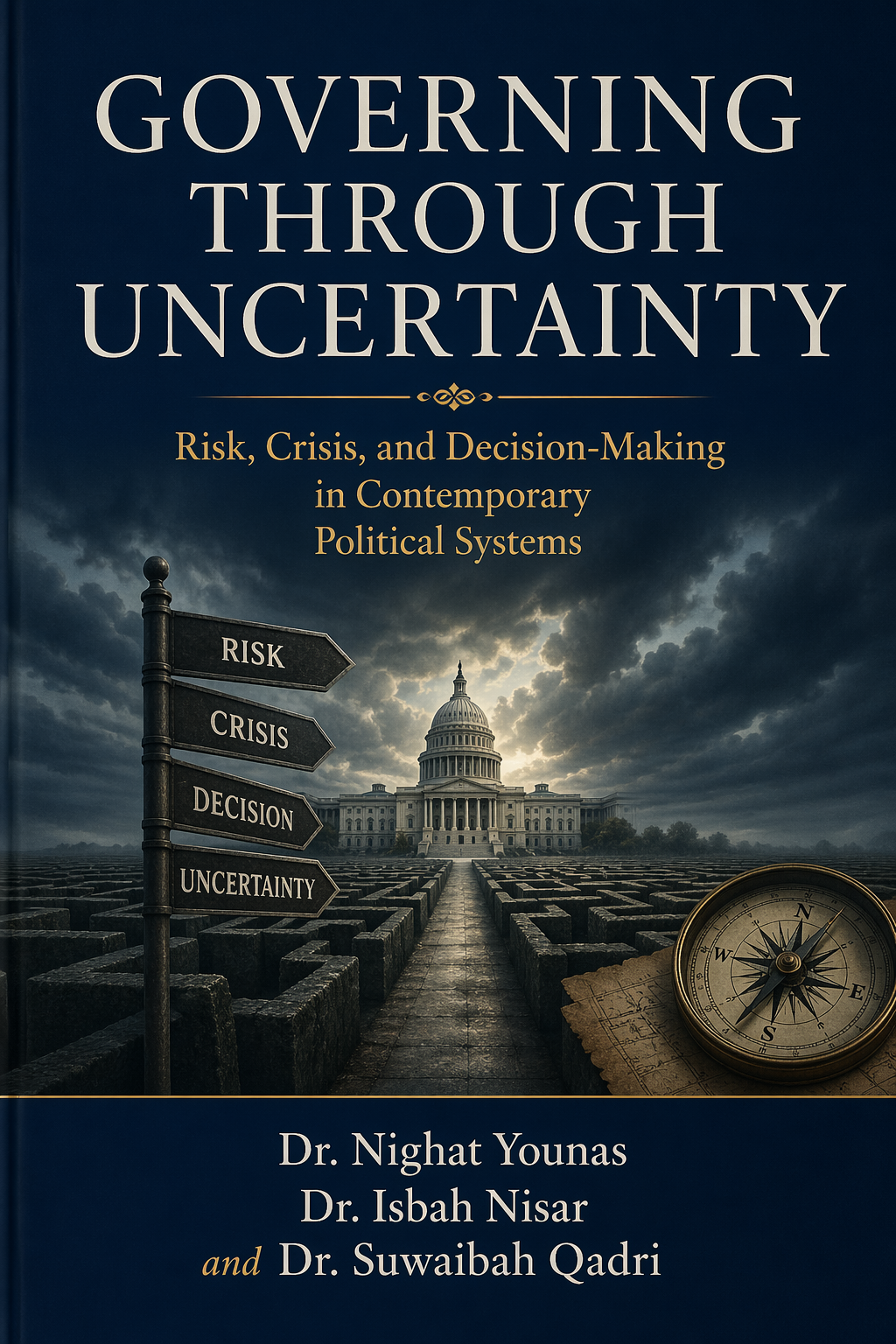
Governing Through Uncertainty: Risk, Crisis, and Decision-Making in
Contemporary Political Systems provides a masterful, interdisciplinary examination of how
political systems and public administrations grapple with the limits of their own foresight in an
era of radical uncertainty. The central thesis of this volume is that contemporary political
governance is not merely challenged or temporarily disrupted by uncertainty; rather, it is
fundamentally and structurally constituted through it.
The authors deploy a unified, three-dimensional analytical framework—integrating cognitive,
institutional, and political dimensions—to examine how the administrative state perceives,
structures, and ultimately instrumentalizes the unknown. From Frank Knight’s rigorous
epistemological boundary between measurable risk and true uncertainty to the “poly-crisis”
frameworks required today, the text meticulously traces the genealogy of the unknown. It exposes how
uncertainty is actively constructed, amplified, and weaponized by political actors to capture policy
agendas and consolidate executive power, bridging the critical gap between high political theory and
pragmatic administrative execution.
Citation
Younas, N., Nisar, I., & Qadri, S. (2026). Governing Through Uncertainty: Risk, Crisis, and Decision-Making in Contemporary Political Systems. Lumina Literati Publishing. https://doi.org/10.65758/isbn.9786277813529
About the Authors
Dr. Nighat Younas
Assistant Professor of Governance and Pakistan Studies, University of Poonch,
Rawalakot, Azad Jammu & Kashmir, Pakistan • Deputy Director, Student Affairs
Dr. Nighat Younas is a distinguished academic, researcher, and academic administrator with over a
decade of experience in higher education, research, and student development. She currently
serves as an Assistant Professor in the Department of Governance and Pakistan Studies at the
University of Poonch, Rawalakot, Azad Jammu & Kashmir, where she has been teaching since
2011. In recognition of her leadership and commitment to student welfare, she was appointed
Deputy Director of Student Affairs in November 2024.
Dr. Younas holds a PhD in Political Science from the University of Karachi, complemented by a
Master of Arts and Bachelor of Arts in Political Science. Her interdisciplinary academic
training enables her to critically examine social structures, governance, political behavior,
and cultural dynamics within South Asian societies. She specializes in teaching political
science along with political sociology, governance, civic and community engagement, research
methods, and social theory at undergraduate and postgraduate levels.
Dr. Younas is an active researcher with a strong publication record in peer-reviewed national and
international journals. Her research interests include political sociology, governance, cultural
heritage preservation, social change, community development, and public policy. She regularly
participates in academic conferences, research workshops, and faculty development programs,
reflecting her commitment to lifelong learning and academic excellence.
Dr. Isbah Nisar
Lecturer in Sociology, Department of Sociology, University of Poonch,
Rawalakot, Azad Jammu and Kashmir, Pakistan
Isbah Nisar is a Lecturer in Sociology in the Department of Sociology at the University of
Poonch, Rawalakot, Azad Jammu and Kashmir, Pakistan. She is currently pursuing her PhD in
Sociology at the University of Peshawar, Pakistan, and holds an MPhil degree in Sociology.
As an academic and researcher, Ms. Isbah Nisar specializes in gender socialization, cultural
diversity, sustainable tourism development, and qualitative research methodologies. Her
scholarly work focuses on exploring the social and cultural dynamics that shape identity,
inclusion, and sustainability within diverse societies. Through empirical inquiry, she examines
contemporary social issues with an interdisciplinary perspective, contributing to both
theoretical understanding and practical policy implications.
She has published research in various areas of sociology, reflecting her commitment to addressing
pressing social challenges through rigorous academic research. Her academic interests align with
sociological perspectives on culture, development, and social change, particularly in relation
to sustainable development practices.
Dr. Suwaibah Qadri
Assistant Professor, Department of Political Science, University of Karachi,
Pakistan
Dr. Suwaibah Qadri is an Assistant Professor in the Department of Political Science at the
University of Karachi, serving since 2019. She has extensive teaching experience at various
institutions. Her specialized fields include Public Policy, Organizational Behavior, and Human
Rights.
She is currently serving as the Departmental Student Advisor, Editor of the Newsletter, and Focal
Person for the Internship Program. Dr. Qadri has participated in several national and
international conferences and has published numerous articles in both national and international
peer-reviewed journals. She has also served as a thesis evaluation examiner and viva voce
examiner for M.Phil. and Ph.D. candidates.
Endorsements & Reviews
“A masterful, interdisciplinary examination of how political systems and public administrations
grapple with the limits of their own foresight. This book is a clarion call for ‘epistemic
humility’—a governance posture that recognizes the limits of predictive modeling and embraces
adaptive, collaborative, and democratically legitimate decision-making.”
“The authors expose how uncertainty is actively constructed, amplified, and weaponized by
political actors to capture policy agendas and consolidate executive power. By dissecting the
cognitive bounds of decision-makers and the pathological rigidities of standard operating
procedures during crises, the text bridges the critical gap between high political theory and
pragmatic administrative execution. It is an essential read for anyone committed to
understanding the true mechanics of twenty-first-century statecraft.”
Open Access Promotion – Final Design
Free & Open Access
This scholarly work is available to everyone. Click the cover to start reading our new publication without barriers.
Governing Through Uncertainty: Risk, Crisis, and Decision-Making in Contemporary Political Systems
References
Showing 10 of 1042 referencesShowing all 1042 references
1
Baker, E. (2021). The Rise of Entrepreneurial Management Theory in the United States. Modern Intellectual History, 20(1), 195-219. https://doi.org/10.1017/s1479244321000597
2
Boettke, P. and Candela, R. (2021). The common sense of economics and divergent approaches in economic thought: a view from Risk, Uncertainty, and Profit. Journal of Institutional Economics, 17(6), 1033-1047. https://doi.org/10.1017/s1744137421000229
3
Bylund, P. (2021). Introduction to the special issue on the Centenary of Frank H. Knight’s Risk, Uncertainty, and Profit. Journal of Institutional Economics, 17(6), 877-881. https://doi.org/10.1017/s1744137421000564
4
Clarke, C. (2021). The legacy of Frank H. Knight for the politics of financial governance. Journal of Institutional Economics, 17(6), 973-987. https://doi.org/10.1017/s1744137421000436
5
Düppe, T. (2010). Debreu’s apologies for mathematical economics after 1983. Erasmus Journal for Philosophy and Economics, 3(1), 1. https://doi.org/10.23941/ejpe.v3i1.37
6
Eabrasu, M. (2021). Bet against yourself: integrating insurance and entrepreneurship. Journal of Institutional Economics, 17(6), 959-972. https://doi.org/10.1017/s1744137421000394
7
Eich, S. (2024). Expedience and experimentation: John Maynard Keynes and the politics of time. American Journal of Political Science, 69(1), 371-382. https://doi.org/10.1111/ajps.12839
Freedman, C., Harcourt, G., Kriesler, P., & Nevile, J. (2013). Milton Friedman: Constructing an Anti-Keynes. SSRN Electronic Journal. https://doi.org/10.2139/ssrn.2374956
10
Jackson, B. and Stemplowska, Z. (2021). “A Quite Similar Enterprise … Interpreted Quite Differently”? James Buchanan, John Rawls and the Politics of the Social Contract. Modern Intellectual History, 18(4), 1010-1033. https://doi.org/10.1017/s1479244320000487
11
Pixley, J. (2014). Uncertainty: the Curate’s egg in financial economics. British Journal of Sociology, 65(2), 200-224. https://doi.org/10.1111/1468-4446.12070
12
Rockoff, H. (2024). Review of “The Monetarists: the Making of the Chicago Monetary Tradition, 1927-1960” by George S Tavlas.. https://doi.org/10.31235/osf.io/kcx59
13
Salerno, J., Dorobăț, C., & McCaffrey, M. (2021). Monopoly as a ‘culture-history fact’: Knight, Menger, and the role of institutions. Journal of Institutional Economics, 17(6), 1049-1064. https://doi.org/10.1017/s1744137421000515
14
Yao, S., Xie, X., Boubaker, S., Şensoy, A., & Cheng, F. (2023). Unknown Unknowns: Knightian Uncertainty and Corporate Opportunistic Earnings Management. British Journal of Management, 35(1), 137-155. https://doi.org/10.1111/1467-8551.12705
15
Brady, M. (2016). J M Keynes on the Definition of Uncertainty: Why Uncertainty must come in Degrees and has nothing to do with Ergodicity or Non Ergodicity. Scholedge International Journal of Management & Development Issn 2394-3378, 3(1), 1. https://doi.org/10.19085/journal.sijmd030101
16
Carvalho, F. (2015). Keynes on Expectations, Uncertainty and Defensive Behavior. Brazilian Keynesian Review, 1(1), 44-54. https://doi.org/10.33834/bkr.v1i1.15
17
Faulkner, P., Feduzi, A., & Runde, J. (2017). Unknowns, Black Swans and the risk/uncertainty distinction. Cambridge Journal of Economics, 41(5), 1279-1302. https://doi.org/10.1093/cje/bex035
Gerrard, B. (2022). The Road Less Travelled: Keynes and Knight on Probability and Uncertainty. SSRN Electronic Journal. https://doi.org/10.2139/ssrn.4157390
Moscati, I. and Zappia, C. (2024). Between Worlds: Daniel Ellsberg (1931–2023). Erasmus Journal for Philosophy and Economics, 17(1). https://doi.org/10.23941/ejpe.v17i1.862
23
Rivot, S. (2013). GENTLEMEN PREFER LIQUIDITY: EVIDENCE FROM KEYNES. Journal of the History of Economic Thought, 35(3), 397-422. https://doi.org/10.1017/s1053837213000230
24
Sakai, Y. (2018). Daniel Ellsberg on J.M. Keynes and F.H. Knight: risk ambiguity and uncertainty. Evolutionary and Institutional Economics Review, 16(1), 1-18. https://doi.org/10.1007/s40844-018-0114-9
25
Zappia, C. (2015). Keynes on Probability and Decision: Evidence from the Correspondence with Hugh Townshend. SSRN Electronic Journal. https://doi.org/10.2139/ssrn.2612951
26
Curran, D. (2013). Risk society and the distribution of bads: theorizing class in the risk society. British Journal of Sociology, 64(1), 44-62. https://doi.org/10.1111/1468-4446.12004
27
Macrae, C. (2008). Risk in Social Science – Edited by P. Taylor‐Gooby and J. Zinn Beyond the Risk Society: Critical Reflections on Risk and Human Security – Edited by G. Mythen and S. Walklate. British Journal of Sociology, 59(1), 175-177. https://doi.org/10.1111/j.1468-4446.2007.00187_7.x
Mythen, G. (2018). The Critical Theory of World Risk Society: A Retrospective Analysis. Risk Analysis, 41(3), 533-543. https://doi.org/10.1111/risa.13159
Walklate, S. and Mythen, G. (2010). Agency, reflexivity and risk: cosmopolitan, neurotic or prudential citizen?. British Journal of Sociology, 61(1), 45-62. https://doi.org/10.1111/j.1468-4446.2009.01301.x
32
Woodman, D., Threadgold, S., & Possamai‐Inesedy, A. (2015). Prophet of a new modernity: Ulrich Beck’s legacy for sociology. Journal of Sociology, 51(4), 1117-1131. https://doi.org/10.1177/1440783315621166
Houdt, F. and Schinkel, W. (2014). Crime, Citizenship and Community: Neoliberal Communitarian Images of Governmentality. The Sociological Review, 62(1), 47-67. https://doi.org/10.1111/1467-954x.12115
36
Johnson, A. (2025). “There’s really no risk of injury”: News coverage of law enforcement phlebotomy & the discursive power of the police perspective. Crime Media Culture an International Journal, 22(1), 145-165. https://doi.org/10.1177/17416590251344477
37
Lippert, R. and Hamilton, C. (2020). Editors’ Introduction to the Special Issue, “Governing Through Human Rights and Critical Criminology”. Critical Criminology, 28(1), 5-11. https://doi.org/10.1007/s10612-020-09501-9
38
Martin, G. and Waring, J. (2018). Realising governmentality: Pastoral power, governmental discourse and the (re)constitution of subjectivities. The Sociological Review, 66(6), 1292-1308. https://doi.org/10.1177/0038026118755616
39
McGregor, A., Challies, E., Overton, J., & Sentes, L. (2013). Developmentalities and Donor–NGO Relations: Contesting Foreign Aid Policies in New Zealand/Aotearoa. Antipode, 45(5), 1232-1253. https://doi.org/10.1111/anti.12017
40
Valverde, M. (2015). Foucault on “Avowal”: Theatres of Truth from Homer to Modern Psychology. Law & Social Inquiry, 40(04), 1080-1097. https://doi.org/10.1111/lsi.12165
41
Walklate, S. and Mythen, G. (2010). Agency, reflexivity and risk: cosmopolitan, neurotic or prudential citizen?. British Journal of Sociology, 61(1), 45-62. https://doi.org/10.1111/j.1468-4446.2009.01301.x
Bellamy, R. (2015). A Sociotechnical Framework for Governing Climate Engineering. Science Technology & Human Values, 41(2), 135-162. https://doi.org/10.1177/0162243915591855
47
Desclaux, A., Sow, K., & Sams, K. (2024). Uncertainties beyond preparedness: COVID-19 vaccination in Senegal. Journal of Biosocial Science, 1-21. https://doi.org/10.1017/s0021932024000075
Giles‐Vernick, T., Traoré, A., & Bainilago, L. (2016). Incertitude, Hepatitis B, and Infant Vaccination in West and Central Africa. Medical Anthropology Quarterly, 30(2), 203-221. https://doi.org/10.1111/maq.12187
Stirling, A. (2007). Risk, precaution and science: towards a more constructive policy debate. Embo Reports, 8(4), 309-315. https://doi.org/10.1038/sj.embor.7400953
53
Stirling, A. and Coburn, J. (2018). From CBA to Precautionary Appraisal: Practical Responses to Intractable Problems. The Hastings Center Report, 48(S1). https://doi.org/10.1002/hast.823
54
Williams, L., Macnaghten, P., Davies, R., & Curtis, S. (2016). Framing ‘fracking’: Exploring public perceptions of hydraulic fracturing in the United Kingdom. Public Understanding of Science, 26(1), 89-104. https://doi.org/10.1177/0963662515595159
55
Bruijn, H., Größler, A., & Videira, N. (2019). Antifragility as a design criterion for modelling dynamic systems. Systems Research and Behavioral Science, 37(1), 23-37. https://doi.org/10.1002/sres.2574
56
Feduzi, A., Runde, J., & Schwarz, G. (2022). Unknowns, Black Swans, and Bounded Rationality in Public Organizations. Public Administration Review, 82(5), 958-963. https://doi.org/10.1111/puar.13522
Murphy, J., Jones, J., & Conner, J. (2020). The COVID‐19 pandemic: Is it a “Black Swan”? Some risk management challenges in common with chemical process safety. Process Safety Progress, 39(2). https://doi.org/10.1002/prs.12160
Ponkin, I. (2019). ”Black Swan” Event as Manifestation of Uncertainties in Public Administration. Mediterranean Journal of Social Sciences, 10(2), 9-15. https://doi.org/10.2478/mjss-2019-0018
61
Rijmenam, M., Erekhinskaya, T., Schweitzer, J., & Williams, M. (2019). Avoid being the Turkey: How big data analytics changes the game of strategy in times of ambiguity and uncertainty. Long Range Planning, 52(5), 101841. https://doi.org/10.1016/j.lrp.2018.05.007
62
Schwarz, G., Christensen, T., & Zhu, X. (2022). Bounded Rationality, Satisficing, Artificial Intelligence, and Decision‐Making in Public Organizations: The Contributions of Herbert Simon. Public Administration Review, 82(5), 902-904. https://doi.org/10.1111/puar.13540
63
Werther, G. (2013). When Black Swans Aren’t: On Better Recognition, Assessment, and Forecasting of Large Scale, Large Impact, and Rare Event Change. Risk Management and Insurance Review, 16(1), 1-23. https://doi.org/10.1111/rmir.12000
Aerts, D. and Sozzo, S. (2016). From ambiguity aversion to a generalized expected utility. Modeling preferences in a quantum probabilistic framework. Journal of Mathematical Psychology, 74, 117-127. https://doi.org/10.1016/j.jmp.2016.02.007
Aerts, D., Geriente, S., Moreira, C., & Sozzo, S. (2018). Testing ambiguity and Machina preferences within a quantum-theoretic framework for decision-making. Journal of Mathematical Economics, 78, 176-185. https://doi.org/10.1016/j.jmateco.2017.12.002
68
Aerts, D., Sozzo, S., & Tapia, J. (2014). Identifying Quantum Structures in the Ellsberg Paradox. International Journal of Theoretical Physics, 53(10), 3666-3682. https://doi.org/10.1007/s10773-014-2086-9
69
Basili, M. and Zappia, C. (2009). Ambiguity and uncertainty in Ellsberg and Shackle. Cambridge Journal of Economics, 34(3), 449-474. https://doi.org/10.1093/cje/bep008
70
Sozzo, S. (2019). Explaining versus describing human decisions: Hilbert space structures in decision theory. Soft Computing, 24(14), 10219-10229. https://doi.org/10.1007/s00500-019-04140-x
71
Sozzo, S. (2020). Representing Attitudes Towards Ambiguity in Hilbert Space: Foundations and Applications. Foundations of Science, 26(1), 103-128. https://doi.org/10.1007/s10699-020-09718-5
72
al‐Nowaihi, A., Dhami, S., & Wei, M. (2018). Quantum Decision Theory and the Ellsberg Paradox. SSRN Electronic Journal. https://doi.org/10.2139/ssrn.3251184
73
Bogner, A. and Torgersen, H. (2018). Precaution, Responsible Innovation and Beyond – In Search of a Sustainable Agricultural Biotechnology Policy. Frontiers in Plant Science, 9. https://doi.org/10.3389/fpls.2018.01884
74
Deblonde, M. and Jardin, P. (2005). Deepening A Precautionary European Policy. Journal of Agricultural and Environmental Ethics, 18(4), 319-343. https://doi.org/10.1007/s10806-005-1499-0
75
Goede, M. (2008). The Politics of Preemption and the War on Terror in Europe. European Journal of International Relations, 14(1), 161-185. https://doi.org/10.1177/1354066107087764
Mathis, J. and Corrias, L. (2017). Law and Precaution in the European Risk Society: The Case of EU Environmental Policy. Ratio Juris, 30(3), 322-340. https://doi.org/10.1111/raju.12165
78
Pellegrini, P. (2013). What risks and for whom? Argentina’s regulatory policies and global commercial interests in GMOs. Technology in Society, 35(2), 129-138. https://doi.org/10.1016/j.techsoc.2013.01.003
79
Post, D. (2006). The Precautionary Principle and Risk Assessment in International Food Safety: How the World Trade Organization Influences Standards. Risk Analysis, 26(5), 1259-1273. https://doi.org/10.1111/j.1539-6924.2006.00814.x
80
Saltelli, A., Dankel, D., Fiore, M., Holland, N., & Pigeon, M. (2022). Science, the endless frontier of regulatory capture. Futures, 135, 102860. https://doi.org/10.1016/j.futures.2021.102860
81
Zerbe, N. (2007). Risking Regulation, Regulating Risk: Lessons from the Transatlantic Biotech Dispute. Review of Policy Research, 24(5), 407-423. https://doi.org/10.1111/j.1541-1338.2007.00292.x
82
Ansell, C. and Boin, A. (2017). Taming Deep Uncertainty: The Potential of Pragmatist Principles for Understanding and Improving Strategic Crisis Management. Administration & Society, 51(7), 1079-1112. https://doi.org/10.1177/0095399717747655
83
Boin, A. and Hart, P. (2010). Organising for Effective Emergency Management: Lessons from Research1. Australian Journal of Public Administration, 69(4), 357-371. https://doi.org/10.1111/j.1467-8500.2010.00694.x
84
Boin, A. and Lodge, M. (2016). DESIGNING RESILIENT INSTITUTIONS FOR TRANSBOUNDARY CRISIS MANAGEMENT: A TIME FOR PUBLIC ADMINISTRATION. Public Administration, 94(2), 289-298. https://doi.org/10.1111/padm.12264
85
Boin, A., Busuioc, M., & Groenleer, M. (2013). Building European Union capacity to manage transboundary crises: Network or lead‐agency model?. Regulation & Governance, 8(4), 418-436. https://doi.org/10.1111/rego.12035
86
Boin, A., Ekengren, M., & Rhinard, M. (2020). Hiding in Plain Sight: Conceptualizing the Creeping Crisis. Risk Hazards & Crisis in Public Policy, 11(2), 116-138. https://doi.org/10.1002/rhc3.12193
87
Capano, G. and Toth, F. (2024). Controversial issues in crisis management. Bridging public policy and crisis management to better understand and address crises. Risk Hazards & Crisis in Public Policy, 16(3). https://doi.org/10.1002/rhc3.12304
88
Karlsen, A. and Antonsen, S. (2023). What were we thinking? A scoping review of crisis management pandemic literature (1984–2019). Journal of Contingencies and Crisis Management, 31(3), 524-544. https://doi.org/10.1111/1468-5973.12457
89
Kuipers, S., Verolme, E., & Müller, E. (2020). Lessons from the MH‐17 transboundary disaster investigation. Journal of Contingencies and Crisis Management, 28(4), 376-385. https://doi.org/10.1111/1468-5973.12287
90
Nohrstedt, D., Bynander, F., Parker, C., & Hart, P. (2018). Managing Crises Collaboratively: Prospects and Problems A Systematic Literature Review. Perspectives on Public Management and Governance, 1(4), 257-271. https://doi.org/10.1093/ppmgov/gvx018
91
Parker, C. and Stern, E. (2022). The Trump Administration and the COVID‐19 crisis: Exploring the warning‐response problems and missed opportunities of a public health emergency. Public Administration, 100(3), 616-632. https://doi.org/10.1111/padm.12843
92
Ansell, C. and Boin, A. (2017). Taming Deep Uncertainty: The Potential of Pragmatist Principles for Understanding and Improving Strategic Crisis Management. Administration & Society, 51(7), 1079-1112. https://doi.org/10.1177/0095399717747655
93
Boin, A. and Hart, P. (2010). Organising for Effective Emergency Management: Lessons from Research1. Australian Journal of Public Administration, 69(4), 357-371. https://doi.org/10.1111/j.1467-8500.2010.00694.x
94
Christensen, T., Lægreid, P., & Rykkja, L. (2016). Organizing for Crisis Management: Building Governance Capacity and Legitimacy. Public Administration Review, 76(6), 887-897. https://doi.org/10.1111/puar.12558
95
Klinke, A. (2013). Postnational discourse, deliberation, and participation toward global risk governance. Review of International Studies, 40(2), 247-275. https://doi.org/10.1017/s0260210513000144
96
Kuipers, S., Verolme, E., & Müller, E. (2020). Lessons from the MH‐17 transboundary disaster investigation. Journal of Contingencies and Crisis Management, 28(4), 376-385. https://doi.org/10.1111/1468-5973.12287
97
Lindholst, A., Klausen, K., Hansen, M., & Sørensen, P. (2024). The governing instruments for resilience in the neo‐Weberian state: The challenge of integrating Ukrainian war refugees. Regulation & Governance, 19(1), 218-235. https://doi.org/10.1111/rego.12608
98
Nohrstedt, D., Bynander, F., Parker, C., & Hart, P. (2018). Managing Crises Collaboratively: Prospects and Problems A Systematic Literature Review. Perspectives on Public Management and Governance, 1(4), 257-271. https://doi.org/10.1093/ppmgov/gvx018
99
Parker, C. and Stern, E. (2022). The Trump Administration and the COVID‐19 crisis: Exploring the warning‐response problems and missed opportunities of a public health emergency. Public Administration, 100(3), 616-632. https://doi.org/10.1111/padm.12843
100
Parker, C., Nohrstedt, D., Baird, J., Hermansson, H., Rubin, O., & Bækkeskov, E. (2020). Collaborative crisis management: a plausibility probe of core assumptions. Policy and Society, 39(4), 510-529. https://doi.org/10.1080/14494035.2020.1767337
101
Rothstein, H. and Downer, J. (2012). ‘RENEWING DEFRA’: EXPLORING THE EMERGENCE OF RISK‐BASED POLICYMAKING IN UK CENTRAL GOVERNMENT. Public Administration, 90(3), 781-799. https://doi.org/10.1111/j.1467-9299.2011.01999.x
102
Zhong, W., Hu, Q., & Kapucu, N. (2022). Robust crisis communication in turbulent times: Conceptualization and empirical evidence from the United States. Public Administration, 101(1), 158-181. https://doi.org/10.1111/padm.12855
103
Ai, X. (2023). A Whole-Process Exploration of the Evolution of Security Issues. Financial Engineering and Risk Management, 6(8). https://doi.org/10.23977/ferm.2023.060815
104
Alexseev, M. (2011). Societal security, the security dilemma, and extreme anti-migrant hostility in Russia. Journal of Peace Research, 48(4), 509-523. https://doi.org/10.1177/0022343311406155
Duarte, D. and Valença, M. (2021). Securitising Covid-19? The Politics of Global Health and the Limits of the Copenhagen School. Contexto Internacional, 43(2), 235-257. https://doi.org/10.1590/s0102-8529.2019430200001
107
Kapur, S. (2018). From Copenhagen to Uri and across the Line of Control: India’s ‘surgical strikes’ as a case of securitisation in two acts. Global Discourse, 8(1), 62-79. https://doi.org/10.1080/23269995.2017.1406633
108
Oels, A. (2012). From ‘Securitization’ of Climate Change to ’Climatization‘ of the Security Field: Comparing Three Theoretical Perspectives., 185-205. https://doi.org/10.1007/978-3-642-28626-1_9
109
Wilkinson, C. (2007). The Copenhagen School on Tour in Kyrgyzstan: Is Securitization Theory Useable Outside Europe?. Security Dialogue, 38(1), 5-25. https://doi.org/10.1177/0967010607075964
110
Bothner, F., Schrader, S., Bandau, F., & Holzhauser, N. (2022). Never let a serious crisis go to waste: the introduction of supplemental carbon taxes in Europe. Journal of Public Policy, 42(2), 343-363. https://doi.org/10.1017/s0143814x21000210
111
Colburn, G. (2014). The Federal Commitment to Homelessness Prevention: A Silver Lining of the Economic Crisis. Poverty & Public Policy, 6(1), 33-45. https://doi.org/10.1002/pop4.57
Dolan, D. (2019). Multiple Partial Couplings in the Multiple Streams Framework: The Case of Extreme Weather and Climate Change Adaptation. Policy Studies Journal, 49(1), 164-189. https://doi.org/10.1111/psj.12341
114
Ebrey, R., Hall, S., & Willis, R. (2020). Is Twitter Indicating a Change in MP’s Views on Climate Change?. Sustainability, 12(24), 10334. https://doi.org/10.3390/su122410334
115
Eckert, E. (2025). The Evolution of Emergency Planning at Kent State University, 1970–2020. Journal of Contingencies and Crisis Management, 33(1). https://doi.org/10.1111/1468-5973.70032
116
Gestel, N., Denis, J., Ferlı́e, E., & McDermott, A. (2018). Explaining the Policy Process Underpinning Public Sector Reform: The Role of Ideas, Institutions, and Timing. Perspectives on Public Management and Governance, 1(2), 87-101. https://doi.org/10.1093/ppmgov/gvx020
117
Herzog, C. and Karppinen, K. (2014). Policy streams and public service media funding reforms in Germany and Finland. European Journal of Communication, 29(4), 416-432. https://doi.org/10.1177/0267323114530581
118
Lancaster, K., Ritter, A., Hughes, C., & Hoppe, R. (2017). A critical examination of the introduction of drug detection dogs for policing of illicit drugs in New South Wales, Australia using Kingdon’s ‘multiple streams’ heuristic. Evidence & Policy, 13(4), 583-603. https://doi.org/10.1332/174426416×14683497019265
119
Moieni, S., Ahmadi, A., Gorji, H., & Kabir, M. (2025). Interpreting Pharmaceutical Policy Change in Iran: A Qualitative Multiple Streams Analysis of the Darooyar Reform Under Sanctions.. https://doi.org/10.21203/rs.3.rs-7631927/v1
120
Rawat, P. and Morris, J. (2016). Kingdon’s “Streams” Model at Thirty: Still Relevant in the 21st Century?. Politics & Policy, 44(4), 608-638. https://doi.org/10.1111/polp.12168
121
Whiteford, H., Meurk, C., Carstensen, G., Hall, W., Hill, P., & Head, B. (2016). How Did Youth Mental Health Make It Onto Australia’s 2011 Federal Policy Agenda?. Sage Open, 6(4). https://doi.org/10.1177/2158244016680855
122
Medvecky, F. (2022). Public Understanding of Ignorance as Critical Science Literacy. Sustainability, 14(10), 5920. https://doi.org/10.3390/su14105920
123
Paul, K. and Haddad, C. (2019). Beyond evidence versus truthiness: toward a symmetrical approach to knowledge and ignorance in policy studies. Policy Sciences, 52(2), 299-314. https://doi.org/10.1007/s11077-019-09352-4
124
Pinto, M. (2015). Tensions in agnotology: Normativity in the studies of commercially driven ignorance. Social Studies of Science, 45(2), 294-315. https://doi.org/10.1177/0306312714565491
125
Pinto, M. (2019). Scientific ignorance: Probing the limits of scientific research and knowledge production. Theoria an International Journal for Theory History and Foundations of Science, 34(2), 195. https://doi.org/10.1387/theoria.19329
126
Rego, B. (2009). The Polonium Brief: A Hidden History of Cancer, Radiation, and the Tobacco Industry. Isis, 100(3), 453-484. https://doi.org/10.1086/644613
Bandola‐Gill, J. (2021). The legitimacy of experts in policy: navigating technocratic and political accountability in the case of global poverty governance. Evidence & Policy, 17(4), 615-633. https://doi.org/10.1332/174426420×16000980489195
Krick, E. (2021). Citizen experts in participatory governance: Democratic and epistemic assets of service user involvement, local knowledge and citizen science. Current Sociology, 70(7), 994-1012. https://doi.org/10.1177/00113921211059225
Landström, C. and Whatmore, S. (2014). Virtually Expert: Modes of Environmental Computer Simulation Modeling. Science in Context, 27(4), 579-603. https://doi.org/10.1017/s0269889714000210
134
Lidskog, R. and Sundqvist, G. (2018). Environmental Expertise as Group Belonging. Nature and Culture, 13(3), 309-331. https://doi.org/10.3167/nc.2018.130301
Stilgoe, J. (2016). Scientific advice on the move: the UK mobile phone risk issue as a public experiment. Palgrave Communications, 2(1). https://doi.org/10.1057/palcomms.2016.28
137
Chen, Y., Long, J., Jun, J., Kim, S., Zain, A., & Piacentine, C. (2023). Anti-intellectualism amid the COVID-19 pandemic: The discursive elements and sources of anti-Fauci tweets. Public Understanding of Science, 32(5), 641-657. https://doi.org/10.1177/09636625221146269
138
Cmeciu, C. (2023). (De)legitimation of COVID-19 vaccination narratives on Facebook comments in Romania: Beyond the co-occurrence patterns of discursive strategies. Discourse & Society, 34(5), 572-597. https://doi.org/10.1177/09579265231174793
139
Hameleers, M. (2022). Empowering the People’s Truth Through Social Media? (De)Legitimizing Truth Claims of Populist Politicians and Citizens. Politics and Governance, 10(1). https://doi.org/10.17645/pag.v10i1.4726
140
Hameleers, M. and Minihold, S. (2020). Constructing Discourses on (Un)truthfulness: Attributions of Reality, Misinformation, and Disinformation by Politicians in a Comparative Social Media Setting. Communication Research, 49(8), 1176-1199. https://doi.org/10.1177/0093650220982762
141
Hameleers, M. and Yekta, N. (2023). Entering an Information Era of Parallel Truths? A Qualitative Analysis of Legitimizing and De-legitimizing Truth Claims in Established Versus Alternative Media Outlets. Communication Research, 52(6), 803-825. https://doi.org/10.1177/00936502231189685
142
Hameleers, M., Brosius, A., Marquart, F., Goldberg, A., Elsas, E., & Vreese, C. (2021). Mistake or Manipulation? Conceptualizing Perceived Mis- and Disinformation among News Consumers in 10 European Countries. Communication Research, 49(7), 919-941. https://doi.org/10.1177/0093650221997719
143
Head, B. (2023). Reconsidering expertise for public policymaking: The challenges of contestability. Australian Journal of Public Administration, 83(2), 156-172. https://doi.org/10.1111/1467-8500.12613
144
Reed, C. and Reed, M. (2022). Expert Authority in Crisis: Making Authority Real Through Struggle. Organization Theory, 3(4). https://doi.org/10.1177/26317877221131587
145
Alvarez, C. (2022). Structural Racism as an Environmental Justice Issue: A Multilevel Analysis of the State Racism Index and Environmental Health Risk from Air Toxics. Journal of Racial and Ethnic Health Disparities, 10(1), 244-258. https://doi.org/10.1007/s40615-021-01215-0
146
Benmarhnia, T., Hajat, A., & Kaufman, J. (2021). Inferential challenges when assessing racial/ethnic health disparities in environmental research. Environmental Health, 20(1). https://doi.org/10.1186/s12940-020-00689-5
147
Chambliss, S., Frinere-Sandoval, N., Zigler, C., Mueller, E., Peng, R., Hall, E., … & Cubbin, C. (2024). Alignment of Air Pollution Exposure Inequality Metrics with Environmental Justice and Equity Goals in the United States. International Journal of Environmental Research and Public Health, 21(12), 1706. https://doi.org/10.3390/ijerph21121706
148
Matthew, D. and Benfer, E. (2023). A Clarion Call for Change: The MLP Imperative to Center Racial Discrimination and Structural Health Inequities. The Journal of Law Medicine & Ethics, 51(4), 735-747. https://doi.org/10.1017/jme.2023.153
149
Mengistie, B. (2025). Environmental and Human Health Impacts of Agricultural Pesticides on BIPOC Communities in the United States: A Review from an Environmental Justice Perspective. International Journal of Environmental Research and Public Health, 22(11), 1683. https://doi.org/10.3390/ijerph22111683
150
Perry, M., Arrington, S., Freisthler, M., Ibe, I., McCray, N., Neumann, L., … & Rosas, B. (2021). Pervasive structural racism in environmental epidemiology. Environmental Health, 20(1). https://doi.org/10.1186/s12940-021-00801-3
Sayyed, T., Ovienmhada, U., Kashani, M., Vohra, K., Kerr, G., O’Donnell, C., … & Kuwayama, Y. (2024). Satellite data for environmental justice: a scoping review of the literature in the United States. Environmental Research Letters, 19(3), 033001. https://doi.org/10.1088/1748-9326/ad1fa4
153
Shkembi, A., Park, S., Zelner, J., & Neitzel, R. (2025). Racial and Ethnic Inequities to Cumulative Environmental and Occupational Impacts in Michigan. Geohealth, 9(6). https://doi.org/10.1029/2025gh001482
154
Tan, S., Binet, A., Thompson, J., & Arcaya, M. (2024). Health Equity as a Guide for Urban Planning. Journal of Planning Literature, 39(3), 371-385. https://doi.org/10.1177/08854122231226279
155
Adomako, S., Frimpong, K., Danso, A., Amankwah‐Amoah, J., Uddin, M., & Kesse, K. (2020). Home country institutional impediments and international expansion of developing country SMEs. International Business Review, 29(5), 101716. https://doi.org/10.1016/j.ibusrev.2020.101716
156
Bosomworth, K. (2018). A discursive–institutional perspective on transformative governance: A case from a fire management policy sector. Environmental Policy and Governance, 28(6), 415-425. https://doi.org/10.1002/eet.1806
157
Brahim, A., Morched, S., & Boujelbène, Y. (2021). How formal institutional antecedents affect Tunisian venture creation decision scripts. Journal of Global Entrepreneurship Research, 11(1), 421-438. https://doi.org/10.1007/s40497-021-00267-0
158
Campo, N. and Lukic, M. (2020). Cognitive and Institutional Determinants of Public Policy Changes: A Comparative Analysis of Brazil and Chile. Latin American Policy, 11(2), 212-228. https://doi.org/10.1111/lamp.12195
159
Klinke, A. (2013). Postnational discourse, deliberation, and participation toward global risk governance. Review of International Studies, 40(2), 247-275. https://doi.org/10.1017/s0260210513000144
160
Li, C. and Haleblian, J. (2021). The Influence of Nation-Level Institutions on Acquisition Premiums: A Cross-Country Comparative Study. Journal of Management, 48(4), 878-904. https://doi.org/10.1177/01492063211010219
161
Meijer, A. (2013). Understanding the Complex Dynamics of Transparency. Public Administration Review, 73(3), 429-439. https://doi.org/10.1111/puar.12032
162
Mickiewicz, T., Stephan, U., & Shami, M. (2021). The consequences of short‐term institutional change in the rule of law for entrepreneurship. Global Strategy Journal, 11(4), 709-739. https://doi.org/10.1002/gsj.1413
163
Rašković, M., Haynes, K., & Vangeli, A. (2023). The emergence of populism as an institution and its recursive mechanisms: A socio-cognitive theory perspective. Journal of International Business Policy, 7(1), 19-40. https://doi.org/10.1057/s42214-023-00164-1
164
Sandri, S. and Alshyab, N. (2020). Institutional uncertainty and growth expectations of businesses: the case of Jordan. International Social Science Journal, 70(237-238), 239-261. https://doi.org/10.1111/issj.12254
165
Straßheim, H. (2019). Behavioural mechanisms and public policy design: Preventing failures in behavioural public policy. Public Policy and Administration, 36(2), 187-204. https://doi.org/10.1177/0952076719827062
166
Zaandam, A., Hasija, D., Ellstrand, A., & Cummings, M. (2021). Founder and professional CEOs’ performance differences across institutions: A meta‐analytic study. Global Strategy Journal, 11(4), 620-655. https://doi.org/10.1002/gsj.1414
167
Diers‐Lawson, A. and Meißner, F. (2021). Editor’s Essay: The Multi-Disciplinary and Diverse Field of Crisis and Risk Communication Research. Journal of International Crisis and Risk Communication Research, 4(3), 439-450. https://doi.org/10.30658/jicrcr.4.3.0
168
Doerfel, M. and Prezelj, I. (2017). Resilience in a complex and unpredictable world. Journal of Contingencies and Crisis Management, 25(3), 118-122. https://doi.org/10.1111/1468-5973.12177
169
LePere‐Schloop, M. and Nesbit, R. (2024). Interdisciplinary knowledge integration in public affairs scholarship: An empirical analysis of the contributions of public administration, policy sciences, and nonprofit studies. Journal of Public Affairs Education, 30(3), 418-449. https://doi.org/10.1080/15236803.2024.2349477
170
Raadschelders, J. (2008). UNDERSTANDING GOVERNMENT: FOUR INTELLECTUAL TRADITIONS IN THE STUDY OF PUBLIC ADMINISTRATION. Public Administration, 86(4), 925-949. https://doi.org/10.1111/j.1467-9299.2008.00742.x
171
Wagner, C. and Raadschelders, J. (2025). From Disciplinary Depth to Interdisciplinary Breadth: The Case of Public Administration. The American Review of Public Administration, 55(4), 299-317. https://doi.org/10.1177/02750740241303106
172
Weber, E. (2020). Seeing Is Believing: Understanding & Aiding Human Responses to Global Climate Change. Daedalus, 149(4), 139-150. https://doi.org/10.1162/daed_a_01823
173
Yang, Y., Zhang, C., & Rickly, J. (2021). A review of early COVID-19 research in tourism: Launching the Annals of Tourism Research’s Curated Collection on coronavirus and tourism. Annals of Tourism Research, 91, 103313. https://doi.org/10.1016/j.annals.2021.103313
174
Adami, M. (2025). Shared Value in Crisis: The Role of SMEs in Humanitarian Action. Business Strategy & Development, 8(4). https://doi.org/10.1002/bsd2.70219
175
Jugl, M. (2024). Collective cognition in context: Explaining variation in the management of Europe’s 2015 migration crisis. Governance, 38(2). https://doi.org/10.1111/gove.12887
176
Wright, S., Sheedy, E., & Magee, S. (2016). International compliance with new Basel Accord principles for risk governance. Accounting and Finance, 58(1), 279-311. https://doi.org/10.1111/acfi.12213
177
Birkegård, A., Halasa, T., Toft, N., Folkesson, A., & Græsbøll, K. (2018). Send more data: a systematic review of mathematical models of antimicrobial resistance. Antimicrobial Resistance and Infection Control, 7(1). https://doi.org/10.1186/s13756-018-0406-1
178
Conti, M., Breda, C., Basilico, S., Zambon, I., Sofroniou, A., Ruggeri, S., … & Cena, H. (2025). Improving Meal Acceptance of Individuals With Autism Spectrum Disorder (AUT-MENU Project): Protocol for a Bicentric Intervention Study. Jmir Research Protocols, 14, e57507. https://doi.org/10.2196/57507
179
Jongeneel, W., Klaveren, H., Bogers, R., Devilee, J., Rijs, K., Piersma, A., … & Lebret, E. (2021). Argumentation Analysis of Risk Assessments: The Case of Perfluorooctanoic Acid. Risk Analysis, 42(4), 770-785. https://doi.org/10.1111/risa.13793
180
Kurniasih, N. (2017). Revitalization of Library Space Function in Digital Era: Comparative Study of Library Space in TEMPO’s Data and Analysis Center and Library of Universitas Indonesia.. https://doi.org/10.31227/osf.io/qrzgw
181
Mollenhauer, J., Sgraja, S., Seeland, U., Kloepfer, M., Amelung, V., & Kurscheid, C. (2025). Multifarious approaches of implementation to transfer gender sensitivity in health care practice: a scoping review. BMC Health Services Research, 25(1). https://doi.org/10.1186/s12913-025-13032-w
182
Quintiens, B., D’Eer, L., Deliëns, L., Block, L., Chambaere, K., Donder, L., … & Smets, T. (2022). Area-Based Compassionate Communities: A systematic integrative review of existing initiatives worldwide. Palliative Medicine, 36(3), 422-442. https://doi.org/10.1177/02692163211067363
183
Sarkar, I. (2022). Transforming Health Data to Actionable Information: Recent Progress and Future Opportunities in Health Information Exchange. Yearbook of Medical Informatics, 31(01), 203-214. https://doi.org/10.1055/s-0042-1742519
184
Vacharanukrauh, P., Miller, K., Alif, S., Grace, F., & Rahman, M. (2025). Pharmacological interventions for anthracycline-induced cardiotoxicity in breast cancer: a systematic review and meta-analysis of randomized controlled trials. Breast Cancer Research and Treatment, 214(1), 1-23. https://doi.org/10.1007/s10549-025-07791-7
185
Boin, A. and Hart, P. (2010). Organising for Effective Emergency Management: Lessons from Research1. Australian Journal of Public Administration, 69(4), 357-371. https://doi.org/10.1111/j.1467-8500.2010.00694.x
186
Boin, A. and McConnell, A. (2007). Preparing for Critical Infrastructure Breakdowns: The Limits of Crisis Management and the Need for Resilience. Journal of Contingencies and Crisis Management, 15(1), 50-59. https://doi.org/10.1111/j.1468-5973.2007.00504.x
187
Chan, R. (2013). Crisis Politics in Authoritarian Regimes: How Crises Catalyse Changes under the State–Society Interactive Framework. Journal of Contingencies and Crisis Management, 21(4), 200-210. https://doi.org/10.1111/1468-5973.12024
188
Christensen, T., Lægreid, P., & Rykkja, L. (2016). Organizing for Crisis Management: Building Governance Capacity and Legitimacy. Public Administration Review, 76(6), 887-897. https://doi.org/10.1111/puar.12558
Dzigbede, K. and Ivanov, A. (2023). Public sector leadership during the COVID-19 crisis in Ghana. International Journal of Public Leadership, 19(2), 142-157. https://doi.org/10.1108/ijpl-05-2022-0028
191
Hannah, A., Bækkeskov, E., & Tubakovic, T. (2022). Ideas and crisis in policy and administration: Existing links and research frontiers. Public Administration, 100(3), 571-584. https://doi.org/10.1111/padm.12862
192
Knodt, M., Fraune, C., & Engel, A. (2021). Local governance of critical infrastructure resilience: Types of coordination in German cities. Journal of Contingencies and Crisis Management, 30(3), 307-316. https://doi.org/10.1111/1468-5973.12386
McConnell, A. (2011). Success? Failure? Something in-between? A framework for evaluating crisis management. Policy and Society, 30(2), 63-76. https://doi.org/10.1016/j.polsoc.2011.03.002
195
McHugh, L., Lemos, M., & Morrison, T. (2021). Risk? Crisis? Emergency? Implications of the new climate emergency framing for governance and policy. Wiley Interdisciplinary Reviews Climate Change, 12(6). https://doi.org/10.1002/wcc.736
196
Owen, C., Brooks, B., Bearman, C., & Curnin, S. (2016). Values and Complexities in Assessing Strategic‐Level Emergency Management Effectiveness. Journal of Contingencies and Crisis Management, 24(3), 181-190. https://doi.org/10.1111/1468-5973.12115
197
Petridou, E. and Zahariadis, N. (2021). Staying at home or going out? Leadership response to the COVID‐19 crisis in Greece and Sweden. Journal of Contingencies and Crisis Management, 29(3), 293-302. https://doi.org/10.1111/1468-5973.12344
Wolbers, J., Kuipers, S., & Boin, A. (2021). A systematic review of 20 years of crisis and disaster research: Trends and progress. Risk Hazards & Crisis in Public Policy, 12(4), 374-392. https://doi.org/10.1002/rhc3.12244
200
Al‐Hashimi, K., Weerakkody, V., Elbanna, S., & Schwarz, G. (2021). Strategic Decision Making and Implementation in Public Organizations in the Gulf Cooperation Council: The Role of Procedural Rationality. Public Administration Review, 82(5), 905-919. https://doi.org/10.1111/puar.13447
201
Brunarska, Z. (2019). A “Good Enough” Choice: Bounded Rationality in Migration Destination Choice. Studia Migracyjne – Przegląd Polonijny, XLV(2 (172)), 43-62. https://doi.org/10.4467/25444972smpp.19.014.10840
Khalil, E. (2022). The information inelasticity of habits: Kahneman’s bounded rationality or Simon’s procedural rationality?. Synthese, 200(4). https://doi.org/10.1007/s11229-022-03815-7
204
Lieder, F. and Griffiths, T. (2019). Resource-rational analysis: Understanding human cognition as the optimal use of limited computational resources. Behavioral and Brain Sciences, 43. https://doi.org/10.1017/s0140525x1900061x
205
Petracca, E. (2021). Embodying Bounded Rationality: From Embodied Bounded Rationality to Embodied Rationality. Frontiers in Psychology, 12. https://doi.org/10.3389/fpsyg.2021.710607
206
Scott, R. and Merton, E. (2023). (Non) rationality and choice architecture: a behavioural approach to public administrative discretion in New Zealand. International Journal of Organizational Analysis, 31(5), 1257-1278. https://doi.org/10.1108/ijoa-12-2022-3555
207
Shin, D., Kim, S., & Jung, K. (2015). Intended rationality in exit decisions: The organizational field of rivals as a source of signal in segment exit decisions by Korean SI ventures, 2000–2006. Australian Journal of Management, 41(2), 398-421. https://doi.org/10.1177/0312896215578477
208
Alesina, A. and Passarelli, F. (2019). Loss Aversion in Politics. American Journal of Political Science, 63(4), 936-947. https://doi.org/10.1111/ajps.12440
209
Bahamonde, H. and Canales, A. (2022). Electoral risk and vote buying, introducing prospect theory to the experimental study of clientelism. Electoral Studies, 80, 102497. https://doi.org/10.1016/j.electstud.2022.102497
210
Fatás, E., Neugebauer, T., & Tamborero, P. (2007). How Politicians Make Decisions: A Political Choice Experiment. Journal of Economics, 92(2), 167-196. https://doi.org/10.1007/s00712-007-0264-4
211
Kappe, R. (2018). Asymmetric evaluations: Government popularity and economic performance in the United Kingdom. Electoral Studies, 53, 133-138. https://doi.org/10.1016/j.electstud.2018.02.002
212
Linde, J. and Vis, B. (2016). Do Politicians Take Risks Like the Rest of Us? An Experimental Test of Prospect Theory Under MPs. Political Psychology, 38(1), 101-117. https://doi.org/10.1111/pops.12335
213
Schumacher, G., Wardt, M., Vis, B., & Klitgaard, M. (2015). How Aspiration to Office Conditions the Impact of Government Participation on Party Platform Change. American Journal of Political Science, 59(4), 1040-1054. https://doi.org/10.1111/ajps.12174
214
Sheffer, L. and Loewen, P. (2018). Accountability, Framing Effects, and Risk-Seeking by Elected Representatives: An Experimental Study with American Local Politicians. Political Research Quarterly, 72(1), 49-62. https://doi.org/10.1177/1065912918775252
215
Vis, B. (2009). Governments and unpopular social policy reform: Biting the bullet or steering clear?. European Journal of Political Research, 48(1), 31-57. https://doi.org/10.1111/j.1475-6765.2008.00783.x
Vis, B. and Kersbergen, K. (2007). Why and how do Political Actors Pursue Risky Reforms?. Journal of Theoretical Politics, 19(2), 153-172. https://doi.org/10.1177/0951629807074268
218
(2021). Indonesia’s China and US Approach: Crafting Policies Out of Standard Operating Procedures. Journal of Asian Security and International Affairs, 8(3), 324-345. https://doi.org/10.1177/23477970211041662
Brummer, K. (2012). The Reluctant Peacekeeper: Governmental Politics and Germany’s Participation in EUFOR RD Congo. Foreign Policy Analysis, 9(1), 1-20. https://doi.org/10.1111/j.1743-8594.2011.00174.x
221
Butcher, C. (2012). Teaching Foreign Policy Decision-Making Processes Using Role-Playing Simulations: The Case of US-Iranian Relations. International Studies Perspectives, 13(2), 176-194. https://doi.org/10.1111/j.1528-3585.2012.00457.x
222
Redd, S. and Mintz, A. (2013). Policy Perspectives on National Security and Foreign Policy Decision Making. Policy Studies Journal, 41(S1). https://doi.org/10.1111/psj.12010
Cai, S., Zhang, M., Song, Z., He, Y., Huang, M., & Shuai, Q. (2025). Decision fatigue of surrogate decision-makers: a scoping review. BMC Medical Informatics and Decision Making, 25(1). https://doi.org/10.1186/s12911-025-03198-y
225
Dong, S., Wang, K., Zhang, K., Wang, X., Wang, J., Turdi, S., … & Li, Y. (2024). Decision fatigue experience of front-line nurses in the context of public health emergency: an interpretative phenomenological analysis. BMC Nursing, 23(1). https://doi.org/10.1186/s12912-024-02163-w
226
Duan, Y., Cai, Y., Peng, R., Zhao, H., Feng, Y., & You, X. (2024). Research on interaction and trust theory model for cockpit human-machine fusion intelligence. Frontiers in Neuroscience, 18. https://doi.org/10.3389/fnins.2024.1352736
227
Dubash, R., Bertenshaw, C., & Ho, J. (2020). Decision fatigue in the emergency department. Emergency Medicine Australasia, 32(6), 1059-1061. https://doi.org/10.1111/1742-6723.13670
228
Grignoli, N., Manoni, G., Gianini, J., Schulz, P., Gabutti, L., & Petrocchi, S. (2025). Clinical decision fatigue: a systematic and scoping review with meta-synthesis. Family Medicine and Community Health, 13(1), e003033. https://doi.org/10.1136/fmch-2024-003033
229
Hirshleifer, D., Levi, Y., Lourie, B., & Teoh, S. (2019). Decision fatigue and heuristic analyst forecasts. Journal of Financial Economics, 133(1), 83-98. https://doi.org/10.1016/j.jfineco.2019.01.005
230
Maier, M., Lawrie, L., Powell, D., Murchie, P., & Allan, J. (2025). Lengthy Shifts and Decision Fatigue in Out‐of‐Hours Primary Care: A Qualitative Study. Journal of Evaluation in Clinical Practice, 31(2). https://doi.org/10.1111/jep.70050
231
O’Hara, R., Loftis, S., & Rando, C. (2025). Real-Time Biometric Monitoring for Cognitive Workload Detection: A Narrative Review of Applications in High-Demand Professions.. https://doi.org/10.1101/2025.08.28.25334668
232
Pignatiello, G., Martin, R., & Hickman, R. (2018). Decision fatigue: A conceptual analysis. Journal of Health Psychology, 25(1), 123-135. https://doi.org/10.1177/1359105318763510
233
Qiu, L., Lin, Z., Zhang, C., & Gao, B. (2025). The Problem of Information Overload Among Consumers on E-Commerce Platforms Under Marxist Consumption Theory. Journal of Organizational and End User Computing, 37(1), 1-29. https://doi.org/10.4018/joeuc.388179
234
Reiner, B. and Krupinski, E. (2011). The Insidious Problem of Fatigue in Medical Imaging Practice. Journal of Digital Imaging, 25(1), 3-6. https://doi.org/10.1007/s10278-011-9436-4
235
Thomson, K. and Oppenheimer, D. (2022). The “Effort Elephant” in the Room: What Is Effort, Anyway?. Perspectives on Psychological Science, 17(6), 1633-1652. https://doi.org/10.1177/17456916211064896
236
Wang, W., Xiao, H., Liu, X., Kuang, W., Shen, F., Li, X., … & Hu, L. (2025). Decision Fatigue among Nurses in a Third‐Level Grade A Hospital in China: A Cross‐Sectional Study on Prevalence and Predictors. International Nursing Review, 72(3). https://doi.org/10.1111/inr.70095
237
Zhu, L., Wei, S., Hua, R., Hu, W., & Xie, X. (2025). Mechanism, contributing factors, and coping strategies of alarm fatigue in intensive care nursing: a qualitative study. Frontiers in Public Health, 13. https://doi.org/10.3389/fpubh.2025.1654389
Boonjubun, C. (2025). Can crisis corporatism protect vulnerable workers? Conceptual insights from a European perspective. Transfer European Review of Labour and Research. https://doi.org/10.1177/10242589251377582
240
Capano, G. and Toth, F. (2024). Controversial issues in crisis management. Bridging public policy and crisis management to better understand and address crises. Risk Hazards & Crisis in Public Policy, 16(3). https://doi.org/10.1002/rhc3.12304
241
Charbonneau, B. and Giguère, A. (2025). The polycrisis and the uncertainty possibility space. Global Sustainability, 8. https://doi.org/10.1017/sus.2025.9
242
Christensen, T. and Ma, L. (2018). Coordination Structures and Mechanisms for Crisis Management in China: Challenges of Complexity. Public Organization Review, 20(1), 19-36. https://doi.org/10.1007/s11115-018-0423-9
243
Christensen, T., Lægreid, P., & Rykkja, L. (2016). Organizing for Crisis Management: Building Governance Capacity and Legitimacy. Public Administration Review, 76(6), 887-897. https://doi.org/10.1111/puar.12558
244
Jalonen, H. (2024). Epistemic Governance in the Context of Crisis: A Complexity-informed Approach. Administration & Society, 57(2), 218-253. https://doi.org/10.1177/00953997241303935
245
Stie, A. and Trondal, J. (2020). Introducing the Study of Nordic Cooperation. Politics and Governance, 8(4), 1-10. https://doi.org/10.17645/pag.v8i4.3726
246
Zaki, B. (2025). Beyond the Buzzword: Rethinking Polycrises in Public Policy and Administration Research. Risk Hazards & Crisis in Public Policy, 16(2). https://doi.org/10.1002/rhc3.70015
247
Christensen, J. and Mortensen, P. (2023). Coping with the unforeseen: bounded rationality and bureaucratic responses to the COVID-19 crisis. Journal of Public Policy, 44(1), 24-43. https://doi.org/10.1017/s0143814x23000284
248
Scott, R. and Merton, E. (2023). (Non) rationality and choice architecture: a behavioural approach to public administrative discretion in New Zealand. International Journal of Organizational Analysis, 31(5), 1257-1278. https://doi.org/10.1108/ijoa-12-2022-3555
249
Kantorowicz, J., Kantorowicz‐Reznichenko, E., & Vries, G. (2023). Public perception of terrorism attacks: A conjoint experiment. Journal of Peace Research, 62(2), 310-327. https://doi.org/10.1177/00223433231200922
250
Ščurek, R. (2021). Management and Data Processing of Quantitative Terrorism Research in the European Union and the Czech Republic. European Research Studies Journal, XXIV(Special Issue 4), 18-39. https://doi.org/10.35808/ersj/2580
251
Artiga-Sainz, L., Ibáñez-Navarro, A., Morante‐Ruiz, M., Bilbao, J., Lema-Tapetado, G., Sarría‐Santamera, A., … & Quintana‐Díaz, M. (2022). Overview of coronavirus pandemic., 1-22. https://doi.org/10.1016/b978-0-323-91172-6.00013-3
252
Gandjour, A. (2022). Cost-effectiveness of future lockdown policies against the COVID-19 pandemic. Health Services Management Research, 36(1), 51-62. https://doi.org/10.1177/09514848221080687
253
McGovern, T., Flood, A., & Carson, P. (2020). COVID-19 Policy-Making in a Country Divided: Catholic Social Teaching as a Path to Unity. The Linacre Quarterly, 87(4), 407-424. https://doi.org/10.1177/0024363920942431
254
Miyawaki, A. and Tsugawa, Y. (2021). Health and Public Health Implications of COVID‐19 in Asian Countries. Asian Economic Policy Review, 17(1), 18-36. https://doi.org/10.1111/aepr.12358
255
Musa, S., Tariq, A., Liu, Y., Wei, H., & He, D. (2021). Infection Fatality Rate and Infection Attack Rate of COVID-19 in South American Countries.. https://doi.org/10.21203/rs.3.rs-1126392/v1
256
Quinn, G., Connolly, R., ÓhAiseadha, C., & Hynds, P. (2021). A TALE OF TWO SCIENTIFIC PARADIGMS: CONFLICTING SCIENTIFIC OPINIONS ON WHAT “FOLLOWING THE SCIENCE” MEANS FOR SARS-COV-2 AND THE COVID-19 PANDEMIC.. https://doi.org/10.31219/osf.io/s9z2p
DiCicco, J. (2011). Fear, Loathing, and Cracks in Reagan’s Mirror Images: Able Archer 83 and an American First Step toward Rapprochement in the Cold War. Foreign Policy Analysis, 7(3), 253-274. https://doi.org/10.1111/j.1743-8594.2011.00137.x
259
Gerblinger, C. (2022). Excess of Objectivity: Australian Intelligence Assessments of Iraq’s Weapons of Mass Destruction., 127-202. https://doi.org/10.22459/hgess.2022.04
Phythian, M. (2006). The Perfect Intelligence Failure? U.S. Pre‐War Intelligence on Iraqi Weapons of Mass Destruction. Politics & Policy, 34(2), 400-424. https://doi.org/10.1111/j.1747-1346.2006.00019.x
Barr, K. and Mintz, A. (2018). Public Policy Perspective on Group Decision‐Making Dynamics in Foreign Policy. Policy Studies Journal, 46(S1). https://doi.org/10.1111/psj.12249
264
Hermann, M. and Dayton, B. (2009). Transboundary Crises through the Eyes of Policymakers: Sense Making and Crisis Management. Journal of Contingencies and Crisis Management, 17(4), 233-241. https://doi.org/10.1111/j.1468-5973.2009.00590.x
265
Pol, O., Bridgman, T., & Cummings, S. (2020). Whyte-Out: How the Creator of Groupthink Became Unseen by Management’s History.. https://doi.org/10.26686/wgtn.12736076
266
Pol, O., Bridgman, T., & Cummings, S. (2022). The forgotten ‘immortalizer’: Recovering William H Whyte as the founder and future of groupthink research. Human Relations, 75(8), 1615-1641. https://doi.org/10.1177/00187267211070680
Chadee, A., Martín, H., Gallage, S., & Rathnayake, U. (2023). Reducing Cost Overrun in Public Housing Projects: A Simplified Reference Class Forecast for Small Island Developing States. Buildings, 13(4), 998. https://doi.org/10.3390/buildings13040998
271
Flyvbjerg, B. (2014). What you Should Know about Megaprojects and Why: An Overview. Project Management Journal, 45(2), 6-19. https://doi.org/10.1002/pmj.21409
Flyvbjerg, B. (2021). Top Ten Behavioral Biases in Project Management: An Overview. Project Management Journal, 52(6), 531-546. https://doi.org/10.1177/87569728211049046
274
Groom, S. and Armendáriz, E. (2021). Managing Megaprojects: Conceptual Framework and International Experience.. https://doi.org/10.18235/0003887
275
Jennings, W. (2013). Governing the Games: High Politics, Risk and Mega-Events. Political Studies Review, 11(1), 2-14. https://doi.org/10.1111/1478-9302.12002
Love, P. and Ahiaga-Dagbui, D. (2018). Debunking fake news in a post-truth era: The plausible untruths of cost underestimation in transport infrastructure projects. Transportation Research Part a Policy and Practice, 113, 357-368. https://doi.org/10.1016/j.tra.2018.04.019
278
Osland, O. and Strand, A. (2010). The Politics and Institutions of Project Approval – a Critical-Constructive Comment on the Theory of Strategic Misrepresentation., Vol 10 No 1 (2010). https://doi.org/10.18757/ejtir.2010.10.1.2869
279
Steininger, B., Groth, M., & Weber, B. (2020). Cost overruns and delays in infrastructure projects: the case of Stuttgart 21. Journal of Property Investment & Finance, 39(3), 256-282. https://doi.org/10.1108/jpif-11-2019-0144
280
Unterhitzenberger, C. (2021). Project Management Journal® Special Issue on Project Behavior. Project Management Journal, 52(6), 527-530. https://doi.org/10.1177/87569728211054716
281
Gelder, T., Kruger, A., Thomman, S., Rozario, R., Silver, E., Saletta, M., … & Burgman, M. (2020). Improving Analytic Reasoning via Crowdsourcing and Structured Analytic Techniques. Journal of Cognitive Engineering and Decision Making, 14(3), 195-217. https://doi.org/10.1177/1555343420926287
282
Mandel, D. and Irwin, D. (2022). Beyond Bias Minimization: Improving Intelligence with Statistical Optimization and Human Augmentation.. https://doi.org/10.31234/osf.io/7hx2c
283
Mandel, D. and Tetlock, P. (2018). Correcting Judgment Correctives in National Security Intelligence. Frontiers in Psychology, 9. https://doi.org/10.3389/fpsyg.2018.02640
284
Mandel, D., Karvetski, C., & Dhami, M. (2018). Boosting intelligence analysts’ judgment accuracy: What works, what fails?. Judgment and Decision Making, 13(6), 607-621. https://doi.org/10.1017/s1930297500006628
285
Straus, S., Parker, A., Bruce, J., & Dembosky, J. (2009). The Group Matters: A Review of the Effects of Group Interaction on Processes and Outcomes in Analytic Teams.. https://doi.org/10.1037/e647252010-001
286
Timms, M., Mandel, D., & Nelson, J. (2019). Applying Information Theory to Validate Commanders’ Critical Information Requirements. SSRN Electronic Journal. https://doi.org/10.2139/ssrn.3452978
287
Timms, M., Mandel, D., & Nelson, J. (2023). Applying Information Theory to Validate Commanders’ Critical Information Requirements.. https://doi.org/10.31234/osf.io/n8xka
288
Wilcox, J. and Mandel, D. (2023). Critical review of the Analysis of Competing Hypotheses technique: Lessons for the intelligence community.. https://doi.org/10.31234/osf.io/an32t
289
Xia, H., Østerlund, C., McKernan, B., Folkestad, J., Rossini, P., Boichak, O., … & Stromer‐Galley, J. (2019). TRACE: A Stigmergic Crowdsourcing Platform for Intelligence Analysis.. https://doi.org/10.24251/hicss.2019.053
Ash, K. and Dolan, T. (2020). Politics of interconfessional empathy and Schadenfreude in Lebanon. Conflict Management and Peace Science, 38(6), 718-741. https://doi.org/10.1177/0738894220906370
292
Bargetz, B. (2015). The Distribution of Emotions: Affective Politics of Emancipation. Hypatia, 30(3), 580-596. https://doi.org/10.1111/hypa.12159
Boswell, J., Corbett, J., Grube, D., & Stein, M. (2024). How does government feel? Toward a theory of institutional pathos in public administration. Public Administration Review, 85(4), 962-972. https://doi.org/10.1111/puar.13901
295
Groenendyk, E. (2011). Current Emotion Research in Political Science: How Emotions Help Democracy Overcome its Collective Action Problem. Emotion Review, 3(4), 455-463. https://doi.org/10.1177/1754073911410746
296
Hatemi, P. and McDermott, R. (2012). Policing the Perimeter: Disgust and Purity in Democratic Debate. Ps Political Science & Politics, 45(4), 675-687. https://doi.org/10.1017/s1049096512000686
297
Smoliak, O., Rice, C., Rudder, D., Tseliou, E., LaMarre, A., LeCouteur, A., … & Henshaw, S. (2024). Emotion regulation as affective neoliberal governmentality. Family Process, 64(1). https://doi.org/10.1111/famp.13064
298
Tonkiss, K. and Cabrera, L. (2022). ‘I Felt Like a Bird Without Wings’: incorporating the study of emotions into grounded normative theory. Contemporary Political Theory, 22(2), 187-208. https://doi.org/10.1057/s41296-022-00570-9
299
Widmann, T. (2020). How Emotional Are Populists Really? Factors Explaining Emotional Appeals in the Communication of Political Parties. Political Psychology, 42(1), 163-181. https://doi.org/10.1111/pops.12693
300
Costa‐Font, J., Rudisill, C., & Mossialos, E. (2008). Attitudes as an Expression of Knowledge and “Political Anchoring”: The Case of Nuclear Power in the United Kingdom. Risk Analysis, 28(5), 1273-1288. https://doi.org/10.1111/j.1539-6924.2008.01094.x
301
Lee, D. and Kwon, G. (2017). The effect of risk communication on the acceptance of policies for high-risk facilities in South Korea: with particular focus on the mediating effects of risk perception. International Review of Administrative Sciences, 85(2), 337-355. https://doi.org/10.1177/0020852317702445
302
Leiserowitz, A. (2006). Climate Change Risk Perception and Policy Preferences: The Role of Affect, Imagery, and Values. Climatic Change, 77(1-2), 45-72. https://doi.org/10.1007/s10584-006-9059-9
303
Leiserowitz, A., Maibach, E., Roser‐Renouf, C., Smith, N., & Dawson, E. (2012). Climategate, Public Opinion, and the Loss of Trust. American Behavioral Scientist, 57(6), 818-837. https://doi.org/10.1177/0002764212458272
304
Liu, X., Mumpower, J., Portney, K., & Vedlitz, A. (2018). Perceived Risk of Terrorism and Policy Preferences for Government Counterterrorism Spending: Evidence From a U.S. National Panel Survey. Risk Hazards & Crisis in Public Policy, 10(1), 102-135. https://doi.org/10.1002/rhc3.12154
305
Liu, X., Portney, K., Mumpower, J., & Vedlitz, A. (2018). Terrorism Risk Assessment, Recollection Bias, and Public Support for Counterterrorism Policy and Spending. Risk Analysis, 39(3), 553-570. https://doi.org/10.1111/risa.13203
306
Maestas, C., Chattopadhyay, J., Leland, S., & Piatak, J. (2018). Fearing Food: The Influence of Risk Perceptions on Public Preferences for Uniform and Centralized Risk Regulation. Policy Studies Journal, 48(2), 447-468. https://doi.org/10.1111/psj.12276
307
Slovic, P. (2020). Risk Perception and Risk Analysis in a Hyperpartisan and Virtuously Violent World. Risk Analysis, 40(S1), 2231-2239. https://doi.org/10.1111/risa.13606
308
Takada, M., Murakami, M., Ohnuma, S., Shibata, Y., & Yasutaka, T. (2024). Public Attitudes toward the Final Disposal of Radioactively Contaminated Soil Resulting from the Fukushima Daiichi Nuclear Power Station Accident. Environmental Management, 73(5), 962-972. https://doi.org/10.1007/s00267-024-01938-w
309
Thaker, J., Smith, N., & Leiserowitz, A. (2020). Global Warming Risk Perceptions in India. Risk Analysis, 40(12), 2481-2497. https://doi.org/10.1111/risa.13574
310
DeVault, A., Miller, M., & Griffin, T. (2016). Crime control theater: Past, present, and future.. Psychology Public Policy and Law, 22(4), 341-348. https://doi.org/10.1037/law0000099
Milan, S., Veale, M., Taylor, L., & Gürses, S. (2021). Promises Made to Be Broken: Performance and Performativity in Digital Vaccine and Immunity Certification. European Journal of Risk Regulation, 12(2), 382-392. https://doi.org/10.1017/err.2021.26
Stewart, M. and Mueller, J. (2008). A risk and cost-benefit assessment of United States aviation security measures. Journal of Transportation Security, 1(3), 143-159. https://doi.org/10.1007/s12198-008-0013-0
316
Worsnop, C. (2025). International Border Restrictions During COVID-19 as Global Health Security Theatre. British Journal of Political Science, 55. https://doi.org/10.1017/s0007123424000784
317
Bagozzi, R., Soscia, I., & Babutsidze, Z. (2024). Yes, we care! Consumer emotional responses to corporate neglect of climate change and the role of individual differences. Journal of Consumer Affairs, 58(4), 1161-1192. https://doi.org/10.1111/joca.12606
Eshan, A., Islam, A., Datta, A., Raisa, H., & Hossen, M. (2025). Eco-Anxiety and Environmental Guilt: A Psychological Review of Emotional Drivers in Climate Behavior.. https://doi.org/10.21203/rs.3.rs-7781780/v1
320
Harjani, T., He, H., & Chao, M. (2023). The Moral Foundations of Vaccine Passports. Journal of Business Ethics, 190(1), 93-121. https://doi.org/10.1007/s10551-023-05427-8
321
Martin, M. (2023). An Investigation of Social Media Use for Environmental Norm Development: An Exploration of an Emerging Multi-Actor Regulatory Governance Normative Process.. https://doi.org/10.32920/24076509
322
Mills, B. (2023). Morality analysis: Reducing moral backlash to public policy. Canadian Public Administration, 66(2), 230-246. https://doi.org/10.1111/capa.12522
323
Morrissey, J. (2018). Envisioning human security – commentary to Gill. Fennia – International Journal of Geography, 196(2), 225-229. https://doi.org/10.11143/fennia.76029
324
Shreedhar, G. and Mourato, S. (2020). Linking Human Destruction of Nature to COVID-19 Increases Support for Wildlife Conservation Policies. Environmental and Resource Economics, 76(4), 963-999. https://doi.org/10.1007/s10640-020-00444-x
Anghel, V. and Schulte-Cloos, J. (2023). COVID‐19‐related anxieties do not decrease support for liberal democracy. European Journal of Political Research, 62(2), 660-673. https://doi.org/10.1111/1475-6765.12554
327
Capelos, T. and Chrona, S. (2018). The Map to the Heart: An Analysis of Political Affectivity in Turkey. Politics and Governance, 6(4), 144-158. https://doi.org/10.17645/pag.v6i4.1576
328
Erişen, C. and Vasilopoulou, S. (2022). The affective model of far‐right vote in Europe: Anger, political trust, and immigration. Social Science Quarterly, 103(3), 635-648. https://doi.org/10.1111/ssqu.13153
329
Groenendyk, E. (2011). Current Emotion Research in Political Science: How Emotions Help Democracy Overcome its Collective Action Problem. Emotion Review, 3(4), 455-463. https://doi.org/10.1177/1754073911410746
Hasell, A., Halversen, A., & Weeks, B. (2024). When Social Media Attack: How Exposure to Political Attacks on Social Media Promotes Anger and Political Cynicism. The International Journal of Press/Politics, 30(1), 167-186. https://doi.org/10.1177/19401612231221806
332
Marcus, G., Valentino, N., Vasilopoulos, P., & Foucault, M. (2019). Applying the Theory of Affective Intelligence to Support for Authoritarian Policies and Parties. Political Psychology, 40(S1), 109-139. https://doi.org/10.1111/pops.12571
333
McCoy, J. and Somer, M. (2018). Toward a Theory of Pernicious Polarization and How It Harms Democracies: Comparative Evidence and Possible Remedies. The Annals of the American Academy of Political and Social Science, 681(1), 234-271. https://doi.org/10.1177/0002716218818782
334
Radnitz, S. (2021). Perceived threats and the trade-off between security and human rights. Journal of Peace Research, 59(3), 367-381. https://doi.org/10.1177/00223433211020809
335
Renström, E., Bäck, H., & Carroll, R. (2023). Threats, Emotions, and Affective Polarization. Political Psychology, 44(6), 1337-1366. https://doi.org/10.1111/pops.12899
336
Severen, R., Roets, A., Muylem, D., Haesevoets, T., Hiel, A., & Wauters, B. (2024). Democratic and Authoritarian Government Preferences in Times of Crisis. Social Psychology, 55(1), 37-50. https://doi.org/10.1027/1864-9335/a000538
337
Wawrzyński, P. and Marszałek–Kawa, J. (2022). Emotional Dynamics of Populism and Its Non-Populist Alternatives: Discussing the Role of Compassion and Pride. Polish Political Science Yearbook, Volume 51 (2022)(Issue 4), 47-62. https://doi.org/10.15804/ppsy202267
338
Bandelow, N., Hornung, J., & Schröder, I. (2025). Narratives and Framing in Policy Making. Review of Policy Research, 42(5), 1082-1086. https://doi.org/10.1111/ropr.70053
339
Blitstein-Mishor, E., Vigoda‐Gadot, E., & Mizrahi, S. (2023). Navigating Emergencies: A Theoretical Model of Civic Engagement and Wellbeing during Emergencies. Sustainability, 15(19), 14118. https://doi.org/10.3390/su151914118
340
Boswell, J., Corbett, J., Grube, D., & Stein, M. (2024). How does government feel? Toward a theory of institutional pathos in public administration. Public Administration Review, 85(4), 962-972. https://doi.org/10.1111/puar.13901
341
Fukumoto, E. and Bozeman, B. (2018). Public Values Theory: What Is Missing?. The American Review of Public Administration, 49(6), 635-648. https://doi.org/10.1177/0275074018814244
342
Joyce, A., Risely, E., Green, C., Carey, G., & Buick, F. (2023). What Can Public Health Administration Learn from the Decision-Making Processes during COVID-19?. International Journal of Environmental Research and Public Health, 21(1), 4. https://doi.org/10.3390/ijerph21010004
343
Linquiti, P. (2024). Operationalizing Lasswell’s call for clarification of value goals: an equity-based approach to normative public policy analysis. Policy Sciences, 57(1), 193-219. https://doi.org/10.1007/s11077-024-09525-w
344
Song, G., Arnold, G., Merry, M., Mondom, D., Galloway, B., Huett, B., … & Seiitova, M. (2024). Editorial introduction: Policy actors, dynamics, and developments New insights from process theories and methodological applications. Policy Studies Journal, 52(4), 703-707. https://doi.org/10.1111/psj.12574
345
Blum, D. and Paté‐Cornell, M. (2016). Probabilistic Warnings in National Security Crises: Pearl Harbor Revisited. Decision Analysis, 13(1), 1-25. https://doi.org/10.1287/deca.2015.0321
Meyer, C. and Otto, F. (2016). How to warn: ‘Outside-in warnings’ of Western governments about violent conflict and mass atrocities. Media War & Conflict, 9(2), 198-216. https://doi.org/10.1177/1750635216656969
348
Parker, C. and Stern, E. (2005). Bolt from the Blue or Avoidable Failure? Revisiting September 11 and the Origins of Strategic Surprise. Foreign Policy Analysis, 1(3), 301-331. https://doi.org/10.1111/j.1743-8594.2005.00014.x
Wirtz, J. (2008). Hiding in Plain Sight: Denial, Deception, and the Non-State Actor. Sais Review of International Affairs, 28(1), 55-63. https://doi.org/10.1353/sais.2008.0020
351
(2017). SCIENCE, INFORMATION AND POLICY INTERFACE FOR EFFECTIVE COASTAL AND OCEAN MANAGEMENT. Integrated Environmental Assessment and Management, 13(1), 217-222. https://doi.org/10.1002/ieam.1853
352
Curtis, C., Clapp, J., Goldstein, G., & Angell, S. (2016). How the Nurses’ Health Study Helped Americans Take the Trans Fat Out. American Journal of Public Health, 106(9), 1537-1539. https://doi.org/10.2105/ajph.2016.303353
353
Dunlop, C. and James, O. (2007). Principal-Agent Modelling and Learning. Public Policy and Administration, 22(4), 403-422. https://doi.org/10.1177/0952076707081585
Sokolovska, N., Fecher, B., & Wagner, G. (2019). Communication on the Science-Policy Interface: An Overview of Conceptual Models. Publications, 7(4), 64. https://doi.org/10.3390/publications7040064
Froud, J., Nilsson, A., Moran, M., & Williams, K. (2011). Stories and Interests in Finance: Agendas of Governance before and after the Financial Crisis. Governance, 25(1), 35-59. https://doi.org/10.1111/j.1468-0491.2011.01561.x
360
Kovras, I., McDaid, S., & Hjálmarsson, R. (2017). Truth Commissions after Economic Crises: Political Learning or Blame Game?. Political Studies, 66(1), 173-191. https://doi.org/10.1177/0032321717706902
McConnell, A. (2008). Ripples Not Waves: A Policy Configuration Approach to Reform in the Wake of the 1998 Sydney Water Crisis. Governance, 21(4), 551-580. https://doi.org/10.1111/j.1468-0491.2008.00413.x
363
Meyer, C. (2023). Can one “prove” that a harmful event was preventable? Conceptualizing and addressing epistemological puzzles in postincident reviews and investigations. Risk Hazards & Crisis in Public Policy, 15(3), 374-392. https://doi.org/10.1002/rhc3.12281
Anderson, C., Rovins, J., Johnston, D., Lang, W., Golding, B., Mills, B., … & Nairn, J. (2022). Connecting Forecast and Warning: A Partnership Between Communicators and Scientists., 87-113. https://doi.org/10.1007/978-3-030-98989-7_4
368
Barquet, K., Morsut, C., Rhinard, M., Englund, M., Mees, H., Engen, O., … & Angell, E. (2024). Variations of riskification: Climate change adaptation in four European cities. Risk Hazards & Crisis in Public Policy, 15(4), 491-517. https://doi.org/10.1002/rhc3.12322
369
Brasseur, G. and Gallardo, L. (2016). Climate services: Lessons learned and future prospects. Earth S Future, 4(3), 79-89. https://doi.org/10.1002/2015ef000338
370
Cotet, C., Kawalek, P., & Jackson, T. (2024). Navigating uncertainty with cybernetics principles: A scoping review of interdisciplinary resilience strategies for rail systems. Iet Intelligent Transport Systems, 18(S1), 2814-2826. https://doi.org/10.1049/itr2.12598
371
Fox, M., Zuidema, C., Bauman, B., Burke, T., & Sheehan, M. (2019). Integrating Public Health into Climate Change Policy and Planning: State of Practice Update. International Journal of Environmental Research and Public Health, 16(18), 3232. https://doi.org/10.3390/ijerph16183232
372
Hemming, D. and Macneill, K. (2020). Use of meteorological data in biosecurity. Emerging Topics in Life Sciences, 4(5), 497-511. https://doi.org/10.1042/etls20200078
373
Johnson, S., Haney, J., Cairone, L., Huskey, C., & Kheirbek, I. (2020). Assessing Air Quality and Public Health Benefits of New York City’s Climate Action Plans. Environmental Science & Technology, 54(16), 9804-9813. https://doi.org/10.1021/acs.est.0c00694
374
Nkiaka, E., Taylor, A., Dougill, A., Antwi‐Agyei, P., Adefisan, E., Ahiataku, M., … & Toure, A. (2020). Exploring the Need for Developing Impact-Based Forecasting in West Africa. Frontiers in Climate, 2. https://doi.org/10.3389/fclim.2020.565500
375
Onifade, I., Adeoye, A., Bayode, M., Michael, I., Akangbe, B., Akomolafe, O., … & Owoeye, O. (2025). ARTIFICIAL INTELLIGENCE AND COMPUTATIONAL METHODS FOR MODELLING AND FORECASTING INFLUENZA AND INFLUENZA-LIKE ILLNESS: A SCOPING REVIEW.. https://doi.org/10.1101/2025.05.05.25327004
376
Pham, C., Nguyễn, H., Le, H., Tran, N., Quoc, D., Bui, V., … & Chu, C. (2025). Challenges and Strategies for the Development and Implementation of Climate‐Informed Early Warning Systems for Vector‐Borne Diseases: A Systematic Review. Tropical Medicine & International Health, 31(1), 10-21. https://doi.org/10.1111/tmi.70045
377
Rodrigues, R. and Shepherd, T. (2022). Small is beautiful: climate-change science as if people mattered. Pnas Nexus, 1(1). https://doi.org/10.1093/pnasnexus/pgac009
378
Wan, K., Shackley, S., Doherty, R., Shi, Z., Zhang, P., & Golding, N. (2020). Science-policy interplay on air pollution governance in China. Environmental Science & Policy, 107, 150-157. https://doi.org/10.1016/j.envsci.2020.03.003
Friedman, J., Baker, J., Mellers, B., Tetlock, P., & Zeckhauser, R. (2018). The Value of Precision in Probability Assessment: Evidence from a Large-Scale Geopolitical Forecasting Tournament. International Studies Quarterly. https://doi.org/10.1093/isq/sqx078
381
Himmelstein, M., Atanasov, P., & Budescu, D. (2021). Forecasting forecaster accuracy: Contributions of past performance and individual differences. Judgment and Decision Making, 16(2), 323-362. https://doi.org/10.1017/s1930297500008597
382
Mellers, B. and Tetlock, P. (2019). From discipline-centered rivalries to solution-centered science: Producing better probability estimates for policy makers.. American Psychologist, 74(3), 290-300. https://doi.org/10.1037/amp0000429
383
Mellers, B., Baker, J., Chen, E., Mandel, D., & Tetlock, P. (2017). How generalizable is good judgment? A multi-task, multi-benchmark study. Judgment and Decision Making, 12(4), 369-381. https://doi.org/10.1017/s1930297500006240
384
Mellers, B., Stone, E., Murray, T., Minster, A., Rohrbaugh, N., Bishop, M., … & Tetlock, P. (2015). Identifying and Cultivating Superforecasters as a Method of Improving Probabilistic Predictions. Perspectives on Psychological Science, 10(3), 267-281. https://doi.org/10.1177/1745691615577794
385
Mellers, B., Ungar, L., Baron, J., Ramos, J., Gürçay, B., Fincher, K., … & Tetlock, P. (2014). Psychological Strategies for Winning a Geopolitical Forecasting Tournament. Psychological Science, 25(5), 1106-1115. https://doi.org/10.1177/0956797614524255
386
Tetlock, P., Mellers, B., Rohrbaugh, N., & Chen, E. (2014). Forecasting Tournaments. Current Directions in Psychological Science, 23(4), 290-295. https://doi.org/10.1177/0963721414534257
387
Ackerman, B. (2015). Three Paths to Constitutionalism – and the Crisis of the European Union. British Journal of Political Science, 45(4), 705-714. https://doi.org/10.1017/s0007123415000150
Gifford, C. (2007). Political Economy and the Study of Britain and European Integration: A Global-National Perspective. The British Journal of Politics and International Relations, 9(3), 461-476. https://doi.org/10.1111/j.1467-856x.2006.00266.x
391
Hadfield, A. and Whitman, R. (2023). The diplomacy of ‘Global Britain’: settling, safeguarding and seeking status. International Politics. https://doi.org/10.1057/s41311-023-00489-x
Wellings, B. (2010). Losing the peace: Euroscepticism and the foundations of contemporary English nationalism. Nations and Nationalism, 16(3), 488-505. https://doi.org/10.1111/j.1469-8129.2010.00447.x
395
Wilkinson, M. (2019). Beyond the Post-Sovereign State?: The Past, Present, and Future of Constitutional Pluralism. Cambridge Yearbook of European Legal Studies, 21, 6-23. https://doi.org/10.1017/cel.2019.9
396
Энтин, М. and Galushko, D. (2020). INTERNATIONAL HUMAN RIGHTS PROTECTION AND REGIONAL INTEGRATION: EUROPEAN AND EURASIAN INTEGRATION PROCESSES COMPARED. Intereulaweast Journal for the International and European Law Economics and Market Integrations, 7(1), 21-45. https://doi.org/10.22598/iele.2020.7.1.2
Kuhlmann, S., Bouckaert, G., Galli, D., Reiter, R., & Hecke, S. (2021). Opportunity management of the COVID-19 pandemic: testing the crisis from a global perspective. International Review of Administrative Sciences, 87(3), 497-517. https://doi.org/10.1177/0020852321992102
399
Madariaga, A., León, S., & Elias, A. (2022). Editorial: The political economy of federalism and multilevel politics in turbulent times. Frontiers in Political Science, 4. https://doi.org/10.3389/fpos.2022.1053249
Oliveira, J., Barabashev, A., Tapscott, C., Thompson, L., & Qian, H. (2021). The role of intergovernmental relations in response to a wicked problem: an analysis of the COVID-19 crisis in the BRICS countries. Revista De Administração Pública, 55(1), 243-260. https://doi.org/10.1590/0034-761220200501
402
Peñas, S., Martínez-Vázquez, J., & Sacchi, A. (2021). Country performance during the Covid-19 pandemic: externalities, coordination, and the role of institutions. Economics of Governance, 23(1), 17-31. https://doi.org/10.1007/s10101-021-00263-w
403
Rocco, P., Rich, J., Klasa, K., Dubin, K., & Béland, D. (2021). Who Counts Where? COVID-19 Surveillance in Federal Countries. Journal of Health Politics Policy and Law, 46(6), 959-987. https://doi.org/10.1215/03616878-9349114
404
Sayers, A., Alcantara, C., & Armstrong, D. (2022). Locating federalism: Non‐financial assets and public policy in Canada. Canadian Public Administration, 65(2), 314-332. https://doi.org/10.1111/capa.12461
405
Smoke, P., Tosun, M., & Yılmaz, S. (2023). Subnational government responses to the Covid‐19 pandemic: Expectations, realities and lessons for the future. Public Administration and Development, 43(2), 97-105. https://doi.org/10.1002/pad.2010
406
Vampa, D. (2021). COVID-19 and Territorial Policy Dynamics in Western Europe: Comparing France, Spain, Italy, Germany, and the United Kingdom. Publius the Journal of Federalism, 51(4), 601-626. https://doi.org/10.1093/publius/pjab017
Schmitt, S. (2022). The problem of low expectations and the principled politician. Economics and Philosophy, 39(2), 177-198. https://doi.org/10.1017/s0266267122000037
Tommasi, M., Scartascini, C., & Stein, E. (2010). Veto Players and Policy Trade-Offs: An Intertemporal Approach to Study the Effects of Political Institutions on Policy.. https://doi.org/10.18235/0010932
411
Versteeg, M. and Zackin, E. (2016). Constitutions Unentrenched: Toward an Alternative Theory of Constitutional Design. American Political Science Review, 110(4), 657-674. https://doi.org/10.1017/s0003055416000447
Fisher, L. and Sandberg, A. (2022). A Safe Governance Space for Humanity: Necessary Conditions for the Governance of Global Catastrophic Risks. Global Policy, 13(5), 792-807. https://doi.org/10.1111/1758-5899.13030
414
Kreienkamp, J. and Pegram, T. (2020). Governing Complexity: Design Principles for the Governance of Complex Global Catastrophic Risks. International Studies Review, 23(3), 779-806. https://doi.org/10.1093/isr/viaa074
415
Kreuder‐Sonnen, C. (2016). Beyond Integration Theory: The (Anti‐)Constitutional Dimension of European Crisis Governance. JCMS Journal of Common Market Studies, 54(6), 1350-1366. https://doi.org/10.1111/jcms.12379
Narby, P. (2024). The normality/emergency imaginary, contingency and political possibility: Analysing the UK pandemic response. Journal of Contingencies and Crisis Management, 32(1). https://doi.org/10.1111/1468-5973.12542
418
Tacik, P. (2021). The Blizzard of the World: COVID-19 and the Last Say of the State of Exception. Acta Universitatis Lodziensis Folia Iuridica, 96, 17-32. https://doi.org/10.18778/0208-6069.96.02
Tso, Y. and Lin, H. (2022). Sham Legality: Analyzing Taiwanese Experiences in Responding to COVID-19 in 2020. Natural Hazards Review, 23(1). https://doi.org/10.1061/(asce)nh.1527-6996.0000530
421
Welikala, A. (2023). “Administrative Law Imagination” and “Legality without Liberalism” in New Emergencies: Some Reflections from Comparative Constitutional Law. Edinburgh Law Review, 27(3), 364-381. https://doi.org/10.3366/elr.2023.0852
422
Çalı, B., Costello, C., & Markard, N. (2025). Constitutional Judging under Pressure: The Role of Judges in Safeguarding the Rule of Law, Equality, and Planetary Survival. German Law Journal, 26(2), 139-152. https://doi.org/10.1017/glj.2025.13
423
Altman, R., Santucci, K., Anderson, M., McDonnell, W., Fanaroff, J., Bondi, S., … & Sigman, L. (2019). Understanding Liability Risks and Protections for Pediatric Providers During Disasters. Pediatrics, 143(3). https://doi.org/10.1542/peds.2018-3893
424
Farber, D. (2012). Direito dos desastres e questões emergentes no Brasil. Revista De Estudos Constitucionais Hermenêutica E Teoria Do Direito, 4(1). https://doi.org/10.4013/rechtd.2012.41.01
Kunreuther, H. and Michel‐Kerjan, E. (2007). Climate Change, Insurability of Large-scale Disasters and the Emerging Liability Challenge.. https://doi.org/10.3386/w12821
427
Matyas, D. (2020). Towards a legal toolkit for disaster resilience and transformation. Disasters, 45(2), 453-476. https://doi.org/10.1111/disa.12430
428
Mot, J. and Faure, M. (2019). Public authority liability and the cost of disasters. The Geneva Papers on Risk and Insurance Issues and Practice, 44(4), 760-783. https://doi.org/10.1057/s41288-019-00121-1
429
Rahmawan, A., Gabriela, E., Habibi, L., & Nariswari, A. (2024). A comparative study of earthquake disaster management laws between USA and Indonesia. Jàmbá Journal of Disaster Risk Studies, 16(1). https://doi.org/10.4102/jamba.v16i1.1582
430
Sherman, E. (2015). Compensating Victims of Mass Disasters Through the Court System: Procedural Challenges and Innovations. Russian Law Journal, 1(1), 66. https://doi.org/10.17589/2309-8678-2013-1-1-66-79
431
Stacey, J. (2018). Vulnerability, Canadian Disaster Law, and The Beast. Alberta Law Review, 853. https://doi.org/10.29173/alr2480
432
Sterett, S. and Mateczun, L. (2020). Displacement, Legal Mobilization, and Disasters: Trial Courts and Legal Process. Risk Hazards & Crisis in Public Policy, 11(4), 348-376. https://doi.org/10.1002/rhc3.12199
433
Viscusi, W. and Zeckhauser, R. (2011). Deterring and Compensating Oil Spill Catastrophes: The Need for Strict and Two-Tier Liability. SSRN Electronic Journal. https://doi.org/10.2139/ssrn.1928134
434
Basham, V. and Vaughan‐Williams, N. (2012). Gender, Race and Border Security Practices: A Profane Reading of ‘Muscular Liberalism’. The British Journal of Politics and International Relations, 15(4), 509-527. https://doi.org/10.1111/j.1467-856x.2012.00517.x
Holohan, S. (2019). Some Human’s Rights: Neocolonial Discourses of Otherness in the Mediterranean Refugee Crisis. Open Library of Humanities, 5(1). https://doi.org/10.16995/olh.423
439
Hunter, D. and MacDonald, M. (2017). Arguments for exception in US security discourse. Discourse & Society, 28(5), 493-511. https://doi.org/10.1177/0957926517710978
440
Marino, S. and Dawes, S. (2016). Introduction to Fortress Europe: Media, Migration and Borders. Networking Knowledge Journal of the Meccsa Postgraduate Network, 9(4). https://doi.org/10.31165/nk.2016.94.443
Tulumello, S. (2020). Agonistic security: Transcending (de/re)constructive divides in critical security studies. Security Dialogue, 52(4), 325-342. https://doi.org/10.1177/0967010620945081
443
Vaughan‐Williams, N. (2009). The generalised bio-political border? Re-conceptualising the limits of sovereign power. Review of International Studies, 35(4), 729-749. https://doi.org/10.1017/s0260210509990155
444
Bartunek, J., Elsbach, K., Bell, E., Markides, C., Christianson, M., Sutcliffe, K., … & Ventresca, M. (2019). Theorizing About an AOM President’s Response to Crisis and the Counter Responses It Evoked. Journal of Management Inquiry, 28(3), 276-282. https://doi.org/10.1177/1056492619853365
445
Chesta, R. (2021). What Is Critical About the Crisis of Expertise? A Review of Gil Eyal’s The Crisis of Expertise (2019, Cambridge: Polity Press). International Journal of Politics Culture and Society, 35(1), 111-117. https://doi.org/10.1007/s10767-021-09402-x
446
Cummings, S. and Bridgeman, T. (2020). The relevant past: Why the history of management should be critical for our future… https://doi.org/10.26686/wgtn.12736016.v1
447
Cummings, S. and Bridgman, T. (2020). The relevant past: why the history of management should be critical for our future.. https://doi.org/10.26686/wgtn.12736031.v1
Malandrino, A. and Demichelis, E. (2020). Conflict in decision making and variation in public administration outcomes in Italy during the COVID‐19 crisis. European Policy Analysis, 6(2), 138-146. https://doi.org/10.1002/epa2.1093
450
Olsen, J. (2005). Maybe It Is Time to Rediscover Bureaucracy. Journal of Public Administration Research and Theory, 16(1), 1-24. https://doi.org/10.1093/jopart/mui027
451
Pellizzoni, L. (2018). Responsibility and ultimate ends in the age of the unforeseeable: On the current relevance of Max Weber’s political ethics. Journal of Classical Sociology, 18(3), 197-214. https://doi.org/10.1177/1468795×18758232
452
Rakšnys, A., Guogis, A., & Minkevičius, A. (2015). THE PROBLEM OF RECONCILIATION OF NEW PUBLIC GOVERNANCE AND POSTMODERNISM: THE CONDITIONS OF RETURNING TO COMMUNITARIANISM; pp. 333–353. Trames Journal of the Humanities and Social Sciences, 19(4), 333-353. https://doi.org/10.3176/tr.2015.4.02
453
Λαμπροπούλου, Μ. and Oikonomou, G. (2016). Theoretical models of public administration and patterns of state reform in Greece. International Review of Administrative Sciences, 84(1), 101-121. https://doi.org/10.1177/0020852315611219
Lee, M. and Gailey, J. (2007). Who Is to Blame for Deviance in Organizations? The Role of Scholarly Worldviews. Sociology Compass, 1(2), 536-551. https://doi.org/10.1111/j.1751-9020.2007.00047.x
457
Pinto, J. and Davis, K. (2023). Normalization of deviance in projects: its causes and implications for effective governance., 171-183. https://doi.org/10.4337/9781802208078.00022
458
Wright, I. (2023). Normalization of Deviance Is Contrary to the Principles of High Reliability. Aorn Journal, 117(4), 231-238. https://doi.org/10.1002/aorn.13894
459
Wright, M., Polivka, B., Odom‐Forren, J., & Christian, B. (2021). Normalization of Deviance. Advances in Nursing Science, 44(2), 171-180. https://doi.org/10.1097/ans.0000000000000356
460
Cusin, J. (2011). Disillusionment from Failure as a Source of Successful Learning. Canadian Journal of Administrative Sciences / Revue Canadienne Des Sciences De L Administration, 29(2), 113-123. https://doi.org/10.1002/cjas.227
461
Elliott, D. and Smith, D. (2006). Cultural Readjustment After Crisis: Regulation and Learning from Crisis Within the UK Soccer Industry*. Journal of Management Studies, 43(2), 289-317. https://doi.org/10.1111/j.1467-6486.2006.00591.x
Schilling, J. and Kluge, A. (2009). Barriers to organizational learning: An integration of theory and research. International Journal of Management Reviews, 11(3), 337-360. https://doi.org/10.1111/j.1468-2370.2008.00242.x
465
Steen, R. and Rønningsbakk, B. (2021). Emergent learning during crisis: A case study of the arctic circle border crossing at Storskog in Norway. Risk Hazards & Crisis in Public Policy, 12(2), 158-180. https://doi.org/10.1002/rhc3.12211
466
Chapman, M., Xu, L., Lapeyrolerie, M., & Boettiger, C. (2023). Bridging adaptive management and reinforcement learning for more robust decisions. Philosophical Transactions of the Royal Society B Biological Sciences, 378(1881). https://doi.org/10.1098/rstb.2022.0195
467
Edmondson, E. and Fanning, L. (2022). Implementing Adaptive Management within a Fisheries Management Context: A Systematic Literature Review Revealing Gaps, Challenges, and Ways Forward. Sustainability, 14(12), 7249. https://doi.org/10.3390/su14127249
468
Fischenich, J., Miller, S., & LoSchiavo, A. (2019). A systems approach to ecosystem adaptive management : a USACE technical guide.. https://doi.org/10.21079/11681/34855
469
Garmestani, A. (2013). Sustainability science: accounting for nonlinear dynamics in policy and social–ecological systems. Clean Technologies and Environmental Policy, 16(4), 731-738. https://doi.org/10.1007/s10098-013-0682-7
470
Kaplan‐Hallam, M. and Bennett, N. (2018). Adaptive social impact management for conservation and environmental management.. https://doi.org/10.31230/osf.io/azqhx
471
McLoughlin, C., Thoms, M., & Parsons, M. (2020). Reflexive learning in adaptive management: A case study of environmental water management in the Murray Darling Basin, Australia. River Research and Applications, 36(4), 681-694. https://doi.org/10.1002/rra.3607
Pine, W., Johnson, F., Frederick, P., & Coggins, L. (2022). Adaptive Management in Practice and the Problem of Application at Multiple Scales Insights from Oyster Reef Restoration on Florida’s Gulf Coast. Marine and Coastal Fisheries, 14(1). https://doi.org/10.1002/mcf2.10192
474
Reed, J., Vianen, J., Deakin, E., Barlow, J., & Sunderland, T. (2016). Integrated landscape approaches to managing social and environmental issues in the tropics: learning from the past to guide the future. Global Change Biology, 22(7), 2540-2554. https://doi.org/10.1111/gcb.13284
475
Roux, D. and Foxcroft, L. (2011). The development and application of strategic adaptive management within South African National Parks. Koedoe, 53(2). https://doi.org/10.4102/koedoe.v53i2.1049
476
Williams, B. and Brown, E. (2013). Adaptive Management: From More Talk to Real Action. Environmental Management, 53(2), 465-479. https://doi.org/10.1007/s00267-013-0205-7
477
Williams, B. and Brown, E. (2018). Double-Loop Learning in Adaptive Management: The Need, the Challenge, and the Opportunity. Environmental Management, 62(6), 995-1006. https://doi.org/10.1007/s00267-018-1107-5
478
Zreık, M. (2024). Governing complex disasters in Southeast Asia: A focus on COVID-19 management in Malaysia. Southeast Asia a Multidisciplinary Journal, 24(3), 171-184. https://doi.org/10.1108/seamj-12-2023-0084
479
Beach, D. and Smeets, S. (2022). Once bitten, twice shy: The overgeneralization trap and epistemic learning after policy failure. Politics & Policy, 50(6), 1177-1202. https://doi.org/10.1111/polp.12509
Cappellina, B. (2020). Legitimising EU Governance through Performance Assessment Instruments. International Review of Public Policy, 2(2), 141-158. https://doi.org/10.4000/irpp.1023
Dunlop, C., Radaelli, C., Wayenberg, E., & Zaki, B. (2024). Policy learning and policy innovation: interactions and intersections. Policy & Politics, 52(4), 547-563. https://doi.org/10.1332/03055736y2024d000000049
484
Dussauge‐Laguna, M. (2012). On the Past and Future of Policy Transfer Research: Benson and Jordan Revisited. Political Studies Review, 10(3), 313-324. https://doi.org/10.1111/j.1478-9302.2012.00275.x
485
Mascio, F., Natalini, A., Ongaro, E., & Stolfi, F. (2019). Influence of the European Semester on national public sector reforms under conditions of fiscal consolidation: The policy of conditionality in Italy 2011–2015. Public Policy and Administration, 35(2), 201-223. https://doi.org/10.1177/0952076718814892
486
Palomo-Hierro, S., Loch, A., & Pérez‐Blanco, C. (2022). Improving water markets in Spain: Lesson-drawing from the Murray-Darling Basin in Australia. Agricultural Water Management, 259, 107224. https://doi.org/10.1016/j.agwat.2021.107224
487
Powell, M. (2021). A prospective policy transfer of learning from abroad in funding long-term care in England. Fulbright Review of Economics and Policy, 1(1), 97-118. https://doi.org/10.1108/frep-03-2021-0019
488
Squevin, P., Aubin, D., Montpetit, É., & Moyson, S. (2021). Closer than they look at first glance: A systematic review and a research agenda regarding measurement practices for policy learning. International Review of Public Policy, 3(2), 146-171. https://doi.org/10.4000/irpp.2083
489
Stark, A. (2019). Left on the shelf: Explaining the failure of public inquiry recommendations. Public Administration, 98(3), 609-624. https://doi.org/10.1111/padm.12630
490
Alibage, A. (2000). Achieving High Reliability Organizations Using Fuzzy Cognitive Maps – the Case of Offshore Oil and Gas.. https://doi.org/10.15760/etd.7478
491
Andriulo, S., Arleo, M., Carlo, F., Gnoni, M., & Tucci, M. (2015). Effectiveness of maintenance approaches for High Reliability Organizations. Ifac-Papersonline, 48(3), 466-471. https://doi.org/10.1016/j.ifacol.2015.06.125
492
Barton, M., Sutcliffe, K., Vogus, T., & DeWitt, T. (2015). Performing Under Uncertainty: Contextualized Engagement in Wildland Firefighting. Journal of Contingencies and Crisis Management, 23(2), 74-83. https://doi.org/10.1111/1468-5973.12076
493
Black, A. and McBride, B. (2013). Assessing high reliability practices in wildland fire management: an exploration and benchmarking of organizational culture.. https://doi.org/10.2737/rmrs-rn-55
494
Callari, T., McDonald, N., Kirwan, B., & Cartmale, K. (2019). Investigating and operationalising the mindful organising construct in an Air Traffic Control organisation. Safety Science, 120, 838-849. https://doi.org/10.1016/j.ssci.2019.08.027
495
Ford, J. (2018). Revisiting high-reliability organizing: obstacles to safety and resilience. Corporate Communications an International Journal, 23(2), 197-211. https://doi.org/10.1108/ccij-04-2017-0034
496
Jahn, J. and Black, A. (2017). A Model of Communicative and Hierarchical Foundations of High Reliability Organizing in Wildland Firefighting Teams. Management Communication Quarterly, 31(3), 356-379. https://doi.org/10.1177/0893318917691358
497
McDonald, N., Callari, T., Baranzini, D., & Mattei, F. (2019). A Mindful Governance model for ultra-safe organisations. Safety Science, 120, 753-763. https://doi.org/10.1016/j.ssci.2019.07.031
498
Moerman, J., Braaksma, J., & Dongen, L. (2019). Assessing HRO Principles for Reliable Performance in Asset-Intensive Organizations., 160-181. https://doi.org/10.4018/978-1-5225-7152-0.ch009
499
Oeij, P., Dhondt, S., & Gaspersz, J. (2016). Mindful infrastructure as an enabler of innovation resilience behaviour in innovation teams. Team Performance Management, 22(7/8), 334-353. https://doi.org/10.1108/tpm-12-2015-0058
500
Oeij, P., Vuuren, T., Dhondt, S., Gaspersz, J., & Vroome, E. (2018). Mindful infrastructure as antecedent of innovation resilience behaviour of project teams. Team Performance Management, 24(7/8), 435-456. https://doi.org/10.1108/tpm-09-2017-0045
501
Almond, P. and Esbester, M. (2017). Regulatory inspection and the changing legitimacy of health and safety. Regulation & Governance, 12(1), 46-63. https://doi.org/10.1111/rego.12155
502
Heijden, J. (2019). Risk Governance and Risk-Based Regulation: A Review of the International Academic Literature. SSRN Electronic Journal. https://doi.org/10.2139/ssrn.3406998
503
Heijden, J. (2021). Risk as an Approach to Regulatory Governance: An Evidence Synthesis and Research Agenda. Sage Open, 11(3). https://doi.org/10.1177/21582440211032202
504
Hänninen, H. and Laurila, J. (2008). Risk Regulation in the Baltic Sea Ferry Traffic. Science Technology & Human Values, 33(6), 683-706. https://doi.org/10.1177/0162243907306706
505
Paul, R. and Huber, M. (2015). Risk‐based Regulation in Continental Europe? Explaining the Corporatist Turn to Risk in German Work Safety Policies. European Policy Analysis, 1(2), 5-33. https://doi.org/10.18278/epa.1.2.2
506
Revez, A., Vázquez, J., & Flood, S. (2017). Risky policies: Local contestation of mainstream flood risk management approaches in Ireland. Environment and Planning a Economy and Space, 49(11), 2497-2516. https://doi.org/10.1177/0308518×17730054
507
Rhodes, R. (2011). One‐way, Two‐way, or Dead‐end Street: British Influence on the Study of Public Administration in America Since 1945. Public Administration Review, 71(4), 559-571. https://doi.org/10.1111/j.1540-6210.2011.02388.x
Rothstein, H., Borraz, O., & Huber, M. (2012). Risk and the limits of governance: Exploring varied patterns of risk‐based governance acrossEurope. Regulation & Governance, 7(2), 215-235. https://doi.org/10.1111/j.1748-5991.2012.01153.x
510
Wright, J. (2009). The regulatory state and the UK Labour Government’s re‐regulation of provision in the English National Health Service. Regulation & Governance, 3(4), 334-359. https://doi.org/10.1111/j.1748-5991.2009.01065.x
511
Pellizzoni, L. (2009). Revolution or passing fashion? Reassessing the precautionary principle. International Journal of Risk Assessment and Management, 12(1), 14. https://doi.org/10.1504/ijram.2009.024127
512
Swedlow, B., Kall, D., Zhou, Z., Hammitt, J., & Wiener, J. (2009). Theorizing and Generalizing about Risk Assessment and Regulation through Comparative Nested Analysis of Representative Cases. Law & Policy, 31(2), 236-269. https://doi.org/10.1111/j.1467-9930.2009.00296.x
Wiener, J. (2013). The politics of precaution, and the reality. Regulation & Governance, 7(2), 258-265. https://doi.org/10.1111/rego.12019
515
Alger, H., Maffini, M., Kulkarni, N., Bongard, E., & Neltner, T. (2013). Perspectives on How FDA Assesses Exposure to Food Additives When Evaluating Their Safety: Workshop Proceedings. Comprehensive Reviews in Food Science and Food Safety, 12(1), 90-119. https://doi.org/10.1111/j.1541-4337.2012.00216.x
516
Bruce, G., Pleus, R., & Snyder, S. (2010). Toxicological Relevance of Pharmaceuticals in Drinking Water. Environmental Science & Technology, 44(14), 5619-5626. https://doi.org/10.1021/es1004895
517
Jacqueline, A., Belz, S., Hoeveler, A., Hugas, M., Okuda, H., Patri, A., … & Anklam, E. (2021). Regulatory landscape of nanotechnology and nanoplastics from a global perspective. Regulatory Toxicology and Pharmacology, 122, 104885. https://doi.org/10.1016/j.yrtph.2021.104885
518
Johnson, G., Dobo, K., Gollapudi, B., Harvey, J., Kenny, J., Kenyon, M., … & Zeller, A. (2021). Permitted daily exposure limits for noteworthy N‐nitrosamines. Environmental and Molecular Mutagenesis, 62(5), 293-305. https://doi.org/10.1002/em.22446
519
Leonelli, G. (2022). Transatlantic Divergencies in the Regulation of Uncertain Risks: Co-Production, Normative Frames and Ideal Evidence-Based and Socially Acceptable Risk Approaches. German Law Journal, 23(5), 769-799. https://doi.org/10.1017/glj.2022.47
520
London, L., Dalvie, M., Nowicki, A., & Cairncross, E. (2005). Approaches for regulating water in South Africa for the presence of pesticides. Water Sa, 31(1). https://doi.org/10.4314/wsa.v31i1.5121
Caprio, G., Demirgüç-Kunt, A., & Kane, E. (2008). The 2007 Meltdown In Structured Securitization: Searching For Lessons, Not Scapegoats.. https://doi.org/10.1596/1813-9450-4756
525
Duca, J., Popoyan, L., & Wächter, S. (2017). REAL ESTATE AND THE GREAT CRISIS: LESSONS FOR MACROPRUDENTIAL POLICY. Contemporary Economic Policy, 37(1), 121-137. https://doi.org/10.1111/coep.12260
526
Freddo, D., Nofal, S., & Vargas, J. (2022). Banking regulation in the United States after the world economic crisis of 2007/2008: economic immunity or false hopes. Brazilian Keynesian Review, 8(2), 209-234. https://doi.org/10.33834/bkr.v8i2.288
527
Jakovljević, S., Degryse, H., & Ongena, S. (2015). A Review of Empirical Research on the Design and Impact of Regulation in the Banking Sector. Annual Review of Financial Economics, 7(1), 423-443. https://doi.org/10.1146/annurev-financial-111914-042024
528
Masciandaro, D. and Quintyn, M. (2015). THE GOVERNANCE OF FINANCIAL SUPERVISION: RECENT DEVELOPMENTS. Journal of Economic Surveys, 30(5), 982-1006. https://doi.org/10.1111/joes.12130
529
Rex, J. (2018). Anatomy of agency capture: An organizational typology for diagnosing and remedying capture. Regulation & Governance, 14(2), 271-294. https://doi.org/10.1111/rego.12209
Bhatia, A., Matthan, R., Khanna, T., & Balsari, S. (2020). Regulatory Sandboxes: A Cure for mHealth Pilotitis?. Journal of Medical Internet Research, 22(9), e21276. https://doi.org/10.2196/21276
533
Fahy, L. (2022). Fostering regulator–innovator collaboration at the frontline: A case study of theUK’s regulatory sandbox for fintech. Law & Policy, 44(2), 162-184. https://doi.org/10.1111/lapo.12184
534
Fuad, A., Tiara, A., Kusumasari, R., Rimawati, R., & Murhandarwati, E. (2023). Introducing a Regulatory Sandbox Into the Indonesian Health System Using e-Malaria as a Use Case: Participatory Action Study. Journal of Medical Internet Research, 25, e47706. https://doi.org/10.2196/47706
535
Johnson, W. (2022). Caught in quicksand? Compliance and legitimacy challenges in using regulatory sandboxes to manage emerging technologies. Regulation & Governance, 17(3), 709-725. https://doi.org/10.1111/rego.12487
536
Koker, L., Morris, N., & Jaffer, S. (2020). Regulating Financial Services in an Era of Technological Disruption. Law in Context a Socio-Legal Journal, 36(2), 1-24. https://doi.org/10.26826/law-in-context.v36i2.98
537
Poščić, A. and Martinović, A. (2023). REGULATORY SANDBOXES UNDER THE DRAFT EU ARTIFICIAL INTELLIGENCE ACT: AN OPPORTUNITY FOR SMES?. Intereulaweast Journal for the International and European Law Economics and Market Integrations, 9(2), 71-117. https://doi.org/10.22598/iele.2022.9.2.3
538
Ranchordás, S. (2021). Experimental Regulations for AI: Sandboxes for Morals and Mores. SSRN Electronic Journal. https://doi.org/10.2139/ssrn.3839744
539
Washington, P., Rehman, S., & Lee, E. (2022). Nexus between Regulatory Sandbox and Performance of Digital Banks A Study on UK Digital Banks. Journal of Risk and Financial Management, 15(12), 610. https://doi.org/10.3390/jrfm15120610 Štefanek, Š. (2022). REGULATORY SANDBOXES AND EXPERIMENTATION CLAUSES: AN ATTEMPT TO MAKE THE (CROATIAN) LEGAL SYSTEM MORE ENTREPRENEURIAL.. https://doi.org/10.25234/eclic/22416
540
Arras, S. and Beyers, J. (2019). Access to European Union Agencies: Usual Suspects or Balanced Interest Representation in Open and Closed Consultations?. JCMS Journal of Common Market Studies, 58(4), 836-855. https://doi.org/10.1111/jcms.12991
541
Auld, G. (2024). Regulating risk: How private information shapes global safety standards. By Rebecca L.Perlman, Cambridge University Press, Cambridge, US$ 29.99. 2023. pp. 227. ISBN: 978‐1‐009‐29193‐4. Regulation & Governance, 18(3), 1044-1045. https://doi.org/10.1111/rego.12587
542
Browne, J. (2018). The Regulatory Gift: Politics, regulation and governance. Regulation & Governance, 14(2), 203-218. https://doi.org/10.1111/rego.12194
Goanță, C., Αλέτρας, Ν., Chalkidis, I., Ranchordás, S., & Spanakis, G. (2023). Regulation and NLP (RegNLP): Taming Large Language Models., 8712-8724. https://doi.org/10.18653/v1/2023.emnlp-main.539
Rex, J. (2018). Anatomy of agency capture: An organizational typology for diagnosing and remedying capture. Regulation & Governance, 14(2), 271-294. https://doi.org/10.1111/rego.12209
547
Taeihagh, A., Ramesh, M., & Howlett, M. (2021). Assessing the regulatory challenges of emerging disruptive technologies. Regulation & Governance, 15(4), 1009-1019. https://doi.org/10.1111/rego.12392
548
Yackee, S. (2021). Regulatory Capture’s Self‐Serving Application. Public Administration Review, 82(5), 866-875. https://doi.org/10.1111/puar.13390
549
Yates, S. and Cardin‐Trudeau, É. (2021). Lobbying “from within”: A new perspective on the revolving door and regulatory capture. Canadian Public Administration, 64(2), 301-319. https://doi.org/10.1111/capa.12412
550
Abbott, K. and Faude, B. (2021). Hybrid institutional complexes in global governance. The Review of International Organizations, 17(2), 263-291. https://doi.org/10.1007/s11558-021-09431-3
Eilstrup‐Sangiovanni, M. (2021). Ordering global governance complexes: The evolution of the governance complex for international civil aviation. The Review of International Organizations, 17(2), 293-322. https://doi.org/10.1007/s11558-020-09411-z
554
Eilstrup‐Sangiovanni, M. and Westerwinter, O. (2021). The global governance complexity cube: Varieties of institutional complexity in global governance. The Review of International Organizations, 17(2), 233-262. https://doi.org/10.1007/s11558-021-09449-7 Gómez‐Mera, L. (2016). Regime complexity and global governance: The case of trafficking in persons. European Journal of International Relations, 22(3), 566-595. https://doi.org/10.1177/1354066115600226
555
Haftel, Y. and Lenz, T. (2021). Measuring institutional overlap in global governance. The Review of International Organizations, 17(2), 323-347. https://doi.org/10.1007/s11558-021-09415-3
556
(2023). Unprecedented & Unfinished: Policy Lessons and Recommendations from COVID-19 – 2nd Edition.. https://doi.org/10.24948/2023.03
557
Copper, F., Mayigane, L., Pei, Y., Charles, D., Nguyen, T., Vente, C., … & Chungong, S. (2020). Simulation exercises and after action reviews – analysis of outputs during 2016–2019 to strengthen global health emergency preparedness and response. Globalization and Health, 16(1). https://doi.org/10.1186/s12992-020-00632-w
558
Gostin, L., Chirwa, D., Clark, H., Habibi, R., Kümmel, B., Mahmood, J., … & Were, M. (2023). The WHO’s 75th anniversary: WHO at a pivotal moment in history. BMJ Global Health, 8(4), e012344. https://doi.org/10.1136/bmjgh-2023-012344
559
Gostin, L., Habibi, R., & Meier, B. (2020). Has Global Health Law Risen to Meet the COVID-19 Challenge? Revisiting the International Health Regulations to Prepare for Future Threats. The Journal of Law Medicine & Ethics, 48(2), 376-381. https://doi.org/10.1177/1073110520935354
Meier, B., Taylor, A., Eccleston-Turner, M., Habibi, R., Sekalala, S., & Gostin, L. (2020). The World Health Organization in Global Health Law. The Journal of Law Medicine & Ethics, 48(4), 796-799. https://doi.org/10.1177/1073110520979392
562
Renzaho, A. (2020). Challenges Associated With the Response to the Coronavirus Disease (COVID‐19) Pandemic in Africa An African Diaspora Perspective. Risk Analysis, 41(5), 831-836. https://doi.org/10.1111/risa.13596
563
Santalucia, I., Sorrentino, M., Fiorilla, C., Tranquilli, S., Strazza, G., Montuori, P., … & Triassi, M. (2025). Learning from COVID-19: A Systematic Review of the IHR-SPAR Framework’s Role in the Pandemic Response. International Journal of Environmental Research and Public Health, 22(5), 695. https://doi.org/10.3390/ijerph22050695
564
Sanyaolu, A., Marinkovic, A., Prakash, S., Abbasi, A., Patidar, R., Williams, M., … & Izurieta, R. (2022). A Look at COVID-19 Global Health Situation, 1-Year Post Declaration of the Pandemic. Microbiology Insights, 15. https://doi.org/10.1177/11786361221089736
565
Sharp, A., Jain, V., Alimi, Y., & Bausch, D. (2021). Policy and planning for large epidemics and pandemics – challenges and lessons learned from COVID-19. Current Opinion in Infectious Diseases, 34(5), 393-400. https://doi.org/10.1097/qco.0000000000000778
Adler, C. and Hadorn, G. (2014). The IPCC and treatment of uncertainties: topics and sources of dissensus. Wiley Interdisciplinary Reviews Climate Change, 5(5), 663-676. https://doi.org/10.1002/wcc.297
568
Aven, T. and Renn, O. (2014). An Evaluation of the Treatment of Risk and Uncertainties in the IPCC Reports on Climate Change. Risk Analysis, 35(4), 701-712. https://doi.org/10.1111/risa.12298
569
Collins, L. and Nerlich, B. (2015). How certain is ‘certain’? Exploring how the English-language media reported the use of calibrated language in the Intergovernmental Panel on Climate Change’s Fifth Assessment Report. Public Understanding of Science, 25(6), 656-673. https://doi.org/10.1177/0963662515579626
570
Crimmins, A. (2020). Improving the Use of Calibrated Language in U.S. Climate Assessments. Earth S Future, 8(11). https://doi.org/10.1029/2020ef001817
571
Fløttum, K., Gasper, D., & Clair, A. (2016). Synthesizing a policy-relevant perspective from the three IPCC “Worlds” A comparison of topics and frames in the SPMs of the Fifth Assessment Report. Global Environmental Change, 38, 118-129. https://doi.org/10.1016/j.gloenvcha.2016.03.007
572
Herrando‐Pérez, S., Bradshaw, C., Lewandowsky, S., & Vieites, D. (2019). Statistical Language Backs Conservatism in Climate-Change Assessments. Bioscience, 69(3), 209-219. https://doi.org/10.1093/biosci/biz004
573
Kause, A., Bruin, W., Persson, J., Thorén, H., Olsson, L., Wallin, A., … & Vareman, N. (2022). Confidence levels and likelihood terms in IPCC reports: a survey of experts from different scientific disciplines. Climatic Change, 173(1-2). https://doi.org/10.1007/s10584-022-03382-3
574
Lempert, R., Lawrence, J., Kopp, R., Haasnoot, M., Reisinger, A., Grubb, M., … & Pasqualino, R. (2024). The use of decision making under deep uncertainty in the IPCC. Frontiers in Climate, 6. https://doi.org/10.3389/fclim.2024.1380054
575
Lewis, S., King, A., Perkins‐Kirkpatrick, S., & Wehner, M. (2019). Toward Calibrated Language for Effectively Communicating the Results of Extreme Event Attribution Studies. Earth S Future, 7(9), 1020-1026. https://doi.org/10.1029/2019ef001273
576
Mastrandrea, M., Mach, K., Plattner, G., Edenhofer, O., Stocker, T., Field, C., … & Matschoss, P. (2011). The IPCC AR5 guidance note on consistent treatment of uncertainties: a common approach across the working groups. Climatic Change, 108(4), 675-691. https://doi.org/10.1007/s10584-011-0178-6
Spiegelhalter, D. and Riesch, H. (2011). Don’t know, can’t know: embracing deeper uncertainties when analysing risks. Philosophical Transactions of the Royal Society a Mathematical Physical and Engineering Sciences, 369(1956), 4730-4750. https://doi.org/10.1098/rsta.2011.0163
579
Swart, R., Bernstein, L., Ha‐Duong, M., & Petersen, A. (2008). Agreeing to disagree: uncertainty management in assessing climate change, impacts and responses by the IPCC. Climatic Change, 92(1-2), 1-29. https://doi.org/10.1007/s10584-008-9444-7
580
Walton, J., Levontin, P., Barons, M., Workman, M., Mackie, E., & Kleineberg, J. (2021). Communicating Climate Risk: A Toolkit.. https://doi.org/10.33774/coe-2021-mrx1f-v2
Bell, D. and Taillandier, A. (2024). Cosmos-Politanism: Transhumanist Visions of Global Order from the First World War to the Digital Age. Perspectives on Politics, 23(3), 1071-1088. https://doi.org/10.1017/s1537592724001051
583
Boyd, M. and Wilson, N. (2020). Existential Risks to Humanity Should Concern International Policymakers and More Could Be Done in Considering Them at the International Governance Level. Risk Analysis, 40(11), 2303-2312. https://doi.org/10.1111/risa.13566
584
Boyd, M. and Wilson, N. (2023). Assumptions, uncertainty, and catastrophic/existential risk: National risk assessments need improved methods and stakeholder engagement. Risk Analysis, 43(12), 2486-2502. https://doi.org/10.1111/risa.14123
585
Bucknall, B. and Dori-Hacohen, S. (2022). Current and Near-Term AI as a Potential Existential Risk Factor., 119-129. https://doi.org/10.1145/3514094.3534146
586
Jehn, F., Engler, J., Arnscheidt, C., Wache, M., Ильин, Е., Cook, L., … & Kemp, L. (2025). The State of Global Catastrophic Risk Research: A Bibliometric Review.. https://doi.org/10.31223/x52x4v
587
McLaughlin, E. and Beck, M. (2025). Managing and mitigating future public health risks: Planetary boundaries, global catastrophic risk, and inclusive wealth. Risk Analysis, 45(7), 1607-1631. https://doi.org/10.1111/risa.17703
588
Sears, N. (2020). Existential Security: Towards a Security Framework for the Survival of Humanity. Global Policy, 11(2), 255-266. https://doi.org/10.1111/1758-5899.12800
589
Taggart, G. (2023). Taking stock of systems for organizing existential and global catastrophic risks: Implications for policy. Global Policy, 14(3), 489-499. https://doi.org/10.1111/1758-5899.13230
590
Thorstad, D. (2023). High Risk, Low Reward: A Challenge to the Astronomical Value of Existential Risk Mitigation. Philosophy & Public Affairs, 51(4), 373-412. https://doi.org/10.1111/papa.12248
591
Allan, A., Pawletta, B., Daza-Clark, A., Vinogradov, S., Wouters, P., & Ziganshina, D. (2023). An integrated water law framework to implement the peaceful use of transboundary waters in line with the SDGS– the contribution of Central Asia… https://doi.org/10.29258/dkucrspb/2022/1-10.eng
592
Christensen, T. and Lægreid, P. (2019). Coordination Quality in Central Government – the Case of Norway. Public Organization Review, 20(1), 145-162. https://doi.org/10.1007/s11115-018-00434-0
593
Hensengerth, O. (2024). Inclusive governance of hydropower on shared rivers? Toward an international legal geography of the Lower Mekong basin. Frontiers in Climate, 6. https://doi.org/10.3389/fclim.2024.1275049
594
Imbwae, I., Aswani, S., Sauer, W., & Hay, C. (2023). Transboundary Fisheries Management in Kavango–Zambezi Transfrontier Conservation Area (KAZA-TFCA): Prospects and Dilemmas. Sustainability, 15(5), 4406. https://doi.org/10.3390/su15054406
595
Kuspayev, U., Далелхан, А., Sheryazdanova, K., & Volkov, A. (2024). Role of supranational bodies in regulating water cooperation: Central Asian experience. World Water Policy, 10(4), 1066-1081. https://doi.org/10.1002/wwp2.12192
596
Ladel, J., Mehta, M., Gulemvuga, G., & Namayanga, L. (2020). Water Policy on SDG6.5 implementation: Progress in Integrated & Transboundary Water Resources Management Implementation. World Water Policy, 6(1), 115-133. https://doi.org/10.1002/wwp2.12025
597
Miller, M., Rigg, J., & Taylor, D. (2022). Transboundary environmental governance: Emerging themes and lessons from Southeast Asia. Environmental Policy and Governance, 32(4), 275-280. https://doi.org/10.1002/eet.2012
598
Sansom, L. (2019). Transboundary Water Sharing: Risk Perceptions Held by Texas Border Decision-Makers., Vol. 10 No. 1 (2019). https://doi.org/10.21423/twj.v10i1.7095
599
Ansell, C., Boin, A., & Keller, A. (2010). Managing Transboundary Crises: Identifying the Building Blocks of an Effective Response System. Journal of Contingencies and Crisis Management, 18(4), 195-207. https://doi.org/10.1111/j.1468-5973.2010.00620.x
600
Boin, A. and Hart, P. (2010). Organising for Effective Emergency Management: Lessons from Research1. Australian Journal of Public Administration, 69(4), 357-371. https://doi.org/10.1111/j.1467-8500.2010.00694.x
601
Boin, A. and McConnell, A. (2007). Preparing for Critical Infrastructure Breakdowns: The Limits of Crisis Management and the Need for Resilience. Journal of Contingencies and Crisis Management, 15(1), 50-59. https://doi.org/10.1111/j.1468-5973.2007.00504.x
Boin, A., Busuioc, M., & Groenleer, M. (2013). Building European Union capacity to manage transboundary crises: Network or lead‐agency model?. Regulation & Governance, 8(4), 418-436. https://doi.org/10.1111/rego.12035
604
Boin, A., Ekengren, M., & Rhinard, M. (2020). Hiding in Plain Sight: Conceptualizing the Creeping Crisis. Risk Hazards & Crisis in Public Policy, 11(2), 116-138. https://doi.org/10.1002/rhc3.12193
Chan, R. (2013). Crisis Politics in Authoritarian Regimes: How Crises Catalyse Changes under the State–Society Interactive Framework. Journal of Contingencies and Crisis Management, 21(4), 200-210. https://doi.org/10.1111/1468-5973.12024
Jugo, D. (2017). Reactive crisis strategies application of the corporate sector in Croatia. Journal of Communication Management, 21(2), 201-214. https://doi.org/10.1108/jcom-11-2016-0088
609
Roux‐Dufort, C. (2007). Is Crisis Management (Only) a Management of Exceptions?. Journal of Contingencies and Crisis Management, 15(2), 105-114. https://doi.org/10.1111/j.1468-5973.2007.00507.x
610
Fimreite, A. (2025). Public Perceptions of Creeping Crises: Climate Change and Antimicrobial Resistance. Risk Hazards & Crisis in Public Policy, 16(4). https://doi.org/10.1002/rhc3.70039
611
Geisemann, P. and Geiger, D. (2024). Crisis? What Crisis? The Contestation of Urgency in Creeping Crises. Journal of Contingencies and Crisis Management, 32(4). https://doi.org/10.1111/1468-5973.70004
612
Kuipers, S. (2020). Editorial: Sanity and Resilience in Times of Corona. Risk Hazards & Crisis in Public Policy, 11(2), 110-115. https://doi.org/10.1002/rhc3.12194
613
Lund‐Tønnesen, J. and Fossheim, K. (2025). Excessive Digital Surveillance and Data Privacy Invasion as a Creeping Crisis. Risk Hazards & Crisis in Public Policy, 16(1). https://doi.org/10.1002/rhc3.70005
614
Mavrot, C. and Sager, F. (2023). Blame‐avoidance and fragmented crisis management during the COVID‐19 pandemic in Switzerland. European Policy Analysis, 10(1), 61-83. https://doi.org/10.1002/epa2.1194
615
Mizrahi, S., Vigoda‐Gadot, E., & Cohen, N. (2021). How Well Do They Manage a Crisis? The Government’s Effectiveness During the COVID‐19 Pandemic. Public Administration Review, 81(6), 1120-1130. https://doi.org/10.1111/puar.13370
616
Räisänen, H., Eronen, J., & Hukkinen, J. (2023). Imagining the next pandemic: Finnish preparedness for chronic transboundary crises before and during COVID‐19. Risk Hazards & Crisis in Public Policy, 14(3), 226-246. https://doi.org/10.1002/rhc3.12271
617
Vince, J. (2022). A creeping crisis when an urgent crisis arises: The reprioritization of plastic pollution issues during COVID‐19. Politics & Policy, 51(1), 26-40. https://doi.org/10.1111/polp.12512
618
Zaman, A., Rubin, O., & Staupe‐Delgado, R. (2024). The challenges experts face during creeping crises: the curse of complacency. Policy & Politics, 52(1), 131-152. https://doi.org/10.1332/03055736y2023d000000017
619
Asiamah, G. (2025). To Ban or Not to Ban: The UK ‘s Hamlet Moment With Farm Antibiotics. Politics & Policy, 53(6). https://doi.org/10.1111/polp.70079
620
Bothner, F., Schrader, S., Bandau, F., & Holzhauser, N. (2022). Never let a serious crisis go to waste: the introduction of supplemental carbon taxes in Europe. Journal of Public Policy, 42(2), 343-363. https://doi.org/10.1017/s0143814x21000210
621
Eriksson, K., Petridou, E., Alirani, G., & Johansson, R. (2025). Putting Out Fires With Institutional Reforms: Experts as Policy Entrepreneurs in the Swedish Fire and Rescue Policy Sector, 1986–2021. European Policy Analysis, 11(3), 420-432. https://doi.org/10.1002/epa2.70015
622
Galanti, M. and Sacchi, S. (2019). When words matter: narratives and strategies in the Italian Jobs Act (2014–2016). Policy and Society, 38(3), 485-501. https://doi.org/10.1080/14494035.2019.1657376
623
Leppänen, T. and Liefferink, D. (2022). Agenda‐setting, policy formulation, and the EU institutional context: The case of the Just Transition Fund. European Policy Analysis, 8(1), 51-67. https://doi.org/10.1002/epa2.1136
624
Ruvalcaba-Gómez, E., Criado, J., & Gil-García, J. (2020). Analyzing open government policy adoption through the multiple streams framework: The roles of policy entrepreneurs in the case of Madrid. Public Policy and Administration, 38(2), 233-264. https://doi.org/10.1177/0952076720936349
625
Zheng-bo, P., Yang, S., Dong, L., & Sun, J. (2024). An Effective Alternative, Policy Experimentation, and the Multiple Streams Framework: An Empirical Study of Chinese Rural Governance Policy Output. Sage Open, 14(1). https://doi.org/10.1177/21582440231220104
626
Amankwah‐Amoah, J. (2015). A unified framework for incorporating decision making into explanations of business failure. Industrial Management & Data Systems, 115(7), 1341-1357. https://doi.org/10.1108/imds-03-2015-0085
627
Bills, K., Costello, L., & Cattani, M. (2023). Barry Turner: The Under-Acknowledged Safety Pioneer. Safety, 9(4), 68. https://doi.org/10.3390/safety9040068
628
Boin, A., Ekengren, M., & Rhinard, M. (2020). Hiding in Plain Sight: Conceptualizing the Creeping Crisis. Risk Hazards & Crisis in Public Policy, 11(2), 116-138. https://doi.org/10.1002/rhc3.12193
629
Choo, C. (2008). Organizational disasters: why they happen and how they may be prevented. Management Decision, 46(1), 32-45. https://doi.org/10.1108/00251740810846725
McConnell, P. (2020). Danske Bank A Smorgasbord of Risks. Journal of Business Accounting and Finance Perspectives, 2(3), 1. https://doi.org/10.35995/jbafp2030017
632
McKelvey, B. and Andriani, P. (2010). Avoiding extreme risk before it occurs: A complexity science approach to incubation. Risk Management, 12(1), 54-82. https://doi.org/10.1057/rm.2009.14
633
Meyer, V., Cunha, M., Mamédio, D., & Nogueira, D. (2020). Crisis management in high-reliability organizations: lessons from Brazilian air disasters. Disaster Prevention and Management an International Journal, 30(2), 209-224. https://doi.org/10.1108/dpm-08-2019-0245
634
Paraskevas, A. and Altınay, L. (2013). Signal detection as the first line of defence in tourism crisis management. Tourism Management, 34, 158-171. https://doi.org/10.1016/j.tourman.2012.04.007
635
Stein, M. (2014). Double Trouble: Sibling Rivalry and Twin Organizations in the 2008 Credit Crisis. British Journal of Management, 26(2), 182-196. https://doi.org/10.1111/1467-8551.12072
Anderson, M., O’Neill, C., Clark, J., Street, A., Woods, M., Johnston-Webber, C., … & McGuire, A. (2021). Securing a sustainable and fit-for-purpose UK health and care workforce. The Lancet, 397(10288), 1992-2011. https://doi.org/10.1016/s0140-6736(21)00231-2
638
Bardosh, K., Lacour, M., Pronin, K., Aste, N., & Koppl, R. (2025). How many democratic countries have conducted COVID-19 public inquiries? An exploratory study of government-led postpandemic reviews (2020–2024). BMJ Public Health, 3(2), e002567. https://doi.org/10.1136/bmjph-2025-002567
Calnan, M. (2020). Health policy and controlling Covid-19 in England: sociological insights. Emerald Open Research, 1(2). https://doi.org/10.1108/eor-02-2023-0013
642
Costello, A. (2025). UK decision not to suppress covid raises questions about medical and scientific advice. BMJ, 389, e082463. https://doi.org/10.1136/bmj-2024-082463
643
Marres, N. and Valderrama, M. (2025). Making expert advice public in a time of emergency: Independent SAGE and the contestation of science during the Covid pandemic in the UK. Social Studies of Science, 55(4), 512-541. https://doi.org/10.1177/03063127241309071
644
Alves, G., Lima, L., Silva, I., Ribeiro-Dantas, M., Monteiro, K., & Endo, P. (2021). Evaluating Social Distancing Measures and Their Association with the Covid-19 Pandemic in South America. Isprs International Journal of Geo-Information, 10(3), 121. https://doi.org/10.3390/ijgi10030121
645
Chisadza, C., Clance, M., & Gupta, R. (2021). Government Effectiveness and the COVID-19 Pandemic. Sustainability, 13(6), 3042. https://doi.org/10.3390/su13063042
646
Kishore, K., Jaswal, V., Pandey, A., Verma, M., & Koushal, V. (2023). Utility of the Comprehensive Health and Stringency Indexes in Evaluating Government Responses for Containing the Spread of COVID-19 in India: Ecological Time-Series Study. Jmir Public Health and Surveillance, 9, e38371. https://doi.org/10.2196/38371
647
Koh, W., Naing, L., & Wong, J. (2020). Estimating the impact of physical distancing measures in containing COVID-19: an empirical analysis. International Journal of Infectious Diseases, 100, 42-49. https://doi.org/10.1016/j.ijid.2020.08.026
648
Solomon, H., Thea, D., Galea, S., Sabin, L., Lucey, D., & Hamer, D. (2022). Adherence to and enforcement of non-pharmaceutical interventions (NPIs) for COVID-19 prevention in Nigeria, Rwanda, and Zambia: A mixed-methods analysis. Plos Global Public Health, 2(9), e0000389. https://doi.org/10.1371/journal.pgph.0000389
649
Won, J., Lee, Y., Cho, M., Kim, Y., & Heo, B. (2022). Impact of Government Intervention in Response to Coronavirus Disease 2019. International Journal of Environmental Research and Public Health, 19(23), 16070. https://doi.org/10.3390/ijerph192316070
650
Yastrebov, G. and Maskileyson, D. (2022). The effect of COVID-19 confinement and economic support measures on the mental health of older population in Europe and Israel. Social Science & Medicine, 314, 115445. https://doi.org/10.1016/j.socscimed.2022.115445
651
Zhang, Z., Liu, C., Nunkoo, R., Sunnassee, V., & Chen, X. (2022). Rethinking Lockdown Policies in the Pre-Vaccine Era of COVID-19: A Configurational Perspective. International Journal of Environmental Research and Public Health, 19(12), 7142. https://doi.org/10.3390/ijerph19127142
Aarts, J., Gerth, E., Ludwig, D., Maat, H., & Macnaghten, P. (2022). The Dutch see Red: (in)formal science advisory bodies during the COVID-19 pandemic. Humanities and Social Sciences Communications, 9(1). https://doi.org/10.1057/s41599-022-01478-w
654
Bhatia, D., Allin, S., & Ruggiero, E. (2023). Mobilization of science advice by the Canadian federal government to support the COVID-19 pandemic response. Humanities and Social Sciences Communications, 10(1). https://doi.org/10.1057/s41599-023-01501-8
655
Bruat, C., Monnet, É., Azanowsky, J., Faliu, B., Mansour, Z., & Chauvin, F. (2022). Interaction between science advice and policymaking in time of COVID-19: a French perspective. European Journal of Public Health, 32(3), 468-473. https://doi.org/10.1093/eurpub/ckac008
656
Easton, M., Paepe, J., Evans, P., Head, B., & Yarnold, J. (2022). Embedding Expertise for Policy Responses to COVID-19: Comparing Decision-Making Structures in Two Federal Democracies. Public Organization Review, 22(2), 309-326. https://doi.org/10.1007/s11115-022-00629-6
657
Gopinathan, U., Hoffman, S., & Ottersen, T. (2018). Scientific Advisory Committees at the World Health Organization: A Qualitative Study of How Their Design Affects Quality, Relevance, and Legitimacy. Global Challenges, 2(9). https://doi.org/10.1002/gch2.201700074
658
Groux, G., Hoffman, S., & Ottersen, T. (2018). A Typology of Scientific Advisory Committees. Global Challenges, 2(9). https://doi.org/10.1002/gch2.201800004
659
Hodges, R., Caperchione, E., Helden, J., Reichard, C., & Sorrentino, D. (2022). The Role of Scientific Expertise in COVID-19 Policy-making: Evidence from Four European Countries. Public Organization Review, 22(2), 249-267. https://doi.org/10.1007/s11115-022-00614-z
660
Hoffman, S., Ottersen, T., Tejpar, A., Baral, P., & Fafard, P. (2018). Towards a Systematic Understanding of How to Institutionally Design Scientific Advisory Committees: A Conceptual Framework and Introduction to a Special Journal Issue. Global Challenges, 2(9). https://doi.org/10.1002/gch2.201800020
661
Lemor, A., Montpetit, É., Téhinian, S., Belleghem, C., Eichenberger, S., Öberg, P., … & Denis, J. (2024). Network dynamics in public health advisory systems: A comparative analysis of scientific advice for COVID‐19 in Belgium, Quebec, Sweden, and Switzerland. Governance, 38(2). https://doi.org/10.1111/gove.12885
662
Whitty, C. and Collet-Fenson, L. (2021). Formal and informal science advice in emergencies: COVID-19 in the UK. Interface Focus, 11(6). https://doi.org/10.1098/rsfs.2021.0059
663
Adams, D., Ratcliff, C., Pokharel, M., Jensen, J., & Liao, Y. (2023). Communicating scientific uncertainty in the early stages of the COVID‐19 pandemic: A message experiment. Risk Analysis, 44(7), 1700-1715. https://doi.org/10.1111/risa.14256
664
Arora, S., Debesay, J., & Eslen‐Ziya, H. (2022). Persuasive narrative during the COVID-19 pandemic: Norwegian Prime Minister Erna Solberg’s posts on Facebook. Humanities and Social Sciences Communications, 9(1). https://doi.org/10.1057/s41599-022-01051-5
665
Elder, E., Lees‐Marshment, J., & Bendle, N. (2022). Marketing in a crisis: lessons from the “COVID election” in New Zealand. European Journal of Marketing, 56(8), 2340-2368. https://doi.org/10.1108/ejm-10-2021-0763
666
Joslyn, S. and LeClerc, J. (2015). Climate Projections and Uncertainty Communication. Topics in Cognitive Science, 8(1), 222-241. https://doi.org/10.1111/tops.12177
667
Piotrowski, D. (2021). Shaping the Public Perception of Economic Phenomena During the COVID-19 Pandemic: Priority of Goals or Values?. European Research Studies Journal, XXIV(Special Issue 1), 528-564. https://doi.org/10.35808/ersj/2059
668
Royo, S. (2020). Responding to COVID‐19: The Case of Spain. European Policy Analysis, 6(2), 180-190. https://doi.org/10.1002/epa2.1099
Zahariadis, N., Petridou, E., & Öztığ, L. (2020). Claiming credit and avoiding blame: political accountability in Greek and Turkish responses to the COVID‐19 crisis. European Policy Analysis, 6(2), 159-169. https://doi.org/10.1002/epa2.1089
671
Zarzeczna, N., Hanel, P., Rutjens, B., Bono, S., Chen, Y., & Haddock, G. (2024). Scientists, speak up! Source impacts trust in health advice across five countries.. Journal of Experimental Psychology Applied, 30(3), 430-441. https://doi.org/10.1037/xap0000500
672
Asaduzzaman, M., Khai, T., Claro, V., & Zaman, F. (2023). Global Disparities in COVID-19 Vaccine Distribution: A Call for More Integrated Approaches to Address Inequities in Emerging Health Challenges. Challenges, 14(4), 45. https://doi.org/10.3390/challe14040045
673
Burrage, R., Mills, K., Coyaso, H., Gronowski, C., & Godinet, M. (2023). Community Resilience and Cultural Responses in Crisis: Lessons Learned from Pacific Islander Responses to the COVID-19 Pandemic in the USA. Journal of Racial and Ethnic Health Disparities, 11(1), 560-573. https://doi.org/10.1007/s40615-023-01541-5
674
Caron, R. and Adegboye, A. (2021). COVID-19: A Syndemic Requiring an Integrated Approach for Marginalized Populations. Frontiers in Public Health, 9. https://doi.org/10.3389/fpubh.2021.675280
675
Daboné, C., Mbagwu, I., Muray, M., Ubangha, L., Kohoun, B., Etowa, E., … & Etowa, J. (2021). Global Food Insecurity and African, Caribbean, and Black (ACB) Populations During the COVID-19 Pandemic: a Rapid Review. Journal of Racial and Ethnic Health Disparities, 9(2), 420-435. https://doi.org/10.1007/s40615-021-00973-1
676
Díaz, A., Thakur, N., & Celedón, J. (2023). Lessons Learned from Health Disparities in Coronavirus Disease-2019 in the United States. Clinics in Chest Medicine, 44(2), 425-434. https://doi.org/10.1016/j.ccm.2022.11.021
677
Gehlbach, D., Vázquez, E., Ortiz, G., Li, E., Sánchez, C., Rodríguez, S., … & Cheney, A. (2022). Perceptions of the Coronavirus and COVID-19 testing and vaccination in Latinx and Indigenous Mexican immigrant communities in the Eastern Coachella Valley. BMC Public Health, 22(1). https://doi.org/10.1186/s12889-022-13375-7
678
Moore, P. (2024). The Impact of COVID-19 on Diverse Communities During the Pandemic: A Case for Culturally Competent Intervention Strategies. Journal of Health and Human Services Administration, 47(1-2), 6-22. https://doi.org/10.1177/10793739241274839
679
Njoku, A., Joseph, M., & Felix, R. (2021). Changing the Narrative: Structural Barriers and Racial and Ethnic Inequities in COVID-19 Vaccination. International Journal of Environmental Research and Public Health, 18(18), 9904. https://doi.org/10.3390/ijerph18189904
680
Nuñez-Smith, M. (2022). Setting an Opportunity Agenda for Multisectoral Partnerships: Building on Learnings from COVID-19. Journal of Health Care for the Poor and Underserved, 33(4S), vii-xix. https://doi.org/10.1353/hpu.2022.0154
681
Prentice, K., Williams, B., True, J., & Jones, C. (2024). Advancing health equity in the aftermath of COVID-19: Confronting intensifying racial disparities. Iscience, 27(7), 110257. https://doi.org/10.1016/j.isci.2024.110257
Schmidt, H., Weintraub, R., Williams, M., Miller, K., Buttenheim, A., Sadecki, E., … & Shen, A. (2021). Equitable allocation of COVID-19 vaccines in the United States. Nature Medicine, 27(7), 1298-1307. https://doi.org/10.1038/s41591-021-01379-6
684
Thakur, N., Lovinsky‐Desir, S., Bime, C., Wisnivesky, J., & Celedón, J. (2020). The Structural and Social Determinants of the Racial/Ethnic Disparities in the U.S. COVID-19 Pandemic. What’s Our Role?. American Journal of Respiratory and Critical Care Medicine, 202(7), 943-949. https://doi.org/10.1164/rccm.202005-1523pp
685
Williams, C. and Vermund, S. (2021). Syndemic Framework Evaluation of Severe COVID-19 Outcomes in the United States: Factors Associated With Race and Ethnicity. Frontiers in Public Health, 9. https://doi.org/10.3389/fpubh.2021.720264
Andrew, A. (2024). Understanding the “Infodemic” Threat: A Case Study of the COVID-19 Pandemic. Korean Journal of Family Medicine, 45(4), 183-188. https://doi.org/10.4082/kjfm.23.0274
688
Banerjee, D., Mukhopadhyay, S., Asmeen, M., & Javed, A. (2021). COVID-19 Vaccination: crucial roles and opportunities for the mental health professionals. Cambridge Prisms Global Mental Health, 8. https://doi.org/10.1017/gmh.2021.25
689
Bazrafshan, A., Sadeghi, A., Bazrafshan, M., Mirzaie, H., Shafiee, M., Geerts, J., … & Sharifi, H. (2023). Health risk communication and infodemic management in Iran: development and validation of a conceptual framework. BMJ Open, 13(7), e072326. https://doi.org/10.1136/bmjopen-2023-072326
690
Bernard, R., Bowsher, G., Sullivan, R., & Gibson-Fall, F. (2021). Disinformation and Epidemics: Anticipating the Next Phase of Biowarfare. Health Security, 19(1), 3-12. https://doi.org/10.1089/hs.2020.0038
691
Bran, R., Țîru, L., Grosseck, G., Holotescu, C., & Malița, L. (2021). Learning from Each Other A Bibliometric Review of Research on Information Disorders. Sustainability, 13(18), 10094. https://doi.org/10.3390/su131810094
692
Clemente‐Suárez, V., Navarro-Jiménez, E., Simón, J., Beltrán-Velasco, A., Laborde-Cárdenas, C., Benítez-Agudelo, J., … & Tornero-Aguilera, J. (2022). Mis–Dis Information in COVID-19 Health Crisis: A Narrative Review. International Journal of Environmental Research and Public Health, 19(9), 5321. https://doi.org/10.3390/ijerph19095321
693
Gao, J., Raza, S., Yousaf, M., Shah, A., Hussain, I., & Malik, A. (2023). How Does Digital Media Search for COVID-19 Influence Vaccine Hesitancy? Exploring the Trade-off between Google Trends, Infodemics, Conspiracy Beliefs and Religious Fatalism. Vaccines, 11(1), 114. https://doi.org/10.3390/vaccines11010114
694
Gradoń, K. (2020). CRIME IN THE TIME OF THE PLAGUE: FAKE NEWS PANDEMIC AND THE CHALLENGES TO LAW-ENFORCEMENT AND INTELLIGENCE COMMUNITY. Society Register, 4(2), 133-148. https://doi.org/10.14746/sr.2020.4.2.10
695
Hove, C. and Cilliers, L. (2023). A structured literature review of the health infodemic on social media in Africa. Jàmbá Journal of Disaster Risk Studies, 15(1). https://doi.org/10.4102/jamba.v15i1.1484
696
Krüger, W., Henrico, I., & Smit, H. (2024). The Social Contract at Risk: COVID-19 Misinformation in South Africa. Jàmbá Journal of Disaster Risk Studies, 16(1). https://doi.org/10.4102/jamba.v16i1.1630
697
McDougall, J., Edwards, L., & Fowler-Watt, K. (2021). Media Literacy in the Time of Covid. Sociologia Della Comunicazione, (62), 50-68. https://doi.org/10.3280/sc2021-062004
698
Mukhtar, S. (2020). Psychology and politics of COVID-19 misinfodemics: Why and how do people believe in misinfodemics?. International Sociology, 36(1), 111-123. https://doi.org/10.1177/0268580920948807
699
Mwale, P., Tamani, B., & Chisi-Kasunda, T. (2023). Politics and Media: The Covid-19 Pandemic and its Discursive Public. Journal of Humanities, 31(1), 43-72. https://doi.org/10.4314/jh.v31i1.3
700
Swinford, D. and Zadeh, A. (2025). COVID vaccine misinformation: Toward an integrated approach for predicting the cascade of disinformation. Information Services & Use, 45(1-2), 125-139. https://doi.org/10.1177/18758789251332783
701
Alam, M. and Murad, M. (2014). The Performance of Islamic Banks During the 2008 Global Financial Crisis: Evidence from Gulf Cooperation Council Countries. SSRN Electronic Journal. https://doi.org/10.2139/ssrn.2517359
Chikobvu, D. and Jakata, O. (2020). Analysing Extreme Risk in the South African Financial Index (J580) using the Generalised Extreme Value Distribution. Statistics Optimization & Information Computing, 8(4), 915-933. https://doi.org/10.19139/soic-2310-5070-866
González‐Hermosillo, B. and Hesse, H. (2011). Global Market Conditions and Systemic Risk. Journal of Emerging Market Finance, 10(2), 227-252. https://doi.org/10.1177/097265271101000204
706
Hesse, H. and Frank, N. (2009). Financial Spillovers to Emerging Markets During the Global Financial Crisis. SSRN Electronic Journal. https://doi.org/10.2139/ssrn.1408887
707
Liu, H. and Hung, J. (2010). Forecasting volatility and capturing downside risk of the Taiwanese futures markets under the financial tsunami. Managerial Finance, 36(10), 860-875. https://doi.org/10.1108/03074351011070233
708
Shiba, K. and Kondo, N. (2019). The Global Financial Crisis and Overweight among Children of Single Parents: A Nationwide 10-Year Birth Cohort Study in Japan. International Journal of Environmental Research and Public Health, 16(6), 1001. https://doi.org/10.3390/ijerph16061001
709
Voogt, T. (2011). The effects of the global financial crisis on top 40 company CFO’s. Journal of Economic and Financial Sciences, 4(2), 367-390. https://doi.org/10.4102/jef.v4i2.326
710
Dymski, G., Hernández, J., & Mohanty, L. (2011). Race, Power, and the Subprime/Foreclosure Crisis: A Mesoanalysis. SSRN Electronic Journal. https://doi.org/10.2139/ssrn.1845542
711
Kowalski, T. and Shachmurove, Y. (2011). An Historical Walk Through Recent Financial Crises. SSRN Electronic Journal. https://doi.org/10.2139/ssrn.1880090
712
Kowalski, T. and Shachmurove, Y. (2011). The financial crisis: : what lessons can be learned?. Economics and Business Review, 11(1), 48-63. https://doi.org/10.18559/ebr.2011.1.865
713
Omidvar, O., Safavi, M., & Glaser, V. (2022). Algorithmic Routines and Dynamic Inertia: How Organizations Avoid Adapting to Changes in the Environment. Journal of Management Studies, 60(2), 313-345. https://doi.org/10.1111/joms.12819
Acemoğlu, D., Johnson, S., Kermani, A., Kwak, J., & Mitton, T. (2016). The value of connections in turbulent times: Evidence from the United States. Journal of Financial Economics, 121(2), 368-391. https://doi.org/10.1016/j.jfineco.2015.10.001
717
Cukierman, A. (2010). The Roles of Ideology, Institutions, Politics, and Economic Knowledge in Forecasting Macroeconomic Developments: Lessons from the Crisis. Cesifo Economic Studies, 56(4), 575-595. https://doi.org/10.1093/cesifo/ifq008
718
Furstenberg, G. (2009). Policy Responses during the Depth of the 2007-09 Financial Crisis: Instrument Innovations, Executive Reconfigurations, and Legacies for U.S. Governance. SSRN Electronic Journal. https://doi.org/10.2139/ssrn.1416883
719
Posner, E. (2016). What Legal Authority Does the Fed Need During a Financial Crisis?. SSRN Electronic Journal. https://doi.org/10.2139/ssrn.2723524
720
Swagel, P. (2009). The Financial Crisis: An Inside View. Brookings Papers on Economic Activity, 2009(1), 1-63. https://doi.org/10.1353/eca.0.0044
721
Weatherford, M. (2013). The President, the Fed, and the Financial Crisis. Presidential Studies Quarterly, 43(2), 299-327. https://doi.org/10.1111/psq.12025
722
Carsamer, E., Abbam, A., & Queku, Y. (2021). Bank capital, liquidity and risk in Ghana. Journal of Financial Regulation and Compliance, 30(2), 149-166. https://doi.org/10.1108/jfrc-12-2020-0117
Chiaramonte, L. and Casu, B. (2017). Capital and liquidity ratios and financial distress. Evidence from the European banking industry. The British Accounting Review, 49(2), 138-161. https://doi.org/10.1016/j.bar.2016.04.001
725
Giordana, G. and Schumacher, I. (2017). An Empirical Study on the Impact of Basel III Standards on Banks’ Default Risk: The Case of Luxembourg. Journal of Risk and Financial Management, 10(2), 8. https://doi.org/10.3390/jrfm10020008
726
Jones, E. and Zeitz, A. (2017). The Limits of Globalizing Basel Banking Standards. Journal of Financial Regulation, 3(1), 89-124. https://doi.org/10.1093/jfr/fjx001
727
Mdaghri, A. and Oubdi, L. (2021). Basel III liquidity regulatory framework and bank liquidity creation in MENA countries. Journal of Financial Regulation and Compliance, 30(2), 129-148. https://doi.org/10.1108/jfrc-01-2021-0002
728
Obadire, A. and Obadire, K. (2023). Determinants of Banks’ Risk-Taking Behaviours in Africa: A Regulatory Perspective. Open Journal of Business and Management, 11(02), 673-687. https://doi.org/10.4236/ojbm.2023.112036
729
Obadire, A., Moyo, V., & Munzhelele, N. (2022). Basel III Capital Regulations and Bank Efficiency: Evidence from Selected African Countries. International Journal of Financial Studies, 10(3), 57. https://doi.org/10.3390/ijfs10030057
730
Papadamou, S., Sogiakas, D., Sogiakas, V., & Toudas, K. (2021). The prudential role of Basel III liquidity provisions towards financial stability. Journal of Forecasting, 40(7), 1133-1153. https://doi.org/10.1002/for.2766
731
Sharma, A. and Chauhan, R. (2023). Impact of Basel III liquidity and capital regulations on bank lending and financial stability: Evidence from emerging countries. Journal of Corporate Accounting & Finance, 34(4), 28-45. https://doi.org/10.1002/jcaf.22630
732
Shonhadji, N. and Irwandi, S. (2023). Liquidity Risk And Basel III Implementation In Southeast Asia Banking. Jurnal Reviu Akuntansi Dan Keuangan, 13(2), 481-496. https://doi.org/10.22219/jrak.v13i2.25135
733
Chava, S., Ganduri, R., & Yerramilli, V. (2020). Do Bond Investors Price Tail Risk Exposures of Financial Institutions?. Quarterly Journal of Finance, 11(01), 2150003. https://doi.org/10.1142/s2010139221500038
734
Faff, R., Parwada, J., & Tan, E. (2019). Did connected hedge funds benefit from bank bailouts during the financial crisis?. Journal of Banking & Finance, 107, 105605. https://doi.org/10.1016/j.jbankfin.2019.08.003
735
Forssbæck, J. and Nielsen, C. (2015). TARP and Market Discipline: Evidence on the Moral Hazard Effects of Bank Recapitalizations. SSRN Electronic Journal. https://doi.org/10.2139/ssrn.2674544
736
Jayasinghe, T. (2019). Effect of Government Bailouts on the Bank Performance and Risk Taking within Bailed out Banks. Staff Studies, 49(1), 21. https://doi.org/10.4038/ss.v49i1.4715
Nurfadilah, D. (2019). The Impact of Bailout on Financial Performance And Bank Risk-Taking During Financial Crisis: A Critical Systematic Review. International Journal of Business Studies, 3(1), 7-13. https://doi.org/10.32924/ijbs.v3i1.94
Yiannaki, S. (2011). Bank bailouts: lessons to learn when patience is a virtue. Euromed Journal of Business, 6(2), 192-205. https://doi.org/10.1108/14502191111151269
Berger, A., Makaew, T., & Roman, R. (2018). Do Business Borrowers Benefit from Bank Bailouts?: The Effects of TARP on Loan Contract Terms. Financial Management, 48(2), 575-639. https://doi.org/10.1111/fima.12222
743
Cordella, T., Dell’Ariccia, G., & Marquez, R. (2018). Government Guarantees, Transparency, and Bank Risk Taking. Imf Economic Review, 66(1), 116-143. https://doi.org/10.1057/s41308-018-0049-5
744
Correa, R., Brandão-Marques, L., & Sapriza, H. (2013). International Evidence on Government Support and Risk Taking in the Banking Sector. International Finance Discussion Paper, 2013.0(1086), 1-46. https://doi.org/10.17016/ifdp.2013.1086
745
Duchin, R. and Sosyura, D. (2014). Safer ratios, riskier portfolios: Banks׳ response to government aid. Journal of Financial Economics, 113(1), 1-28. https://doi.org/10.1016/j.jfineco.2014.03.005
746
Gong, N. and Jones, K. (2013). Bailouts, Monitoring, and Penalties: An Integrated Framework of Government Policies to Manage the Too‐Big‐to‐Fail Problem. International Review of Finance, 13(3), 299-325. https://doi.org/10.1111/irfi.12011
747
Gradstein, M. and Kaganovich, M. (2018). Legislative Restraint in Corporate Bailout Design. SSRN Electronic Journal. https://doi.org/10.2139/ssrn.3212544
748
Hur, S., Sosa‐Padilla, C., & Yom, Z. (2024). Optimal Bailouts in Banking and Sovereign Crises. gwp, 2021(406). https://doi.org/10.24149/gwp406r1
749
Anderson, B., Borgonovo, E., Galeotti, M., & Roson, R. (2013). Uncertainty in Climate Change Modeling: Can Global Sensitivity Analysis Be of Help?. Risk Analysis, 34(2), 271-293. https://doi.org/10.1111/risa.12117
750
Botzen, W., Bergh, J., & Chichilnisky, G. (2018). CLIMATE POLICY WITHOUT INTERTEMPORAL DICTATORSHIP: CHICHILNISKY CRITERION VERSUS CLASSICAL UTILITARIANISM IN DICE. Climate Change Economics, 09(02), 1850002. https://doi.org/10.1142/s2010007818500021
751
Caney, S. (2014). Climate change, intergenerational equity and the social discount rate. Politics Philosophy & Economics, 13(4), 320-342. https://doi.org/10.1177/1470594×14542566
752
Dietz, S. and Asheim, G. (2011). Climate Policy Under Sustainable Discounted Utilitarianism. SSRN Electronic Journal. https://doi.org/10.2139/ssrn.1922693
753
Drupp, M., Freeman, M., Groom, B., & Nesje, F. (2018). Discounting Disentangled. American Economic Journal Economic Policy, 10(4), 109-134. https://doi.org/10.1257/pol.20160240
754
Greenstone, M., Kopits, E., & Wolverton, A. (2013). Developing a Social Cost of Carbon for US Regulatory Analysis: A Methodology and Interpretation. Review of Environmental Economics and Policy, 7(1), 23-46. https://doi.org/10.1093/reep/res015
Jafino, B., Kwakkel, J., & Taebi, B. (2021). Enabling assessment of distributive justice through models for climate change planning: A review of recent advances and a research agenda. Wiley Interdisciplinary Reviews Climate Change, 12(4). https://doi.org/10.1002/wcc.721
Anthoff, D. and Tol, R. (2013). Climate policy under fat-tailed risk: an application of FUND. Annals of Operations Research, 220(1), 223-237. https://doi.org/10.1007/s10479-013-1343-2
761
Conte, M. and Kelly, D. (2021). Understanding the Improbable: A Survey of Fat Tails in Environmental Economics. Annual Review of Resource Economics, 13(1), 289-310. https://doi.org/10.1146/annurev-resource-102020-094143
762
Gollier, C. and Weitzman, M. (2009). How Should the Distant Future Be Discounted When Discount Rates are Uncertain?. SSRN Electronic Journal. https://doi.org/10.2139/ssrn.1519805
763
Guesnerie, R. and Stern, N. (2012). Introduction to theSpecialIssue onManagingClimateChange. Journal of Public Economic Theory, 14(2), 189-196. https://doi.org/10.1111/j.1467-9779.2011.01538.x
764
Hwang, I., Reynès, F., & Tol, R. (2013). Climate Policy Under Fat-Tailed Risk: An Application of Dice. Environmental and Resource Economics, 56(3), 415-436. https://doi.org/10.1007/s10640-013-9654-y
765
Millner, A. (2013). On welfare frameworks and catastrophic climate risks. Journal of Environmental Economics and Management, 65(2), 310-325. https://doi.org/10.1016/j.jeem.2012.09.006
766
Nordhaus, W. (2011). The Economics of Tail Events with an Application to Climate Change. Review of Environmental Economics and Policy, 5(2), 240-257. https://doi.org/10.1093/reep/rer004
767
Pindyck, R. (2011). Fat Tails, Thin Tails, and Climate Change Policy. Review of Environmental Economics and Policy, 5(2), 258-274. https://doi.org/10.1093/reep/rer005
Rheinberger, C. and Treich, N. (2016). Attitudes Toward Catastrophe. Environmental and Resource Economics, 67(3), 609-636. https://doi.org/10.1007/s10640-016-0033-3
770
Valentini, E. and Vitale, P. (2017). Optimal Climate Policy for a Pessimistic Social Planner. Environmental and Resource Economics, 72(2), 411-443. https://doi.org/10.1007/s10640-017-0199-3
771
Yohe, G. and Tol, R. (2009). Precaution and a Dismal Theorem: Implications for Climate Policy and Climate Research., 91-99. https://doi.org/10.1002/9781118467381.ch7
772
Cass, N., Büchs, M., & Lucas, K. (2023). How are high-carbon lifestyles justified? Exploring the discursive strategies of excess energy consumers in the United Kingdom. Energy Research & Social Science, 97, 102951. https://doi.org/10.1016/j.erss.2023.102951
Chen, S. (2023). The fate of bitumen: an exploratory study of national newspaper coverage of Alberta’s bitumen industry during the COVID-19 pandemic. Humanities and Social Sciences Communications, 10(1). https://doi.org/10.1057/s41599-023-01515-2
775
Finnerty, S., Piazza, J., & Levine, M. (2024). Climate futures: Scientists’ discourses on collapse versus transformation. British Journal of Social Psychology, 64(1). https://doi.org/10.1111/bjso.12840
776
Hayes, S., Gabbatiss, J., & Butler, C. (2025). From climate scepticism to discourses of delay in UK editorials. Public Understanding of Science, 34(7), 832-851. https://doi.org/10.1177/09636625251315446
777
McKie, R., Holder, F., Mirza, S., Carbone, J., & Ngo-Lee, N. (2022). Climate Obstruction and Facebook Advertising: How a Sample of Climate Obstruction Organizations Use social media to Disseminate Discourses of Delay.. https://doi.org/10.21203/rs.3.rs-1760493/v1
778
Pflieger, G. and Pryck, K. (2023). Contextualizing discourses of climate delay: a response to Lamb et al. (2020). Global Sustainability, 6. https://doi.org/10.1017/sus.2023.18
779
Pietarinen, N., Pecurul-Botines, M., & Brockhaus, M. (2025). Politics of delay hinder the implementation of EU Forest Strategy in Finland. Ambio, 54(12), 2154-2169. https://doi.org/10.1007/s13280-025-02207-8
780
Pringle, A. and Robbins, D. (2022). From denial to delay: Climate change discourses in Ireland. Administration, 70(3), 59-84. https://doi.org/10.2478/admin-2022-0019
781
Araújo, B., Pacheco, G., Fernandes, C., Lima, D., & Alves, C. (2023). A general methodology for adaptative planning of urban water systems under deep uncertainty. RBRH, 28. https://doi.org/10.1590/2318-0331.282320220117
782
Charbonneau, B. and Giguère, A. (2025). The polycrisis and the uncertainty possibility space. Global Sustainability, 8. https://doi.org/10.1017/sus.2025.9
783
Few, S., Stanton, M., & Roelich, K. (2023). Decision making for transformative change: exploring model use, structural uncertainty and deep leverage points for change in decision making under deep uncertainty. Frontiers in Climate, 5. https://doi.org/10.3389/fclim.2023.1129378
784
Madani, F. (2025). Matching Decision Attributes to Methods: A Structured Framework for Selecting DMDU Approaches in Environmental Water Management. Wiley Interdisciplinary Reviews Water, 12(6). https://doi.org/10.1002/wat2.70045
785
Malekpour, S., Walker, W., Haan, F., Frantzeskaki, N., & Marchau, V. (2020). Bridging Decision Making under Deep Uncertainty (DMDU) and Transition Management (TM) to improve strategic planning for sustainable development. Environmental Science & Policy, 107, 158-167. https://doi.org/10.1016/j.envsci.2020.03.002
786
Muñoz, R., Vaghefi, S., Drenkhan, F., Santos, M., Viviroli, D., Muccione, V., … & Huggel, C. (2024). Assessing Water Management Strategies in Data-Scarce Mountain Regions under Uncertain Climate and Socio-Economic Changes. Water Resources Management. https://doi.org/10.1007/s11269-024-03853-5
787
Stenström, O., Khatiwada, D., Levihn, F., Usher, W., & Rydén, M. (2024). A robust investment decision to deploy bioenergy carbon capture and storage exploring the case of Stockholm Exergi. Frontiers in Energy Research, 11. https://doi.org/10.3389/fenrg.2023.1250537
788
Webber, M. and Samaras, C. (2022). A Review of Decision Making Under Deep Uncertainty Applications Using Green Infrastructure for Flood Management. Earth S Future, 10(7). https://doi.org/10.1029/2021ef002322
789
ATIENZA, E. and HIPOLITO, D. (2010). Challenges on Risk Management of Sediment-Related Disasters in the Philippines. International Journal of Erosion Control Engineering, 3(1), 85-91. https://doi.org/10.13101/ijece.3.85
790
Aida, M., Tahar, A., & Davey, O. (2023). Ecocide in the International Law: Integration Between Environmental Rights and International Crime and Its Implementation in Indonesia., 572-584. https://doi.org/10.2991/978-2-38476-046-6_57
791
Briscoe, A. (2022). Of Climate Change, Quantum Physics and Causation: Is it Time for a Probabilistic Approach to Causation in Tort Law?. Victoria University of Wellington Law Review, 53(2), 159-184. https://doi.org/10.26686/vuwlr.v53i2.7703
792
Lopes, M. and Biazatti, B. (2017). Extrativism in the Global Market and Human Rights: The Tragedy of the Mudslide in Mariana (2015). Brasiliana- Journal for Brazilian Studies, 5(2), 5-28. https://doi.org/10.25160/bjbs.v5i2.24765
793
McCourt, A., Sunshine, G., & Rutkow, L. (2019). Judicial Opinions Arising from Emergency Preparedness, Response, and Recovery Activities. Health Security, 17(3), 240-247. https://doi.org/10.1089/hs.2018.0118
794
Octastefani, T., Kusuma, B., & Hentika, N. (2022). Encourage resource governance: Responding disaster threats behind environmentally friendly claims at the Tumpang Pitu gold mine. Jurnal Inovasi Ilmu Sosial Dan Politik (Jisop), 4(1), 9. https://doi.org/10.33474/jisop.v4i1.15014
Cervantes, M., Criscuolo, C., Dechezleprêtre, A., & Pilat, D. (2023). Driving low-carbon innovations for climate neutrality.. https://doi.org/10.1787/8e6ae16b-en
800
D’Arcangelo, F., Levin, I., Pagani, A., Pisu, M., & Johansson, Å. (2022). A framework to decarbonise the economy.. https://doi.org/10.1787/4e4d973d-en
Jakob, M. and Mehling, M. (2025). Addressing Competitiveness Concerns of EU exporters with Industrial Policy: The Role of Innovation Support. World Trade Review, 24(2), 282-301. https://doi.org/10.1017/s1474745624000405
803
Krogstrup, S. and Oman, W. (2019). Macroeconomic and Financial Policies for Climate Change Mitigation: A Review of the Literature. SSRN Electronic Journal. https://doi.org/10.2139/ssrn.3463780
804
Lamperti, F., Wieners, C., Dosi, G., & Roventini, A. (2024). Macroeconomic policies for rapid decarbonization, steady economic transition and employment creation.. https://doi.org/10.21203/rs.3.rs-4637209/v1
805
Nesje, F., Schmidt, R., & Drupp, M. (2023). Heterogeneity in Expert Recommendations for Designing Carbon Pricing Policies Across the Globe. SSRN Electronic Journal. https://doi.org/10.2139/ssrn.4565886
806
Bonfanti, R., Oberti, B., Ravazzoli, E., Rinaldi, A., Ruggieri, S., & Schimmenti, A. (2023). The Role of Trust in Disaster Risk Reduction: A Critical Review. International Journal of Environmental Research and Public Health, 21(1), 29. https://doi.org/10.3390/ijerph21010029
807
Bopape, M., Nemakonde, L., & Fourie, K. (2021). Private companies and community collaboration: Towards building disaster resilience in Diepsloot, Johannesburg, South Africa. Jàmbá Journal of Disaster Risk Studies, 13(1). https://doi.org/10.4102/jamba.v13i1.1003
808
Covele, A., Niekerk, D., & Cilliers, D. (2024). Statutory and policy-based eco-disaster risk reduction in SADC member states. Jàmbá Journal of Disaster Risk Studies, 16(2). https://doi.org/10.4102/jamba.v16i2.1799
809
Cui, K., Han, Z., & Wang, D. (2018). Resilience of an Earthquake-Stricken Rural Community in Southwest China: Correlation with Disaster Risk Reduction Efforts. International Journal of Environmental Research and Public Health, 15(3), 407. https://doi.org/10.3390/ijerph15030407
810
Mavhura, E., Munsaka, E., Round, G., Ngwenya, N., Mabanga, P., & Jusa, Z. (2023). Disaster policy framework analysis: Experts’ perspectives on the usefulness of the disaster legislation in Zimbabwe. Journal of International Development, 36(2), 852-866. https://doi.org/10.1002/jid.3851
811
Norizan, N., Hassan, N., & Yusoff, M. (2019). Integrating Flood Risk Reduction Measures in Local Development Plans: A Study Based on Selected Local Plans in Kelantan, Malaysia., 263-267. https://doi.org/10.2478/9783110680003-048
812
Schipper, E., Thomalla, F., Vulturius, G., Davis, M., & Johnson, K. (2016). Linking disaster risk reduction, climate change and development. International Journal of Disaster Resilience in the Built Environment, 7(2), 216-228. https://doi.org/10.1108/ijdrbe-03-2015-0014
813
Silva, A., Amaratunga, D., & Haigh, R. (2022). Green and Blue Infrastructure as Nature-Based Better Preparedness Solutions for Disaster Risk Reduction: Key Policy Aspects. Sustainability, 14(23), 16155. https://doi.org/10.3390/su142316155
814
Surianto, S., Alim, S., Nindrea, R., & Trisnantoro, L. (2019). Regional Policy for Disaster Risk Management in Developing Countries Within the Sendai Framework: A Systematic Review. Open Access Macedonian Journal of Medical Sciences, 7(13), 2213-2219. https://doi.org/10.3889/oamjms.2019.614
815
Terblanche, T., Sousa, L., & Niekerk, D. (2022). Disaster resilience framework indicators for a city’s disaster resilience planning strategy. Jàmbá Journal of Disaster Risk Studies, 14(1). https://doi.org/10.4102/jamba.v14i1.1264
816
Wei, W., Mojtahedi, M., Yazdani, M., & Kabirifar, K. (2021). The Alignment of Australia’s National Construction Code and the Sendai Framework for Disaster Risk Reduction in Achieving Resilient Buildings and Communities. Buildings, 11(10), 429. https://doi.org/10.3390/buildings11100429
817
Wen, J., Wan, C., Ye, Q., Yan, J., & Li, W. (2023). Disaster Risk Reduction, Climate Change Adaptation and Their Linkages with Sustainable Development over the Past 30 Years: A Review. International Journal of Disaster Risk Science, 14(1), 1-13. https://doi.org/10.1007/s13753-023-00472-3
818
Amery, F. (2018). Resilience in British social policy: Depoliticising risk and regulating deviance. Politics, 39(3), 363-378. https://doi.org/10.1177/0263395718777920
819
Bourbeau, P. (2015). Resilience and International Politics: Premises, Debates, Agenda. International Studies Review, n/a-n/a. https://doi.org/10.1111/misr.12226
820
Bourbeau, P. and Ryan, C. (2017). Resilience, resistance, infrapolitics and enmeshment. European Journal of International Relations, 24(1), 221-239. https://doi.org/10.1177/1354066117692031
821
Cavelty, M., Kaufmann, M., & Kristensen, K. (2015). Resilience and (in)security: Practices, subjects, temporalities. Security Dialogue, 46(1), 3-14. https://doi.org/10.1177/0967010614559637
Krüger, M. and Albris, K. (2020). Resilience unwanted: Between control and cooperation in disaster response. Security Dialogue, 52(4), 343-360. https://doi.org/10.1177/0967010620952606
824
Schmidt, J. (2014). Intuitively neoliberal? Towards a critical understanding of resilience governance. European Journal of International Relations, 21(2), 402-426. https://doi.org/10.1177/1354066114537533
825
Smirnova, V., Lawrence, J., & Bohland, J. (2020). The critical turn of resilience: Mapping thematic communities and modes of critical scholarship. Geographical Journal, 187(1), 16-27. https://doi.org/10.1111/geoj.12370
826
Aitsi-Selmi, A. and Murray, V. (2015). Protecting the Health and Well-being of Populations from Disasters: Health and Health Care in The Sendai Framework for Disaster Risk Reduction 2015-2030. Prehospital and Disaster Medicine, 31(1), 74-78. https://doi.org/10.1017/s1049023x15005531
827
Dastgerdi, A. and Kheyroddin, R. (2022). Policy Recommendations for Integrating Resilience into the Management of Cultural Landscapes. Sustainability, 14(14), 8500. https://doi.org/10.3390/su14148500
828
Ivčević, A., Mazurek, H., Siamé, L., Moussa, A., & Bellier, O. (2019). Indicators in risk management: Are they a user-friendly interface between natural hazards and societal responses? Challenges and opportunities after UN Sendai conference in 2015. International Journal of Disaster Risk Reduction, 41, 101301. https://doi.org/10.1016/j.ijdrr.2019.101301
829
MacDonald, F., Woods, B., Hall, C., Corney, T., & Ryan, D. (2023). Joining the dots to reimagine community resilience: empowering young people. Australian Journal of Emergency Management, 10.47389/38(No 4), 85-89. https://doi.org/10.47389/38.4.85
830
Nekoei‐Moghadam, M., Moradi, S., & Tavan, A. (2024). How can the Sendai framework be implemented for disaster risk reduction and sustainable development? A qualitative study in Iran. Globalization and Health, 20(1). https://doi.org/10.1186/s12992-024-01028-w
831
Niekerk, D., Coetzee, C., & Nemakonde, L. (2020). Implementing the Sendai Framework in Africa: Progress Against the Targets (2015–2018). International Journal of Disaster Risk Science, 11(2), 179-189. https://doi.org/10.1007/s13753-020-00266-x
832
Pyda, J., Patterson, R., Caddell, L., Wurdeman, T., Koch, R., Polatty, D., … & Corlew, S. (2019). Towards resilient health systems: opportunities to align surgical and disaster planning. BMJ Global Health, 4(3), e001493. https://doi.org/10.1136/bmjgh-2019-001493
833
Starkie, E., Casado-Claro, M., & Navarro-González, I. (2021). The Japanese Educational System as an International Model for Urban Resilience. International Journal of Environmental Research and Public Health, 18(11), 5794. https://doi.org/10.3390/ijerph18115794
834
Terblanche, T., Sousa, L., & Niekerk, D. (2022). Disaster resilience framework indicators for a city’s disaster resilience planning strategy. Jàmbá Journal of Disaster Risk Studies, 14(1). https://doi.org/10.4102/jamba.v14i1.1264
835
Thomalla, F., Boyland, M., Johnson, K., Ensor, J., Tuhkanen, H., Swartling, Å., … & Wahl, D. (2018). Transforming Development and Disaster Risk. Sustainability, 10(5), 1458. https://doi.org/10.3390/su10051458
836
Tomaszewski, B., Moore, E., Parnell, K., Leader, A., Armington, W., Aponte, O., … & Parody, R. (2020). Developing a geographic information capacity (GIC) profile for disaster risk management under United Nations framework commitments. International Journal of Disaster Risk Reduction, 47, 101638. https://doi.org/10.1016/j.ijdrr.2020.101638
837
Wei, W., Mojtahedi, M., Yazdani, M., & Kabirifar, K. (2021). The Alignment of Australia’s National Construction Code and the Sendai Framework for Disaster Risk Reduction in Achieving Resilient Buildings and Communities. Buildings, 11(10), 429. https://doi.org/10.3390/buildings11100429
838
Barnaud, C., Longueville, F., Gonella, G., Antona, M., Dendoncker, N., & Waylen, K. (2023). Participatory research on ecosystem services in the face of disputed values and other uncertainties: A review. Ecosystem Services, 63, 101551. https://doi.org/10.1016/j.ecoser.2023.101551
839
Bond, A., Morrison‐Saunders, A., Gunn, J., Pope, J., & Retief, F. (2015). Managing uncertainty, ambiguity and ignorance in impact assessment by embedding evolutionary resilience, participatory modelling and adaptive management. Journal of Environmental Management, 151, 97-104. https://doi.org/10.1016/j.jenvman.2014.12.030
840
Fergnani, A. (2023). Explaining and critiquing the postnormal: A warning against ideologies in the field of futures and foresight. Futures & Foresight Science, 5(3-4). https://doi.org/10.1002/ffo2.158
841
Findlater, K., Kozak, R., & Hagerman, S. (2022). Difficult climate-adaptive decisions in forests as complex social–ecological systems. Proceedings of the National Academy of Sciences, 119(4). https://doi.org/10.1073/pnas.2108326119
842
Kao, S. (2012). EMF controversy in Chigu, Taiwan: contested declarations of risk and scientific knowledge have implications for risk governance. Ethics in Science and Environmental Politics, 12(2), 81-97. https://doi.org/10.3354/esep00125
843
Kunseler, E. (2016). Revealing a paradox in scientific advice to governments: the struggle between modernist and reflexive logics within the PBL Netherlands Environmental Assessment Agency. Palgrave Communications, 2(1). https://doi.org/10.1057/palcomms.2016.29
844
Lyamzina, Y. and Slovic, P. (2019). Community‐Oriented Risk Communication in Recovery Efforts after Radiological Contamination/Accidents. Risk Hazards & Crisis in Public Policy, 10(2), 197-211. https://doi.org/10.1002/rhc3.12169
845
Raymond, C., Kenter, J., Plieninger, T., Turner, N., & Alexander, K. (2014). Comparing instrumental and deliberative paradigms underpinning the assessment of social values for cultural ecosystem services. Ecological Economics, 107, 145-156. https://doi.org/10.1016/j.ecolecon.2014.07.033
846
St‐Laurent, G., Hoberg, G., Sheppard, S., & Hagerman, S. (2020). Designing and evaluating analytic-deliberative engagement processes for natural resources management. Elementa Science of the Anthropocene, 8. https://doi.org/10.1525/elementa.402
847
Webler, T. and Tuler, S. (2018). Four Decades of Public Participation in Risk Decision Making. Risk Analysis, 41(3), 503-518. https://doi.org/10.1111/risa.13250
848
Wesselink, A. and Hoppe, R. (2010). If Post-Normal Science is the Solution, What is the Problem?: The Politics of Activist Environmental Science. Science Technology & Human Values, 36(3), 389-412. https://doi.org/10.1177/0162243910385786
849
Béné, C., Newsham, A., Davies, M., Ulrichs, M., & Godfrey‐Wood, R. (2014). REVIEW ARTICLE: RESILIENCE, POVERTY AND DEVELOPMENT. Journal of International Development, 26(5), 598-623. https://doi.org/10.1002/jid.2992
850
Cañizares, J., Copeland, S., & Doorn, N. (2021). Making Sense of Resilience. Sustainability, 13(15), 8538. https://doi.org/10.3390/su13158538
Olsson, L., Jerneck, A., Thorén, H., Persson, J., & O’Byrne, D. (2015). Why resilience is unappealing to social science: Theoretical and empirical investigations of the scientific use of resilience. Science Advances, 1(4). https://doi.org/10.1126/sciadv.1400217
Cattanach, D., Wysocki, A., Ray‐Conde, T., Nankivell, C., Allen, J., & North, J. (2018). Post‐mortem general surgeon reflection on decision‐making: a mixed‐methods study of mortality audit data. Anz Journal of Surgery, 88(10), 993-997. https://doi.org/10.1111/ans.14796
855
Dudley, S. and Xie, Z. (2020). Nudging the nudger: Toward a choice architecture for regulators. Regulation & Governance, 16(1), 261-273. https://doi.org/10.1111/rego.12329
856
Gyurovski, I. and Lester, E. (2022). Does outcome bias trump political tribalism?. Translational Issues in Psychological Science, 8(3), 323-340. https://doi.org/10.1037/tps0000333
857
McGraw, A., Todorov, A., & Kunreuther, H. (2011). A policy maker’s dilemma: Preventing terrorism or preventing blame. Organizational Behavior and Human Decision Processes, 115(1), 25-34. https://doi.org/10.1016/j.obhdp.2011.01.004
858
Meyer, C. (2023). Can one “prove” that a harmful event was preventable? Conceptualizing and addressing epistemological puzzles in postincident reviews and investigations. Risk Hazards & Crisis in Public Policy, 15(3), 374-392. https://doi.org/10.1002/rhc3.12281
Shirowzhan, H. and Fakhari, H. (2024). Clarifying the decision-making mystery: drivers of professional skepticism, ego depletion and overconfidence in independent auditors’ quality of judgment. Managerial Auditing Journal, 39(7), 821-842. https://doi.org/10.1108/maj-04-2024-4317
861
Brown, M. (2008). Review of Roger S. Pielke, Jr., The Honest Broker: Making Sense of Science in Policy and Politics. Minerva, 46(4), 485-489. https://doi.org/10.1007/s11024-008-9106-y
862
Duncan, R., Robson-Williams, M., & Edwards, S. (2020). A close examination of the role and needed expertise of brokers in bridging and building science policy boundaries in environmental decision making. Palgrave Communications, 6(1). https://doi.org/10.1057/s41599-020-0448-x
Palmer, J., Owens, S., & Doubleday, R. (2018). Perfecting the ‘Elevator Pitch’? Expert advice as locally-situated boundary work. Science and Public Policy, 46(2), 244-253. https://doi.org/10.1093/scipol/scy054
865
Paprica, P., Wodchis, W., & McGrail, K. (2025). Advice or Advocacy – Varying Perceptions of Health Services and Policy Researcher Activities. Healthcare Policy | Politiques De Santé, 20(3), 27-34. https://doi.org/10.12927/hcpol.2025.27519
866
Tholen, B. (2015). The value of the issue context approach for scientific policy advice. Science and Public Policy, 43(2), 184-191. https://doi.org/10.1093/scipol/scv029
867
Thompson, R., Barbour, E., Bradshaw, C., Briggs, S., Byron, N., Grace, M., … & Webb, J. (2022). Principles for scientists working at the river science‐policy interface. River Research and Applications, 38(5), 819-831. https://doi.org/10.1002/rra.3951
868
Walsh, L. (2010). Before Climategate: Visual strategies to integrate ethos across the “is/ought” divide in the IPCC’s Climate Change 2007: Summary for Policy Makers. Poroi, 6(2), 33-61. https://doi.org/10.13008/2151-2957.1066
Wilke, A. and Morton, L. (2014). Climatologists’ patterns of conveying climate science to the agricultural community. Agriculture and Human Values, 32(1), 99-110. https://doi.org/10.1007/s10460-014-9531-5
871
Courant, D. (2021). Citizens’ Assemblies for Referendums and Constitutional Reforms: Is There an “Irish Model” for Deliberative Democracy?. Frontiers in Political Science, 2. https://doi.org/10.3389/fpos.2020.591983
872
Coxcoon, R. (2024). Are local climate assemblies politically representative of the macro-public they represent, and does this matter?. Environmental Research Communications, 6(12), 125011. https://doi.org/10.1088/2515-7620/ad937f
873
Curato, N., Smith, G., Willis, R., & Rosén, D. (2024). Deliberative Democracy and Climate Change: Exploring the Potential of Climate Assemblies in the Global South.. https://doi.org/10.31752/idea.2024.34
874
Degeling, C., Carter, S., & Rychetnik, L. (2015). Which public and why deliberate? – A scoping review of public deliberation in public health and health policy research. Social Science & Medicine, 131, 114-121. https://doi.org/10.1016/j.socscimed.2015.03.009
875
Howarth, C., Bryant, P., Corner, A., Fankhauser, S., Gouldson, A., Whitmarsh, L., … & Willis, R. (2020). Building a Social Mandate for Climate Action: Lessons from COVID-19. Environmental and Resource Economics, 76(4), 1107-1115. https://doi.org/10.1007/s10640-020-00446-9
876
Labrador, A. and Zografos, C. (2023). Empowerment and disempowerment in climate assemblies: The French citizens’ convention on climate. Environmental Policy and Governance, 34(4), 414-426. https://doi.org/10.1002/eet.2093
877
Mavrommati, G., Rogers, S., Howarth, R., & Borsuk, M. (2020). Representing future generations in the deliberative valuation of ecosystem services. Elementa Science of the Anthropocene, 8. https://doi.org/10.1525/elementa.417
878
Sandover, R., Moseley, A., & Devine‐Wright, P. (2021). Contrasting Views of Citizens’ Assemblies: Stakeholder Perceptions of Public Deliberation on Climate Change. Politics and Governance, 9(2), 76-86. https://doi.org/10.17645/pag.v9i2.4019
879
Wells, R., Howarth, C., & Brand-Correa, L. (2021). Are citizen juries and assemblies on climate change driving democratic climate policymaking? An exploration of two case studies in the UK. Climatic Change, 168(1-2). https://doi.org/10.1007/s10584-021-03218-6
880
Willis, R., Curato, N., & Smith, G. (2022). Deliberative democracy and the climate crisis. Wiley Interdisciplinary Reviews Climate Change, 13(2). https://doi.org/10.1002/wcc.759
Borinca, I., Gomides, M., & Mustafa, S. (2022). The impact of the COVID-19 pandemic on individuals and their intra- and intergroup relations.. https://doi.org/10.31234/osf.io/wtsm9
883
Borinca, I., Griffin, S., McHugh, C., Bradshaw, D., Jay, S., Roth, J., … & Muldoon, O. (2021). Social Cohesion Strengthens Compliance With COVID-19 Restrictions: Evidence From a Longitudinal Study.. https://doi.org/10.21203/rs.3.rs-923189/v1
884
Chen, G., Zhang, H., Hu, Y., & Luo, C. (2024). Trust as a catalyst: revealing the impact of government trust and professional trust on public health policy compliance during a pandemic. BMC Public Health, 24(1). https://doi.org/10.1186/s12889-024-18449-2
885
Guglielmi, S., Sani, G., Molteni, F., Biolcati, F., Chiesi, A., Ladini, R., … & Vezzoni, C. (2020). Public Acceptability of Containment Measures During the COVID-19 Pandemic in Italy: How Institutional Confidence and Specific Political Support Matter.. SSRN Electronic Journal. https://doi.org/10.2139/ssrn.3726219
886
Guglielmi, S., Sani, G., Molteni, F., Biolcati, F., Chiesi, A., Ladini, R., … & Vezzoni, C. (2020). Public acceptability of containment measures during the COVID-19 pandemic in Italy: how institutional confidence and specific political support matter. International Journal of Sociology and Social Policy, 40(9/10), 1069-1085. https://doi.org/10.1108/ijssp-07-2020-0342
887
Hrbková, L. and Kudrnáč, A. (2024). Fear, trust, and compliance with COVID-19 measures: a study of the mediating effect of trust in government on the relationship between fear and compliance. Journal of Public Policy, 44(3), 527-545. https://doi.org/10.1017/s0143814x24000059
888
Price, D., Bonsaksen, T., Ruffolo, M., Leung, J., Chiu, V., Thygesen, H., … & Geirdal, A. (2021). Perceived Trust in Public Authorities Nine Months after the COVID-19 Outbreak: A Cross-National Study. Social Sciences, 10(9), 349. https://doi.org/10.3390/socsci10090349
889
Saechang, O., Yu, J., & Li, Y. (2021). Public Trust and Policy Compliance during the COVID-19 Pandemic: The Role of Professional Trust. Healthcare, 9(2), 151. https://doi.org/10.3390/healthcare9020151
890
Six, F., Vadder, S., Glavina, M., Verhoest, K., & Pepermans, K. (2021). What drives compliance withCOVID‐19 measures over time? Explaining changing impacts with Goal Framing Theory. Regulation & Governance, 17(1), 3-21. https://doi.org/10.1111/rego.12440
891
Wen, H. and Zhou, B. (2025). Convergence and diversity: how collective risk perception shapes public compliance behaviour – a case study of China’s Covid-19 response. Health Research Policy and Systems, 23(1). https://doi.org/10.1186/s12961-025-01311-1
892
Woelfert, F. and Kunst, J. (2020). How Political and Social Trust Can Impact Social Distancing Practices During COVID-19 in Unexpected Ways. Frontiers in Psychology, 11. https://doi.org/10.3389/fpsyg.2020.572966
893
Zhang, H., Yang, C., Deng, X., & Luo, C. (2025). How Authoritative Media and Personal Social Media Influence Policy Compliance Through Trust in Government and Risk Perception: Quantitative Cross-Sectional Survey Study. Journal of Medical Internet Research, 27, e64940. https://doi.org/10.2196/64940
894
Bardosh, K., Lacour, M., Pronin, K., Aste, N., & Koppl, R. (2025). How many democratic countries have conducted COVID-19 public inquiries? An exploratory study of government-led postpandemic reviews (2020–2024). BMJ Public Health, 3(2), e002567. https://doi.org/10.1136/bmjph-2025-002567
Dwyer, G. and Hardy, C. (2015). We have not lived long enough: Sensemaking and learning from bushfire in Australia. Management Learning, 47(1), 45-64. https://doi.org/10.1177/1350507615577047
897
Kovras, I. and Kutlay, M. (2021). The EU’s truth by omission: Learning and accountability after the Eurozone crisis. The British Journal of Politics and International Relations, 24(1), 187-204. https://doi.org/10.1177/13691481211013705
898
Renå, H. and Christensen, J. (2019). Learning from crisis: The role of enquiry commissions. Journal of Contingencies and Crisis Management, 28(1), 41-49. https://doi.org/10.1111/1468-5973.12269
899
Schlembach, R. and Hart, E. (2022). Towards a criminology of public inquiries: From cautious optimism to contestation in the Brook House Inquiry. Criminology & Criminal Justice, 25(2), 374-392. https://doi.org/10.1177/17488958221115797
900
Stark, A. (2019). Left on the shelf: Explaining the failure of public inquiry recommendations. Public Administration, 98(3), 609-624. https://doi.org/10.1111/padm.12630
Sulitzeanu‐Kenan, R. (2010). Reflection in the Shadow of Blame: When Do Politicians Appoint Commissions of Inquiry?. British Journal of Political Science, 40(3), 613-634. https://doi.org/10.1017/s0007123410000049
903
Belle, S. and Mayhew, S. (2016). What can we learn on public accountability from non-health disciplines: a meta-narrative review. BMJ Open, 6(7), e010425. https://doi.org/10.1136/bmjopen-2015-010425
904
Lindberg, S. (2013). Mapping accountability: core concept and subtypes. International Review of Administrative Sciences, 79(2), 202-226. https://doi.org/10.1177/0020852313477761
905
Muller, S., Mostert, M., Delden, J., Schillemans, T., & Thiel, G. (2022). Learning accountable governance: Challenges and perspectives for data-intensive health research networks. Big Data & Society, 9(2). https://doi.org/10.1177/20539517221136078
906
Murphy, D. and Moerman, L. (2018). SLAPPing accountability out of the public sphere. Accounting Auditing & Accountability Journal, 31(6), 1774-1793. https://doi.org/10.1108/aaaj-10-2017-3186
Veselý, A. (2013). Accountability in Central and Eastern Europe: concept and reality. International Review of Administrative Sciences, 79(2), 310-330. https://doi.org/10.1177/0020852313477762
Calhoun, L. (2023). Latency, uncertainty, contagion: Epistemologies of risk-as-reform in crime forecasting software. Environment and Planning D Society and Space, 41(4), 745-762. https://doi.org/10.1177/02637758231197012
Davis, J., Purves, D., Gilbert, J., & Sturm, S. (2022). Five ethical challenges facing data-driven policing. Ai and Ethics, 2(1), 185-198. https://doi.org/10.1007/s43681-021-00105-9
Ugwudike, P. (2024). 25 years of technology use in policing. International Journal of Police Science & Management, 26(4), 478-486. https://doi.org/10.1177/14613557241298863
915
Yarrow, E. (2022). Data Feminism By CatherineD’Ignazio and Lauren F.Klein, Cambridge, Massachusetts and London, England: The MIT Press, 2020. ISBN: 978‐0‐262‐04400‐4. Gender Work and Organization, 30(3), 1148-1151. https://doi.org/10.1111/gwao.12891
Bannister-Tyrrell, M., Chen, M., Choi, V., Miglietta, A., & Galea, G. (2023). Systematic scoping review of the implementation, adoption, use, and effectiveness of digital contact tracing interventions for COVID-19 in the Western Pacific Region. The Lancet Regional Health – Western Pacific, 34, 100647. https://doi.org/10.1016/j.lanwpc.2022.100647
918
Cong, W. (2021). From Pandemic Control to Data-Driven Governance: The Case of China’s Health Code. Frontiers in Political Science, 3. https://doi.org/10.3389/fpos.2021.627959
919
Davies, H., Hjorth, L., Andrejevic, M., Richardson, I., & DeSouza, R. (2023). QR codes during the pandemic: Seamful quotidian placemaking. Convergence the International Journal of Research Into New Media Technologies, 29(5), 1121-1135. https://doi.org/10.1177/13548565231160623
920
Gasser, U., Ienca, M., Scheibner, J., Sleigh, J., & Vayena, E. (2020). Digital tools against COVID-19: taxonomy, ethical challenges, and navigation aid. The Lancet Digital Health, 2(8), e425-e434. https://doi.org/10.1016/s2589-7500(20)30137-0
921
Lo, K. (2022). Implications of COVID-19 for Climate Governance in China: The Rise of an Eco-Surveillance State?. Journal of Asian Energy Studies, 6(1), 25-36. https://doi.org/10.24112/jaes.060002
922
Mann, M., Mitchell, P., & Foth, M. (2022). Between surveillance and technological solutionism: A critique of privacy-preserving apps for COVID-19 contact-tracing. New Media & Society, 26(7), 4099-4117. https://doi.org/10.1177/14614448221109800
923
Michael, K. and Abbas, R. (2022). What Happens to COVID-19 Data After the Pandemic? Socio-Technical Lessons. Ieee Transactions on Technology and Society, 3(4), 242-247. https://doi.org/10.1109/tts.2022.3226119
924
Newlands, G., Lutz, C., Tamò‐Larrieux, A., Fosch‐Villaronga, E., Harasgama, R., & Scheitlin, G. (2020). Innovation under pressure: Implications for data privacy during the Covid-19 pandemic. Big Data & Society, 7(2). https://doi.org/10.1177/2053951720976680
925
Tan, G. and Lim, S. (2022). Communicative strategies for building public confidence in data governance: Analyzing Singapore’s COVID-19 contact-tracing initiatives. Big Data & Society, 9(1). https://doi.org/10.1177/20539517221104086
926
Busch, F., Kather, J., Johner, C., Moser, M., Truhn, D., Adams, L., … & Bressem, K. (2024). Navigating the European Union Artificial Intelligence Act for Healthcare. NPJ Digital Medicine, 7(1). https://doi.org/10.1038/s41746-024-01213-6
927
Canavese, D., Ferreira, A., Laborde, R., & Benzekri, A. (2024). Artificial Intelligence Systems in the European Union: Guidelines and Architectures for Compliance-by-Design.. https://doi.org/10.2139/ssrn.5037706
928
Gstrein, O., Haleem, N., & Zwitter, A. (2024). General-purpose AI regulation and the European Union AI Act. Internet Policy Review, 13(3). https://doi.org/10.14763/2024.3.1790
929
Martínea, C. (2023). La importancia de la regulación de la inteligencia artificial en atención sanitaria y otros campos: lecciones desde Hollywood. Medicina General Y De Familia, 12(5), 195-196. https://doi.org/10.24038/mgyf.2023.049
930
Nannini, L. (2024). Habemus a Right to an Explanation: so What? – A Framework on Transparency-Explainability Functionality and Tensions in the EU AI Act. AIES, 7, 1023-1035. https://doi.org/10.1609/aies.v7i1.31700
931
Novelli, C., Casolari, F., Hacker, P., Spedicato, G., & Floridi, L. (2024). Generative AI in EU Law: Liability, Privacy, Intellectual Property, and Cybersecurity. SSRN Electronic Journal. https://doi.org/10.2139/ssrn.4694565
932
Novelli, C., Hacker, P., Morley, J., Trondal, J., & Floridi, L. (2024). A Robust Governance for the AI Act: AI Office, AI Board, Scientific Panel, and National Authorities. SSRN Electronic Journal. https://doi.org/10.2139/ssrn.4817755
933
Smuha, N. (2025). Regulation 2024/1689 of the Eur. Parl. & Council of June 13, 2024 (EU Artificial Intelligence Act). International Legal Materials, 64(5), 1234-1381. https://doi.org/10.1017/ilm.2024.46
934
Łabuz, M. (2024). Deep fakes and the Artificial Intelligence Act—An important signal or a missed opportunity?. Policy & Internet, 16(4), 783-800. https://doi.org/10.1002/poi3.406
ADABARA, I., Sadiq, B., Shuaibu, A., Danjuma, Y., & Venkateswarlu, M. (2025). A Review of Agentic AI in Cybersecurity: Cognitive Autonomy, Ethical Governance, and Quantum-Resilient Defense. F1000research, 14, 843. https://doi.org/10.12688/f1000research.169337.1
937
AL-Hawamleh, A. (2024). Cyber Resilience Framework: Strengthening Defenses and Enhancing Continuity in Business Security. International Journal of Computing and Digital Systems, 15(1), 1315-1331. https://doi.org/10.12785/ijcds/150193
938
Amosh, H. and Khatib, S. (2024). Cybersecurity Transparency and Firm Success: Insights From the Australian Landscape. Australian Economic Papers, 64(2), 189-204. https://doi.org/10.1111/1467-8454.12385
939
Calliess, C. and Baumgarten, A. (2020). Cybersecurity in the EU The Example of the Financial Sector: A Legal Perspective. German Law Journal, 21(6), 1149-1179. https://doi.org/10.1017/glj.2020.67
940
Dupont, B., Shearing, C., Bernier, M., & Leukfeldt, R. (2022). The Tensions of Cyber-Resilience: From Sensemaking to Practice. SSRN Electronic Journal. https://doi.org/10.2139/ssrn.4224537
Munusamy, T. and Khodadi, T. (2023). Building Cyber Resilience: Key Factors for Enhancing Organizational Cyber Security. Journal of Informatics and Web Engineering, 2(2), 59-71. https://doi.org/10.33093/jiwe.2023.2.2.5
943
Mızrak, F. and Elbir, U. (2025). Supervisor experience and cybersecurity response in aviation organizations using a two-wave exploratory design. Plos One, 20(8), e0330942. https://doi.org/10.1371/journal.pone.0330942
944
Punt, E., Monstadt, J., Frank, S., & Witte, P. (2023). Navigating cyber resilience in seaports: challenges of preparing for cyberattacks at the Port of Rotterdam. Digital Policy Regulation and Governance, 25(4), 420-438. https://doi.org/10.1108/dprg-12-2022-0150
945
Sallos, M., García-Pérez, A., & Bocanet, A. (2024). Organisational cyber resilience: a heuristic for bridging foundations and applications. Journal of Enterprise Information Management, 37(6), 1926-1952. https://doi.org/10.1108/jeim-06-2023-0317
946
Vučinić, M. and Luburić, R. (2022). Fintech, Risk-Based Thinking and Cyber Risk. Journal of Central Banking Theory and Practice, 11(2), 27-53. https://doi.org/10.2478/jcbtp-2022-0012 -, R. (2024). Public Administration 5.0: Enhancing Governance and Public Services with Smart Technologies. International Journal for Multidisciplinary Research, 6(4). https://doi.org/10.36948/ijfmr.2024.v06i04.26086
947
Brand, D. (2022). Responsible Artificial Intelligence in Government: Development of a Legal Framework for South Africa. Jedem – Ejournal of Edemocracy and Open Government, 14(1), 130-150. https://doi.org/10.29379/jedem.v14i1.678
948
Cao, Y. (2025). Ethical challenges in the algorithmic era: a systematic rapid review of risk insights and governance pathways for nursing predictive analytics and early warning systems. BMC Medical Ethics, 26(1). https://doi.org/10.1186/s12910-025-01308-z
949
Chhillar, D. and Aguilera, R. (2022). An Eye for Artificial Intelligence: Insights Into the Governance of Artificial Intelligence and Vision for Future Research. Business & Society, 61(5), 1197-1241. https://doi.org/10.1177/00076503221080959
950
Machado, H., Silva, S., & Neiva, L. (2023). Publics’ views on ethical challenges of artificial intelligence: a scoping review. Ai and Ethics, 5(1), 139-167. https://doi.org/10.1007/s43681-023-00387-1
951
Mugamba, E. (2025). Predictive Protection or Profiling? A Legal-Ethical Framework for Algorithmic Risk Tools in Child Welfare Systems in Spain.. https://doi.org/10.21203/rs.3.rs-7388305/v1
952
Sheehy, B. and Ng, Y. (2024). The Challenges of AI-Decision-Making in Government and Administrative Law: A Proposal for Regulatory Design. Indiana Law Review, 57(3), 665-699. https://doi.org/10.18060/28360
953
Singhal, A., Neveditsin, N., Tanveer, H., & Mago, V. (2024). Toward Fairness, Accountability, Transparency, and Ethics in AI for Social Media and Health Care: Scoping Review. Jmir Medical Informatics, 12, e50048. https://doi.org/10.2196/50048
954
Briand, A. (2010). Reverse onus: An effective and efficient risk management strategy for chemical regulation. Canadian Public Administration, 53(4), 489-508. https://doi.org/10.1111/j.1754-7121.2010.00146.x
955
McLean, C. and Patterson, A. (2006). A Precautionary Approach to Foreign Policy? A Preliminary Analysis of Tony Blair’s Speeches on Iraq. The British Journal of Politics and International Relations, 8(3), 351-367. https://doi.org/10.1111/j.1467-856x.2006.00242.x
956
Sunny, R., Muhdar, M., & Kurnia, M. (2024). The Urgency of Regulating the Air Pollution Crime as a Crime Against Humanity.. https://doi.org/10.31219/osf.io/e2wgq
957
Ulum, M. (2021). REGULATING BIOSAFETY OF GENETICALLY MODIFIED CROPS IN INDONESIA: LIMITS AND CHALLENGES. Uum Journal of Legal Studies, 12(Number 1), 157-177. https://doi.org/10.32890/uumjls2021.12.1.7
958
Wang, Y. (2025). A comparative study on the governance approaches for biotechnological risks. Frontiers in Bioengineering and Biotechnology, 13. https://doi.org/10.3389/fbioe.2025.1647204
959
Wilson, K., Leonard, B., Wright, R., Graham, I., Moffet, J., Pluscauskas, M., … & Wilson, M. (2006). Application of the Precautionary Principle by Senior Policy Officials: Results of a Canadian Survey. Risk Analysis, 26(4), 981-988. https://doi.org/10.1111/j.1539-6924.2006.00793.x
Dickinson, M. (2005). Neustadt, New Institutionalism, and Presidential Decision Making: A Theory and Test. Presidential Studies Quarterly, 35(2), 259-288. https://doi.org/10.1111/j.1741-5705.2005.00248.x
962
Mori, E., Cantoni, F., Bisogni, P., & Zuffada, E. (2025). Hospitals’ Resilience: An Evidence‐Based Framework for Sustaining the “Coping” Phase in Non‐Linear and Continuous Crises. Journal of Public Affairs, 25(4). https://doi.org/10.1002/pa.70085
963
Nowell, B., Bodkin, C., & Bayoumi, D. (2017). Redundancy as a strategy in disaster response systems: A pathway to resilience or a recipe for disaster?. Journal of Contingencies and Crisis Management, 25(3), 123-135. https://doi.org/10.1111/1468-5973.12178
964
Stark, A. (2014). BUREAUCRATIC VALUES AND RESILIENCE: AN EXPLORATION OF CRISIS MANAGEMENT ADAPTATION. Public Administration, 92(3), 692-706. https://doi.org/10.1111/padm.12085
Bugin, K., Lotrecchiano, G., O’Rourke, M., & Butler, J. (2021). Evaluating integration in collaborative cross-disciplinary FDA new drug reviews using an input-process-output model. Journal of Clinical and Translational Science, 5(1). https://doi.org/10.1017/cts.2021.861
967
Gooding, H., Lattanzio, S., Parry, G., & Newnes, L. (2022). Perceptions of Transdisciplinary Engineering: Characterisations of the Transdisciplinary Research Approach.. https://doi.org/10.3233/atde220704
968
Heitzmann, N., Opitz, A., Stadler, M., Sommerhoff, D., Fink, M., Obersteiner, A., … & Fischer, F. (2021). Cross-Disciplinary Research on Learning and Instruction – Coming to Terms. Frontiers in Psychology, 11. https://doi.org/10.3389/fpsyg.2021.562658
969
Kragt, M., Robson, B., & Macleod, C. (2013). Modellers’ roles in structuring integrative research projects. Environmental Modelling & Software, 39, 322-330. https://doi.org/10.1016/j.envsoft.2012.06.015
970
Kumar, S., Zöphel, C., Martius, A., Cabadag, R., Plewnia, F., Pruditsch, N., … & Möst, D. (2019). Stronger together—A framework for measuring interdisciplinary understanding. Wiley Interdisciplinary Reviews Energy and Environment, 8(6). https://doi.org/10.1002/wene.348
971
Rodela, R. and Alašević, D. (2017). Crossing disciplinary boundaries in environmental research: Interdisciplinary engagement across the Slovene research community. The Science of the Total Environment, 574, 1492-1501. https://doi.org/10.1016/j.scitotenv.2016.08.144
972
Subedi, J., Houston, J., & Sherman–Morris, K. (2018). Interdisciplinary Research as an Iterative Process to Build Disaster Systems Knowledge. Risk Analysis, 41(7), 1072-1077. https://doi.org/10.1111/risa.13244
973
Tolk, A., Harper, A., & Mustafee, N. (2021). Hybrid models as transdisciplinary research enablers. European Journal of Operational Research, 291(3), 1075-1090. https://doi.org/10.1016/j.ejor.2020.10.010
974
Ananda, J., McFarlane, D., & Loh, M. (2020). The role of experimentation in water management under climate uncertainty: Institutional barriers to social learning. Environmental Policy and Governance, 30(6), 319-331. https://doi.org/10.1002/eet.1887
975
Choi, T. and Seon, S. (2020). Target Groups on the Mainline: A Theoretical Framework of Policy Layering and Learning Disparity. Administration & Society, 53(4), 595-618. https://doi.org/10.1177/0095399720949853
976
Choudhury, M., Wu, H., & Shahidullah, A. (2023). Improving the feedback loop between community‐ and policy‐level learning: Building resilience of coastal communities in Bangladesh. Sustainable Development, 32(2), 1508-1524. https://doi.org/10.1002/sd.2686
977
Druga, E. (2024). Learning in Lending: The World Bank’s Organisational Learning Journey in Albanian Health Financing Reform Projects, 1994–2022. Central European Journal of Public Policy, 18(1), 72-88. https://doi.org/10.2478/cejpp-2024-0005
978
Dunlop, C. (2009). The temporal dimension of knowledge and the limits of policy appraisal: biofuels policy in the UK. Policy Sciences, 43(4), 343-363. https://doi.org/10.1007/s11077-009-9101-7
979
Eberhard, R., Robinson, C., Waterhouse, J., Parslow, J., Hart, B., Grayson, R., … & Taylor, B. (2009). Adaptive management for water quality planning – from theory to practice. Marine & Freshwater Research, 60(11), 1189-1195. https://doi.org/10.1071/mf08347
980
He, A., Fan, Y., & Su, R. (2022). Seeking policy solutions in a complex system: experimentalist governance in China’s healthcare reform. Policy Sciences, 55(4), 755-776. https://doi.org/10.1007/s11077-022-09482-2
981
Johnson, F., Case, D., & Humburg, D. (2016). Learning and adaptation in waterfowl conservation: By chance or by design?. Wildlife Society Bulletin, 40(3), 423-427. https://doi.org/10.1002/wsb.682
982
Li, J., Lei, X., Yu, Q., Kang, A., & Yan, P. (2020). The Water Status in China and an Adaptive Governance Frame for Water Management. International Journal of Environmental Research and Public Health, 17(6), 2085. https://doi.org/10.3390/ijerph17062085
983
Littlejohns, L., McKee, G., Rasali, D., Naiman, D., Mee, J., Osborne, T., … & Faulkner, G. (2024). Follow the Arrows: Using a Co-Created Causal Loop Diagram to Explore Leverage Points to Strengthen Population Physical Activity Promotion in British Columbia, Canada. Journal of Physical Activity and Health, 21(8), 765-777. https://doi.org/10.1123/jpah.2023-0740
984
McLoughlin, C., Kingsford, R., & Johnson, W. (2024). Learning consciousness in managing water for the environment, exemplified using Macquarie River and Marshes, Australia. Marine & Freshwater Research, 75(12). https://doi.org/10.1071/mf24049
985
McLoughlin, C., Thoms, M., & Parsons, M. (2020). Reflexive learning in adaptive management: A case study of environmental water management in the Murray Darling Basin, Australia. River Research and Applications, 36(4), 681-694. https://doi.org/10.1002/rra.3607
986
Ojha, H. (2025). From Dialogue to Policy Learning: Water Policy Labs for Transformative Water Governance. World Water Policy. https://doi.org/10.1002/wwp2.70041
987
Pescud, M., Rychetnik, L., Allender, S., Irving, M., Finegood, D., Riley, T., … & Friel, S. (2021). From Understanding to Impactful Action: Systems Thinking for Systems Change in Chronic Disease Prevention Research. Systems, 9(3), 61. https://doi.org/10.3390/systems9030061
988
Schalkwyk, S., Couper, I., Blitz, J., & Villiers, M. (2020). A framework for distributed health professions training: using participatory action research to build consensus. BMC Medical Education, 20(1). https://doi.org/10.1186/s12909-020-02046-z
989
Tengberg, A. and Valencia, S. (2018). Integrated approaches to natural resources management—Theory and practice. Land Degradation and Development, 29(6), 1845-1857. https://doi.org/10.1002/ldr.2946
990
Guindo, L., Wagner, M., Baltussen, R., Rindress, D., Til, J., Kind, P., … & Goetghebeur, M. (2012). From efficacy to equity: Literature review of decision criteria for resource allocation and healthcare decisionmaking. Cost Effectiveness and Resource Allocation, 10(1). https://doi.org/10.1186/1478-7547-10-9
991
Ilcic, A., Fuentes, M., & Lawler, D. (2025). Artificial intelligence, complexity, and systemic resilience in global governance. Frontiers in Artificial Intelligence, 8. https://doi.org/10.3389/frai.2025.1562095
992
Kruger, K., Brysiewicz, P., Lori, J., & Bell, S. (2025). The role of the nursing workforce in health system resilience during disasters: a scoping review of empirical studies. International Journal of Nursing Studies Advances, 9, 100361. https://doi.org/10.1016/j.ijnsa.2025.100361
993
Ota, Y., Singh, G., Clark, T., Schutter, M., Swartz, W., & Cisneros‐Montemayor, A. (2022). Finding logic models for sustainable marine development that deliver on social equity. Plos Biology, 20(10), e3001841. https://doi.org/10.1371/journal.pbio.3001841
994
Pinho‐Gomes, A., Stone, J., Shaw, T., Heath, A., Cowl, J., Norburn, L., … & Scott, S. (2022). Values, principles, strategies, and frameworks underlying patient and public involvement in health technology assessment and guideline development: a scoping review. International Journal of Technology Assessment in Health Care, 38(1). https://doi.org/10.1017/s0266462322000289
995
Schiff, D., Rakova, B., Ayesh, A., Fanti, A., & Lennon, M. (2020). Principles to Practices for Responsible AI: Closing the Gap.. https://doi.org/10.48550/arxiv.2006.04707
996
Shah, S. (2025). Federated Learning in Public Health: A Systematic Review of Decentralized, Equitable, and Secure Disease Prevention Approaches. Healthcare, 13(21), 2760. https://doi.org/10.3390/healthcare13212760
997
Sigfrids, A., Nieminen, M., Leikas, J., & Pikkuaho, P. (2022). How Should Public Administrations Foster the Ethical Development and Use of Artificial Intelligence? A Review of Proposals for Developing Governance of AI. Frontiers in Human Dynamics, 4. https://doi.org/10.3389/fhumd.2022.858108
998
Stratil, J., Baltussen, R., Scheel, I., Nacken, A., & Rehfuess, E. (2020). Development of the WHO-INTEGRATE evidence-to-decision framework: an overview of systematic reviews of decision criteria for health decision-making. Cost Effectiveness and Resource Allocation, 18(1). https://doi.org/10.1186/s12962-020-0203-6
999
Villalba‐Eguiluz, U., Alonso, A., Mendiguren, J., & Urretabizkaia, L. (2020). Social and Solidarity Economy in Ecuador: Fostering an Alternative Development Model?. Sustainability, 12(17), 6876. https://doi.org/10.3390/su12176876
Bessant, J., Emslie, M., & Watts, R. (2011). Accounting for Future Generations: Intergenerational Equity in Australia1. Australian Journal of Public Administration, 70(2), 143-155. https://doi.org/10.1111/j.1467-8500.2011.00723.x
1003
Cheong, B. (2025). Understanding Intergenerational Equity through the Prism of Legal Interpretivism: Some Reflections. Environmental Policy and Law, 55(2-3), 42-56. https://doi.org/10.1177/18785395251355070
1004
Hawken, S., Isendahl, C., Strickland, K., & Barthel, S. (2025). Towards intergenerational neutrality in urban planning and governance: Reflections on temporality in sustainability transitions research. Urban Studies, 62(3), 435-451. https://doi.org/10.1177/00420980241307907
1005
Lawrence, P. (2022). Justifying Representation of Future Generations and Nature: Contradictory or Mutually Supporting Values?. Transnational Environmental Law, 11(3), 553-579. https://doi.org/10.1017/s2047102522000176
1006
Lawrence, P. and Linehan, J. (2021). Introduction to Giving Future Generations a Voice: Normative Frameworks, Institutions and Practice.. https://doi.org/10.4337/9781839108259.00007
Taebi, B., Kwakkel, J., & Kermisch, C. (2020). Governing climate risks in the face of normative uncertainties. Wiley Interdisciplinary Reviews Climate Change, 11(5). https://doi.org/10.1002/wcc.666
1010
Takle, M. (2021). Common concern for the global ecological commons: solidarity with future generations?. International Relations, 35(3), 403-421. https://doi.org/10.1177/00471178211036218
1011
Barnett, C. (2021). The wicked city: Genealogies of interdisciplinary hubris in urban thought. Transactions of the Institute of British Geographers, 47(1), 271-284. https://doi.org/10.1111/tran.12483
1012
Clarke, C. (2021). The legacy of Frank H. Knight for the politics of financial governance. Journal of Institutional Economics, 17(6), 973-987. https://doi.org/10.1017/s1744137421000436
1013
Han, P., Klein, W., & Arora, N. (2011). Varieties of Uncertainty in Health Care. Medical Decision Making, 31(6), 828-838. https://doi.org/10.1177/0272989×10393976
1014
Kovacic, Z. (2018). Conceptualizing Numbers at the Science–Policy Interface. Science Technology & Human Values, 43(6), 1039-1065. https://doi.org/10.1177/0162243918770734
1015
SOYLU, F. (2024). Epistemological and ontological indeterminism: Hayek and Schumpeter. Panoeconomicus, 71(1), 25-69. https://doi.org/10.2298/pan200602025s
Werle, N. (2011). More than a sum of its parts: A Keynesian epistemology of statistics. Journal of Philosophical Economics, Volume IV Issue 2(Articles). https://doi.org/10.46298/jpe.10612
1018
Corrias, L. (2017). The empty place of European power: Contested democracy and the technocratic threat. European Law Journal, 23(6), 482-494. https://doi.org/10.1111/eulj.12271
1019
Hollyer, J. and Rosendorff, B. (2012). Leadership Survival, Regime Type, Policy Uncertainty and PTA Accession1. International Studies Quarterly, 56(4), 748-764. https://doi.org/10.1111/j.1468-2478.2012.00750.x
1020
Kim, G. (2023). Patterns of (party competition in) democracy: Voter certainty and party strategy in different institutional settings. Social Science Quarterly, 104(4), 605-618. https://doi.org/10.1111/ssqu.13284
1021
Lupu, N. and Riedl, R. (2012). Political Parties and Uncertainty in Developing Democracies. Comparative Political Studies, 46(11), 1339-1365. https://doi.org/10.1177/0010414012453445
1022
Nooruddin, I. and Simmons, J. (2009). Openness, Uncertainty, and Social Spending: Implications for the Globalization- Welfare State Debate. International Studies Quarterly, 53(3), 841-866. https://doi.org/10.1111/j.1468-2478.2009.00558.x
1023
SUNGUR, O. and ALTINER, A. (2023). The Effect of Democracy and Political Stability on Economic Growth: Empirical Evidence from BRICS-T Countries (2002-2020). Sosyoekonomi, 31(58), 161-178. https://doi.org/10.17233/sosyoekonomi.2023.04.08
1024
Bagg, S. (2018). The Power of the Multitude: Answering Epistemic Challenges to Democracy. American Political Science Review, 112(4), 891-904. https://doi.org/10.1017/s0003055418000527
Holst, C. and Molander, A. (2019). Epistemic democracy and the role of experts. Contemporary Political Theory, 18(4), 541-561. https://doi.org/10.1057/s41296-018-00299-4
1027
Landemore, H. (2012). Why the Many Are Smarter than the Few and Why It Matters. Journal of Deliberative Democracy, 8(1). https://doi.org/10.16997/jdd.129
1028
Min, J. and Wong, J. (2018). Epistemic approaches to deliberative democracy. Philosophy Compass, 13(6). https://doi.org/10.1111/phc3.12497
Anderson, A. (2019). Parrhesia: Accounting for different contemporary relations between risk and politics. Journal of Sociology, 55(3), 495-510. https://doi.org/10.1177/1440783319829245
1032
Beck, U. and Grande, E. (2010). Varieties of second modernity: the cosmopolitan turn in social and political theory and research. British Journal of Sociology, 61(3), 409-443. https://doi.org/10.1111/j.1468-4446.2010.01320.x
1033
Donovan, A. and Oppenheimer, C. (2013). Managing the uncertain earth: geophysical hazards in the risk society. Geographical Journal, 180(1), 89-95. https://doi.org/10.1111/geoj.12046
Pick, D. and Dayaram, K. (2006). Globalisation, reflexive modernisation, and development: the case of India. Society and Business Review, 1(2), 171-183. https://doi.org/10.1108/17465680610669843
1036
Taylor‐Gooby, P. and Zinn, J. (2006). Current Directions in Risk Research: New Developments in Psychology and Sociology. Risk Analysis, 26(2), 397-411. https://doi.org/10.1111/j.1539-6924.2006.00746.x
1037
Woodman, D., Threadgold, S., & Possamai‐Inesedy, A. (2015). Prophet of a new modernity: Ulrich Beck’s legacy for sociology. Journal of Sociology, 51(4), 1117-1131. https://doi.org/10.1177/1440783315621166
1038
Koskimaa, V. and Raunio, T. (2023). Curtailing political short-termism in legislatures: a trade-off between influence and institutionalization?. European Journal of Futures Research, 11(1). https://doi.org/10.1186/s40309-023-00220-2
1039
Krajnyák, E. (2023). The Role and Activity of the Deputy Commissioner for Fundamental Rights Ombudsman for Future Generations in Shaping Environmental Protection in Hungary. Journal of Agricultural and Environmental Law = Agrár- És Környezetjog, 18(34), 7-30. https://doi.org/10.21029/jael.2023.34.7
Rose, M. (2024). Institutional Proxy Representatives of Future Generations: A Comparative Analysis of Types and Design Features. Politics and Governance, 12. https://doi.org/10.17645/pag.7745
1042
Schroder, F. (2021). FUTURE GENERATIONS AND THE ENVIRONMENT: A RIGHT TO INTERGENERATIONAL EQUITY UNDER INTERNATIONAL LAW?. Pretoria Student Law Review, 15(1). https://doi.org/10.29053/pslr.v15i1.3666