
How to Publish Your First SSCI Journal Article: An Evidence‑Based, Reviewer‑Ready Guide
A practical, step‑by‑step roadmap aligned with COPE, ICMJE, and journal best practices—plus templates, checklists, and peer‑review strategies.
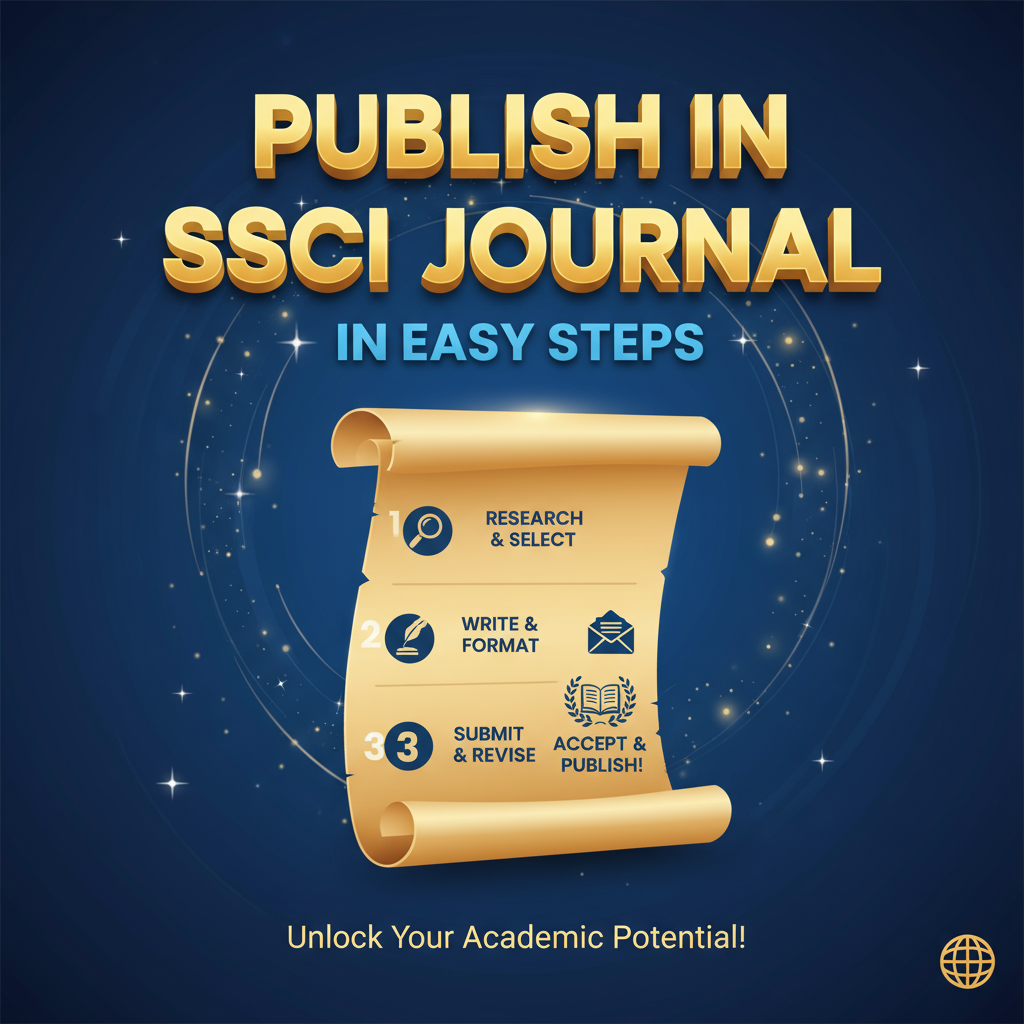
On this page
- What SSCI indexing means and why it matters
- The publishing roadmap at a glance
- Step‑by‑step: From idea to acceptance
- Writing and structuring tips for SSCI articles
- Submission, peer review, and decisions
- Ethics, authorship, and reporting standards
- Choosing the right SSCI journal
- Concise cover letter template
- Pre‑submission checklist
- FAQs
- References
What SSCI indexing means and why it matters
The Social Sciences Citation Index (SSCI), curated by Clarivate within the Web of Science Core Collection, indexes leading peer‑reviewed journals across social sciences. Publishing in SSCI‑indexed journals signals rigorous peer review, discoverability, and citation visibility—factors that influence career progression and funding prospects [7][8][9]. Targeting critical, timely topics can also boost article impact and journal metrics in the short term [7].
Verify indexing. Use the Master Journal List (MJL) to confirm a journal’s SSCI status. Distinguish SSCI from ESCI; some journals are in ESCI (emerging) and not yet SSCI.
The publishing roadmap at a glance
The process is systematic: define objectives and authorship; choose a target journal; outline the paper; draft in manageable sections; obtain internal/external feedback; submit; respond to reviewers; and finalize post‑acceptance tasks [1][3][5][6]. Clear communication with editors and reviewers throughout is essential [2][3][5].
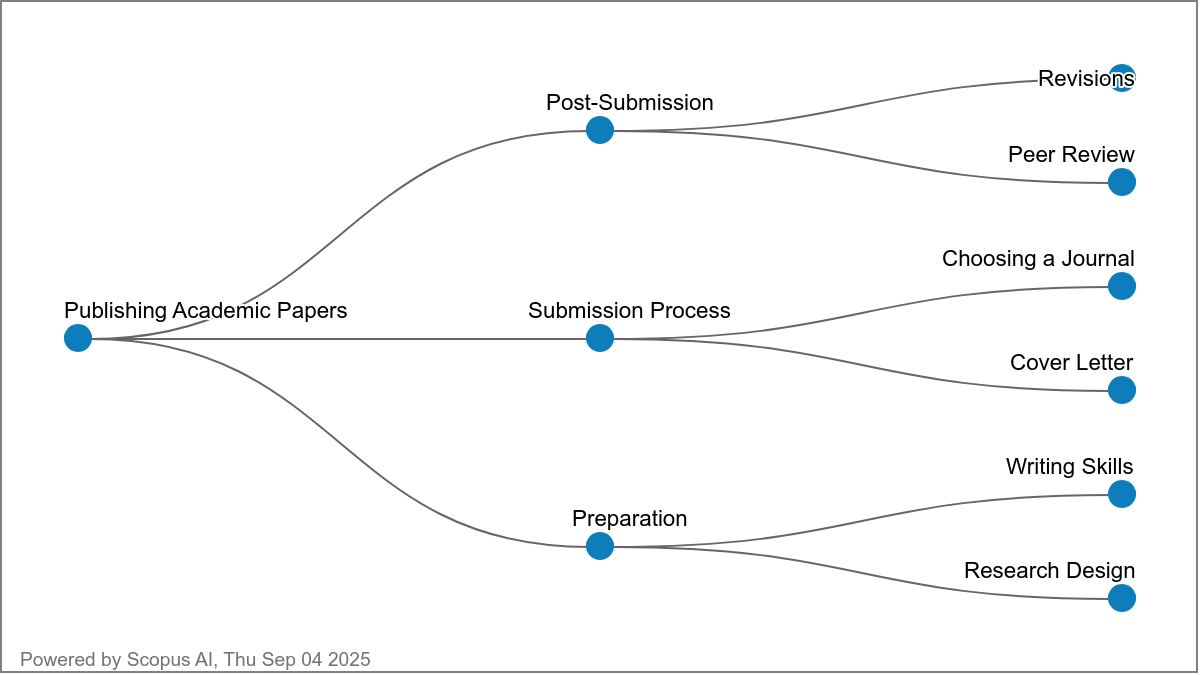
Step‑by‑step: From idea to acceptance
1) Define objectives, authorship, and contribution
- Articulate your research question, novelty, and target audience; write a 1–2 sentence value proposition [1][3].
- Agree on authorship order and contributor roles early (use ICMJE/CRediT guidance) to prevent disputes [3].
- Register protocols where relevant (e.g., OSF, ClinicalTrials.gov).
2) Select your target SSCI journal before drafting
- Match scope, readership, and methods; check editorial policies, indexing, and recent special issues [5].
- Use MJL to verify SSCI; consult JCR for categories and metrics.
- Beware predatory outlets; confirm COPE membership and transparent peer‑review policies.
3) Outline and align to the journal’s author guidelines
- Create a detailed outline; map sections to the journal’s required structure and house style [3][6].
- Adopt relevant reporting standards (e.g., CONSORT, PRISMA, STROBE, COREQ; see EQUATOR).
- Resolve acknowledgments, funding statements, data availability, and ethics approvals before drafting [3].
4) Draft in focused, manageable sections
- Write out of order (Methods/Results first) to reduce friction; keep sections concise and purposeful [6].
- Use figures/tables to carry key messages; ensure reproducibility and transparency.
5) Internal and external pre‑submission reviews
- Seek critical feedback from colleagues with domain and methodological expertise [3].
- Conduct a language and formatting review against the journal’s checklist [6].
6) Prepare submission package
- Cover letter emphasizing originality, relevance, and fit [5].
- Ethics statements, conflict of interest, data availability, funding, and author contributions.
- Suggest potential reviewers (with rationale) and disclose any conflicts.
7) Submit and communicate professionally
- Follow the submission portal carefully; ensure all files and metadata are complete.
- Respond promptly and courteously to editorial queries [2][3][5].
8) Revise systematically post‑review
- Map reviewer points; respond point‑by‑point with evidence and citations [5].
- Where you disagree, justify respectfully and provide alternative analyses where possible.
9) Final acceptance and post‑publication
- Proof carefully; check figures, references, and author details.
- Share compliant versions; promote ethically; consider a lay summary and data/code repository.
Writing and structuring tips for SSCI articles
- Front‑load novelty and contribution in the abstract and introduction [1][6].
- Use signposting and subheadings; adhere strictly to the journal’s style and reference format [6].
- Keep paragraphs focused; one claim per paragraph supported by data.
- Draft the Discussion around contribution, limitations, and future research; link to the literature’s gaps.
- Quality over quantity—polish shorter sections iteratively to maintain momentum [6].
Submission, peer review, and decisions
After submission, an editor or associate editor conducts an initial screening for fit and quality; desk rejections are common [5]. Passing this stage typically leads to external peer review. Authors must comply carefully with feedback in subsequent versions [5]. Communicate promptly and graciously with editors and reviewers to maintain momentum [2][3][5].
- Common outcomes: desk reject; reject with encouragement; major/minor revisions; accept.
- Typical timelines: initial decision 2–6 weeks; full review 8–16+ weeks (varies by field).
Ethics, authorship, and reporting standards
- Follow COPE and ICMJE guidance on ethics and authorship.
- Obtain IRB/ethics approvals as required; disclose consent and data protection practices.
- Use transparent reporting checklists (EQUATOR: CONSORT/PRISMA/STROBE/COREQ).
- Include data availability and code statements; consider preregistration where applicable.
Choosing the right SSCI journal
Align your manuscript with the journal’s scope, readership, editorial policy, dissemination avenues, indexing, and impact factor [5]. Quality and prestige are central considerations for authors and institutions [7][8][9].
- Scope and audience fit: topic, method, and geographical focus.
- Editorial policy: special issues, open science, word limits, OA options.
- Metrics: JCR category quartiles, impact factor, recent citation patterns [7].
- Indexing: SSCI verified in MJL; beware journals claiming indexing without evidence.
Concise cover letter template
Editors value a brief, direct cover letter that explains originality, fit, and contribution [5]. Customize and keep to one page.
Dear Dr. [Editor Surname],

Please find our manuscript, "[Title]," submitted to [Journal Name] for consideration as a [Article Type].
This work [one-sentence novelty/aim]. It contributes by [succinct contribution] and is a strong fit for your readers because [fit to scope/special issue].

We confirm the work is original, not under consideration elsewhere, and that all authors meet ICMJE authorship criteria.
Ethics approval was obtained from [Board], and data are available at [Repository/DOI].

Suggested reviewers (no conflicts): [Name, Affiliation, Email, Rationale].
We have no competing interests to declare.

Thank you for your consideration.

Sincerely,
[Corresponding Author, Affiliation, ORCID, Email]
Pre‑submission checklist
- Journal confirmed in MJL as SSCI; scope and word limits match.
- Manuscript adheres to house style; figures/tables meet resolution and format requirements.
- Abstract clearly states the research question, methods, results, and contribution.
- Reporting guidelines completed (e.g., PRISMA checklist attached if applicable).
- Ethics, funding, conflicts, contributions, and data statements included.
- Cover letter tailored; suggested reviewers provided (if allowed).
- Internal/external peer review done; language polished.
Our editors can review fit, structure, and compliance to reduce desk‑reject risk.
FAQs
How do I verify a journal is SSCI‑indexed?
Search the Master Journal List. Confirm the database is SSCI (not ESCI) and that the journal’s ISSN matches the site.
How long does peer review take?
Initial screening can take 2–6 weeks; external review often 8–16+ weeks. Timelines vary by field and journal workload [5].
Does impact factor matter?
Yes, but context matters. Fit, readership, and editorial policy can be more important than a small IF difference. Publishing on critical topics can also accelerate impact [7].
Can I use AI tools in writing?
Many journals permit responsible AI‑assisted drafting with full disclosure. Authors remain accountable for accuracy, originality, and proper citation. Check each journal’s policy and COPE guidance.
References
- [1] Tress, G., Tress, B., Saunders, D.A. (2014). How to write a paper for successful publication in an international peer‑reviewed journal. Pacific Conservation Biology. https://www.scopus.com/pages/publications/84904427232
- [2] Fekadu, A. (2018). Demystifying writing papers for biomedical journals. Ethiopian Medical Journal. https://www.scopus.com/pages/publications/85055289296
- [3] Roederer, M., Marciniak, M.W., O’Connor, S.K., Eckel, S.F. (2013). An integrated approach to research and manuscript development. American Journal of Health‑System Pharmacy. https://www.scopus.com/pages/publications/84893431149
- [4] Sens, M.A. (2011). How to Write a Research Paper. Academic Forensic Pathology. https://www.scopus.com/pages/publications/85072733143
- [5] García, A.M., Fernández, E. (2021). How to write and publish scientific articles (and III). Medicina Paliativa. https://www.scopus.com/pages/publications/85125983460
- [6] Finlay, L. (2020). How to write a journal article: Top tips for the novice writer. European Journal for Qualitative Research in Psychotherapy. https://www.scopus.com/pages/publications/85131656232
- [7] Lee, J.-S., Wei, C.-Y. (2016). Journal features and impact factor. Managerial Finance. https://www.scopus.com/pages/publications/84996564596
- [8] Sarker, S. (2015). Publishing in leading journals: An overview for aspirant authors early in their careers. In A Guide to Publishing for Academics. https://www.scopus.com/pages/publications/85028384260
- [9] Schoenwolf, G.C. (2013). Getting published well requires fulfilling editors’ and reviewers’ needs and desires. Development Growth and Differentiation. https://www.scopus.com/pages/publications/84890789349
- Clarivate. Master Journal List (MJL): https://mjl.clarivate.com/home
- Clarivate. Journal Citation Reports (JCR): https://clarivate.com/webofsciencegroup/solutions/journal-citation-reports/
- Committee on Publication Ethics (COPE): https://publicationethics.org/
- ICMJE Recommendations: https://www.icmje.org/recommendations/
- EQUATOR Network: https://www.equator-network.org/
- Open Science Framework (OSF): https://osf.io